admin
admin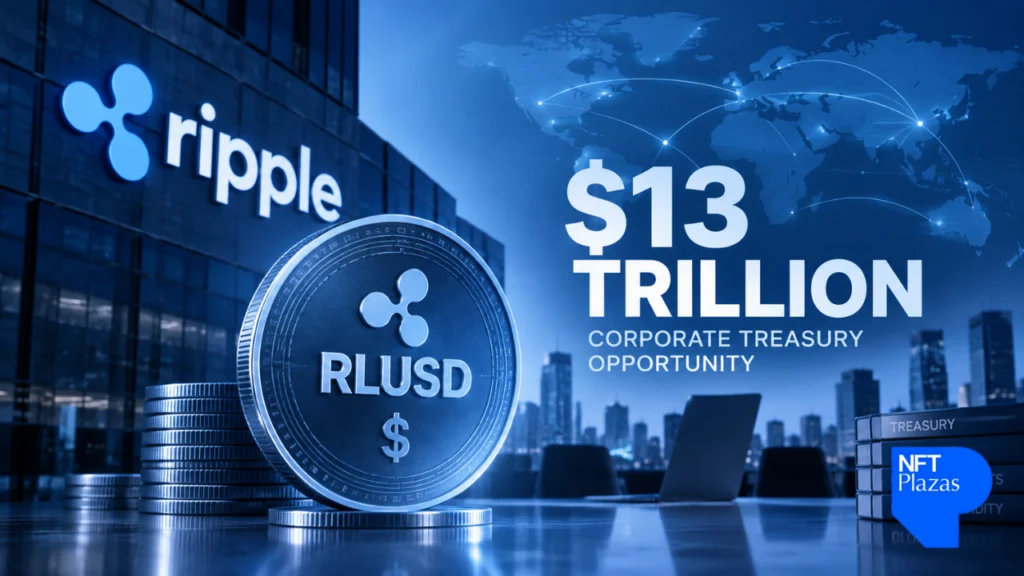
Ripple is strategically positioning its RLUSD stablecoin as a pivotal instrument for corporate treasury operations, targeting an expansive network of companies that collectively manage an estimated $13 trillion in annual transactions. This ambitious move signals a significant pivot for the blockchain giant, aiming to embed distributed ledger technology (DLT) and digital assets into the foundational financial workflows of global enterprises, moving beyond traditional cryptocurrency trading into the realm of enterprise-grade financial infrastructure.
The core of this strategy revolves around Ripple Treasury, a sophisticated corporate treasury-management business established following Ripple’s substantial $1 billion acquisition of GTreasury in 2025. This strategic acquisition provided Ripple with immediate, direct access to a vast ecosystem of corporate finance teams. These teams are responsible for navigating the complexities of cash management across international borders, diverse subsidiaries, and various domestic accounts—a financial landscape historically characterized by intricate processes, slow settlement times, and often opaque visibility.
Jack McDonald, Ripple’s Senior Vice President of Stablecoins, emphasized the immense potential of this untapped market. "That customer base hadn’t been onchain," McDonald noted in an interview with CoinDesk, highlighting that the transactions managed by these GTreasury customers represent a staggering $13 trillion annually. This figure, while representing transaction activity rather than immediate capital inflow into RLUSD, underscores the sheer scale of the opportunity and elucidates why Ripple views corporate treasury as a critical distribution channel for its stablecoin. The integration of blockchain-based settlement into these traditionally off-chain financial workflows could mark a profound shift in how corporations manage their global liquidity and payments.
The Strategic Imperative: Utility Over Mere Supply Growth
While RLUSD remains a relatively nascent player compared to established giants like Tether’s USDT and Circle’s USDC in the broader stablecoin market, its trajectory has been marked by rapid expansion. Ripple’s latest transparency data, as of September 3, 2026, indicated approximately $2.4 billion of RLUSD in circulation, meticulously backed by reserves that exceed the outstanding token amount. This growth is further corroborated by third-party blockchain data, which pegs RLUSD’s supply at a similar figure, with tokens distributed across both the XRP Ledger and Ethereum networks.
However, Ripple’s strategic focus extends beyond merely inflating market capitalization. McDonald explicitly stated that the company is less concerned with headline supply figures and more invested in the actual utility and active usage of RLUSD. "What’s more exciting to us is the utility and the daily activity," he affirmed. This philosophy is demonstrably reflected in the stablecoin’s operational metrics; daily RLUSD activity has more than tripled since the beginning of the year, surging from approximately $200 million to roughly $750 million per day in the preceding month.
This distinction is paramount for Ripple. Instead of engaging in a direct, head-to-head competition solely for a larger share of the stablecoin supply market, Ripple is meticulously positioning RLUSD as an integral component of a broader, interconnected financial infrastructure. This infrastructure is designed to span critical financial domains, including payments, sophisticated treasury management, dynamic capital markets, and institutional trading. The vision is to transform RLUSD from a mere digital asset into a fundamental layer of global financial operations, providing efficiency and transparency where traditional systems often falter.
Chronology of Expansion and Integration

Ripple’s strategic path to targeting the corporate treasury market has been a deliberate, multi-pronged effort involving key acquisitions and regulatory advancements:
- 2025: GTreasury Acquisition: The cornerstone of Ripple’s corporate treasury strategy, the $1 billion acquisition of GTreasury in 2025 immediately provided Ripple with a robust treasury management system and direct access to a vast client base of corporate finance teams. GTreasury, a recognized leader in treasury and risk management solutions, manages a substantial volume of global transactions, giving Ripple a ready-made channel to introduce blockchain-based solutions.
- Early 2026: Hidden Road Acquisition (Ripple Prime): Complementing the GTreasury acquisition, Ripple also integrated Hidden Road, an institutional prime broker. This acquisition led to the creation of Ripple Prime, enhancing Ripple’s capabilities in institutional brokerage, particularly for digital assets. This move bolstered the infrastructure for capital markets applications, enabling RLUSD to be used effectively as collateral and for institutional trading.
- February 2026: Luxembourg EMI License: Ripple secured a full Electronic Money Institution (EMI) license from Luxembourg. This license is crucial for operating regulated payment services and e-money issuance within the European Economic Area (EEA), providing a strong regulatory foundation for RLUSD’s expansion into Europe.
- April 2026: Ripple Treasury Launches Digital Asset Capabilities: Building on the GTreasury infrastructure, Ripple Treasury introduced a treasury management system with native digital-asset capabilities. This enhancement specifically extended the platform to accommodate blockchain-based assets, directly enabling GTreasury’s existing clients to interact with digital currencies and stablecoins within their familiar treasury environment. This platform facilitated an impressive $13 trillion in payments volume in 2025, underscoring its significant reach.
- Mid-2026: Full MiCA Authorization as CASP: Further solidifying its European presence, Ripple obtained full Markets in Crypto-Assets (MiCA) authorization as a Crypto Asset Service Provider (CASP). This landmark achievement allows Ripple to offer a comprehensive suite of regulated crypto services—including payments, custody, trading, and stablecoin operations—across the entire European Economic Area, positioning RLUSD for significant growth in one of the world’s most regulated markets.
Payments and Capital Markets: Leading the Charge for Adoption
Ripple’s strategic blueprint for RLUSD’s adoption prioritizes real-world utility across critical financial sectors. Payments represent one of the primary and most immediate use cases. The company has seamlessly integrated the stablecoin into its existing payments infrastructure, empowering businesses to leverage digital dollars for streamlined cross-border transactions and efficient settlement. This directly addresses the pain points of traditional international payments, which often involve multiple intermediaries, high fees, and prolonged settlement times. By utilizing RLUSD, companies can achieve near-instantaneous, cost-effective global transfers, enhancing liquidity management and reducing operational overhead.
Beyond payments, capital markets emerge as another significant growth area for RLUSD. Within this domain, the stablecoin can function as the essential cash component of transactions, facilitating rapid settlement and serving as robust collateral. Ripple has actively forged collaborations with prominent financial institutions, including Franklin Templeton and DBS, on innovative initiatives such as tokenized money-market funds and various lending-related projects. These partnerships underscore the growing acceptance of stablecoins as a reliable and efficient asset within institutional finance. Furthermore, RLUSD can be employed as collateral through Ripple Prime, the institutional brokerage arm created following the acquisition of Hidden Road. This provides a secure and efficient mechanism for institutional clients to manage risk and optimize capital utilization in their trading and lending activities.
This comprehensive strategy reflects Ripple’s broader commitment to constructing an integrated institutional financial stack, rather than operating RLUSD as an isolated cryptocurrency. McDonald aptly summarized this evolving landscape: "Stablecoins [are] evolving from a crypto asset to part of financial infrastructure." This paradigm shift holds particular significance for corporate treasurers, whose operational priorities are intrinsically linked to liquidity, settlement speed, transparent cash visibility, robust risk management, and stringent regulatory compliance—rather than engaging in speculative cryptocurrency trading. By embedding RLUSD into the operational fabric of treasury systems, Ripple directly addresses these core priorities, offering tangible improvements to existing financial processes.
Europe: A Key Frontier for Regulatory-Compliant Expansion
With the increasing regulatory clarity surrounding stablecoins, particularly within the European Union, Ripple is actively pursuing the expansion of RLUSD into the European market. The EU’s landmark Markets in Crypto-Assets (MiCA) framework provides a comprehensive regulatory environment, offering a clear pathway for compliant digital asset operations.
McDonald outlined Ripple’s intention to introduce the dollar-backed stablecoin through a dual-issuance structure, specifically designed to comply with MiCA’s stringent requirements. This innovative approach aims to ensure that RLUSD can operate seamlessly and legally across the diverse jurisdictions within the European Economic Area (EEA), providing a standardized and reliable digital dollar option for European businesses and financial institutions.
Ripple has made considerable strides in strengthening its regulatory position within the region throughout the year. The company’s receipt of a full Electronic Money Institution (EMI) license from Luxembourg in February 2026 was a critical step, allowing it to issue electronic money and provide payment services. This was followed by the crucial attainment of full MiCA authorization as a Crypto Asset Service Provider (CASP). This comprehensive authorization empowers Ripple to offer a broad spectrum of regulated crypto services—including payments, custody, trading, and stablecoin operations—across all 27 EU member states and the broader EEA. This regulatory foundation is invaluable, providing both operational certainty for Ripple and confidence for potential institutional partners and users.

Interestingly, McDonald also observed that demand for dollar-backed stablecoins continues to outweigh that for tokens denominated in euros or emerging-market currencies, even within markets where underlying transactions occur in multiple fiat currencies. This creates a compelling opportunity for RLUSD to serve as a universal digital dollar bridge, facilitating cross-currency transactions and providing a stable, liquid asset for international commerce, regardless of the local fiat currency.
Furthermore, Ripple envisions a complementary role for stablecoins alongside bank-issued tokenized deposits. While deposit tokens can offer efficiencies within the closed ecosystems of individual banks or proprietary networks, McDonald elaborated that "When you want to go outside of that walled garden, that’s where stablecoins come into play." This perspective positions stablecoins like RLUSD as crucial interoperability layers, bridging disparate institutional systems and facilitating seamless money movement across different financial entities and blockchain networks. This hybrid approach acknowledges the evolving landscape where traditional finance and decentralized finance are increasingly converging.
Selective Blockchain Expansion and Future Implications
Initially launched on the XRP Ledger and Ethereum, RLUSD has strategically expanded its availability across a carefully selected array of additional networks, including Base, Ink, Optimism, and Unichain. This expansion is not indiscriminate; Ripple is not pursuing every available blockchain. Instead, McDonald articulated a demand-driven strategy: "We want to be where there is demand." This approach underscores Ripple’s institutional focus, prioritizing networks that offer robust infrastructure, security, and a demonstrable need from institutional users, rather than merely maximizing the number of supported chains. This selective expansion aligns perfectly with the company’s broader positioning of RLUSD as foundational infrastructure for businesses and established financial institutions.
The monumental $13 trillion annual transaction figure managed by Ripple Treasury’s customer base provides Ripple with a potentially transformative distribution advantage. Rather than embarking on the arduous task of persuading companies to adopt crypto markets from the ground up, Ripple can introduce stablecoin functionality directly through the treasury management systems that these corporations already utilize daily. This embedded approach significantly lowers the barrier to entry for businesses, integrating advanced blockchain capabilities into familiar operational environments.
The immediate challenge lies in effectively converting this vast existing financial activity into meaningful, sustained RLUSD usage. With its current circulation of approximately $2.4 billion, RLUSD remains a small fraction compared to the gargantuan transaction flows Ripple is targeting. However, if Ripple successfully embeds the stablecoin into the core functions of corporate payments, sophisticated liquidity management, and dynamic capital-market workflows, the company would transcend mere competition for a larger share of the crypto trading market. It would be vying for a fundamental role in the essential infrastructure that global corporations rely upon to move and manage money every single day.
This strategic direction signifies a profound shift in the utility of stablecoins and blockchain technology. It represents a potential disruption to established financial intermediaries, offering a pathway to significantly reduce the costs, delays, and complexities inherent in the current global financial system. The implications extend to the very architecture of international commerce, promising a future where digital assets are not just speculative instruments but indispensable tools for enterprise efficiency, global liquidity, and real-time financial operations. Ripple’s long-term vision positions RLUSD as a cornerstone of this evolving, more interconnected, and efficient global financial ecosystem.