admin
admin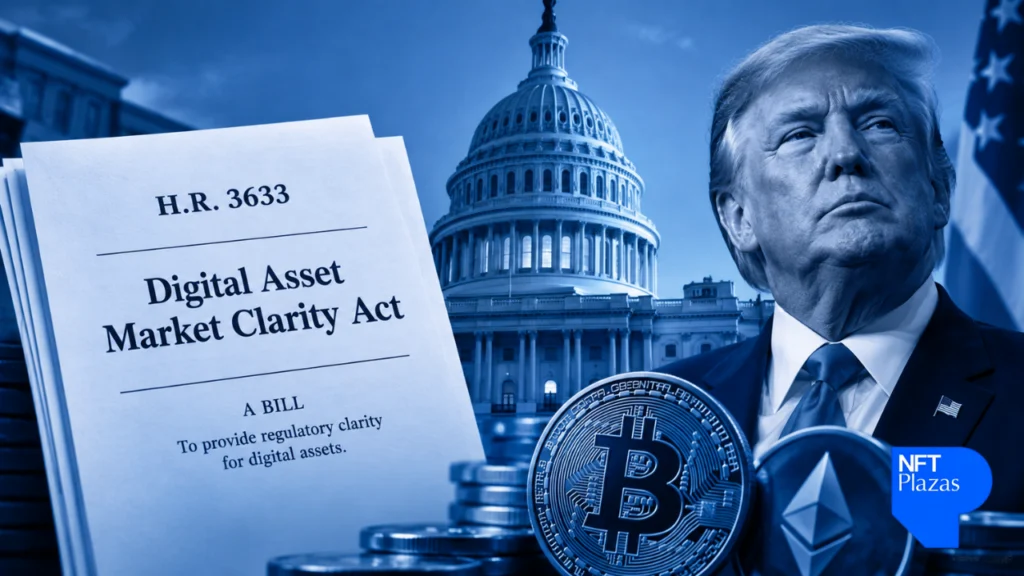
Senate Republicans have released what they are terming the “final” draft of the CLARITY Act, initiating a renewed and urgent push to advance this long-anticipated cryptocurrency market structure bill before Congress concludes the 2026 legislative calendar. This move represents a critical juncture for digital asset regulation in the United States, with significant implications for an industry that has long sought definitive federal guidelines.
The comprehensive 635-page proposal was unveiled late Sunday by Senators Cynthia Lummis (R-WY), John Boozman (R-AR), and Tim Scott (R-SC). Its release precedes a pivotal procedural vote, known as a cloture vote, scheduled for Tuesday, September 15. Republican proponents assert that this latest iteration of the bill incorporates a substantial 126 substantive changes specifically requested by Senate Democrats, reflecting over a year of painstaking bipartisan negotiations and compromise. The revised legislation also notably integrates the majority of a bipartisan ethics proposal championed by Senators Thom Tillis (R-NC) and Ruben Gallego (D-AZ). A significant development in this regard is President Donald Trump’s agreement to adhere to these new ethics restrictions, a move that could potentially dismantle one of the most formidable political obstacles confronting the CLARITY Act’s passage. The sponsoring senators indicated that, should cloture be successfully invoked, this new text would be formally offered as the substitute amendment, setting the stage for full Senate debate.
The Quest for Regulatory Clarity: A Multi-Year Saga
The journey toward comprehensive federal cryptocurrency regulation in the U.S. has been protracted and fraught with challenges. For years, the digital asset industry has operated under a fragmented and often ambiguous regulatory landscape, leading to calls from innovators, investors, and consumer advocates alike for clear rules of engagement. The absence of a unified framework has created uncertainty, hindering innovation, raising concerns about consumer protection, and potentially ceding U.S. leadership in the rapidly evolving global digital economy. Various legislative attempts have been made in previous sessions, but none have garnered sufficient bipartisan momentum to overcome the inherent complexities and political divisions surrounding digital assets.
The CLARITY Act, first introduced in earlier forms, emerged as a leading contender due to its comprehensive scope, aiming to delineate jurisdictional lines between federal agencies like the Securities and Exchange Commission (SEC) and the Commodity Futures Trading Commission (CFTC), establish consumer protections, and foster responsible innovation. Its evolution has involved extensive dialogue with industry stakeholders, regulatory bodies, and academic experts, seeking to strike a delicate balance between fostering a vibrant digital economy and mitigating risks associated with novel financial technologies. The current iteration reflects a concerted effort by key Republican figures, particularly Senator Lummis, a known advocate for the digital asset space, to bridge the ideological gaps and construct a bill capable of garnering broad support across the aisle.
President Trump’s Concession: A Political Breakthrough on Ethics
One of the most contentious aspects of the CLARITY Act negotiations has revolved around ethics provisions, particularly concerning federal public officials’ involvement in the burgeoning cryptocurrency sector. This issue gained significant traction due to President Trump and his family’s documented engagement with various cryptocurrency ventures. Reports have detailed their involvement in entities such as World Liberty Financial, a USD1 stablecoin project, and the TRUMP memecoin. Financial disclosures from President Trump reportedly indicated an astounding $1.4 billion in crypto-related income during 2025 alone, a figure that ignited widespread debate regarding potential conflicts of interest, especially given his administration’s active role in shaping cryptocurrency regulation.
The revised CLARITY Act directly addresses these concerns by extending ethics restrictions to a broad spectrum of federal public officials and employees, encompassing the President, Vice President, members of Congress, and their spouses. This framework largely adopts the blueprint laid out in the Tillis-Gallego proposal, which notably includes a provision empowering state attorneys general to enforce conflict-of-interest rules. This particular inclusion had been a crucial condition for several Democratic senators who were considering supporting the legislation. Senator Lummis underscored the significance of this development, stating that President Trump had "voluntarily agreed" to these restrictions and asserting that Democrats should now honor their part of the bargain. "Democrats got what they wanted; now they need to take yes for an answer," Lummis remarked, signaling a call for immediate bipartisan backing.

However, the scope of these ethics provisions has not escaped scrutiny. Critics have pointed out that while the bill applies to officials and their spouses, it does not impose identical restrictions on other family members, including the children of public officials. This perceived loophole leaves open the possibility of certain potential conflicts of interest remaining outside the direct purview of the proposed legislation, a detail that may continue to be a point of discussion or future amendment. Nonetheless, Trump’s agreement is widely seen as a major political victory for the bill’s proponents, removing a significant personal and partisan hurdle that could have otherwise derailed its progress.
Navigating Stablecoin Rewards: A New Circuit Breaker Mechanism
The latest draft of the CLARITY Act also tackles one of the most significant points of contention between the rapidly expanding cryptocurrency industry and the more established traditional banking sector: the regulation of stablecoin rewards. Stablecoins, digital currencies pegged to a stable asset like the U.S. dollar, have seen explosive growth, raising questions about their role in the financial system. The original intent of the legislation was generally to prevent platforms from offering interest on idle payment stablecoins, while still permitting rewards tied directly to the active use of stablecoins.
Traditional banking groups, most notably the American Bankers Association (ABA), have vociferously argued that such incentives could create an unfair competitive landscape, potentially encouraging consumers to withdraw deposits from community banks and instead channel them into stablecoin-based products. They contend that community bank deposits form the bedrock of local lending and economic activity, and any significant outflow could destabilize the traditional financial ecosystem.
In response to these concerns, the new draft introduces a critical safeguard: the Treasury Secretary would be granted authority to impose an 18-month "circuit breaker" on certain stablecoin rewards. This emergency measure would be triggered if payment stablecoins are found to be causing substantial deposit outflows from the banking system. This provision is explicitly designed as a temporary emergency safeguard rather than a permanent prohibition on rewards, aiming to provide a mechanism to address systemic risks without stifling innovation entirely. The addition of this "circuit breaker" is anticipated to garner crucial support from lawmakers who have expressed apprehension about the potential disruptive impact of stablecoins on the traditional banking system, offering a compromise that acknowledges both innovation and financial stability.
Refined Protections for Blockchain Developers: Balancing Innovation and Enforcement
Another significant area of amendment in the CLARITY Act pertains to the protections afforded to blockchain developers under the Blockchain Regulatory Certainty Act. Earlier versions of the bill sought to provide broad safe harbors for developers, recognizing their crucial role in building the underlying infrastructure of the digital asset ecosystem. However, the revised language now narrows these protections, specifically limiting them to matters involving the Bank Secrecy Act (BSA) and civil enforcement actions.
Notably, Republicans have removed broader language that could have shielded developers from certain criminal charges, including prosecutions under 18 U.S.C. 1960. This particular federal statute prohibits operating an unlicensed money transmitting business and has been a powerful tool for U.S. prosecutors in high-profile cases involving developers associated with privacy-focused cryptocurrency services, such as Tornado Cash and Samourai Wallet. These cases have sparked considerable debate within the crypto community, with developers arguing that merely creating code should not constitute operating a financial service, while law enforcement maintains the need to prevent illicit finance.
These changes reflect a nuanced effort by lawmakers to provide a clearer regulatory environment for legitimate blockchain development without inadvertently creating a sweeping exemption from federal criminal law. The intent is to foster innovation while ensuring that bad actors cannot exploit legal ambiguities to facilitate money laundering, terrorist financing, or other illegal activities. For the developer community, this narrowing of protections represents a mixed outcome: while some certainty is provided, the specter of criminal liability for certain types of code or services remains, potentially influencing future development decisions and the location of such activities.

Further refinements have been made to provisions under the Agriculture Committee’s purview, specifically tightening guardrails against affiliate trading, conflicts of interest, and vertical integration involving digital commodity exchanges, brokers, and dealers. These changes aim to enhance market integrity and prevent manipulative practices in the nascent digital commodity markets. The legislation also clarifies the circumstances under which state consumer-protection laws can apply to digital asset businesses, attempting to harmonize federal and state regulatory efforts to provide a more consistent safety net for consumers.
A Perilous Path to Passage: The Upcoming Cloture Vote and Legislative Clock
Despite the significant compromises embedded in the latest draft, the CLARITY Act faces an exceptionally challenging and narrow path through Congress. The immediate hurdle is the cloture vote scheduled for Tuesday, September 15, on the motion to proceed with the bill. A successful cloture vote requires the support of 60 senators, a formidable supermajority in the current political climate. With Republicans holding 53 seats in the Senate, the passage of cloture necessitates at least seven Democrats or independents joining their ranks, assuming unanimous Republican support. This mathematical reality underscores the critical need for continued bipartisan cooperation.
A successful cloture vote, however, would only mark the beginning of the legislative journey. It would initiate the formal debate process in the Senate, during which senators would need to navigate potential amendments, further procedural votes, and ultimately, a final passage vote. Even if the bill clears the Senate, it would then face scrutiny in the House of Representatives. The House would either need to consider and pass the Senate version directly or reconcile it with its own existing or proposed digital asset legislation, a process that can be lengthy and complex, often involving conference committees.
Time is rapidly becoming the most critical constraint. The Senate’s tentative schedule includes a state work period commencing on October 5, followed closely by Election Day on November 3. House leaders have also reportedly canceled scheduled work weeks later in September, drastically compressing the legislative window available for lawmakers to complete such a monumental piece of legislation. Senator Lummis has previously issued a stark warning: if the CLARITY Act fails to pass during the current Congress, the opportunity for comprehensive federal digital asset regulation could be delayed until as late as 2030, given the nature of electoral cycles and the complexities of reintroducing and re-negotiating such a significant bill.
Broader Implications and the Road Ahead
The stakes for the cryptocurrency industry and the broader U.S. economy are immense. A failure to pass the CLARITY Act would perpetuate the existing regulatory uncertainty, potentially driving innovation and investment overseas, and leaving consumers vulnerable to an inconsistent patchwork of state laws and enforcement actions. Conversely, its passage could solidify the U.S. as a leader in digital asset innovation, providing the clarity necessary for businesses to thrive, attract capital, and develop next-generation financial technologies responsibly.
Despite the daunting legislative calendar and the inherent political difficulties, the latest compromise has tangibly improved market expectations. Prediction markets, often seen as indicators of informed sentiment, now place the probability of the CLARITY Act becoming law this year at approximately one-third, a notable increase from the low-20% range observed before the release of this final draft. This upward revision reflects a cautious optimism that the extensive negotiations and concessions might finally yield a breakthrough.
For the cryptocurrency industry, the cloture vote on Tuesday, September 15, transcends a mere procedural hurdle. It represents the clearest and most definitive test yet of whether the exhaustive months of negotiations—spanning market structure, stablecoin regulation, developer protections, and political ethics—have culminated in a compromise robust enough to command genuine bipartisan support. Should Republicans successfully secure the requisite 60 votes, the CLARITY Act will advance into its crucial next stage of debate and amendment. If they fall short, however, the digital asset industry in the U.S. could once again face a prolonged and frustrating wait for comprehensive federal rules, leaving a multi-trillion-dollar market navigating an increasingly complex and ambiguous regulatory environment. The outcome of this vote will send a powerful signal about Congress’s willingness and ability to adapt to the realities of the 21st-century digital economy.