admin
admin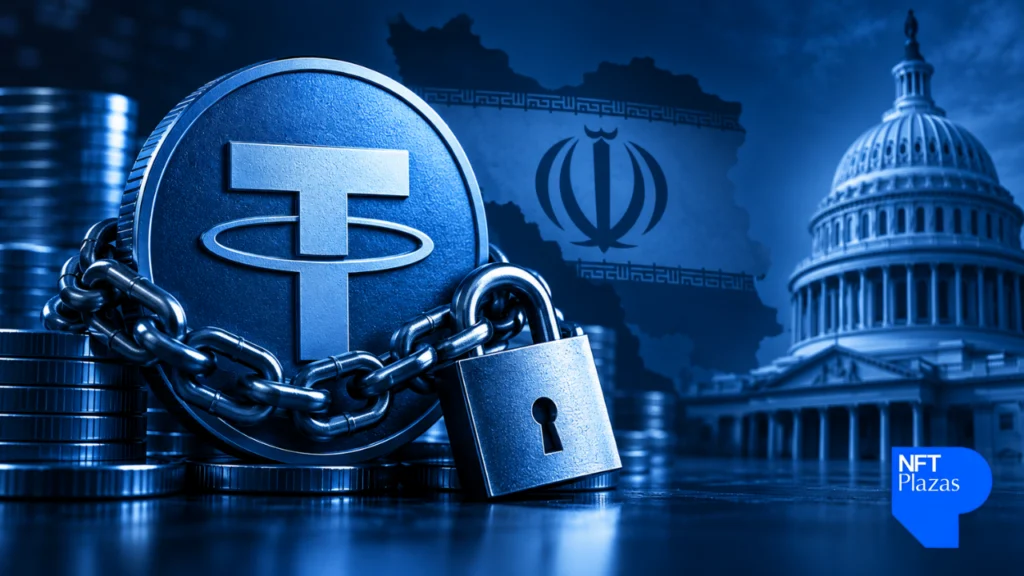
Tether, the issuer of the world’s largest stablecoin, USDT, announced on September 28, 2026, that it had assisted global authorities in freezing nearly $550 million in Iran-linked USDT during the year, a move that starkly highlights the stablecoin’s increasingly pivotal, yet complex, role in international sanctions enforcement. This disclosure arrived simultaneously with a critical report from U.S. lawmakers, alleging that USDT has become a primary conduit for Iranian entities to circumvent conventional financial restrictions, thereby intensifying scrutiny on the stablecoin issuer’s compliance mechanisms and the broader digital asset landscape.
The developments underscore a fundamental dichotomy inherent to stablecoins: the very technological infrastructure designed to facilitate rapid, borderless financial transfers also leaves an indelible, transparent ledger of transactions that can be a powerful tool for investigators. While Tether champions this transparency as proof of its cooperation with law enforcement, U.S. legislators are questioning whether the current compliance frameworks are sufficient to prevent widespread illicit use by sanctioned regimes.
The Growing Nexus of Sanctions and Digital Assets
The United States has long employed a robust sanctions regime against Iran, aiming to curb its nuclear ambitions, support for terrorism, and human rights abuses. These sanctions have progressively isolated Iran from the global traditional financial system, compelling the nation and its proxies to seek alternative methods for moving funds and conducting international trade. In this vacuum, cryptocurrencies, particularly stablecoins like USDT, have emerged as attractive, albeit high-risk, avenues.
USDT, pegged 1:1 to the U.S. dollar, offers the stability of fiat currency with the transactional speed and lower fees characteristic of blockchain technology. Its vast liquidity and availability across numerous exchanges globally have made it an indispensable tool in the wider cryptocurrency ecosystem, but also, inadvertently, a target for those seeking to bypass financial controls. The opaque nature of some crypto transactions, combined with the perception of decentralized anonymity, has historically drawn illicit actors. However, Tether, as a centralized issuer, maintains a critical "kill switch" capability, allowing it to freeze assets on its network when directed by legitimate authorities, a power that is now at the forefront of the debate.
A Chronology of Enforcement and Scrutiny
The year 2026 has marked a significant escalation in both the use of stablecoins by sanctioned entities and the response from U.S. authorities and Tether itself.
- 2021-2025: The Senate’s Early Findings: Investigations by the Senate Permanent Subcommittee on Investigations began to uncover significant patterns of USDT use by Iranian networks. Their subsequent report, published in September 2026, detailed that over $600 million in USDT had been traced through the accounts of just two sanctioned Iranian oil smugglers during this period. The report examined 846 cryptocurrency wallets linked to Iran or its proxies, finding that an overwhelming 84% of these wallets had transacted exclusively or nearly exclusively in USDT. This provided a compelling, albeit critical, backdrop to Tether’s own announcements.
- April 2026: Major Freezes Initiated: Acting on intelligence from the U.S. Treasury Department’s Office of Foreign Assets Control (OFAC) and other U.S. law enforcement agencies, Tether froze more than $344 million in USDT across two distinct blockchain addresses. The following day, OFAC formally added these addresses to its sanctions designation for Iran’s central bank, explicitly citing their links to the Islamic Revolutionary Guard Corps-Qods Force (IRGC-QF) and Hezbollah, two entities designated as foreign terrorist organizations by the U.S.
- July 2026: Further Targeted Actions: Building on previous efforts, Tether executed additional freezes in July, blocking over $130 million across four TRON wallets. These addresses were subsequently added to the same OFAC designation for Iran’s central bank, further solidifying the connection to illicit Iranian financial networks. Together, these two major actions constituted the bulk of Tether’s nearly $550 million in Iran-linked freezes for the year.
- August 2026: "Operation Economic Outcast" Launched: The U.S. Treasury Department formalized its expanded focus on digital assets as part of a broader campaign against Iran. "Operation Economic Outcast" was initiated to target financial networks supporting Iran, explicitly including digital assets alongside traditional sectors like technology, gold, aviation, and shipping in its expanded measures. This signaled a clear governmental intent to aggressively pursue cryptocurrency-based sanctions evasion.
- September 2026: Sanctions and Forfeiture: The intensified campaign continued with OFAC sanctioning BitBank, an Iranian digital-asset venture, its software developer, and several associates of financier Babak Zanjani. Treasury alleged that Zanjani’s network leveraged digital-asset businesses to facilitate fund movements for the IRGC. Concurrently, a separate Justice Department case highlighted the potential endgame of a Tether freeze: federal prosecutors sought forfeiture of approximately $61 million in USDT across 10 TRON addresses that Tether had previously frozen. These funds were alleged to be proceeds from Iranian oil sales, intended to benefit Iran’s government and military-linked organizations. Notably, this $61 million forfeiture case was separate from and not included in Tether’s announced $550 million figure, underscoring the ongoing and multi-faceted nature of these enforcement efforts.
- September 28, 2026: Disclosure and Senate Report: Tether publicly detailed its nearly $550 million in freezes, emphasizing its proactive cooperation. On the same day, the Senate Permanent Subcommittee on Investigations released its damning report, asserting that USDT’s liquidity and widespread availability made it a critical payment rail for Iranian networks, connecting Iranian banks with financial networks associated with Hezbollah and the Houthis.
Clarifying "Freeze" vs. "Seizure": A Critical Distinction

Tether has been careful to delineate between a "freeze" and a "government seizure." A freeze, executed by Tether, prevents the USDT held at a specific blockchain address from being transferred, effectively immobilizing the assets. However, ownership of these funds cannot be transferred to the government without a separate, formal legal process, typically a forfeiture action initiated by law enforcement, as exemplified by the Justice Department’s $61 million case. This distinction highlights the collaborative yet segmented nature of enforcement in the digital asset space, requiring coordination between private issuers and public legal frameworks.
Official Reactions and Industry Perspectives
Tether CEO Paolo Ardoino robustly defended the company’s position, asserting that "Tether has consistently demonstrated that USDT is not a haven for sanctioned actors, terrorist organizations or criminal networks." He emphasized the value of public blockchains in tracking financial activity, arguing that the transparency inherent in these ledgers ultimately aids law enforcement. Tether’s public disclosure also noted its broader cooperation with authorities worldwide, resulting in the freezing of over $4.9 billion in assets globally, including more than $2.4 billion connected to U.S. authorities alone, demonstrating a significant track record of compliance.
However, the Senate investigation takes a far more critical stance. Senator Richard Blumenthal, a key figure behind the report, publicly called upon the Treasury and Justice departments to launch comprehensive investigations into potential sanctions violations and to scrutinize Tether’s precise role in transactions involving Iranian networks. The Senate findings are presented as investigative allegations, not a legal determination of Tether’s culpability, but they undeniably cast a shadow over the stablecoin’s operational integrity in the eyes of some lawmakers.
From a broader industry perspective, this situation underscores the immense pressure stablecoin issuers face. While decentralization is a core tenet of much of the cryptocurrency world, stablecoins, by their very design and the need for fiat backing, often retain centralized control points. This centralization, while enabling actions like freezing assets, also makes them targets for regulatory demands and potential criticism if illicit activities are perceived to proliferate on their networks.
Broader Impact and Implications for the Digital Asset Ecosystem
The events of 2026 have profound implications for the future of digital assets, sanctions enforcement, and global financial regulation.
- The Regulatory Imperative: This saga unequivocally signals that digital assets are no longer operating in a regulatory grey zone when it comes to national security and anti-money laundering (AML) concerns. Governments worldwide, particularly the U.S., are rapidly expanding their regulatory and enforcement frameworks to encompass cryptocurrencies. This will likely lead to increased demands for stablecoin issuers and other centralized crypto entities to implement more stringent Know Your Customer (KYC) and AML protocols, potentially mirroring those of traditional financial institutions.
- Compliance Challenges at Scale: USDT’s colossal scale presents an unprecedented compliance challenge. With hundreds of billions in market capitalization and daily transaction volumes often exceeding traditional payment networks, monitoring systems must be incredibly sophisticated to flag sanctioned addresses and suspicious patterns before funds are moved elsewhere. The inherent speed of blockchain transactions means that even a brief delay in identification can allow illicit funds to dissipate across numerous wallets or be converted to other assets. The prospect of even faster blockchain infrastructure, such as StableChain targeting speeds of up to 10,000 transactions per second, further exacerbates this challenge, potentially creating a compliance arms race.
- The Evolving Nature of Sanctions Enforcement: Digital assets offer both challenges and opportunities for sanctions enforcement. While they can facilitate evasion, their immutable and transparent public ledgers can also provide an unparalleled forensic trail for investigators, a point Ardoino rightly emphasizes. This will necessitate greater collaboration between law enforcement, intelligence agencies, and private blockchain analytics firms, leveraging cutting-edge technology to trace illicit flows. The "issuer-level controls" exercised by Tether are a crucial enforcement mechanism, demonstrating that centralization, in some contexts, can be a feature, not a bug, for regulatory compliance.
- Public Perception and Trust: The narrative surrounding stablecoins and their role in illicit finance directly impacts public trust in the broader cryptocurrency ecosystem. For mainstream adoption to accelerate, the industry must convincingly demonstrate its commitment to combating financial crime. While Tether’s actions showcase its ability to respond to law enforcement, the Senate report’s allegations highlight a persistent concern that, despite these efforts, stablecoins might still be widely exploited.
- Future of Stablecoin Regulation: The debate over stablecoin regulation in the U.S. and globally is ongoing. This incident will undoubtedly fuel arguments for stricter oversight, potentially leading to specific legislation that mandates certain compliance standards, reporting requirements, and clearer legal frameworks for asset freezing and forfeiture within the digital realm. The European Union’s MiCA regulation, for instance, already sets comprehensive rules for stablecoin issuers, offering a potential blueprint for other jurisdictions.
In conclusion, Tether’s substantial freezing of Iran-linked USDT, while demonstrating a tangible commitment to sanctions enforcement, has concurrently illuminated the vast scale of illicit financial activity leveraging stablecoins. The critical assessment from the U.S. Senate underscores a fundamental question facing the digital asset industry: can the existing compliance mechanisms, even with the aid of blockchain transparency, truly keep pace with the rapid proliferation and increasingly sophisticated use of stablecoins in sanctions-sensitive markets? As U.S. authorities continue to sharpen their focus on digital assets as a new frontier for financial crime and national security, Tether’s compliance practices, and indeed those of all major stablecoin issuers, are poised to face unprecedented and continuous scrutiny. The resolution of this tension will profoundly shape the future of digital finance and its integration into the global regulatory landscape.