admin
admin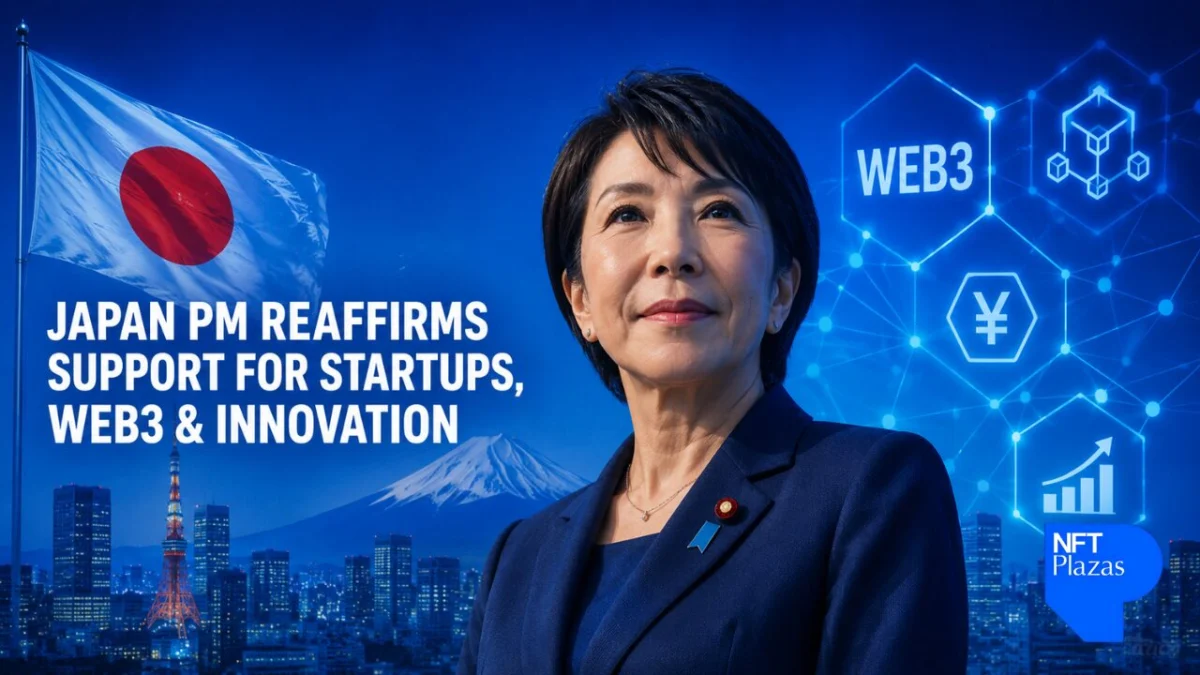
Prime Minister Sanae Takaichi, in a significant video address at WebX 2026 in Tokyo, emphatically reinforced Japan’s unwavering commitment to establishing itself as a premier global hub for startup growth and Web3 innovation. Her remarks underscored the government’s robust support for entrepreneurs, advanced blockchain technology, and critical regulatory reforms, signalling a consistent and long-term national strategy. Speaking to an estimated 15,000 founders, investors, and industry leaders gathered at one of Asia’s largest blockchain and digital asset conferences, Takaichi positioned Web3 not as a niche cryptocurrency phenomenon, but as an integral component of Japan’s broader innovation roadmap and economic revitalization efforts.
The Prime Minister emphasized the crucial synergy between governmental policy and pivotal industry events like WebX, highlighting their collective potential to foster vital connections between nascent startups and established investors, accelerate the development of groundbreaking technologies, and forge strategic commercial partnerships. Her address, while not unveiling new grants or immediate policy shifts, served as a powerful reaffirmation of the government’s comprehensive, long-term roadmap designed to strengthen the nation’s burgeoning startup ecosystem. This strategic direction reflects Japan’s determined push to cultivate innovation through enhanced access to capital, the modernization of its regulatory frameworks, and robust collaboration between the public and private sectors, all aimed at securing a leading position in the global digital economy.
WebX 2026: A Confluence of Innovation and Policy
WebX 2026, held in the bustling metropolis of Tokyo, solidified its reputation as a pivotal annual gathering for the global blockchain and digital assets community. With an anticipated attendance of approximately 15,000 participants, the conference provided an unparalleled platform for policymakers, venture capital firms, financial institutions, developers, and entrepreneurs to converge. Discussions at the event spanned the rapidly evolving landscape of emerging technologies, from the intricacies of decentralized finance (DeFi) and the potential of tokenized assets to the transformative power of artificial intelligence and its intersection with Web3.
Prime Minister Takaichi, addressing this diverse audience virtually, articulated WebX’s vital role as a melting pot for ideas, where startups, corporations, and investors could exchange insights and translate theoretical blockchain technology into tangible, practical business applications. According to reports from CoinPost, she succinctly described the conference as "a platform to create business collaboration," emphasizing its role beyond mere networking to actual deal-making and strategic alliances. This focus aligns with Japan’s ambition to move beyond speculative digital assets towards real-world utility for blockchain, driving economic growth and efficiency across various sectors.
Integrating Web3 into Japan’s National Economic Fabric
Takaichi’s speech deliberately steered the conversation beyond a narrow focus on cryptocurrencies, instead illuminating Web3’s expansive potential across a multitude of industries. She specifically highlighted its transformative capabilities in areas such as digital finance, supply chain management, robust identity verification systems, and advanced enterprise services. This broad perspective underscores Japan’s overarching strategic approach: to seamlessly integrate blockchain technology into its national economic policy, rather than relegating it to a specialized, niche financial sector.
This strategic pivot reflects a broader global trend where nations are recognizing the foundational nature of Web3 technologies, seeing them as infrastructure for future digital economies rather than merely speculative investments. Japan aims to leverage these technologies to enhance productivity, improve transparency, and foster new business models that can drive its economic competitiveness in the 21st century. The government’s vision is to harness the decentralized, secure, and transparent characteristics of blockchain to solve real-world problems and create new value across traditional and emerging sectors.

A Comprehensive Strategy for Startup Development
Central to Japan’s innovation agenda is the Comprehensive Startup Support Package, a landmark initiative introduced in 2025. This package is designed to bolster the nation’s Five-Year Startup Development Plan, which was initially launched in 2022. These interconnected strategies collectively aim to dramatically increase annual startup investment to an ambitious target of approximately 10 trillion yen by fiscal 2027. Such a monumental investment surge is intended to catapult Japan into the ranks of Asia’s leading startup ecosystems, rivaling established hubs like Singapore and potentially even global leaders.
The long-term governmental objectives outlined within this framework are equally ambitious: to cultivate 100 unicorn companies – privately held startups valued at over $1 billion – and to support the sustained growth of an astounding 100,000 startups nationwide. Achieving these targets would fundamentally reshape Japan’s economic landscape, fostering a vibrant culture of entrepreneurship and innovation that could drive significant job creation and technological advancement.
The support package is multifaceted, addressing critical barriers to startup growth. It seeks to expand access to capital through a combination of government-backed investment funds and collaborative efforts with established financial institutions. Simultaneously, it aims to ease regulatory burdens that have historically impeded the rapid scaling of young companies, creating a more agile and responsive business environment. Furthermore, the initiative actively encourages strategic partnerships between innovative startups and established corporations, fostering a symbiotic relationship that can accelerate market adoption and provide invaluable resources. By strengthening founder networks and improving opportunities for businesses to scale both domestically and internationally, Japan is building a robust pipeline for future economic growth.
While the government has yet to release definitive implementation timelines for every specific measure within the package, officials consistently emphasize that startup development is not merely an ancillary program but a critical pillar of Japan’s long-term economic competitiveness and national prosperity. This sustained focus underscores a commitment to fostering a dynamic, innovation-driven economy capable of adapting to global challenges and opportunities.
Modernizing Japan’s Digital Asset Regulatory Landscape
Parallel to its broad startup initiatives, Japan is also making significant strides in modernizing its regulatory framework for digital assets. Lawmakers have been actively advancing legislation that could substantially reduce the tax rate on cryptocurrency gains to 20%, a move designed to align digital asset taxation more closely with the treatment of stocks and other traditional financial investments. This proposed framework also aims to establish a clear and legal pathway for the introduction of domestic cryptocurrency Exchange-Traded Funds (ETFs), which could unlock significant institutional investment in the digital asset space.
While these reforms have not yet been formally enacted, with tax-related provisions currently anticipated to take effect in 2028 if approved, they represent one of Japan’s most substantial efforts in recent memory to overhaul its crypto regulatory environment. The goal is to significantly enhance the country’s competitiveness within the global digital asset industry, positioning it as a more attractive and stable jurisdiction for blockchain-related activities. A lower tax burden, combined with clearer investment rules and the potential for ETFs, could profoundly increase Japan’s appeal to blockchain startups, institutional investors, and developers who seek a predictable and supportive regulatory environment. This progressive stance contrasts with more cautious approaches seen in some other major economies, potentially giving Japan a competitive edge in attracting talent and capital.
Private Sector Catalysts and Collaborative Synergies
Government programs, while foundational, are increasingly being complemented and amplified by significant private-sector investment and initiatives. Earlier in the year, a notable collaboration emerged between Ripple, a leading enterprise blockchain and crypto solutions provider, and Web3 Salon. This partnership launched a series of grants, offering up to $200,000 for Japanese startups dedicated to building innovative applications on the XRP Ledger. The initiative is strategically focused on critical areas such as payments, the tokenization of real-world assets (RWAs), and decentralized finance (DeFi), reflecting key growth vectors within the Web3 ecosystem. Crucially, this private-sector endeavor has garnered official support from the Japan External Trade Organization (JETRO), a government-related agency that promotes trade and investment.

Although this grant program operates independently from the broader government-backed Comprehensive Startup Support Package, its endorsement by JETRO exemplifies the growing and essential cooperation between public agencies and private companies. This collaborative spirit is vital for accelerating blockchain innovation and fostering a dynamic ecosystem in Japan. For many early-stage startups, access to critical funding, strategic enterprise partnerships, and clear regulatory guidance are often just as, if not more, important than pure technical development. Such private initiatives, backed by public support, create a robust environment where innovation can flourish, ensuring that groundbreaking ideas receive the necessary resources and mentorship to transition from concept to commercial viability. This synergy helps de-risk early-stage ventures and provides a clear pathway for growth within a supportive national framework.
A Decade of Consistent Policy Direction
Prime Minister Takaichi’s appearance at WebX 2026 continues a remarkable pattern of consistent political leadership and support for digital innovation that has been established by her predecessors. This continuity underscores the strategic importance Japan places on this sector. Former Prime Minister Fumio Kishida set a precedent by addressing WebX in 2024, explicitly describing blockchain as an indispensable component of Japan’s overarching digital transformation strategy. Building on this momentum, in 2025, former Prime Minister Shigeru Ishiba attended the conference in person, personally voicing strong support for continued investment and regulatory reform across both Web3 and the rapidly advancing field of artificial intelligence.
The repeated participation and consistent messaging from Japan’s top political leaders signify that support for blockchain innovation and the broader startup ecosystem has evolved beyond a transient policy interest. It has firmly become an entrenched part of a broader national economic agenda, reflecting a deep-seated commitment to technological leadership and economic dynamism. This consistent political backing provides crucial stability and confidence for both domestic and international investors, entrepreneurs, and developers looking to establish or expand their presence in Japan.
While keynote speeches, by themselves, do not automatically translate into new legislation or immediate policy implementation, they serve as profoundly important signals. These signals communicate the government’s long-term priorities and strategic direction to entrepreneurs, investors, and the global technology community. They convey a clear message: Japan is serious about its digital future and is committed to creating an environment where Web3 and startup innovation can thrive.
Broader Impact and Future Implications
Prime Minister Takaichi’s closing remarks at WebX 2026 reiterated that the convergence of governmental initiatives and robust industry collaboration is the key to fostering new businesses and strengthening Japan’s overall innovation ecosystem. The ambitious targets, from increasing startup investment to cultivating unicorns and reforming crypto taxation, paint a picture of a nation strategically positioning itself for a new era of digital leadership.
The potential implications of this comprehensive strategy are far-reaching. Economically, a thriving startup ecosystem and a leading Web3 sector could drive significant job creation, attract foreign direct investment, and diversify Japan’s industrial base beyond its traditional manufacturing strengths. Technologically, it could solidify Japan’s role as a pioneer in decentralized technologies, contributing to global standards and applications. Socially, the integration of Web3 into areas like identity and supply chains could enhance trust, transparency, and efficiency in daily life.
However, the success of these ambitions hinges on the effective execution and coordination across various stakeholders. Ministries, regulatory bodies, and financial institutions must work in concert to translate these high-level policy declarations into tangible, actionable frameworks. Challenges remain, including attracting and retaining top global talent in the highly competitive Web3 space, fostering a truly risk-taking entrepreneurial culture, and navigating the complexities of international regulatory harmonization. Japan’s proactive approach, characterized by a clear vision and sustained political will, indicates a strong foundation. Whether these bold ambitions fully materialize into significantly greater investment, a proliferation of successful startups, and widespread adoption of blockchain technology will ultimately depend on the diligence and agility with which the ongoing policies are implemented and adapted to the evolving global digital landscape. Japan’s journey to becoming a global Web3 and startup powerhouse is well underway, and the world watches keenly as its strategic blueprint unfolds.