admin
admin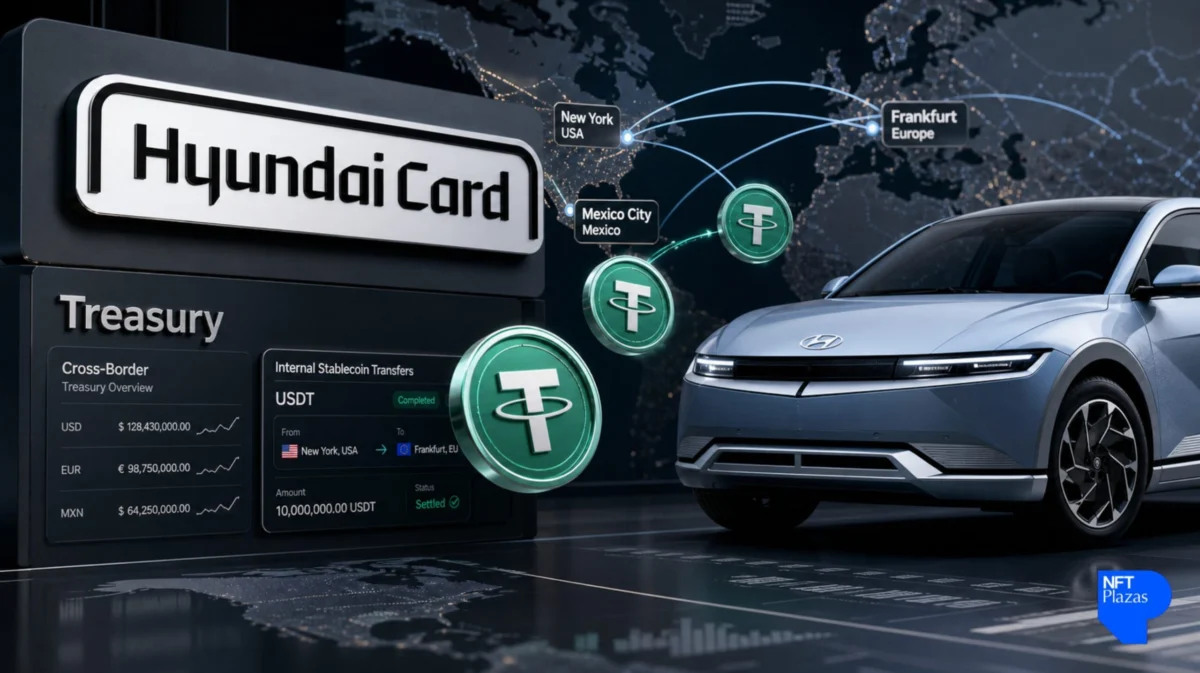
Hyundai Card, the financial services arm of the South Korean automotive conglomerate, and Hyundai Motor, the flagship car manufacturer, have successfully completed a Proof of Concept (PoC) utilizing stablecoins for international transfers between their corporate entities. Announced by Hyundai Card on July 9, this significant development moves beyond mere technical verification, marking a crucial step towards applying stablecoin technology to real-world cross-border treasury operations. The initial test involved Hyundai Motor entities in the United States and Mexico, demonstrating the potential for stablecoins to dramatically shorten settlement times compared to conventional banking methods. Following this successful pilot, plans are already underway for a second PoC in Europe, aiming to further validate the model across diverse regulatory and currency landscapes.
The Evolution of Corporate Treasury: Seeking Efficiency in a Globalized World
For multinational conglomerates like Hyundai Motor Group, which operates a vast network of subsidiaries and affiliates across numerous countries, the efficient management of internal cash flows is paramount. These internal transfers are not merely transactional; they are integral to sophisticated cash management strategies, encompassing cost allocation, intercompany reimbursements, liquidity balancing, and the timely processing of accounts receivable and payable between disparate units. Traditionally, these critical financial arteries rely heavily on correspondent banking networks, involving multiple intermediary banks, stringent processing hours, complex verification steps, and often protracted post-transaction reconciliation. This multi-layered process can lead to significant delays, increased operational costs, and reduced transparency, tying up capital and hindering agile financial decision-making.
The global cross-border payments market is a colossal ecosystem, projected by McKinsey & Company to exceed $250 trillion in transaction value by 2027. Despite its scale, it remains ripe for disruption, particularly in the business-to-business (B2B) segment, where inefficiencies disproportionately impact large enterprises. The average time for an international wire transfer can range from a few hours to several business days, often incurring substantial fees from various intermediaries, including foreign exchange (FX) conversion costs. These frictions prompted Hyundai Card and Hyundai Motor to explore innovative solutions, identifying stablecoins as a promising avenue to streamline their intricate global treasury operations.
From Technical Validation to Real-World Application: The US-Mexico Pilot
Hyundai Card emphasized that this PoC was specifically designed as preparation for the practical deployment of stablecoins in international transfers, extending far beyond a simple technological demonstration. The core focus was on addressing a specific and pressing treasury problem: the speed and reconciliation challenges associated with transfers between entities in different countries. The official announcement highlighted that the PoC was built around a real-world operational scenario where foreign subsidiaries require faster and more transparent internal payment processing.
To ensure the viability of such a system, Hyundai Card, in close collaboration with Hyundai Motor, undertook a comprehensive review of legal, tax, accounting, and internal control factors pertinent to the participating entities. This meticulous preparatory phase underscores the serious intent behind the PoC, positioning it as a robust treasury test conducted under simulated real operational conditions, rather than an isolated blockchain experiment. This diligence is critical for any large corporation contemplating the integration of novel financial technologies, ensuring compliance and operational integrity from the outset.
Inside the US-Mexico Transfer: A Detailed Look at the Lifecycle
The inaugural PoC centered on a straightforward yet comprehensive transfer flow designed to replicate all essential stages of a cross-border treasury transaction. Hyundai Motor America initiated the process by converting $20,000 into Tether’s USDT stablecoin. This USDT was then transmitted via a blockchain network to Hyundai Motor Mexico. Upon receipt, the Mexican entity converted the stablecoin back into traditional USD, completing the cycle.
This structured approach allowed Hyundai to rigorously test the entire lifecycle of a stablecoin-based transaction:
- Fiat-to-Stablecoin Conversion: The initial step of converting traditional fiat currency (USD) into a stablecoin (USDT).
- Blockchain Transmission: The secure and rapid transfer of USDT across a distributed ledger technology (DLT) network.
- Transaction Confirmation: Verification of the transfer on the blockchain.
- Stablecoin-to-Fiat Conversion: The final step of converting the received stablecoin back into local fiat currency at the receiving entity.
For this pilot, Avalanche was selected as the underlying blockchain network, known for its high transaction throughput and low latency, making it suitable for enterprise applications. Tether, as the issuer of USDT, provided the stablecoin liquidity. Axiym, a blockchain payment infrastructure layer provider, supported the technical architecture facilitating the transaction.
While the transaction volume of $20,000 was not intended to test large-scale capital movements or high transaction loads, its significance lay in its execution between two actual foreign entities of Hyundai Motor. This practical application was vital for assessing whether a stablecoin transfer could navigate all the necessary operational, financial, and compliance steps required for genuine internal corporate treasury functions. It moved the conversation from "can it technically work?" to "can it work within our existing corporate governance and financial frameworks?"
Why Hyundai is Embracing Stablecoin Rails: A Quest for Unprecedented Speed
For a global conglomerate, internal transfers are far more than mere payments; they are the circulatory system of cash management. These processes are inherently linked to cost allocation, intercompany reconciliation, liquidity optimization, and managing accounts payable and receivable across a complex global matrix. The traditional methods, reliant on banking hours, correspondent banking networks, and multi-stage verification, introduce significant time lags.
In its announcement, Hyundai Card starkly contrasted the processing time of the stablecoin PoC with that of traditional bank transfers, which typically range from 3-4 hours or, more realistically for cross-border transactions, can extend to several business days depending on cut-off times, weekends, and intermediary bank processes. Stablecoins, in this context, are being explored by Hyundai not as a speculative crypto asset for end-users, but as a supplementary, highly efficient rail for critical internal cash flows. This strategic positioning solidifies the PoC as a serious treasury infrastructure test, rather than a fleeting marketing foray into blockchain or digital assets. The ultimate goal is operational excellence and financial agility.
Settlement Speed: The Core Metric Driving Innovation
The most compelling outcome of the first PoC was the dramatic reduction in settlement time. Hyundai Card reported that the entire transfer and verification process, from fiat-to-stablecoin conversion to stablecoin-to-fiat conversion, took an average of approximately 7 minutes. This figure represents a monumental improvement over the traditional bank transfer method, which can take several hours to multiple days.
For internal transfers between corporate entities, this acceleration in settlement speed is not merely a convenience; it is a strategic advantage. Faster settlement empowers treasury teams with greater flexibility in coordinating cash flows, significantly reduces the amount of capital idled in transit between systems, and streamlines post-transaction reconciliation steps. In an environment where every hour counts for managing working capital and mitigating foreign exchange risk, a 7-minute settlement time could unlock substantial operational efficiencies and cost savings.
However, Hyundai Card also acknowledged that the 7-minute result must be viewed within the specific parameters of this initial PoC: a single $20,000 transaction between two predefined entities, operating on a pre-configured infrastructure design. To genuinely evaluate scalability and broader applicability, subsequent tests will need to rigorously verify performance across several critical dimensions: increased transaction volume, higher transfer frequency, fluctuating conversion costs, network fees (gas fees), potential FX costs (especially with multiple currencies), and the system’s capability to seamlessly handle exception transactions and error resolution.
The European Pilot: Expanding the Scope to FX Complexity
Building on the success of the US-Mexico pilot, Hyundai Card announced plans for a second PoC to be conducted between Hyundai Motor entities in Europe later in the month. This European test is strategically designed to tackle a more complex dimension: transfers based on local currencies, moving beyond the USD-centric focus of the first pilot.
For transactions spanning multiple markets and involving different fiat currencies, the costs and complexities associated with the currency exchange process (FX) can significantly impact payment efficiency. The European PoC will, therefore, explicitly test and analyze FX costs, a variable that was not a primary focus in the largely USD-denominated US-Mexico transfer. This broader scope acknowledges the realities of global trade and the necessity of seamless multi-currency operations for multinational corporations.
The infrastructure partners for the European PoC will also see a change, with Circle and Visa stepping in, expanding the partner ecosystem beyond Tether, Avalanche, and Axiym. Circle is a prominent issuer of USDC, another leading stablecoin, known for its strong regulatory compliance and auditability. Visa, a global payments technology company, brings extensive experience in facilitating cross-border transactions and potentially integrating stablecoin rails into existing financial infrastructures. This diversification of partners indicates Hyundai’s methodical approach to exploring different stablecoin ecosystems and technological configurations, assessing which combination best addresses specific regional and operational challenges, particularly those involving local currency conversions and FX efficiency.
Compliance Work: The Bedrock of Real-World Rollout
A recurring theme emphasized by Hyundai Card is the rigorous compliance framework underpinning the PoC. The preparatory review of legal, tax, accounting, and internal control factors for all relevant foreign entities is not a mere formality; it is the fundamental prerequisite for transforming a technical experiment into a viable corporate financial tool. For cross-border internal transfers within a corporate treasury process, these compliance layers dictate whether transactions can be legally recorded, properly controlled, and accurately accounted for, or if they remain confined to the realm of technical demonstrations.
At the corporate scale, stablecoin transfers must meet the same stringent control requirements as traditional financial transactions. This includes robust identification protocols for sending and receiving entities, thorough vetting of infrastructure partners, maintaining comprehensive transaction logs, securing internal approvals, and ensuring accurate accounting recognition post-settlement. Hyundai Card reiterated its commitment to continuously evaluating the potential for stablecoins to facilitate payments, transfers, and reconciliation between foreign entities within the broader Hyundai Motor Group. The ultimate focus remains on whether this innovative model can operate reliably, repeatedly, and compliantly across a multitude of global markets, adhering to diverse regulatory frameworks.
Broader Implications and Future Outlook
The successful PoC by Hyundai Card and Hyundai Motor carries significant implications for the corporate treasury landscape, the stablecoin market, and the broader adoption of blockchain technology in traditional finance.
- For Enterprise Adoption: Hyundai’s initiative provides a compelling blueprint for other large multinational corporations grappling with the inefficiencies of traditional cross-border payments. As a major player in the automotive industry, Hyundai’s validation of stablecoin technology could encourage other conglomerates to explore similar solutions, accelerating the adoption curve for enterprise blockchain.
- For Stablecoins: This PoC elevates stablecoins beyond their perception as tools for cryptocurrency trading and speculation. It firmly positions them as serious contenders for foundational financial infrastructure, capable of solving tangible, high-value business problems for established corporations. This move lends significant credibility to the stablecoin ecosystem.
- For Traditional Finance: The stark comparison in settlement times (7 minutes vs. 3-4 hours or days) puts direct pressure on traditional banking institutions and payment networks to innovate their cross-border offerings. While banks are also exploring DLT, the proactive steps by corporate giants like Hyundai signal a demand for solutions that existing systems are struggling to provide efficiently. This could foster greater collaboration between traditional finance and blockchain innovators or accelerate the development of proprietary DLT solutions by banks themselves.
- Regulatory Considerations: The emphasis on legal, tax, and accounting reviews highlights the critical role of regulatory clarity. As stablecoins gain traction in enterprise applications, regulators globally will need to provide clearer guidelines on their treatment, especially concerning cross-border transactions, AML/CFT compliance, and consumer/corporate protection. Hyundai’s approach demonstrates a responsible pathway, integrating compliance from the outset.
- Future Challenges: While promising, scaling this solution presents challenges. These include integrating stablecoin rails with existing legacy enterprise resource planning (ERP) systems, managing liquidity for multiple fiat-to-stablecoin and stablecoin-to-fiat conversion pairs across various jurisdictions, navigating fragmented global regulatory landscapes, and ensuring robust cybersecurity protocols for a mission-critical financial infrastructure. The European PoC, with its focus on local currencies and diverse partners, is a crucial step in addressing some of these complexities.
Hyundai Card and Hyundai Motor’s strategic embrace of stablecoins for internal treasury operations represents a pivotal moment in the convergence of corporate finance and blockchain technology. By meticulously testing the practical application, compliance, and efficiency gains, Hyundai is not just experimenting with a new technology; it is actively shaping the future of global corporate treasury, aiming for a system characterized by unprecedented speed, transparency, and operational agility. The journey from a $20,000 pilot to potentially revolutionizing a multi-trillion-dollar segment of global finance has only just begun.