Dwi Wanna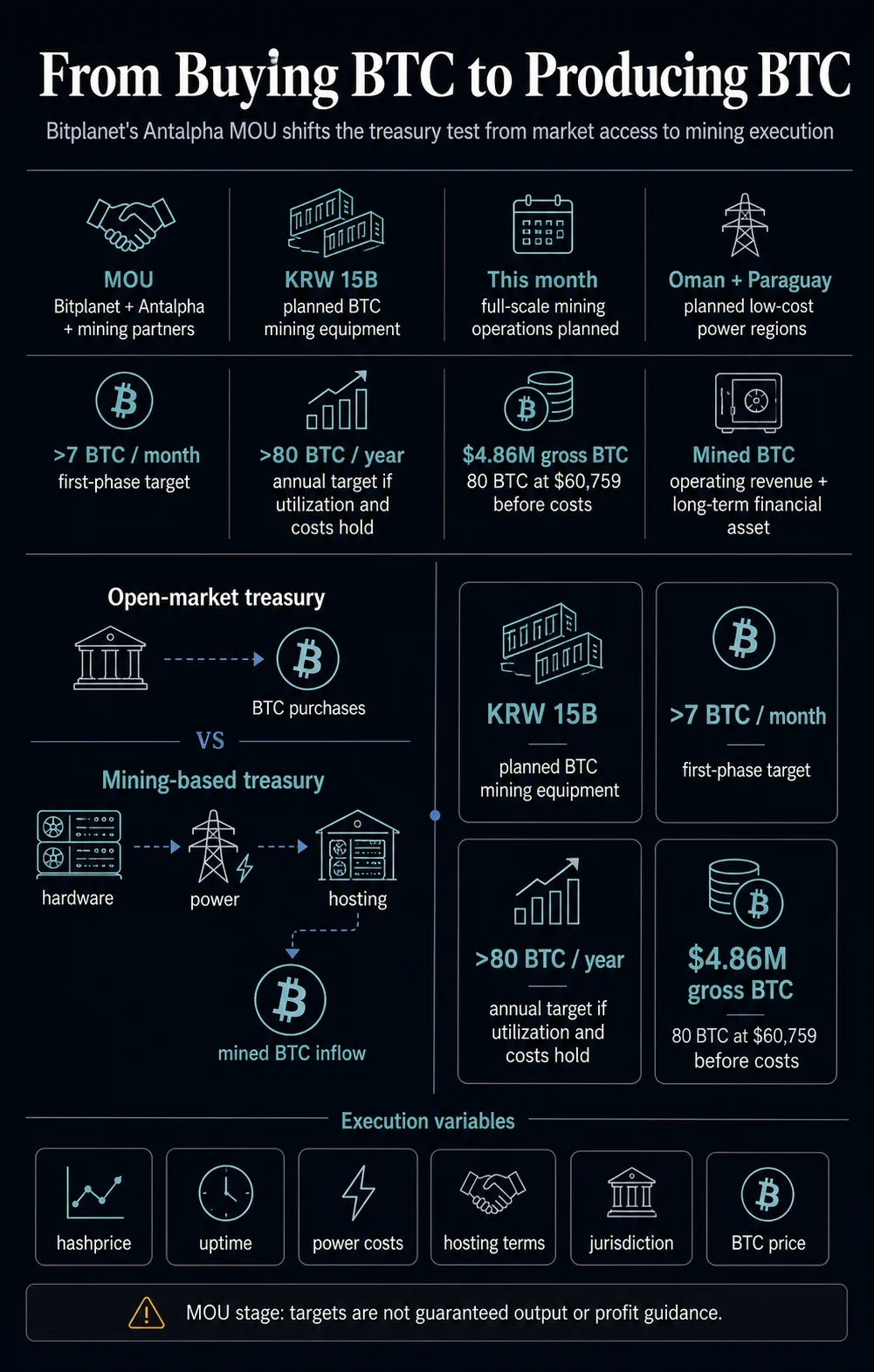
South Korean technology and investment firm Bitplanet has announced a fundamental shift in its corporate digital asset strategy, moving from a passive Bitcoin treasury model to an active operational mining framework. In a formal release issued on June 24, the company confirmed the signing of a strategic memorandum of understanding (MOU) with Antalpha, a Nasdaq-listed specialist in Bitcoin mining finance, and several key mining ecosystem partners. This agreement marks the beginning of Bitplanet’s transition into a producer of Bitcoin, aiming to transform its balance sheet from a static repository of purchased assets into a dynamic source of recurring mined revenue.
Under the terms of the MOU, Bitplanet will commit KRW 15 billion (approximately $10.8 million USD) toward the acquisition of high-performance Bitcoin mining equipment. The company anticipates the commencement of full-scale mining operations within the current month, signaling an aggressive timeline for deployment. This pivot represents a departure from the traditional corporate treasury playbook—famously championed by firms like MicroStrategy—which focuses on raising capital through debt or equity to purchase Bitcoin on the open market. Instead, Bitplanet is building a "recurring production loop" where hardware and infrastructure serve as the primary engines for balance sheet growth.
The Evolution of Bitplanet’s Bitcoin Strategy
The transition to mining is the latest phase in Bitplanet’s multi-stage effort to establish itself as a dominant institutional player in the cryptocurrency space. Previously, the company gained market attention through its acquisition of SGA, a move intended to bolster its path toward becoming one of the top ten corporate Bitcoin holders globally. Following that acquisition, Bitplanet initiated a daily Bitcoin accumulation strategy, which included a high-profile purchase of 93 BTC as part of a long-term goal to reach a 10,000 BTC treasury.
While the initial strategy relied on capital-market access and open-market purchases, the new mining-based model introduces a different set of operational variables. Bitplanet’s leadership has indicated that the shift is designed to mitigate the risks associated with external financing and market volatility. By producing its own Bitcoin, the company aims to generate "operating revenue" that can be managed as a long-term financial asset. This revenue will be allocated across three primary categories: liquidity reserves, risk-hedging funds, and reinvestment capital for future infrastructure expansion.
Strategic Alliance with Antalpha and Antalpha Prime
The partnership with Antalpha provides Bitplanet with the financial and logistical scaffolding necessary to enter the capital-intensive mining sector. Antalpha, which trades on the Nasdaq under the ticker ANTA following its initial public offering in May 2025, has positioned itself as a bridge between traditional finance and the Bitcoin mining industry. The company’s core business revolves around mining-specific financial products, including equipment-backed loans, hashrate-linked credit lines, and supply-chain financing.
Through its Antalpha Prime platform, the firm offers specialized lending products where mined Bitcoin can be used as collateral to cover operational expenses such as hosting fees, maintenance costs, and power bills. For Bitplanet, this arrangement is critical. Mining requires significant upfront capital for hardware, shipping, and installation before a single satoshi is produced. The Antalpha partnership allows Bitplanet to leverage its equipment and future production to manage cash flow, potentially reducing the need for further dilutive equity raises or high-interest traditional debt.
However, recent financial data from Antalpha suggests a complex market environment. In its first-quarter 2026 results, Antalpha reported a 3% year-over-year decline in the total value of loans facilitated and a 25% drop in supply-chain total value locked (TVL). Despite these headwinds, the company saw a 52% increase in revenue, suggesting a shift toward higher-margin services. Bitplanet’s reliance on this ecosystem will be a significant test of execution within a lending market that is currently experiencing pockets of softening demand.
Operational Logistics: Oman and Paraguay
A central pillar of Bitplanet’s mining thesis is the selection of overseas deployment sites. The company has identified Oman and Paraguay as its primary hubs for the first phase of operations. These regions were chosen for their competitive electricity costs and relatively stable regulatory and power environments.
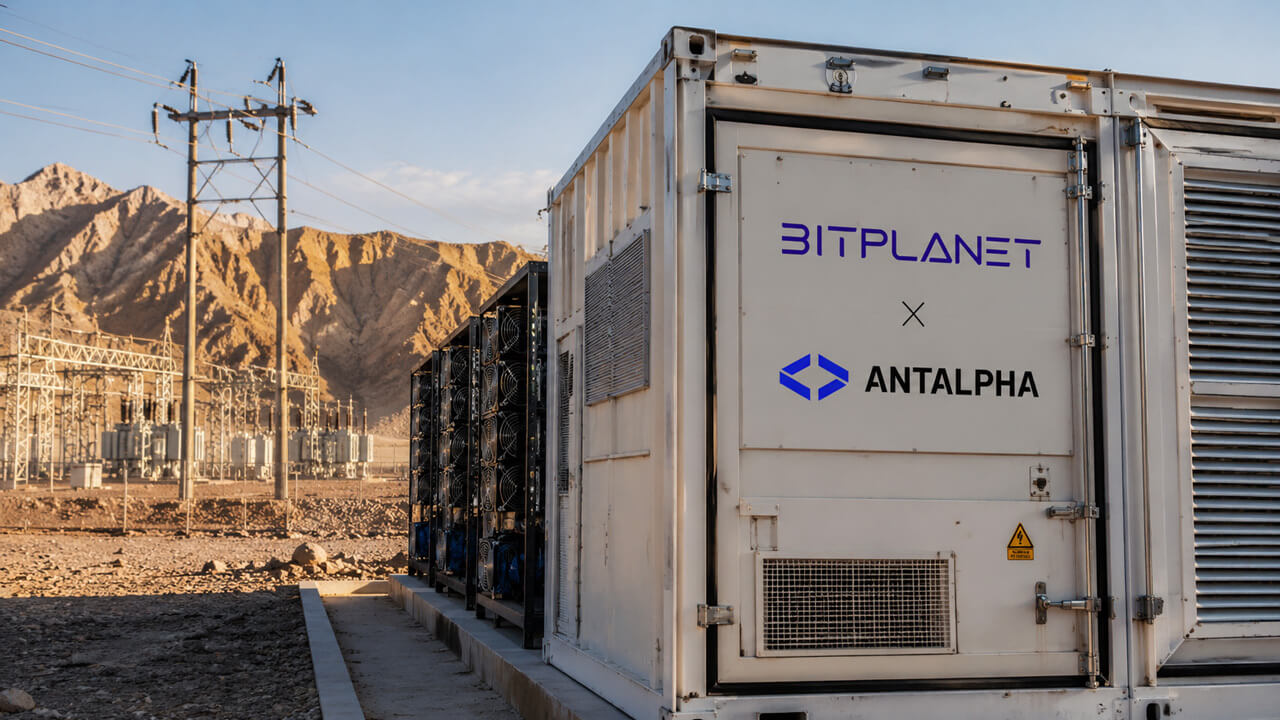
Paraguay has increasingly become a destination for international miners due to its surplus of renewable hydroelectric energy, largely sourced from the Itaipu Dam. Meanwhile, Oman has made strategic strides in attracting digital asset infrastructure as part of its broader economic diversification goals. Bitplanet plans to utilize a colocation model in these regions, combining outsourced operations with joint-venture structures.
This geographical strategy is not without risk. While low-cost power is the lifeblood of mining profitability, the success of overseas deployments depends on hosting reliability, equipment uptime, and local political stability. Furthermore, the share of mined Bitcoin that must be sold to cover local taxes, customs, and service fees will directly impact the company’s ability to retain coins for its treasury.
Quantitative Projections and Economic Realities
Bitplanet has provided specific production targets for the initial phase of its mining program. The company expects its KRW 15 billion equipment fleet to produce more than 7 BTC per month, totaling over 80 BTC annually. Based on a Bitcoin price of approximately $61,000, a gross annual output of 80 BTC would represent roughly $4.9 million in revenue.
It is important to note that this $4.9 million figure is a gross revenue marker and does not account for the significant costs associated with mining. Investors will need to monitor the "all-in sustaining cost" (AISC) per Bitcoin produced, which includes:
- Electricity and hosting fees.
- Financing costs for the KRW 15 billion investment.
- Maintenance and hardware repairs.
- Corporate overhead and taxes.
- Depreciation of ASIC (Application-Specific Integrated Circuit) hardware.
The current industry backdrop adds a layer of difficulty to these projections. Data from the Hashrate Index shows that the Bitcoin "hashprice"—a measure of the daily revenue a miner can expect from a specific amount of hashrate—recently hovered around $30.72 per petahash (PH). This is a significant decline from May 2026, when hashprice averaged $36.60 before fading to $33.58 due to rising network difficulty.
Furthermore, a mid-June 2026 report from VanEck’s Digital Assets research team estimated total monthly miner revenue at $1.12 billion, a 26% decrease year-over-year. This compression has led many established miners to sell their Bitcoin holdings or pivot toward providing infrastructure for Artificial Intelligence (AI) and high-performance computing (HPC) to diversify their revenue streams. Bitplanet is entering the fray at a time when pure-play mining is under intense margin pressure.
Regulatory Context in South Korea
Bitplanet’s move is also significant within the context of the South Korean regulatory landscape. For years, the South Korean Financial Services Commission (FSC) maintained a restrictive stance on corporate virtual-asset transactions, a policy that dates back to 2017. However, in 2025, the FSC indicated that these restrictions were being lifted in stages, allowing domestic corporations to engage more freely with the digital asset economy.
By establishing its mining operations overseas while remaining a South Korean-listed entity, Bitplanet is navigating a complex legal path. The company is effectively testing the boundaries of how a Korean firm can integrate Bitcoin production into its formal operating revenue. Success in this area could provide a blueprint for other South Korean corporations looking to gain exposure to Bitcoin without the regulatory hurdles often associated with direct open-market trading on domestic exchanges.
Implications for Shareholders and the Broader Market
The transition from a "buy-and-hold" treasury to a "mine-and-hold" operations model shifts the criteria by which investors must evaluate Bitplanet. The primary metric of success is no longer just the total amount of BTC on the balance sheet, but the efficiency of the production cycle.
If Bitplanet can maintain a low cost of production, it will be able to accumulate Bitcoin organically, even during periods when capital markets are closed or unfavorable for raising new funds. This provides a level of self-sufficiency that passive treasury holders lack. Conversely, if operational costs exceed the market price of Bitcoin, the mining program could become a drain on the company’s cash reserves, forcing the sale of previously accumulated assets to fund ongoing operations.
The comparison to large-scale public miners is telling. For example, Bitdeer, a major industry player, reported mining 921 BTC in May 2026 alone. While Bitplanet’s target of 80 BTC per year is modest by comparison, the fundamental challenge remains the same: coin retention. The market will closely watch Bitplanet’s future disclosures for evidence of deployment success, including:
- Finalized hosting and joint-venture contracts in Oman and Paraguay.
- Verified hashrate and monthly production reports.
- Transparency regarding the percentage of mined BTC retained versus sold for expenses.
- Updates on the performance of the Antalpha-backed financing structures.
As the Bitcoin mining industry continues to mature and consolidate, Bitplanet’s strategic pivot represents a bold attempt to merge corporate treasury management with industrial-scale production. The coming months will determine whether this operational loop can deliver the sustainable growth the company envisions or if the complexities of the global mining stack will pose too great a challenge for a firm transitioning away from a traditional financial model.