admin
admin
The global cryptocurrency landscape continues to evolve at a rapid pace, marked by sovereign states increasingly looking to digital assets as a solution to domestic economic challenges, and established crypto industry players diversifying their business models to navigate shifting market dynamics. In a significant development, Bolivia is actively exploring a regulatory framework to formally recognize Tether’s USDt (USDT) as a legitimate payment currency, a move directly spurred by a persistent shortage of U.S. dollars within its borders. This initiative underscores a growing trend in emerging markets where economic instability and a scarcity of hard currency are accelerating stablecoin adoption. Concurrently, the Bitcoin mining sector is undergoing a profound transformation, with many operators pivoting towards Artificial Intelligence (AI) infrastructure to unlock new revenue streams. This strategic shift, however, has not shielded them from heightened investor scrutiny, particularly concerning insider stock sales and governance practices, even as some, like CleanSpark, secure massive data center leases. Adding another dimension to the industry’s diversification, Bitmine Immersion Technologies has showcased the impressive revenue potential of Ethereum staking, generating tens of millions of dollars in a single quarter.
Bolivia’s Economic Turmoil and the Official Embrace of Stablecoins
Bolivia, a nation grappling with severe economic pressures, is poised to make a landmark decision that could profoundly integrate digital assets into its national financial system. The country’s proposal to formally recognize Tether’s USDT as a payment currency represents a significant policy shift, moving from a previous stance of caution and prohibition towards a pragmatic embrace of stablecoins. This move is not merely a technological adoption but a direct response to a deepening economic crisis characterized by a critical shortage of U.S. dollars.
The Genesis of Bolivia’s Dollar Shortage
For years, Bolivia maintained a fixed exchange rate for its national currency, the boliviano, against the U.S. dollar, a policy designed to foster stability and control inflation. However, a confluence of factors, including declining foreign exchange reserves primarily due to a drop in natural gas exports (a major revenue source), a widening trade deficit, and increased public spending, put immense pressure on this peg. Earlier this year, the government was compelled to abandon its long-standing currency peg, a decision that immediately triggered market anxiety and exacerbated the dollar shortage. The official exchange rate has since diverged significantly from the parallel market rate, where dollars fetch a premium, creating an urgent demand for dollar-denominated alternatives. This economic backdrop has created fertile ground for the organic adoption of stablecoins like USDT, which effectively function as digital dollars, offering a more accessible and often more liquid alternative to physical U.S. currency in a constrained market.
A Chronology of Policy Shifts
Bolivia’s journey with cryptocurrencies has been circuitous. Initially, the country adopted a restrictive stance, with a blanket ban on cryptocurrencies implemented in 2014, citing concerns about financial stability and consumer protection. This prohibition largely isolated Bolivia from the burgeoning global crypto economy for nearly a decade. However, the escalating dollar crisis appears to have forced a re-evaluation of this policy. In a significant turn, the ban was officially lifted in 2024. This was followed by a pledge from the new administration to actively integrate cryptocurrencies and stablecoins into the financial system, recognizing their potential utility in a dollar-scarce environment. The current proposal to recognize USDT, articulated by Economy and Public Finance Minister Jose Gabriel Espinoza, is the latest and most concrete step in this policy evolution. Espinoza has indicated that the framework would allow USDT to circulate alongside the boliviano and the U.S. dollar for both payments and savings, signaling a dual-currency approach with a digital asset component.
Navigating Regulatory Challenges and Implications
While the potential benefits of USDT adoption for Bolivia are clear – providing a stable medium of exchange, facilitating remittances, and offering a hedge against local currency depreciation – the path is not without regulatory hurdles. The proposed framework is under review and will necessarily include robust anti-money laundering (AML) safeguards. This is particularly crucial given Bolivia’s current status on the Financial Action Task Force (FATF) gray list, which designates countries with strategic deficiencies in their AML/CFT regimes. Ensuring compliance with international financial standards will be paramount to prevent illicit financial flows and to avoid further international isolation.

The implications for Bolivia are profound. Should the proposal be enacted, it would position Bolivia as one of the pioneering nations to formally integrate a major stablecoin into its official financial infrastructure. This move could serve as a blueprint for other emerging economies facing similar currency crises, particularly in Latin America, where economic instability often drives citizens towards alternative assets. The adoption of USDT could enhance financial inclusion, offer greater transactional efficiency, and potentially alleviate some of the pressures on the central bank’s foreign reserves by providing an alternative conduit for dollar-denominated transactions. However, it also introduces new complexities related to monetary policy, financial oversight, and technological infrastructure, requiring careful implementation and continuous monitoring.
Bitcoin Miners’ Strategic Pivot to AI: Opportunity Meets Scrutiny
The Bitcoin mining industry, historically characterized by its singular focus on validating transactions and securing the Bitcoin network, is undergoing a dramatic strategic pivot. Faced with evolving economic realities, many prominent mining companies are now aggressively diversifying into Artificial Intelligence (AI) and high-performance computing (HPC) infrastructure. While this shift promises lucrative new revenue streams, it has simultaneously attracted intense investor scrutiny, particularly regarding corporate governance and the transparency of insider stock transactions.
Post-Halving Pressures and the Lure of AI
The economic landscape for Bitcoin miners fundamentally shifted with the fourth Bitcoin halving in April 2024. This pre-programmed event slashed the block reward for miners by 50%, significantly reducing their primary revenue source. Coupled with rising energy costs, increasing network difficulty, and volatile Bitcoin prices, the profitability of traditional Bitcoin mining has come under considerable pressure. This environment has compelled miners to seek alternative avenues for growth and sustainability.
The pivot to AI infrastructure is a natural evolution for many mining companies. Their core competencies—large-scale energy procurement, efficient data center construction and operation, and managing vast arrays of specialized computing hardware—are highly transferable to the demands of AI and HPC. AI models, particularly large language models (LLMs), require immense computational power for training and inference, often utilizing energy-intensive Graphics Processing Units (GPUs) housed in specialized data centers. Bitcoin miners, already possessing the physical infrastructure, power agreements, and operational expertise, are well-positioned to repurpose or expand their facilities to host AI workloads, thereby monetizing their existing assets in a new, high-growth sector. This strategy aims to unlock new revenue streams that are less directly tied to Bitcoin’s price volatility, offering a path to greater financial stability and diversification.
Investor Scrutiny and Governance Concerns
Despite the clear strategic rationale, the rapid embrace of AI by Bitcoin miners has not been uniformly welcomed by investors. A cooling enthusiasm for the sector, coupled with lingering concerns about corporate governance, has led to increased scrutiny, particularly regarding insider stock sales. According to Blocksbridge Consulting, a number of executives from major mining firms, including TeraWulf, Cipher Digital, Riot Platforms, and Core Scientific, have disclosed significant stock sales in recent months. Many of these sales were executed under Rule 10b5-1 trading plans, which allow insiders to pre-arrange sales to avoid accusations of trading on non-public information. However, the timing and volume of these sales, especially during a period of strategic reorientation and market volatility, have raised eyebrows.
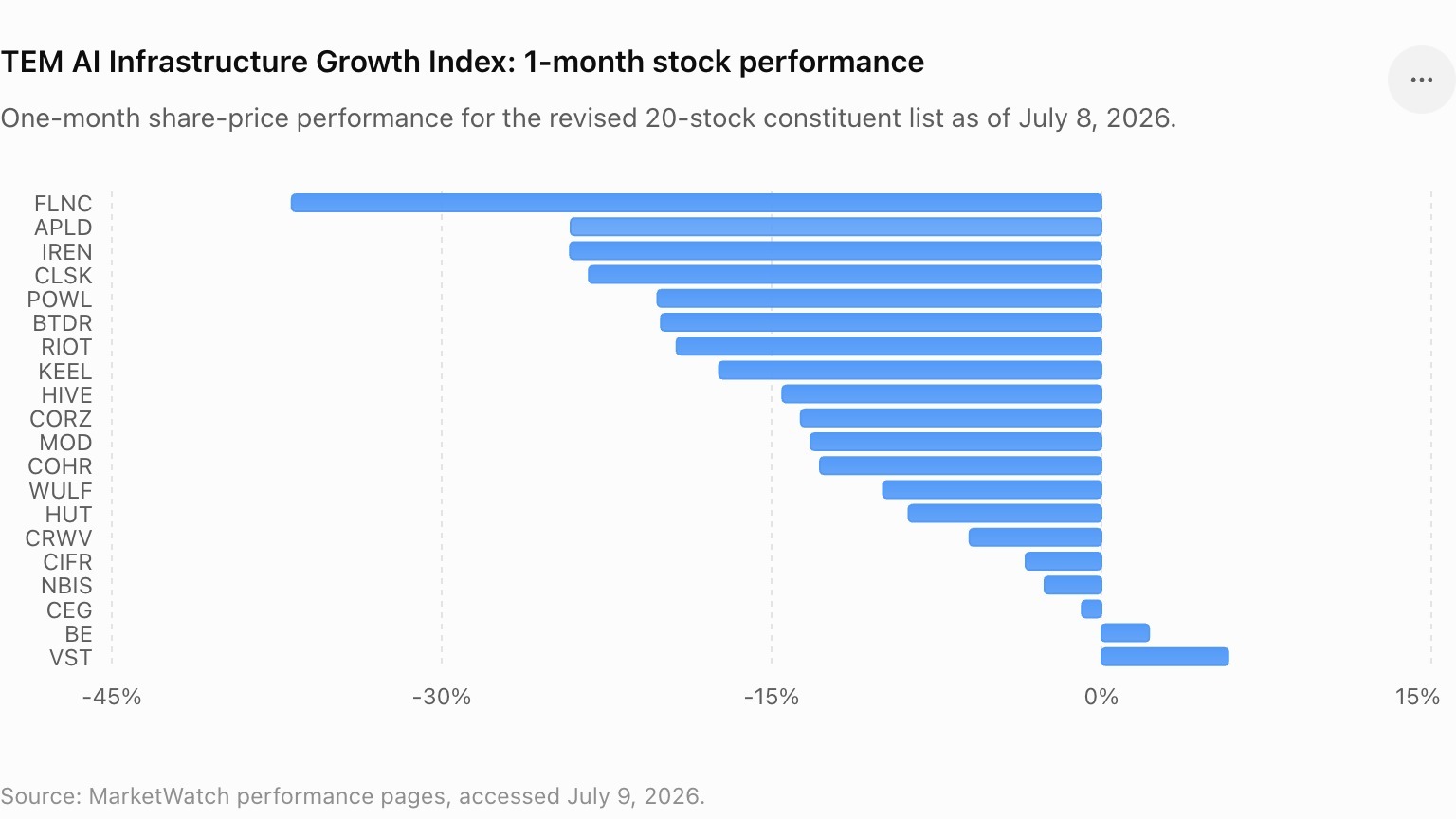
Adding to the concern, strategic investors have also begun trimming their holdings. Notably, Tether, the issuer of USDT, reduced its stake in Bitdeer following the company’s AI-driven stock rally. This collective action by insiders and large investors suggests a cautious, if not skeptical, view on whether the immediate benefits of the AI pivot are truly flowing to public shareholders or are primarily benefiting those with insider knowledge. The TEM AI Infrastructure Growth Index, a benchmark for companies involved in this sector, has reflected this skepticism, falling by 16% over the past month. Blocksbridge Consulting emphasizes that investors are now looking beyond the compelling "AI growth story" to assess the tangible, long-term benefits for all shareholders, demanding greater transparency and accountability from management.

CleanSpark’s Bold Move into Data Centers
Amidst this landscape of strategic shifts and investor skepticism, CleanSpark, a prominent Bitcoin miner, has distinguished itself with a particularly aggressive and successful move into AI infrastructure. The company’s shares rallied by as much as 22% following the announcement of a monumental 20-year data center lease agreement in Sandersville, Georgia. This deal, signed with an undisclosed investment-grade global technology company, covers a 175-megawatt data center and is projected to generate up to $6.6 billion in contracted revenue. With two potential five-year extension options, the total value of the contract could reach an astounding $11.6 billion.
Under the terms of the agreement, the tenant will install its computing equipment at the Sandersville site, with phased deliveries expected to commence in the fourth quarter of 2027. This long-term, high-value contract underscores CleanSpark’s commitment to high-performance computing and AI infrastructure, providing a stable and substantial revenue stream that significantly diversifies its business beyond Bitcoin mining. Unlike many publicly traded miners that have reduced their Bitcoin holdings to shore up liquidity post-halving, CleanSpark has largely maintained its position as a net accumulator of Bitcoin, despite some strategic sales earlier in the year to fund operations. This dual strategy—maintaining a strong Bitcoin treasury while aggressively pursuing AI data center revenue—positions CleanSpark uniquely in the evolving digital asset and compute infrastructure landscape. The market’s positive reaction to the lease agreement suggests confidence in CleanSpark’s ability to execute its diversification strategy effectively and generate substantial value for its shareholders.
Bitmine’s Ethereum Staking: A Robust Revenue Model
While Bitcoin miners explore new horizons in AI, other segments of the crypto industry are demonstrating the strength of alternative revenue models. Bitmine Immersion Technologies has emerged as a notable example, showcasing the significant and stable income potential derived from Ethereum staking and validation. This diversification beyond traditional mining highlights the multifaceted nature of the blockchain economy and the opportunities for companies to generate revenue from different protocols and services.
Capitalizing on Ethereum’s Proof-of-Stake Transition
Bitmine Immersion Technologies reported an impressive $45.7 million in revenue from Ethereum staking and validation during the quarter ending May 31. This remarkable figure demonstrates the resilience and profitability of its business model, even during periods when Ether (ETH) prices may be under pressure. The company’s success is largely attributable to its strategic pivot towards capitalizing on Ethereum’s transition to a Proof-of-Stake (PoS) consensus mechanism, which eliminated energy-intensive mining in favor of staking.
Ethereum staking involves locking up ETH to support the network’s security and operations, for which stakers earn rewards. Bitmine’s institutional Ethereum staking platform, MAVAN, launched in March, has been instrumental in this success. MAVAN was built on the acquisition of validator operator Pier Two Holdings, providing Bitmine with established infrastructure and expertise. The company has aggressively staked approximately 85% of its substantial Ether holdings, amounting to roughly 4.9 million ETH, making it a dominant player in the Ethereum staking ecosystem.
Financial Performance and Future Outlook
The financial results underscore the efficacy of Bitmine’s strategy: Ethereum staking accounted for a staggering 98% of the company’s revenue for the quarter. In contrast, self-mining Bitcoin contributed a mere $624,000, and consulting services added $168,000. This stark contrast highlights the significant revenue generation capabilities of large-scale institutional staking operations compared to other crypto-related activities in the current market environment.
Chairman Tom Lee has expressed strong optimism regarding Bitmine’s future, stating that the company now stakes more Ether than any other entity globally. He projects annualized staking rewards of $284 million once its entire Ether holdings are fully staked through the MAVAN platform and its network of partners. This projection positions Ethereum staking as a core and highly lucrative component of Bitmine’s long-term financial strategy, demonstrating how specialized services within the blockchain ecosystem can yield substantial, recurring revenue.
The success of Bitmine Immersion Technologies in Ethereum staking provides a compelling case study for the broader crypto industry. It illustrates the viability of diversified revenue streams beyond Bitcoin mining and the significant financial opportunities present in the evolving proof-of-stake landscape. As the blockchain industry matures, such specialized and capital-efficient operations are likely to gain increasing prominence, offering investors exposure to different facets of the digital asset economy.
The evolving narratives from Bolivia’s governmental embrace of stablecoins to the strategic pivots of Bitcoin miners and the robust performance of Ethereum stakers collectively paint a vivid picture of a dynamic and increasingly sophisticated cryptocurrency ecosystem. These developments underscore the growing real-world utility of digital assets, their increasing integration into national economies, and the continuous innovation driving the industry forward, albeit with ongoing challenges related to regulation, governance, and market volatility.