admin
admin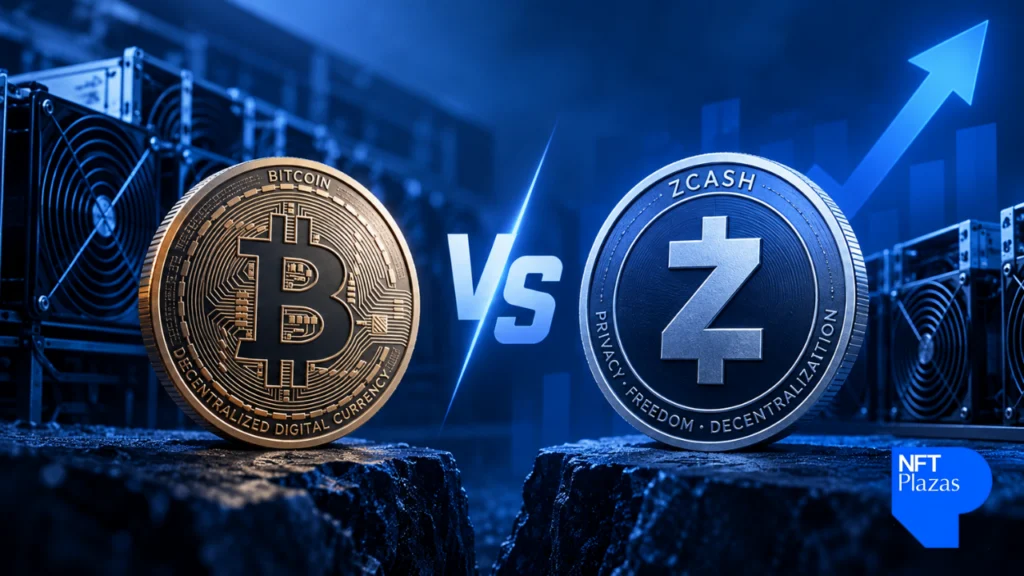
A groundbreaking new analysis from Grayscale Research indicates that Zcash (ZEC) mining has become demonstrably more profitable for individual operators when compared to Bitcoin (BTC) mining, despite Bitcoin’s continued overwhelming dominance in terms of overall industry scale and collective rewards. This revelation highlights a significant, albeit nuanced, shift in the competitive landscape of proof-of-work cryptocurrency mining, drawing attention to efficiency metrics over sheer volume.
The comprehensive report, spearheaded by Grayscale Research director Zach Pandl, meticulously details a sharp divergence between the economics of the two prominent proof-of-work networks. While Bitcoin continues to generate a vastly larger sum of money for its global network of miners collectively, Zcash currently offers substantially higher returns on investment per individual mining machine and, critically, per unit of electricity consumed. This emergent trend coincides with Zcash (ZEC) experiencing one of its most robust price rallies in recent memory, propelling its value significantly upward and, consequently, attracting a substantial influx of computing power to its network.
The Enduring Hegemony of Bitcoin’s Reward Pool
Bitcoin, as the pioneering and largest cryptocurrency, unequivocally maintains its unparalleled position when measured by the aggregate value distributed to its vast network of miners. Grayscale’s estimations place Bitcoin miners’ collective daily rewards at an staggering figure of approximately $35 million. In stark contrast, Zcash miners collectively generate around $2 million in daily rewards. This immense disparity is a direct reflection of Bitcoin’s significantly larger market capitalization, its pervasive network activity, and its colossal, globally distributed mining infrastructure, which has been built over more than a decade. Bitcoin’s status as a global reserve asset in the digital realm, coupled with its robust transaction volume and widespread adoption, solidifies its position as the king of the crypto mining ecosystem by total economic output.
However, the analytical lens shifts dramatically when the focus moves from the collective total to the performance of individual machines and their operational efficiency. According to Grayscale’s meticulous calculations, a typical Zcash mining rig is currently capable of generating approximately twice the daily revenue of a comparable Bitcoin mining machine. This operational advantage becomes even more pronounced and economically compelling when the crucial factor of electricity consumption is introduced into the equation. Under Grayscale’s carefully defined assumptions, Zcash mining yields an astonishing approximate four times as much revenue per megawatt-hour (MWh) as Bitcoin mining. The research firm even drew a compelling comparison, noting that Zcash mining, under current conditions, can generate higher revenue per unit of electricity than some artificial intelligence (AI) and high-performance computing (HPC) cloud services, underscoring its exceptional energy efficiency in revenue generation.
It is crucial to contextualize these figures; they do not imply that Zcash mining is four times more profitable in every conceivable market or for every operator. The ultimate profitability for individual operators remains highly contingent on a multitude of variables. These include, but are not limited to, fluctuating local electricity prices, the initial capital expenditure on hardware, ongoing cooling costs, regular maintenance expenses, varying pool fees, and the ever-changing network difficulty. Each of these factors can materially alter the economic viability and net profit margins for any mining operation.

ZEC’s Historic Price Rally: A Game-Changer for Mining Economics
The profound improvement in Zcash mining economics is inextricably linked to, and largely a direct consequence of, the cryptocurrency’s recent and dramatic price appreciation. In a remarkable surge, ZEC recently ascended to a valuation of approximately $1,155, marking its highest price point in roughly nine years. This sustained and powerful rally has firmly established Zcash as one of the strongest-performing large-cap cryptocurrencies in the market during this period.
In a striking illustration of its momentum, ZEC recorded a gain of over 14% within a single week at one juncture, while Bitcoin, its larger counterpart, experienced a decline of nearly 3% over the identical period. This exceptional performance propelled ZEC’s market capitalization to an impressive approximately $19.5 billion, signalling renewed investor confidence and significant market interest. The rally has also pushed Zcash well beyond the levels it held earlier in 2026, demonstrating a significant upward trajectory throughout the year.
Grayscale’s report highlights that these substantial price gains for ZEC have served as a powerful incentive for miners, encouraging them to deploy additional computing power onto the network. This direct correlation is evidenced by a dramatic increase in the network’s total mining activity, which has surged by more than 2.5 times since the beginning of the year. This creates a vital and self-reinforcing feedback loop for the Zcash network: higher ZEC prices inherently make mining more economically attractive, which in turn encourages a greater number of miners to participate. While an increase in mining power naturally intensifies competition among miners, it concurrently and crucially strengthens the overall security and robustness of the blockchain network. Zach Pandl of Grayscale Research succinctly described this relationship as "potentially reinforcing," where stronger mining economics directly support enhanced network security, which can then help to sustain and even amplify investor interest.
The Technical Divide: Specialized Hardware and Algorithm Limitations
An essential caveat to any direct comparison between Bitcoin and Zcash mining profitability lies in the fundamental technical distinctions between the two networks. These differences impose significant limitations on the ability of miners to simply switch their operational focus based on fluctuating profitability. The two networks employ entirely different mining algorithms and, consequently, necessitate specialized hardware for their respective operations. Bitcoin, for instance, relies exclusively on the SHA-256 algorithm and requires Application-Specific Integrated Circuits (ASICs) specifically designed for this algorithm. In contrast, Zcash utilizes the Equihash algorithm, which also demands specialized ASIC hardware engineered for its unique computational requirements. As a direct consequence, a Bitcoin miner cannot simply reconfigure or redirect a Bitcoin ASIC to mine Zcash when ZEC’s profitability appears more attractive, and vice versa.
To ensure a fair and relevant comparison, Grayscale’s analysis meticulously selected specific hardware models for its evaluation. For Bitcoin mining, the firm utilized data from a Bitmain S23 Hydro miner, a high-performance ASIC designed for the SHA-256 algorithm. For Zcash mining, the analysis referenced data from a Bitmain Z15 Pro Zcash miner, an ASIC optimized for the Equihash algorithm. The calculations underpinning Grayscale’s findings were based on several specific assumptions: an electricity cost of $0.05 per kilowatt-hour, an assumption of full uptime for the mining rigs, and the exclusion of transaction-fee revenue in the primary revenue calculations.

It is paramount to reiterate that these estimates primarily focus on mining revenue rather than an operator’s final net profit. The transition from revenue to net profit involves a complex array of additional operational costs that can materially reduce actual returns. These include, but are not limited to, the significant upfront costs of hardware acquisition and its subsequent depreciation over time, potential financing costs for equipment, facility costs (rent, property taxes), comprehensive cooling infrastructure and its associated energy drain, ongoing maintenance and repair of sophisticated machinery, and various pool fees charged by mining pools. Electricity, while factored into the revenue-per-MWh metric, remains an overarching critical factor. A mining operation situated in a region with significantly higher electricity prices than the assumed $0.05/kWh may find that the apparent profitability advantage of Zcash considerably diminishes or even disappears entirely once these higher operating expenses are incorporated into the financial model.
The Sustainability Question: Zcash’s Smaller Reward Pool and Hashrate Dynamics
The most pertinent question for prospective Zcash miners and market observers alike is whether the current, significant profitability advantage can be sustained over the long term. This concern is primarily rooted in the inherently smaller scale of Zcash’s daily mining rewards compared to Bitcoin’s. With approximately $2 million distributed across its entire mining network each day, the pool of available rewards for Zcash miners is, by comparison, relatively constrained.
This limited reward pool introduces a critical dynamic: as more miners are drawn to the network by the allure of higher individual profitability and consequently deploy more computing power (increasing the network’s hashrate), the same finite reward pool must be divided among a greater number of participants. This inverse relationship means that rising hashrate and network difficulty can, and often do, reduce the amount of ZEC earned by each individual machine, even if the market price of ZEC remains stable or continues to appreciate.
This dynamic is already distinctly observable in Zcash’s rapidly expanding hashrate. The more than 2.5-fold increase in mining activity observed this year serves as a compelling real-world demonstration of how quickly miners can respond to improved economic incentives, leading to an intensification of competition within the network. Bitcoin, despite its immense scale, is not immune to this fundamental economic mechanism. Its much larger mining ecosystem and significantly greater reward pool, however, operate on a vastly different scale, providing a larger buffer against rapid dilution of individual rewards, though rising difficulty remains a constant factor. The sustainability of Zcash’s individual profitability advantage will thus heavily depend on a delicate balance between continued ZEC price appreciation, the rate at which new mining hardware enters the network, and the subsequent adjustments in network difficulty.
Institutional Validation and Broader Market Implications
The burgeoning Zcash mining boom is unfolding concurrently with, and is likely being reinforced by, a growing wave of institutional interest in the privacy-focused cryptocurrency. Grayscale’s own Zcash investment product, trading under the ticker ZCSH, commenced trading on NYSE Arca on August 25. This significant development marked a new chapter for Zcash, providing institutional investors with regulated access to the asset. The asset manager reported that the fund attracted approximately $179 million in net assets during its initial 11 trading days, propelling its total assets under management (AUM) above the $700 million mark.

Grayscale proudly announced that ZCSH ranked among the top 1% of nearly 4,000 exchange-traded products (ETPs) by net asset growth during this period, further describing it as the fastest-growing altcoin exchange-traded product by net assets, based on the issuer’s proprietary data. This robust institutional adoption and rapid capital inflow into ZCSH underscore a profound shift in how traditional finance views and engages with Zcash. The synergistic combination of surging institutional demand, sustained price appreciation, and improving mining economics has collectively fostered a significantly more favorable and dynamic environment for Zcash than it had experienced earlier in the year. This convergence suggests a maturation of the Zcash ecosystem, moving beyond niche interest to garnering serious consideration from larger capital allocators.
For the broader cryptocurrency mining industry, this development carries several implications. It could signal a diversification of mining investments beyond the traditional Bitcoin-centric approach, potentially leading to increased development and deployment of specialized hardware for other profitable altcoins. It also challenges the long-held perception that only Bitcoin mining offers significant, scalable returns, opening up new avenues for operators with specific cost structures and strategic objectives.
Concluding Insights: Efficiency, Not Size, Defines the Current Opportunity
Grayscale’s seminal research does not, by any means, suggest that Zcash has surpassed or is on the verge of surpassing Bitcoin as the dominant mining business overall. Bitcoin remains overwhelmingly larger in terms of total mining revenue, overall market capitalization, and the sheer scale of its global mining infrastructure. Instead, the analysis meticulously highlights a different, yet equally crucial, metric: the efficiency with which an individual mining machine can generate revenue relative to its operational energy consumption.
On this specific, performance-oriented measure, Zcash currently demonstrates a clear and compelling advantage. Whether this advantage can be sustained and for how long will critically depend on a complex interplay of factors: the continued trajectory of ZEC’s market price, the prevailing electricity costs for miners, the dynamic adjustments in network mining difficulty, and the rate at which new, efficient Zcash mining hardware is introduced to the network. The observed rapid growth in Zcash’s hashrate—a direct indicator of increased mining activity—strongly suggests that miners are already actively responding to this emerging economic opportunity.
For the time being, however, Grayscale’s conclusion is unambiguous and straightforward: Bitcoin continues to reign as the undisputed largest mining network in the cryptocurrency ecosystem, but Zcash is, without question, offering considerably superior mining economics for individual machines and demonstrating remarkable efficiency in terms of electricity consumption. This distinction presents a compelling narrative for miners looking beyond Bitcoin for lucrative opportunities and underscores the evolving, dynamic nature of the cryptocurrency mining landscape.