admin
admin
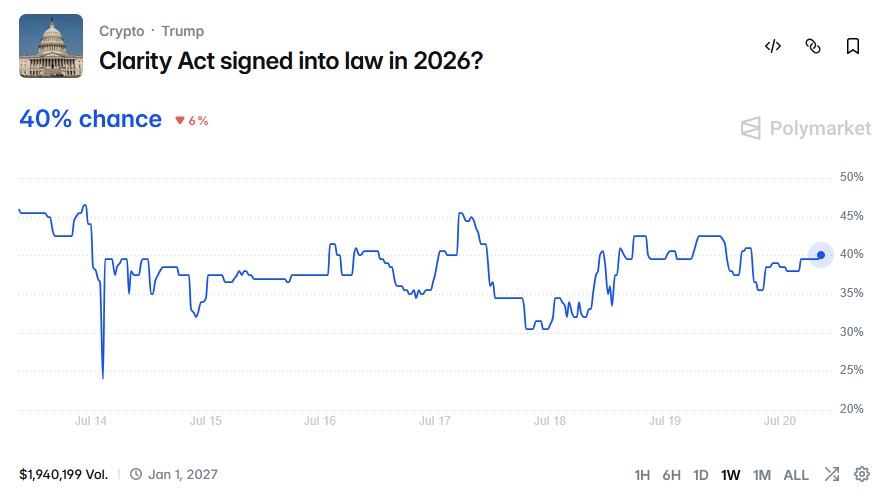
The complex interplay of political ethics, burgeoning market sectors, and evolving regulatory landscapes continues to define the trajectory of the digital asset industry. At a recent industry event, Summer Mersinger, CEO of the Blockchain Association and a former commissioner at the US Commodity Futures Trading Commission (CFTC), pointedly articulated a significant concern for the crypto sector, stating, "Ethics is the big elephant in the room." This candid remark underscores a growing apprehension among industry stakeholders that political deliberations, particularly those influenced by high-profile figures like former President Donald Trump, could inadvertently impede the progress of crucial legislative efforts aimed at establishing clear market structures for digital assets.
Mersinger’s statement highlights a fundamental tension: while the industry seeks pragmatic regulatory frameworks, the political sphere often becomes entangled in broader ethical debates. "For my members and what we are advocating for on the Hill… look, whatever you decide on ethics, that’s really not our concern. That is politics. That’s Congress. That’s elected officials. But please don’t let it kill all the hard work that we put in the rest of the bill," she urged. This sentiment reflects a widespread industry desire to separate the technical and economic imperatives of digital asset regulation from the political controversies that can derail legislative momentum. The implicit reference to Trump’s ethics likely stems from past and ongoing discussions surrounding his financial dealings, potential conflicts of interest, and the broader political climate, which can create bipartisan friction and slow down the legislative process for bills like the proposed CLARITY Act, designed to provide much-needed regulatory clarity for various blockchain applications and cryptocurrencies. The crypto industry, representing a rapidly growing segment of the global economy with significant investment and job creation potential, views regulatory clarity as paramount for fostering innovation and ensuring consumer protection within the United States. Delays in establishing such frameworks risk pushing technological leadership and capital flight to more accommodating jurisdictions.
Prediction Markets Defy Downturn, Face Global Regulatory Scrutiny
While legislative progress grapples with political headwinds, certain sectors within the crypto economy are demonstrating remarkable resilience. Prediction markets, in particular, recorded their strongest quarter on record in Q2, generating a staggering $113.8 billion in notional volume. This surge occurred despite a broader downturn in the crypto market, where spot trading volume across the top 10 centralized exchanges (CEXs) plummeted from $2.7 trillion in Q1 to $1.95 trillion in Q2, as per CoinGecko’s latest Crypto Industry Report. CEX perpetual futures volume also saw a 10% decline to $12.7 trillion, and the stablecoin market contracted by 1.6% to $305.1 billion. This divergence suggests that prediction markets offer a unique value proposition, perhaps attracting capital seeking alternative forms of speculative engagement or hedging during periods of market uncertainty.

Platforms like Polymarket have been at the forefront of this growth, captivating users with diverse event-based contracts. Its World Cup winner market alone amassed over $3.3 billion in trading volume, demonstrating the significant appetite for betting on real-world outcomes using blockchain technology. Contracts related to the 2028 US presidential election also rank among the platform’s largest markets, underscoring the broad appeal of these decentralized forecasting tools. The data from Polymarketscan further solidifies its position as a dominant player in this niche.
However, this rapid growth has not gone unnoticed by regulators, particularly in jurisdictions where the line between prediction markets and traditional gambling is heavily scrutinized. France’s National Gambling Authority (ANJ) recently took decisive action, ordering internet service providers to block access to Polymarket, classifying its operations as illegal gambling. This move highlights a fundamental challenge for prediction markets: their innovative structure, which leverages blockchain for transparency and decentralization, often clashes with existing national gambling laws designed for centralized, regulated betting operations. Polymarket’s global reach is also constrained, as it is reportedly blocked in 33 countries, though users often circumvent these restrictions using Virtual Private Networks (VPNs). This cat-and-mouse game between platforms and national regulators underscores the ongoing struggle to define and regulate novel blockchain applications within traditional legal frameworks, creating a patchwork of access and legality across different regions.
Senate Unanimously Rejects SBF Clemency Amidst FTX Creditor Repayments
The echoes of past crypto collapses continue to resonate, particularly with the ongoing saga of Sam Bankman-Fried (SBF) and the FTX bankruptcy. In a significant bipartisan show of force, the US Senate adopted a resolution unequivocally opposing any executive clemency for the former FTX CEO. While such a measure does not legally prevent a presidential pardon, it sends a powerful message reflecting strong, unified Senate opposition to any attempt to commute Bankman-Fried’s sentence. This resolution follows widespread speculation that arose after Bankman-Fried reportedly applied for clemency from former President Trump in June 2026. The speculation was fueled by Trump’s history of controversial pardons and commutations during his presidency, leading many to fear a similar outcome for SBF, who was convicted of fraud and conspiracy charges in March 2024 and sentenced to 25 years in federal prison for his role in the spectacular collapse of FTX in 2022.
Concurrently, the FTX Recovery Trust continues its arduous process of recouping and distributing assets to defrauded creditors. In the fifth round of repayments, the Trust announced it would distribute approximately $900 million. This latest payout brings the total amount distributed since the company filed for bankruptcy to an impressive $10 billion. The diligent efforts of the recovery team underscore the significant financial devastation caused by the FTX implosion, but also demonstrate the complex, multi-year process required to unwind such a large-scale financial collapse and return funds to victims. The Senate’s firm stance on SBF’s sentence, coupled with the ongoing recovery efforts, serves as a stark reminder of the importance of ethical conduct and robust regulatory oversight in the nascent crypto industry.
Tokenized Stocks Soar to Record Heights, Attracting Institutional Interest
In a powerful testament to the growing convergence of traditional finance and blockchain technology, the global market capitalization of tokenized stocks reached an all-time high of $2.3 billion on Wednesday. This record surge indicates a burgeoning appetite among investors for blockchain-based equity products, which offer benefits such as fractional ownership, 24/7 trading, enhanced liquidity, and increased transparency.
The Ethereum network continues to lead the charge, commanding a 34% market share of tokenized stocks, followed closely by BNB Chain with 30% and the Solana network with 23%. This distribution reflects the maturity and developer ecosystems of these leading smart contract platforms, which provide the infrastructure necessary for issuing and trading these innovative digital assets. Data aggregator Token Terminal highlighted this growth in a recent X post, identifying key contributors to the market expansion. Kraken exchange’s xStocks notably accounted for $507 million worth of tokenized stocks, while Binance’s bStocks contributed $334 million. Ondo Finance solidified its position as the largest tokenized stock issuer, managing $955 million in on-chain equities, according to Token Terminal data.
Crucially, this retail and platform-driven growth is being paralleled by significant institutional validation. The Depository Trust & Clearing Corporation (DTCC), a cornerstone of traditional finance responsible for safeguarding $114 trillion in assets, recently launched a trial of tokenized securities. This pilot program, conducted in partnership with over 40 leading financial firms, signals a profound shift in how established financial institutions perceive and integrate blockchain technology. The DTCC’s involvement is a strong indicator that tokenized assets are moving beyond niche crypto markets and into the mainstream financial infrastructure, promising efficiencies and new capabilities for traditional securities. While Robinhood Chain also aims to be a leader in tokenized stocks, its volume to date has largely been driven by memecoins, illustrating the diverse and sometimes volatile nature of activity within the broader crypto ecosystem. The success of tokenized stocks represents a significant step towards a more digitized and efficient global financial system, potentially unlocking new investment opportunities and streamlining existing processes.
US and UK Align on Stablecoin Regulation, But Domestic Delays Persist
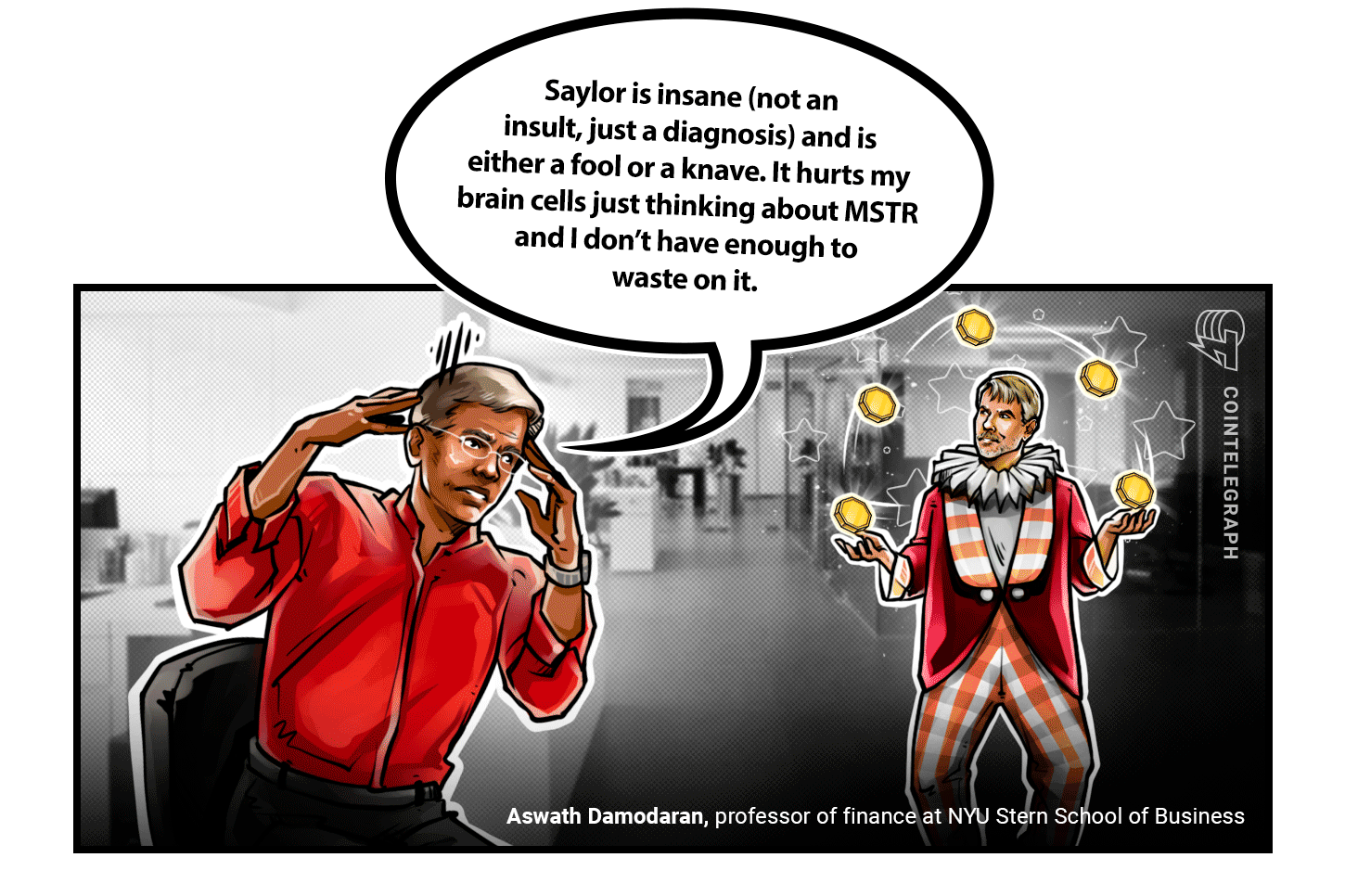
In a proactive move to foster international regulatory harmonization, the US Department of the Treasury and HM Treasury in the UK have issued four joint recommendations concerning digital assets. This transatlantic collaboration underscores a shared recognition of the global nature of digital finance and the necessity for coordinated regulatory approaches. Key recommendations include the establishment of a private-sector-led group dedicated to "testing of cross-border use cases for tokenized assets," and a call for financial agencies in both countries, including the Bank of England, to identify shared regulatory approaches for tokenized assets.
A central tenet of their joint statement emphasized that stablecoins "should be fully backed, on at least a one-to-one basis, by high-quality, liquid assets." This principle aligns with proposed US law, reflecting a common understanding that robust backing is essential for maintaining stablecoin integrity and mitigating systemic risks. Such alignment is critical for fostering trust and facilitating the widespread adoption of stablecoins in cross-border payments and remittances.
Ironically, despite this international commitment to robust stablecoin regulation, domestic implementation in the US has encountered bureaucratic hurdles. Just days after the joint statement, it emerged that US regulatory agencies had missed a statutory Saturday deadline for rulemaking under the GENIUS stablecoin act. While missing the deadline does not invalidate the act itself, it creates a compressed timeline for issuers to achieve compliance before the rules officially go into effect in January. This delay introduces an element of uncertainty and places additional pressure on stablecoin issuers to adapt rapidly, highlighting the challenges of translating legislative intent into practical regulatory frameworks within established government bureaucracies. The juxtaposition of international cooperation and domestic procedural delays underscores the complex and often asynchronous nature of digital asset regulation.
Market Performance and Key Predictions: A Mixed Outlook
As the week drew to a close, the cryptocurrency market presented a mixed picture. Bitcoin (BTC) hovered at $64,620, Ether (ETH) traded at $1,868, and XRP (XRP) was priced at $1.09. The total market capitalization stood at $2.21 trillion, according to CoinMarketCap data.

Among the top 100 cryptocurrencies, some altcoins demonstrated notable gains. Pump.fun (PUMP) emerged as the week’s top performer, surging by 36%. Venice Token (VVV) also saw significant positive movement, gaining 10%, while Litecoin (LTC) increased by 7%. These gains suggest pockets of strong investor interest or specific project developments driving momentum.
Conversely, several altcoins experienced declines. DeXe (DEXE) was the week’s biggest loser, shedding 27% of its value. Lighter (LIT) followed with a 17% drop, and Worldcoin (WRLD) fell by 14%. These losses highlight the inherent volatility of the altcoin market, where rapid price movements are common.
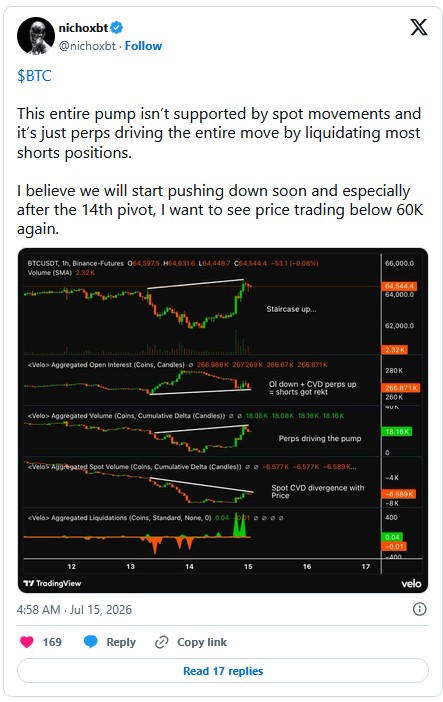
Looking ahead, market analysts offered divergent predictions for Bitcoin. One optimistic analyst projected a new $80,000 target for August, stating, "It’s holding the crucial level at $61,000 and flipping important MAs for support, indicating that there’s more momentum on the horizon. I’m expecting to see a rally to $68,000 in the next 1-2 weeks, followed by a continuation towards $75,000-80,000 in August." This bullish outlook hinges on Bitcoin maintaining key support levels and demonstrating upward momentum through moving average trend lines. However, not all analysts shared this optimism. Nichoxbt, for instance, offered a more cautious perspective, suggesting that Bitcoin’s price might head back under $60,000, indicating ongoing market uncertainty and a lack of consensus on short-term price direction.
Security Concerns and Strategic Shifts: The Week’s Top FUD
The digital asset space also faced significant challenges this week, characterized by security breaches and strategic missteps, collectively known as "FUD" (Fear, Uncertainty, Doubt).
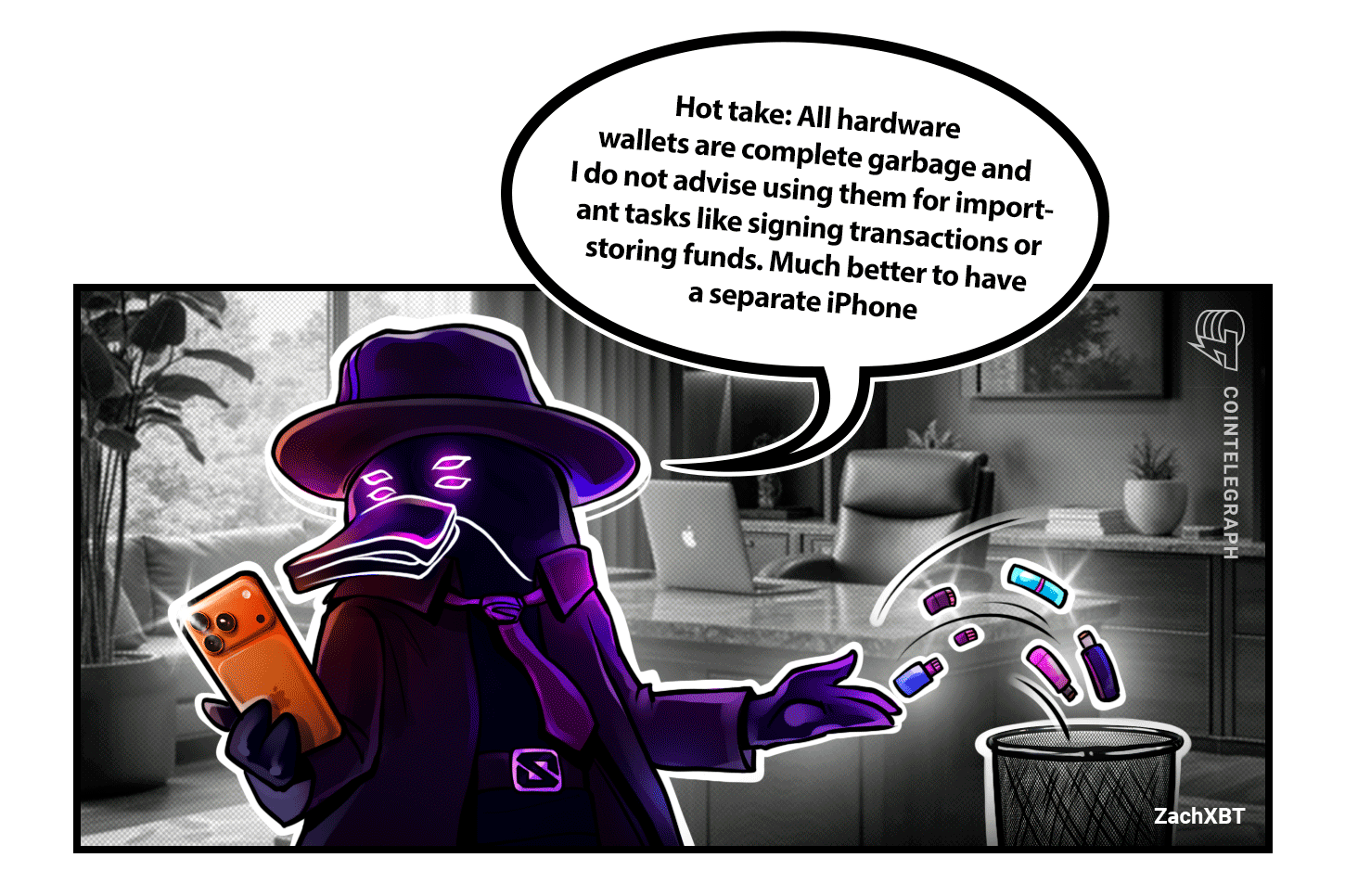
One concerning incident involved Consensys, a prominent blockchain company and developer of the widely used MetaMask wallet. It was revealed that Consensys unknowingly outsourced developer work to an individual linked to North Korea, who gained access to some of its systems for approximately one month. First reported by Drop Site, Consensys had engaged the developer through a "reputable third-party service provider" earlier this year. While the company temporarily suspended product releases and launched an investigation, it confirmed that "there was no misappropriation of assets or data, no malicious code deployed, and no impact to user safety and security." This event underscores the critical importance of robust supply chain security and rigorous vetting processes in the highly sensitive blockchain development space, especially given the persistent threat from state-sponsored hacking groups.
Cybersecurity firm Kaspersky also identified a newly developed malware framework, dubbed "OkoBot," specifically targeting cryptocurrency investors. This sophisticated malware initiates an infection chain through social engineering tactics like "ClickFix," which tricks users into executing malicious commands, or by distributing trojanized GitHub applications that implant backdoors on infected devices. In a related threat, SlowMist reported a separate malware campaign aimed at infiltrating the devices of Web3 developers via deceptive LinkedIn recruitment opportunities. Attackers impersonate recruiters, sending fake GitHub repositories to victims under the guise of requiring code assessment before an interview. These incidents highlight the increasing sophistication of cyber threats targeting the crypto community, emphasizing the need for constant vigilance and enhanced security practices among both investors and developers.
Finally, Jesse Pollak, the creator of the Base network, admitted to making a "wrong bet" on the platform’s initial strategic direction, leading him to step back from his leadership role at Base App. Pollak candidly shared in an X post that his initial focus on creator, content, and messaging apps to drive adoption had seen the market "disintegrated completely." He now acknowledges that financial applications, including trading, payments, and AI agents, represent the path forward for the network. As a result of this strategic pivot, the Base App will return to Coinbase’s direct oversight and will be led by crypto influencer and trader Jordan Fish, better known as "Cobie" on X. This strategic re-evaluation on Base illustrates the dynamic and often unpredictable nature of innovation in the Layer 2 blockchain space, where adaptability to market realities is crucial for long-term success.
Magazine Highlights: Deep Dives into Crypto Narratives
This week’s top magazine stories delved into compelling narratives shaping the crypto world:
- Strategy became a symbol of the dot-com crash: Could history repeat? This article explored Michael Saylor’s journey from leading MicroStrategy through the dot-com bust to transforming it into the world’s largest corporate Bitcoin holder, questioning whether history’s lessons have been fully absorbed.
- Is Robinhood Chain’s success bullish or bearish for ETH the asset? This piece analyzed the surging volumes on Robinhood Chain and its potential implications for Ethereum, particularly for those who believe in "ETH is money" thesis.
- Gambling on random Pokémon cards: Onchain gacha hits record high as crypto sinks. This report highlighted the surprising trend of users spending a record $324 million on on-chain gacha in June, even as Bitcoin hit a 21-month low, illustrating the growing appeal of digital collectibles and speculative gaming.
These stories collectively paint a picture of a digital asset landscape that is simultaneously maturing and facing new challenges, driven by technological innovation, market dynamics, and the ongoing push for regulatory clarity and security.