admin
admin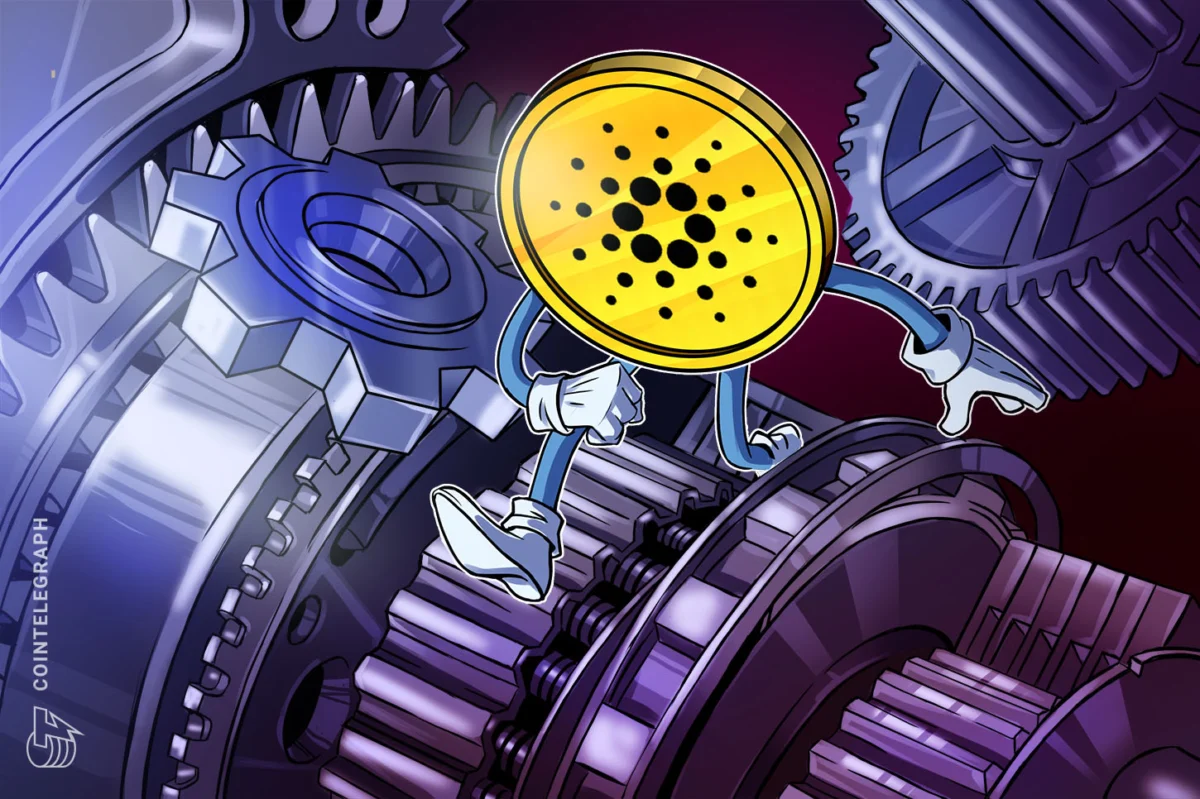
Cardano, the prominent proof-of-stake blockchain platform, successfully activated its van Rossem hard fork on Saturday, upgrading the Cardano mainnet to Protocol Version 11. This pivotal network enhancement is designed to significantly reduce smart contract execution costs and establish critical infrastructure for Ouroboros Leios, a forthcoming major scalability upgrade envisioned for the protocol. The activation marks a crucial step in Cardano’s evolutionary roadmap, emphasizing both efficiency and decentralized governance.
The transition from Protocol Version 10 in epoch 643 to Version 11 in epoch 644 was confirmed by on-chain data provided by Cardanoscan, illustrating a seamless network upgrade. Input Output Global (IOG), the engineering company responsible for designing and building the Cardano blockchain, articulated the broader implications of this update in a recent weekly development report. "As well as Plutus improvements and Plutus Cost Model enhancements, this upgrade lays the foundation for the next upgrade, the Dijkstra era hard fork, which will introduce Ouroboros Leios to Cardano," IOG stated, underscoring the foundational nature of van Rossem for future advancements.
The Van Rossem Hard Fork: A Deep Dive into Technical Enhancements
The van Rossem hard fork is more than just a version number change; it represents a series of strategic technical refinements aimed at optimizing the network’s core functionalities. At its heart are substantial "Plutus improvements and Plutus Cost Model enhancements." Plutus is Cardano’s native smart contract platform, enabling developers to write decentralized applications (dApps) using Haskell, a powerful functional programming language. The Plutus Core, the on-chain execution environment, benefits directly from these enhancements.
Specifically, the upgrade is anticipated to make smart contract operations more efficient and less resource-intensive. This translates directly into lower transaction fees for users interacting with dApps and reduced operational costs for developers deploying and maintaining smart contracts on the Cardano blockchain. For instance, common dApp functionalities like token swaps, lending protocols, and NFT marketplaces often involve multiple smart contract interactions, each incurring a small fee. By optimizing the Plutus Cost Model, van Rossem aims to make these interactions significantly cheaper, thereby improving the overall user experience and encouraging broader adoption of Cardano’s decentralized ecosystem.
This optimization is particularly relevant in the context of Cardano’s Extended Unspent Transaction Output (EUTXO) model. Unlike account-based models, EUTXO offers enhanced security, predictability, and parallel transaction processing. However, it can sometimes be perceived as more complex for certain smart contract patterns. The Plutus improvements within van Rossem aim to streamline these complexities, making the EUTXO model even more performant and developer-friendly, without compromising its inherent security advantages. Developers can now potentially deploy more sophisticated and computationally intensive smart contracts while keeping execution costs at a competitive level.
Laying the Groundwork for Ouroboros Leios and the Dijkstra Era
Beyond its immediate benefits, the van Rossem upgrade is a critical precursor to the much-anticipated Ouroboros Leios. Leios is a groundbreaking scalability proposal for Cardano’s Ouroboros proof-of-stake consensus mechanism, projected to launch in late 2026 as part of the Dijkstra era hard fork. The primary objective of Ouroboros Leios is to dramatically increase the network’s transactions per second (TPS) capability without compromising the robust security guarantees inherent to the Ouroboros protocol.
Ouroboros, the peer-reviewed and mathematically proven proof-of-stake protocol, has been a cornerstone of Cardano’s design philosophy, prioritizing security and decentralization from its inception. However, as blockchain technology evolves and global demand for decentralized services grows, scalability remains a paramount challenge for all Layer 1 protocols. Ouroboros Leios seeks to address this by introducing novel mechanisms that enhance throughput while maintaining the integrity of the consensus.
While specific technical details of Leios are still being developed and rigorously peer-reviewed, the overarching goal is to enable Cardano to handle a significantly higher volume of transactions, rivaling traditional financial systems, without resorting to sharding or other methods that might fragment the network or dilute security. Concepts under exploration for Leios often involve advanced block production techniques, improved block propagation, and efficient validation mechanisms that allow the network to process more data concurrently. The van Rossem hard fork, with its Plutus optimizations, provides a more efficient foundation upon which these high-throughput Leios transactions can eventually be executed. This systematic approach, where foundational improvements precede major architectural shifts, is characteristic of Cardano’s research-driven development methodology.
The Dijkstra era, which will culminate in the introduction of Ouroboros Leios, represents the next major phase in Cardano’s roadmap, following the current Basho era focused on scalability and optimization. Each era builds upon the last, progressively delivering on the protocol’s long-term vision.
A Milestone in Decentralized Governance: Cardano’s First Community-Driven Hard Fork
Perhaps one of the most significant aspects of the van Rossem upgrade is its historical distinction as the first governance-driven hard fork in Cardano’s history. Unlike previous upgrades, which were primarily coordinated and implemented by Input Output Global, this particular hard fork emerged from and was approved through Cardano’s nascent on-chain governance system. This event signifies a profound shift towards the full realization of the Voltaire era, Cardano’s final developmental stage, which aims to establish complete decentralized governance.
The Voltaire era is designed to empower the Cardano community with the ability to propose, vote on, and implement changes to the protocol itself. This includes everything from funding proposals to critical protocol parameter adjustments and, as demonstrated by van Rossem, even hard forks. The governance process typically involves:
- Cardano Improvement Proposals (CIPs): Community members or development teams propose changes to the protocol.
- Delegated Representatives (DReps): ADA holders can delegate their voting power to DReps, who are elected representatives tasked with researching proposals and voting on behalf of their delegators. ADA holders can also vote directly.
- On-chain Voting: Proposals are put to a vote on the blockchain, with the outcome determining the network’s future direction.
- Constitutional Committee: A temporary or permanent body that ensures proposals align with Cardano’s fundamental principles and constitution.
The successful activation of van Rossem through this decentralized mechanism, as evidenced by governance action gov_action1lh2x3kjucjkggvwu6l3txggkvmrnhs3flpv8j35lvlcan4gax3xsq3cxfjc, demonstrates the practical efficacy of Cardano’s on-chain governance model. It moves Cardano closer to its stated goal of becoming a truly self-sustaining and community-driven blockchain, where the power to shape its future resides with its token holders and engaged participants, rather than being solely concentrated within development entities. This level of decentralization in decision-making enhances the network’s resilience, censorship resistance, and long-term sustainability. It also distinguishes Cardano within the broader blockchain landscape, where many networks still rely heavily on centralized development teams for critical upgrades.
The Evolution of Cardano: A Historical Context
To fully appreciate the significance of the van Rossem hard fork, it’s essential to contextualize it within Cardano’s phased developmental roadmap, famously divided into distinct "eras":
- Byron Era (Foundation): The initial bootstrap phase, establishing the fundamental architecture and launching the mainnet in 2017. This era focused on the core infrastructure and basic transaction capabilities.
- Shelley Era (Decentralization): Launched in 2020, this era marked a significant leap towards decentralization by introducing staking, allowing ADA holders to participate in network security and earn rewards. The number of decentralized block producers (stake pools) grew substantially.
- Goguen Era (Smart Contracts): Starting in 2021 with the Alonzo hard fork, this era introduced smart contract functionality via Plutus, enabling the development of dApps, DeFi protocols, and NFTs on Cardano.
- Basho Era (Scalability and Optimization): The current era, focusing on enhancing network performance, scalability, and interoperability. This includes optimizing existing structures and exploring layer-2 solutions like Hydra. Van Rossem directly contributes to the Basho era’s goals of optimization through its Plutus enhancements.
- Voltaire Era (Governance): The final era, dedicated to achieving full decentralized governance, where the community holds the reins of protocol development and funding. Van Rossem serves as a tangible, early demonstration of the Voltaire era’s principles in action.
Cardano’s development is guided by three core entities: Input Output Global (IOG), responsible for research and engineering; the Cardano Foundation, focused on promotion, adoption, and partnerships; and EMURGO, a global blockchain technology company and venture builder. This multi-organizational approach, coupled with a strong emphasis on peer-reviewed academic research, underpins Cardano’s methodical and robust development cycle. The van Rossem hard fork is a testament to the collaborative efforts of these entities and the growing engagement of the wider Cardano community.
Implications for the Cardano Ecosystem and Broader Blockchain Landscape
The successful activation of the van Rossem hard fork carries far-reaching implications for the entire Cardano ecosystem and its position within the competitive blockchain landscape.
For developers, the reduced smart contract execution costs mean a more attractive environment for building and deploying dApps. Lower costs can foster innovation by enabling more complex contract logic or allowing developers to pass savings on to users, making their applications more competitive. This could lead to a surge in new dApps, further enriching the variety of services available on Cardano.
Users will benefit from a smoother and more economical experience. Interacting with dApps, from swapping tokens on decentralized exchanges (DEXs) to participating in decentralized autonomous organizations (DAOs), will become less expensive. This improved user experience is crucial for attracting and retaining a broad user base, which is vital for network effect and overall ecosystem growth.
For the network itself, enhanced Plutus efficiency means the blockchain can process smart contract-related transactions more effectively, contributing to overall network capacity. While Ouroboros Leios will deliver the massive TPS increase, these foundational optimizations ensure that when Leios arrives, the underlying smart contract execution layer is already highly efficient.
In terms of competitiveness, van Rossem helps position Cardano more favorably against other Layer 1 blockchains that are also striving for scalability and lower transaction costs, such as Ethereum (with its Layer 2 solutions and upcoming sharding), Solana, and Avalanche. By systematically addressing smart contract efficiency and setting the stage for significant scalability, Cardano reinforces its commitment to resolving the "blockchain trilemma" – the challenge of simultaneously achieving decentralization, security, and scalability.
Furthermore, the governance-driven nature of the van Rossem hard fork solidifies Cardano’s long-term vision of a truly decentralized future. It sends a strong signal to the crypto community that Cardano is not only technically capable but also committed to empowering its community in the decision-making process. This aligns with the broader ethos of Web3, where user and community ownership are paramount.
Looking Ahead: The Road to Dijkstra and Beyond
With van Rossem successfully implemented, the Cardano ecosystem now looks forward to the next major milestones. The Dijkstra era hard fork, which will introduce Ouroboros Leios, remains a focal point for future development. The late 2026 target for Leios’s launch provides a clear roadmap for the continued evolution of Cardano’s scalability architecture.
The ongoing development cycle, characterized by rigorous research, peer review, and community involvement, underscores Cardano’s methodical approach to building a robust and sustainable blockchain. The van Rossem hard fork is not merely an isolated upgrade but a critical link in a long chain of innovations designed to position Cardano as a leading platform for decentralized applications, global finance, and digital identity for years to come. The journey towards a fully decentralized, scalable, and efficient future for Cardano continues, with van Rossem serving as a testament to its unwavering commitment to progress.