admin
admin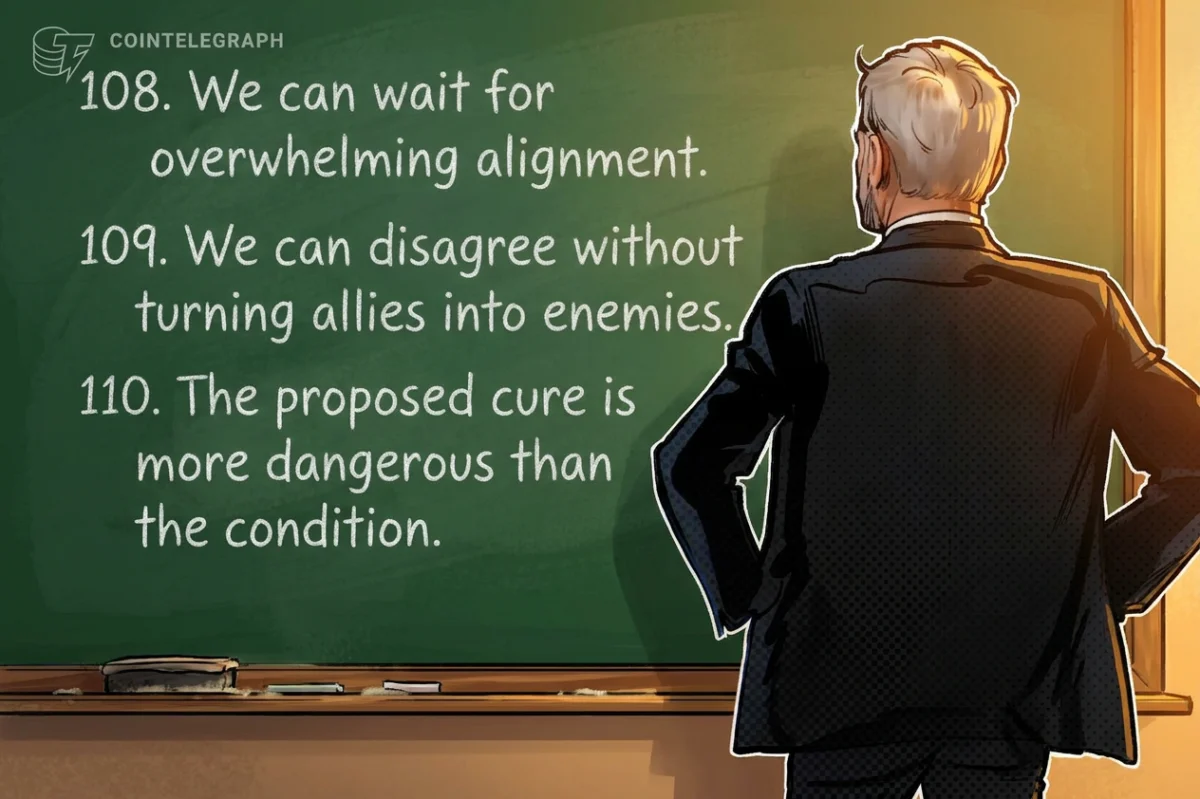
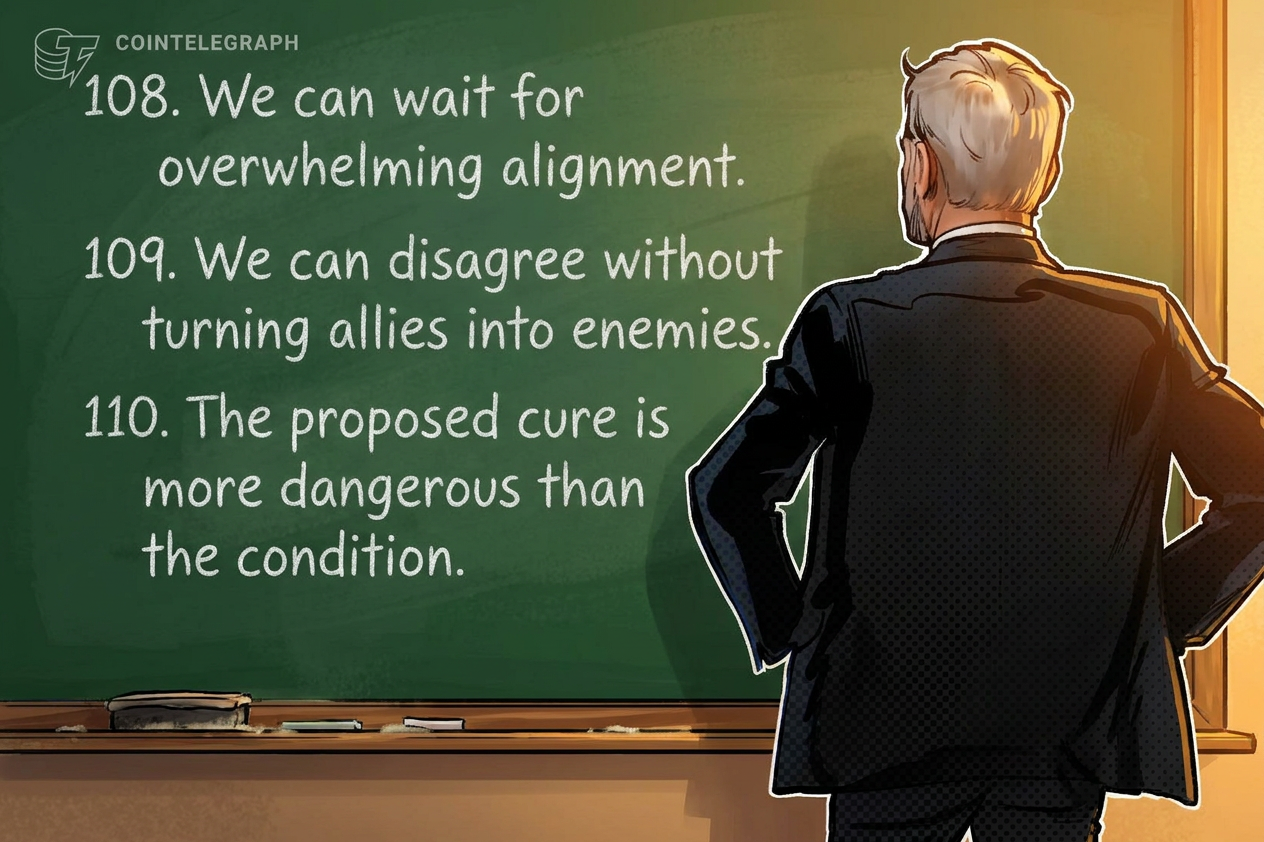
Strategy executive chairman Michael Saylor leveraged social media on Sunday to meticulously outline his "110 reasons" opposing a proposed temporary fork aimed at restricting non-monetary transactions on the Bitcoin network, known as Bitcoin Improvement Proposal 110 (BIP-110). This extensive commentary reignites a fundamental debate within the Bitcoin community concerning the network’s core purpose, its governance, and the very definition of "spam" in a permissionless system.
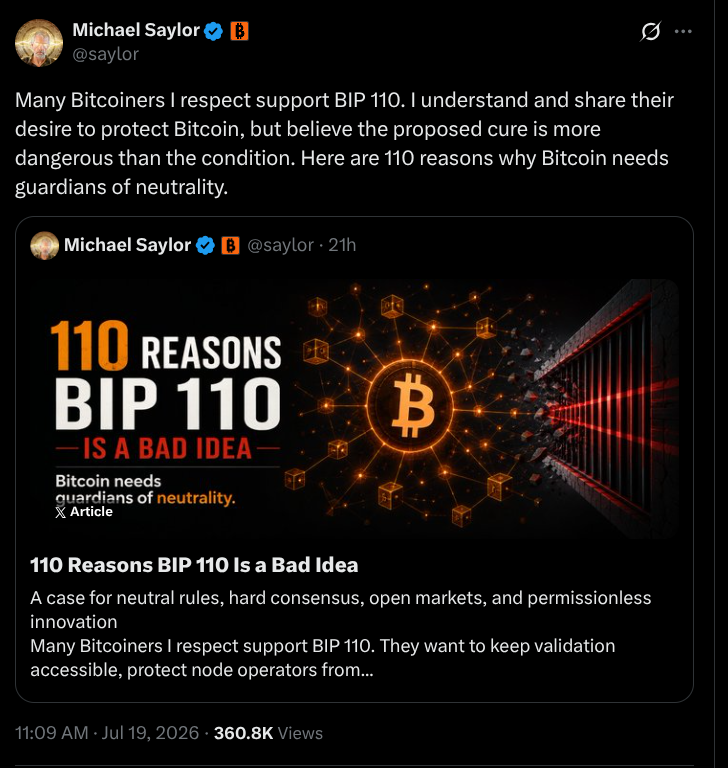
Saylor, whose company MicroStrategy controls one of the largest corporate treasuries of Bitcoin (BTC), articulated his philosophical stance in a roughly 3,700-word post on X.com. His arguments championed "neutral rules, hard consensus, open markets, and permissionless innovation" as cornerstones of Bitcoin’s design and its long-term viability. The influential Bitcoin advocate’s intervention underscores the significant philosophical and technical divides emerging within the ecosystem, reminiscent of past protocol-level disputes.
The Genesis of BIP-110 and Its Stated Objectives
Bitcoin Improvement Proposal-110 was formally introduced in December 2025 by pseudonymous Bitcoin developer "Dathon Ohm," with prominent support from Ocean Protocol founder Luke Dashjr. The proposal’s primary objective is to implement a temporary measure to curb the proliferation of non-fungible token (NFT)-like Ordinals inscriptions and other forms of arbitrary data. Proponents argue that these inscriptions "spam" the network, consume valuable block space, and divert Bitcoin from its intended primary use case as a peer-to-peer electronic cash system. The proposed fork is envisioned as a temporary, one-year measure, aiming to alleviate perceived network congestion and preserve transactional efficiency.
The introduction of BIP-110 followed a surge in Ordinals activity, which peaked significantly in August 2023. During this period, daily inscriptions on the Bitcoin blockchain exceeded 400,000, leading to increased transaction fees and longer confirmation times. For many proponents of BIP-110, this surge highlighted a critical vulnerability, suggesting that the network could be overwhelmed by non-monetary data, thereby undermining its utility for financial transactions. They contend that while the activity has since subsided, the potential for future "spam attacks" remains a "serious threat" that necessitates a proactive solution.
Michael Saylor’s Comprehensive Rebuttal
In his lengthy exposition, Saylor acknowledged the concerns of BIP-110 supporters, stating, "Many Bitcoiners I respect support BIP 110. They want to keep validation accessible, protect node operators from unwanted costs and content, preserve affordable payments, and keep Bitcoin focused on sound money rather than general-purpose data storage. Those are serious concerns. I share the objectives. I disagree about the remedy." This measured approach sought to frame the debate as a difference in methodology rather than a conflict of core values.
Saylor’s "110 reasons" systematically dismantle the premise and potential implications of BIP-110. His core arguments revolve around the principles of censorship resistance and the immutability of Bitcoin’s rules. He asserts that introducing a mechanism to filter or limit certain types of data, even temporarily, sets a dangerous precedent that could lead to broader censorship and compromise Bitcoin’s permissionless nature. For Saylor, Bitcoin’s strength lies in its neutrality – its inability to distinguish between different types of data, treating all transactions equally as long as they adhere to the protocol’s consensus rules and pay the requisite fees.
He further argued that such a fork would fundamentally alter Bitcoin’s "hard consensus" rules, which have historically been resistant to change. Any deviation, even a temporary one, could introduce instability, undermine trust in the protocol’s predictability, and potentially lead to contentious chain splits. Saylor’s philosophy emphasizes that the market, through transaction fees, should ultimately determine the value and priority of data written to the blockchain, rather than a centralized decision by developers or a majority of node operators. His post, which garnered significant attention with 879,000 views, 692 replies, and 852 retweets by Sunday 12 p.m. ET, clearly resonated with a substantial segment of the Bitcoin community.
Historical Echoes: The Blocksize Wars Revisited
The current debate surrounding BIP-110 is widely considered one of the most notable protocol-level disputes within the Bitcoin development community since the infamous Blocksize Wars that unfolded between 2015 and 2017. That era saw a protracted and often acrimonious debate among ecosystem participants over whether to increase the block size limit to improve scalability. Proponents of larger blocks argued it was necessary to accommodate more transactions and reduce fees, while opponents feared it would lead to greater centralization by increasing the hardware requirements for running full nodes and risking a chain split.
The Blocksize Wars ultimately resulted in the creation of Bitcoin Cash (BCH) and Bitcoin SV (BSV) through hard forks, while the original Bitcoin network adopted Segregated Witness (SegWit) and maintained its 1MB block size limit, effectively demonstrating the community’s strong preference for stability and decentralization over immediate scalability. This historical context is crucial, as it illustrates the deep-seated resistance within the Bitcoin community to changes that are perceived to compromise its core tenets or lead to contentious splits. The BIP-110 debate, therefore, is not merely about data filtering but touches upon similar anxieties regarding network governance, developer influence, and the potential for fracturing the ecosystem.
The Current State of BIP-110 Activation and Ordinals Activity
For BIP-110 to be activated, it requires a significant level of support: 55% of Bitcoin nodes validating blocks must signal their approval within a defined Bitcoin block "period." However, current data suggests that activation is a distant prospect. In the most recent period, period number 475 (encompassing blocks 955,584 to 957,599), only 1% of blocks signaled support for the proposal. This low adoption rate indicates a significant lack of consensus among node operators, reflecting the widespread skepticism and opposition within the community.
Compounding the lack of urgency for BIP-110 is the current state of Ordinals activity. Data from Dune Analytics reveals that Ordinals inscriptions have experienced a dramatic decline since their peak. Over the last month, fewer than 10,000 Ordinals have been inscribed onto the Bitcoin blockchain daily. This stands in stark contrast to the over 400,000 daily inscriptions observed during its peak in August 2023. The significant reduction in activity directly challenges the premise that Ordinals-driven "bloat" constitutes an imminent "serious threat" to the network. Critics of BIP-110 argue that the market has naturally self-corrected, with high fees during peak inscription periods making such activities less economically viable, thus negating the need for protocol-level intervention.
Key Figures and Their Divergent Perspectives
The debate has drawn strong opinions from other prominent figures in the Bitcoin space. Blockstream CEO Adam Back, a key figure in Bitcoin’s early development and the inventor of hashcash (a precursor to Bitcoin’s proof-of-work), has been a vocal opponent of BIP-110. Back described the proposal as a "quest to police other people," arguing that it fundamentally contradicts Bitcoin’s decentralized nature. He emphasized that Bitcoin’s design principle means "you can’t impose your views on others," asserting that such a measure is incompatible with BTC’s cypherpunk ethos of permissionless, censorship-resistant money. For Back, the ability to write any data to the blockchain, provided it adheres to technical specifications and pays fees, is a fundamental aspect of Bitcoin’s freedom and resilience.
Conversely, Luke Dashjr, a long-standing Bitcoin developer and a primary advocate for BIP-110, maintains his stance that Ordinals-driven bloat represents a "serious threat" to the network, necessitating an "imminent fix." Dashjr and his supporters contend that while current Ordinals activity may be low, the underlying vulnerability remains. They have also argued that BIP-110, despite being a fork, would not cause a permanent chain split as many fear, primarily because of its temporary, one-year limit. They suggest that after this period, the network would revert to its previous state, and fee-paying transactions would not be invalidated over the long term. Their perspective prioritizes the network’s efficiency and its perceived original intent as a monetary system above its potential use as a general-purpose data layer.
Philosophical Underpinnings and Broader Implications
The BIP-110 debate is not merely a technical disagreement; it delves into the core philosophical underpinnings of Bitcoin. At its heart is a tension between two visions: Bitcoin as a minimalist "sound money" protocol, strictly focused on peer-to-peer cash transactions, versus Bitcoin as a robust, permissionless, and uncensorable ledger capable of supporting a broader range of data, including novel applications like Ordinals.
Saylor’s emphasis on "neutral rules" speaks to the idea that Bitcoin’s strength lies in its impartiality. By design, the network does not, and should not, discriminate against data types. Any attempt to introduce such discrimination could open a Pandora’s box, leading to future demands for censorship based on content, origin, or other subjective criteria. This could erode the very "permissionless" quality that makes Bitcoin a powerful tool for financial freedom and a bastion against central control.
The concept of "spam" itself is contentious. While some see Ordinals as wasteful data, others view them as legitimate transactions that pay fees, contribute to miner revenue, and explore new use cases for the blockchain. The market-driven fee mechanism, they argue, is the appropriate filter for unwanted data; if users are willing to pay for it, it is not "spam" but a valid use of block space.
This dispute also tests Bitcoin’s unique governance model, which relies on rough consensus among various stakeholders – developers, miners, node operators, and users. Unlike traditional corporations or governments, there is no central authority to dictate changes. Significant protocol alterations, especially those involving forks, require broad community buy-in to avoid fragmentation and maintain the network’s integrity. The low signaling rate for BIP-110 underscores the difficulty of achieving such consensus, particularly when fundamental principles are perceived to be at stake.
The Path Forward: Uncertainty and Ongoing Dialogue
Given the strong opposition from influential figures like Michael Saylor and Adam Back, coupled with the extremely low node signaling rate and the diminished activity of Ordinals, the immediate prospects for BIP-110 activation appear minimal. The debate, however, highlights an ongoing tension within the Bitcoin community: how to balance innovation with core principles, and how to define the boundaries of acceptable use on a decentralized, permissionless network.
The future of Bitcoin will likely continue to be shaped by such vigorous discussions, which, as Saylor noted, are strongest "when we can disagree vigorously without mistaking allies for enemies." The outcome of the BIP-110 discussion, regardless of its activation status, will serve as another important chapter in the ongoing evolution of Bitcoin’s governance and its identity as a global, digital asset. The community’s ability to navigate these complex issues while upholding its foundational principles will be crucial for Bitcoin’s long-term success and resilience.