admin
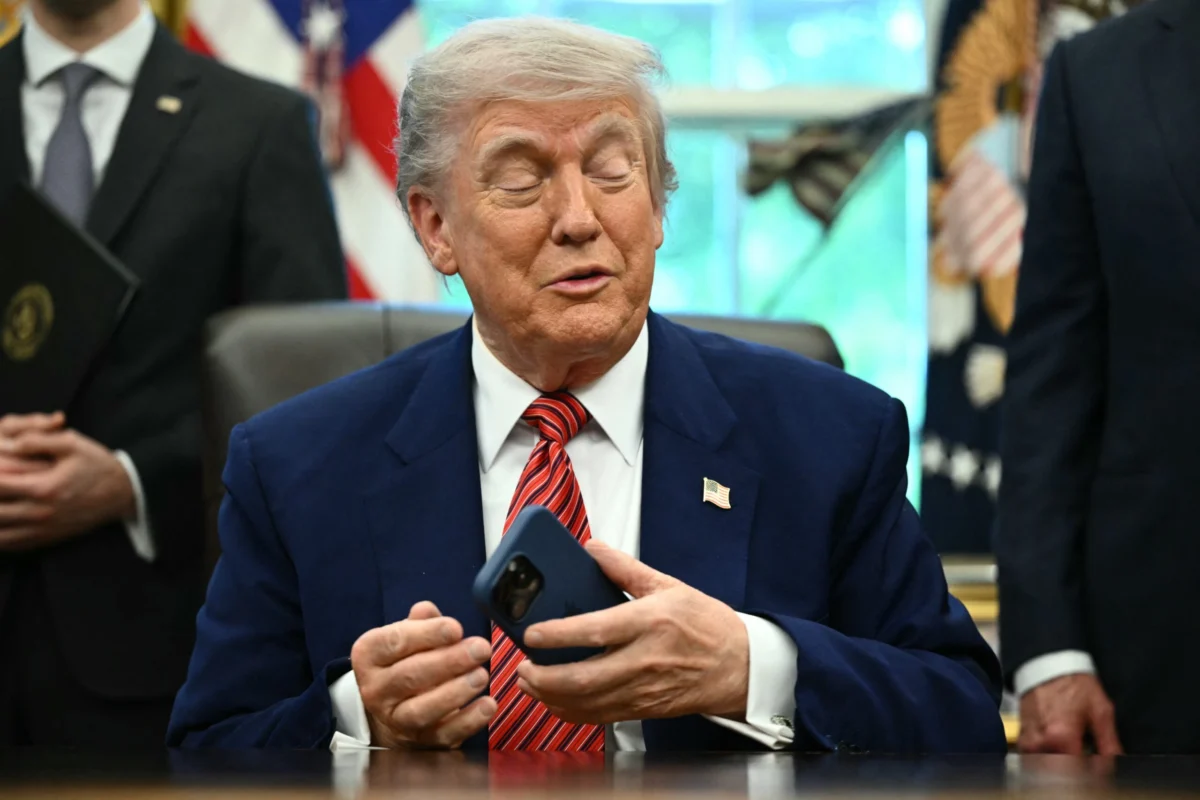
The financial landscape of the digital asset market has been rocked by a comprehensive analysis from the cryptocurrency analytics firm Nansen, revealing that nearly one million individual investors have incurred collective losses totaling $3.8 billion through the $TRUMP memecoin. The report, which scrutinized publicly available blockchain transaction data through the end of June 2026, indicates that 988,905 unique digital wallets currently hold positions in the asset that are worth significantly less than their initial acquisition price. This staggering figure represents approximately two-thirds of all market participants who purchased the token since its inception, highlighting the extreme volatility and risk inherent in the celebrity-driven "memecoin" sector.
As of early July 2026, the $TRUMP token was trading at a modest $1.69, a precipitous decline of nearly 98% from its historical peak of $75.35. The rapid devaluation of the asset has sparked intense debate among financial analysts, ethics watchdogs, and retail investors regarding the intersection of political influence and speculative financial instruments. While the broader cryptocurrency market has experienced various cycles of growth and contraction, the specific trajectory of the $TRUMP token serves as a high-profile case study in the risks of high-leverage, sentiment-based trading.
The Genesis and Rapid Ascent of $TRUMP
The $TRUMP memecoin was officially announced by Donald Trump in January 2025, just three days prior to his second inauguration. The timing of the launch was viewed by market observers as a strategic move to capitalize on the immense media attention surrounding the transition of power. At the time, the digital asset was presented as a symbol of the new administration’s commitment to decentralized finance and the "democratization" of wealth.
Before the launch of the $TRUMP token, the president had already established a footprint in the sector through the co-founding of World Liberty Financial, a crypto-focused startup launched in collaboration with his sons. That venture introduced the $WLFI coin, which served as a precursor to the more volatile memecoin. While $WLFI was marketed with more traditional decentralized finance (DeFi) utility in mind, the $TRUMP token was a pure memecoin—an asset whose value is derived almost exclusively from social media trends, community sentiment, and the personal brand of its namesake.
During the first half of 2025, the token experienced an unprecedented surge. Driven by viral social media campaigns and the president’s own frequent mentions of the asset during public addresses, the price climbed from pennies to a peak of $75.35. During this period, the market capitalization of the token briefly rivaled some of the most established projects in the crypto ecosystem. However, the Nansen data suggests that while the price was soaring, the majority of retail buyers were entering the market at elevated price points, leaving them vulnerable to the subsequent correction.
Financial Disclosures and Presidential Profits
Recent mandatory financial disclosures have provided a rare glimpse into the personal financial benefits the president has derived from the cryptocurrency industry. According to these filings, President Trump earned approximately $636 million from the $TRUMP memecoin alone over the past year. This figure accounts for nearly half of the $1.4 billion in total income he reported from crypto-related activities during the same period.
The disclosure of these profits has intensified scrutiny over the potential for conflicts of interest. Unlike traditional assets, memecoins are highly sensitive to the public statements of the individuals they represent. Analysts note that the president’s ability to move the market with a single social media post or policy announcement creates a unique dynamic where the line between public service and private gain becomes blurred.
Supporters of the president argue that these earnings are a testament to his business acumen and his successful integration of modern technology into his personal brand. Critics, however, point to the $3.8 billion in losses sustained by his supporters as evidence of a predatory financial ecosystem that benefits those at the top of the "hype cycle" at the expense of late-coming retail investors.

A New Era of Regulatory Non-Intervention
The dramatic rise and fall of the $TRUMP token have occurred against a backdrop of significant regulatory shifts within the United States. Under the current administration, the Securities and Exchange Commission (SEC) has undergone a fundamental transformation in its approach to digital assets. In a landmark policy shift, the SEC announced that it would not classify memecoins as securities, a move that effectively exempted these assets from the rigorous disclosure and consumer protection requirements that govern traditional stocks and bonds.
This "hands-off" approach is a sharp departure from the previous administration’s efforts to bring the cryptocurrency market under tighter federal oversight. Furthermore, the SEC has dropped several high-profile lawsuits against major crypto firms, including a notable case against the Winklevoss twins’ Gemini exchange. This deregulatory environment has been a cornerstone of the administration’s economic platform, aimed at fostering innovation and ensuring that the United States remains a global leader in the digital economy.
A White House spokesperson, responding to inquiries regarding the Nansen report and the widespread investor losses, told The New York Times, "President Trump proudly made the United States the crypto capital of the world." The administration maintains that the volatility seen in the $TRUMP token is a natural feature of a free and open market, where individuals are empowered to make their own investment choices without government interference.
Chronology of Key Events
The following timeline outlines the major milestones in the lifecycle of the $TRUMP memecoin and the broader administration policy:
- September 2024: Launch of World Liberty Financial ($WLFI), signaling the Trump family’s formal entry into the DeFi space.
- January 17, 2025: Announcement of the $TRUMP memecoin, three days before the presidential inauguration.
- February 2025: The SEC officially declares that memecoins will not be regulated as securities, leading to a massive influx of retail capital into the sector.
- May 2025: The $TRUMP token reaches its all-time high of $75.35, fueled by high-profile endorsements and speculative fervor.
- January 2026: The SEC drops its remaining lawsuits against several major crypto exchanges, further solidifying the deregulatory environment.
- June 2026: Nansen’s analysis confirms that nearly 1 million accounts are in the red, with the token price hovering below $2.00.
- July 2026: Financial disclosures reveal the president’s $636 million profit from the token.
Broader Implications for the Crypto Market
The $3.8 billion loss associated with the $TRUMP token has broader implications for the future of the cryptocurrency market and the role of "celebrity coins." While traditional assets like Bitcoin and Ethereum have increasingly been adopted by institutional investors, the memecoin sector remains dominated by retail participants who are often less equipped to manage the risks of extreme volatility.
Market analysts suggest that the "Trump Effect" in the crypto space has created a template for other political figures and celebrities to monetize their followings through digital assets. However, the massive losses reported by Nansen may serve as a cautionary tale for future investors. The concentration of profits in the hands of a few—most notably the president himself—while the majority of holders suffer losses, raises fundamental questions about market fairness and the long-term sustainability of hype-driven assets.
Furthermore, the administration’s stance on regulation has created a bifurcated global market. While the United States has embraced a permissive environment, other major economies, including the European Union and China, have moved toward stricter oversight. This divergence could lead to significant capital shifts as investors navigate different regulatory regimes.
Conclusion and Future Outlook
As the $TRUMP token continues to trade at a fraction of its peak value, the fallout from its collapse remains a central point of contention in the American political and financial discourse. For the nearly one million individuals who saw their investments evaporate, the promise of the "crypto capital of the world" has come at a steep personal cost.
The administration shows no signs of reversing its deregulatory path, suggesting that the era of memecoins and celebrity-backed digital assets is far from over. However, the data provided by Nansen serves as a stark reminder of the underlying mechanics of these markets: for every massive profit realized at the top, there is often a much larger group of participants bearing the weight of the decline. Whether the market will eventually self-correct through investor caution or if new forms of "political finance" will continue to emerge remains the defining question for the next chapter of the digital asset era.