admin
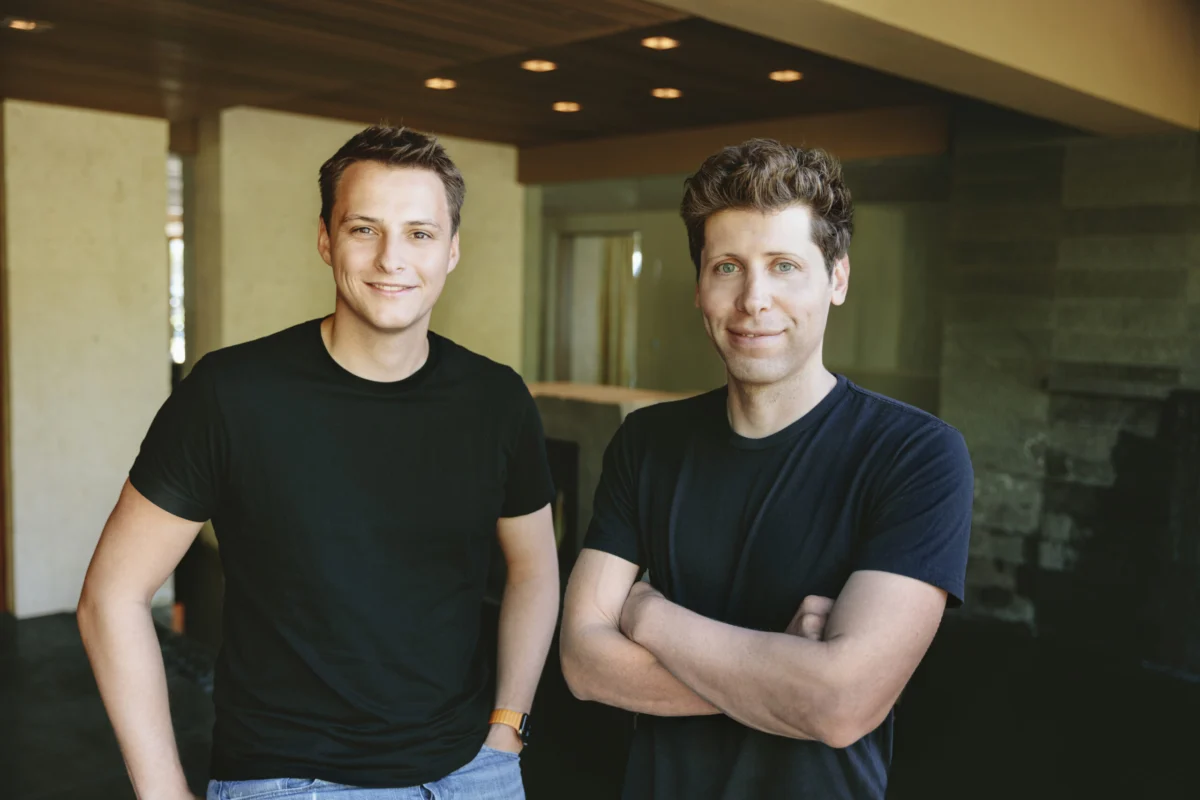
World, the ambitious digital identity and cryptocurrency project co-founded by OpenAI Chief Executive Sam Altman and Alex Blania, has successfully secured $52.5 million in a strategic token sale. The capital was raised through the sale of the project’s native cryptocurrency, WLD, to a group of high-profile institutional investors. This latest infusion of capital is earmarked for the World Foundation, a Cayman Islands-based exempted limited guarantee foundation tasked with overseeing the governance and expansion of the World network.
The funding round was led by Pantera Capital, a prominent venture capital firm specializing in digital assets and blockchain technology. Joining Pantera in this strategic investment were several other notable firms, including Eightco Holdings, Bain Capital Crypto, Susquehanna Crypto, and Selini Capital. According to a press release issued by the company, the transaction was structured with a 12-month lockup period. This mechanism prevents the participating investors from selling or trading their WLD tokens for at least one year, a move intended to signal a long-term commitment to the project’s growth and the utility of its ecosystem.
This capital raise comes at a pivotal moment for World, which is currently navigating a complex landscape of rapid technological advancement, regulatory scrutiny, and a significant rebranding effort. As the proliferation of artificial intelligence makes it increasingly difficult to distinguish between human-generated and bot-generated content, World positions itself as the primary infrastructure for "proof of human" verification on the internet.
The Core Mission: Establishing a Global Proof of Human Protocol
The World project is managed by Tools for Humanity (TFH), a San Francisco-based technology startup where Alex Blania serves as CEO and co-founder, alongside Sam Altman. The project’s central objective is to create a global, decentralized identity system that can verify the "humanness" of an individual without compromising their privacy.
In an era where large language models (LLMs) and generative AI can mimic human behavior, text, and even voices with high fidelity, the digital world faces what some researchers call a "crisis of authenticity." World’s solution to this problem is the World ID—a secure, anonymous digital marker that proves a user is a real person rather than an AI agent or a bot.
To achieve the highest level of verification, World employs a controversial yet technically advanced biometric system. Users must interact with an "Orb," a custom-engineered hardware device about the size of a bowling ball. The Orb uses high-resolution cameras and infrared sensors to scan a user’s iris, which is as unique as a fingerprint but significantly more difficult to forge. This biometric data is then converted into a cryptographic identifier—a "hash"—that represents the user’s identity without storing the actual image of the eye. Once verified, the user is issued a World ID, which can be used to log into various applications and services that require proof of personhood.
Rebranding and the Evolution of the Ecosystem
The project was originally introduced to the public under the name "Worldcoin," reflecting its heavy reliance on cryptocurrency and blockchain technology. However, in an effort to distance itself from the volatility and negative perceptions sometimes associated with the broader crypto industry, the company recently rebranded simply to "World." This shift highlights a strategic pivot toward becoming a more comprehensive identity platform rather than just a financial experiment.
The WLD token, which was the vehicle for the recent $52.5 million sale, serves as the utility and governance token for the network. While the token is a central part of the incentive structure—often given to users in certain jurisdictions as a reward for verifying their identity—the company has increasingly emphasized the utility of the World ID system over the speculative nature of the cryptocurrency itself.
Chronology of Development and Scaling Efforts
The journey of World has been marked by rapid expansion, significant technical milestones, and operational adjustments:
- 2019–2021: Conceptualization and Stealth Mode: Altman and Blania began developing the technology under Tools for Humanity, focusing on the engineering challenges of the Orb.
- 2023: Global Launch: The project officially launched its token and biometric verification network globally, deploying Orbs in major cities across several continents.
- April 2024: Major Software Update and Partnerships: World launched a redesigned version of its mobile application and announced several high-profile integrations. These included partnerships with Tinder, Zoom, and DocuSign, aimed at allowing these platforms to verify that their users are real humans.
- June 2024: Operational Restructuring: Despite the high-profile nature of its founders, Tools for Humanity faced the realities of a challenging tech market. In June, the company conducted a round of layoffs to streamline operations and focus on core growth areas.
- July 2024: Strategic Funding: The $52.5 million token sale was finalized, providing the necessary runway for the World Foundation to continue its mission.
Strategic Partnerships and Market Integration
One of the primary hurdles for World has been demonstrating the real-world utility of its verification system. The recent partnerships with Tinder, Zoom, and DocuSign represent a major step toward mainstream adoption. On Tinder, for instance, a World ID could potentially be used to verify profiles, reducing the prevalence of "catfishing" and bot-driven scams. In the professional sphere, Zoom and DocuSign could utilize World ID to ensure that participants in meetings or signatories of legal documents are indeed who they claim to be.
However, the path to adoption has not been without its setbacks. The company recently had to issue a correction regarding a rumored partnership with Ticketmaster, clarifying that no such agreement exists. This underscores the challenges the startup faces in securing deep integrations with established digital giants.
Regulatory Challenges and Privacy Concerns
The most significant headwind for World has been the intense scrutiny from data protection authorities worldwide. The use of biometric data—specifically iris scans—has raised alarms among privacy advocates and government regulators.
In several countries, including Kenya, Spain, and Hong Kong, the project has faced temporary bans or investigations into its data collection practices. Regulators are primarily concerned with how the biometric data is stored, whether users are providing truly informed consent, and what happens to the data if the company were to cease operations.
World has consistently maintained that its system is designed with "privacy by design" principles. The company asserts that the original images of the iris are deleted immediately after the cryptographic hash is created (unless a user explicitly opts into data sharing for system improvement). Furthermore, the use of zero-knowledge proofs (ZKPs) allows users to prove their identity without revealing any personal information about themselves to the third-party applications they are accessing.
Financial Analysis and Implications
The $52.5 million raised through the WLD token sale is a significant sum, but it must be viewed in the context of the project’s massive ambitions. Building and maintaining a global network of hardware (the Orbs) and a decentralized blockchain infrastructure is an expensive endeavor.
The decision to use a token sale rather than traditional equity for this round is also noteworthy. By selling WLD tokens with a lockup period, World is essentially creating a class of "aligned" stakeholders who have a vested interest in the long-term price appreciation and utility of the token. For investors like Pantera Capital, the bet is that as more people join the World network, the demand for WLD and the World ID protocol will grow, eventually making the token a foundational asset of the digital identity era.
The June layoffs at Tools for Humanity suggest that the company is moving toward a more sustainable financial model. By reducing headcount and securing new funding, the leadership team appears to be preparing for a longer, more measured rollout of the technology, rather than the explosive (and often chaotic) growth seen in the project’s early days.
The Broader Impact on the AI Landscape
The success or failure of World may have profound implications for the future of the internet. If the project succeeds in becoming the global standard for human verification, it could solve one of the most pressing issues of the AI age: the erosion of trust in digital interactions.
Conversely, if World fails to gain traction or is permanently blocked by regulators, the industry will need to find alternative methods for "Proof of Human." Competitors are already emerging, utilizing different approaches such as social graph analysis, government-issued digital IDs, or different forms of biometrics that do not require specialized hardware.
The involvement of Sam Altman adds another layer of complexity to the narrative. As the head of OpenAI, Altman is arguably the individual most responsible for the acceleration of the AI capabilities that make World’s mission necessary. This creates a unique feedback loop where Altman is simultaneously developing the technology that challenges human authenticity and the technology intended to preserve it.
Conclusion
The $52.5 million strategic investment marks a vote of confidence from the venture capital community in the vision of a "Proof of Human" world. With the backing of Pantera Capital and others, World now has the resources to continue its global deployment and refine its technology. However, the road ahead remains fraught with regulatory hurdles and the difficult task of convincing a skeptical public to entrust their biometric data to a startup. As the boundary between human and machine continues to blur, the success of World’s mission to provide a "digital passport" for the AI era will be closely watched by technologists, regulators, and users alike.