admin
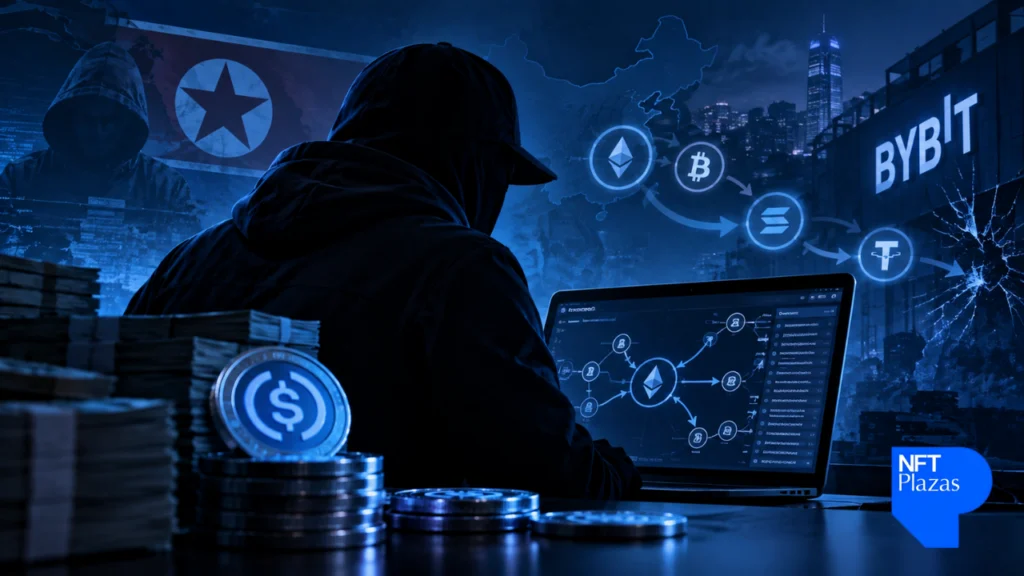
Pseudonymous blockchain investigator ZachXBT has unveiled a high-stakes undercover operation, personally fronting nearly $350,000 to infiltrate an alleged Chinese money-laundering network suspected of ties to North Korea’s notorious Lazarus Group. This audacious gambit has reportedly led to the exposure of over $12 million in illicit funds directly connected to the staggering $1.5 billion Bybit hack, marking a significant victory in the ongoing battle against state-sponsored cybercrime. The detailed account, published on X (formerly Twitter) on October 5, outlines a meticulously planned infiltration that saw ZachXBT pose as a client, deliberately incurring financial losses to gather critical intelligence on how the criminal syndicate moved stolen cryptocurrency across various blockchain networks.
The $1.5 Billion Bybit Heist: A Precedent for Infiltration
The context for ZachXBT’s daring operation is the colossal Bybit exploit of February 2025, which stands as one of the largest cryptocurrency thefts in history. The U.S. Federal Bureau of Investigation (FBI) swiftly attributed this sophisticated attack to North Korean hackers, specifically identifying the threat actor as "TraderTraitor." The FBI’s assessment highlighted the characteristic tactics employed by the Lazarus Group, a state-sponsored hacking collective notorious for its prowess in cyber-espionage, sabotage, and, crucially, large-scale financial theft aimed at circumventing international sanctions and funding North Korea’s illicit weapons programs. The stolen $1.5 billion in digital assets, comprising a mix of cryptocurrencies, was rapidly fragmented and laundered across thousands of distinct blockchain addresses, a common obfuscation technique designed to obscure their origin and make recovery exceedingly difficult for law enforcement and blockchain forensics experts.
North Korea’s reliance on crypto theft has intensified in recent years, with numerous reports from the United Nations, cybersecurity firms, and government agencies detailing billions of dollars stolen from exchanges, DeFi protocols, and individual wallets. These funds are vital for sustaining the isolated regime’s economy and advancing its nuclear and ballistic missile programs. The Bybit hack, by its sheer scale, underscored the persistent and evolving threat posed by the Lazarus Group, compelling a broad spectrum of actors, from national intelligence agencies to independent researchers like ZachXBT, to intensify their efforts.
The Undercover Operation: A Deep Dive into Deception and Risk
ZachXBT’s investigation into the Bybit exploit began not with sophisticated government surveillance, but with observations in public Telegram and Discord groups. He noticed more than 15 accounts actively soliciting assistance with transactions involving funds clearly linked to the Bybit hack. This digital breadcrumb trail, while public, represented a critical entry point for an investigator willing to go beyond mere observation. Among these contacts was an individual operating under the alias "Jimmy Green," who would become ZachXBT’s primary target for infiltration.

Rather than merely tracking the illicit funds from an external vantage point, ZachXBT made the strategic decision to embed himself within the network. On March 6, 2025, he initiated the undercover phase by funding a newly established Ethereum address with a substantial sum: 349,700 USDC (USD Coin), a stablecoin pegged to the U.S. dollar. This personal investment, totaling nearly $350,000 of his own money, represented a significant financial risk, as there was no guarantee of recovery.
The modus operandi involved ZachXBT posing as a client seeking to move funds, engaging in transactions with Green where USDC on the Ethereum network was exchanged for USDT (Tether) on the Tron network. Crucially, ZachXBT immediately identified a red flag: the wallet provided by Green for these transactions had itself received gas fees from an address directly implicated in the Bybit exploit and was publicly listed on a Bybit blacklist. This initial verification solidified the investigator’s belief that he had indeed found a direct conduit to the stolen funds.
To establish credibility and trust within the alleged laundering operation, ZachXBT continued to execute transactions, deliberately accepting financial losses. He revealed that he lost approximately 5% on each order, a calculated cost of doing business in the shadowy world of crypto laundering. This strategy was not without significant peril; at any moment, the counterparty could have absconded with his funds, leaving him with a substantial personal loss and no recourse. "At this point, I realized I needed to continue losing 5% per order and gamble on capturing as much actionable intel as quickly as possible," ZachXBT explained, underscoring the high-stakes nature of his mission. The investigator’s willingness to incur these losses was paramount to gaining the network’s trust, slowly peeling back layers of anonymity to expose its inner workings.
Unmasking the Network: On-Chain Evidence and Crucial Leads
The calculated risks began to pay off as "Jimmy Green" gradually became more forthcoming, sharing information that ZachXBT could independently verify on-chain. The conversations escalated from simple transaction details to discussions about plans to move funds connected to North Korea, and even provided insights into the network’s operational bases in Hong Kong and mainland China. This geographical information was vital, suggesting a sophisticated, multi-jurisdictional criminal enterprise rather than a lone actor.
A pivotal moment occurred when Green sent a screenshot depicting a transaction involving funds being bridged between different blockchain networks. Leveraging his expertise in blockchain forensics, ZachXBT was able to quickly cross-reference this visual evidence with real-time on-chain data. Within minutes of the conversation, he successfully matched the screenshot to a corresponding transaction on THORChain, a decentralized cross-chain liquidity protocol. This independent verification provided undeniable proof of the network’s active involvement in illicit fund movements and validated Green’s information.
Further intelligence came in the form of three Solana addresses shared by Green. These addresses proved to be a goldmine, allowing ZachXBT to identify a large cluster of wallets containing over $12 million in Bybit-linked funds. These funds were actively being shuffled across multiple blockchains, including Bitcoin, Ethereum, Solana, and Tron, demonstrating the network’s sophistication in using various chains and bridging protocols to complicate tracing efforts. The intelligence gathered from this direct interaction enabled a critical intervention: Tether, the issuer of the USDT stablecoin, subsequently froze 442,000 USDT connected to the identified wallet cluster, effectively seizing a portion of the illicit assets and preventing their further circulation. This action by Tether underscores the crucial role of stablecoin issuers in combating crypto crime, often acting swiftly when provided with verifiable intelligence.

Beyond Bybit: Connections to a Larger Criminal Enterprise
The investigation revealed that the alleged laundering network’s activities extended far beyond the Bybit exploit, suggesting a broader involvement in major cryptocurrency thefts. "Jimmy Green" reportedly mentioned approximately $300,000 that had been previously frozen, a detail ZachXBT meticulously traced to 332,000 USDC linked to the 2023 Poloniex exploit. This particular exploit has also been widely associated with North Korean hacking activities by various researchers and cybersecurity firms, further solidifying the connection between the laundering network and Lazarus Group operations.
Green also boasted of laundering around $3 million in fraud proceeds for another client. ZachXBT’s relentless on-chain sleuthing traced these funds to a wallet associated with "Huione Guarantee," a marketplace known for its ties to cryptocurrency laundering and various illicit services. This indicates that the network was not exclusively serving state-sponsored hackers but also providing services to other criminal elements, positioning itself as a central hub for converting stolen or illicitly obtained digital assets into spendable currency. The aggregation of these various activities paints a picture of a well-established and versatile criminal infrastructure.
The Anatomy of a Laundering Network
ZachXBT’s findings provide invaluable insights into the operational structure of sophisticated crypto laundering networks. The investigation strongly suggests that this was not merely a loose collection of individual brokers, but an organized criminal enterprise. ZachXBT alleged that the Chinese network had laundered "more than $1 billion across multiple exploits linked to Lazarus Group," including a substantial portion of the funds stolen from Bybit. These claims are supported by a combination of private conversations, observed wallet movements, and the precise timing of transactions, which together form a compelling chain of evidence.
The alleged organization reportedly operated through distinct divisions, with specialized roles for individuals responsible for receiving stablecoins, distributing them to other participants, and managing the intricate process of cross-chain transfers and fiat conversions. This hierarchical and distributed structure is designed to enhance efficiency, resilience, and plausible deniability. While stolen funds may traverse dozens of wallets, multiple blockchains, stablecoins, bridges, and decentralized exchanges, they invariably require human intermediaries at critical junctures to facilitate conversion or transfer. For diligent investigators like ZachXBT, these intermediaries, despite their attempts at anonymity, often become the most vulnerable points of intelligence gathering. Their communications, transaction patterns, and occasional slips provide the necessary clues to unravel the complex web of illicit activity.
The Broader Implications: Cybersecurity, Geopolitics, and Independent Investigators

ZachXBT’s successful infiltration builds upon his already significant track record in tracking cryptocurrency stolen by North Korean-linked hackers. Since 2022, he has reportedly facilitated over $75 million in freezes connected to DPRK-related incidents, a testament to his expertise and dedication. His investigation into the Bybit attack notably preceded the FBI’s public attribution of the theft to North Korea, highlighting the speed and efficacy of independent, specialized blockchain forensics.
ZachXBT has emerged as one of the most prominent independent figures in the crypto incident response landscape. His methodology, which relies heavily on publicly available blockchain data to trace stolen assets and identify connections between seemingly disparate hacks, has become a benchmark for others in the field. His work is critical because it often moves faster than traditional law enforcement agencies, which can be hampered by jurisdictional complexities and slower investigative processes in the nascent and rapidly evolving digital asset space.
However, this vital work comes with considerable personal risk. ZachXBT has previously faced legal challenges, including being sued and doxxed by a former target, demonstrating the very real dangers associated with exposing powerful criminal entities. Despite these threats, he has continued his investigations into major cryptocurrency thefts. He acknowledges that grants from foundations and donations from individuals have been crucial in funding complex investigations. Yet, for this particular undercover operation, he personally bore the financial burden, fronting the nearly $350,000 himself—a stark illustration of the dedication and personal sacrifice involved.
The operation was fraught with danger, not only financial but also personal security risks. ZachXBT had no guarantee that "Jimmy Green" would continue cooperating, nor that his substantial personal investment would be returned. Direct contact with an organized international laundering network inevitably created an unknown level of personal security risk. Throughout the investigation, ZachXBT maintained strict privacy, judiciously passing critical information to law enforcement agencies and other trusted investigators, ensuring that official channels could act on the intelligence while protecting the integrity of his undercover work.
This case profoundly illustrates the evolving nature of cryptocurrency laundering and the increasingly sophisticated methods employed by both criminals and investigators. Even as bad actors utilize a dizzying array of chains, stablecoins, bridges, and decentralized exchanges to obscure their tracks, investigators can sometimes leverage the very transparency of blockchain technology to reconstruct the trail. ZachXBT’s operation, however, took this approach a significant step further: instead of merely observing and following the money from the outside, he effectively "stepped inside the network moving it," a tactic rarely seen from independent researchers. His bold strategy has not only led to tangible asset freezes but also provided invaluable intelligence into the inner workings of a major financial artery for state-sponsored cybercrime, setting a new precedent for proactive crypto investigations. The ongoing cat-and-mouse game between North Korean hackers and global investigators remains a critical front in cybersecurity and international finance.