admin
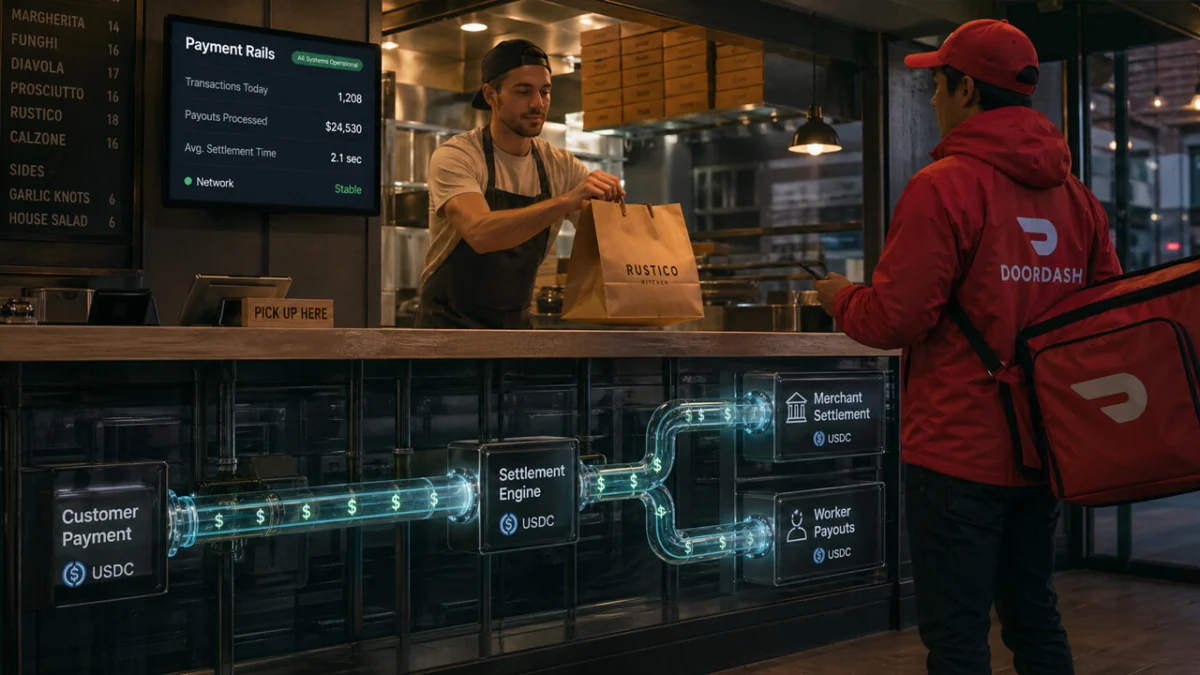
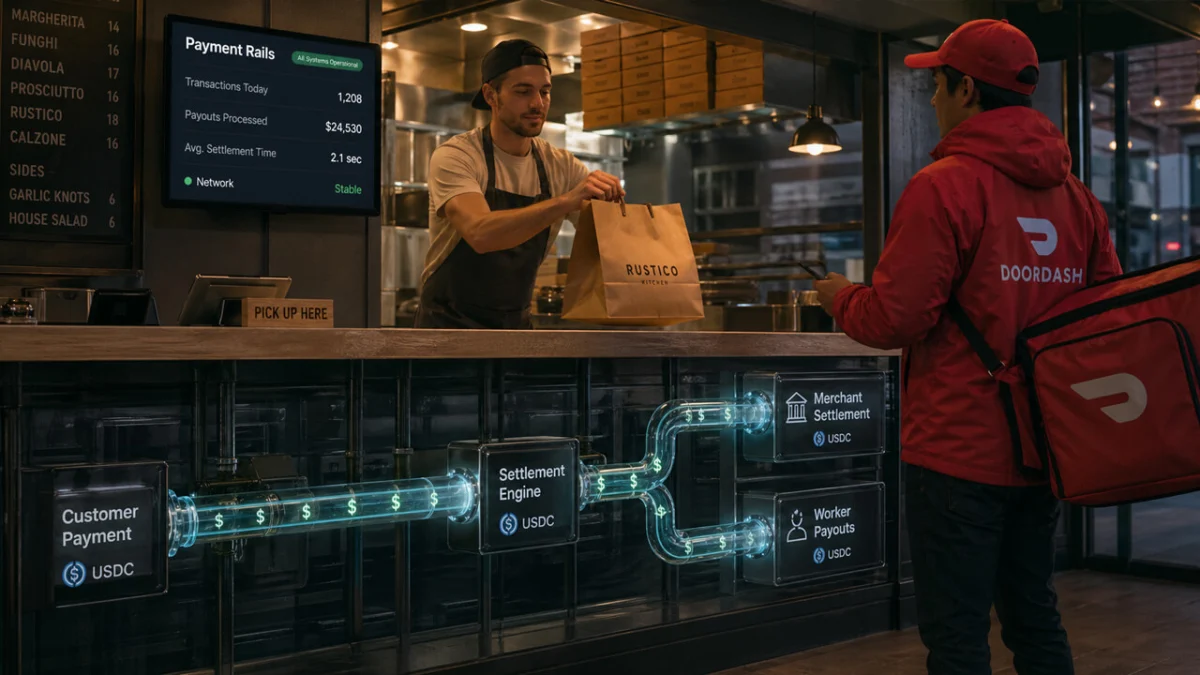
DoorDash has announced a strategic collaboration with Tempo, a payments-focused blockchain infrastructure provider backed by Stripe and Paradigm, to integrate stablecoin-powered payouts into its global marketplace. This move signals a significant shift in how the delivery giant manages the complex flow of capital between customers, merchants, and its network of independent contractors, known as Dashers. By leveraging stablecoin rails, DoorDash aims to address the inherent frictions of traditional banking systems, including settlement delays, high cross-border transaction costs, and the limitations of regional financial "rails" that often leave workers and small businesses waiting days for their earnings to clear.
The integration represents one of the most substantial real-world applications of stablecoins to date, moving the technology from the periphery of speculative trading into the core operating infrastructure of a Fortune 500 company. DoorDash currently operates in more than 40 countries, managing a three-sided marketplace where money moves in multiple directions simultaneously. Customers pay at the point of checkout, merchants require settlement to manage inventory and payroll, and Dashers rely on rapid payouts to cover immediate expenses such as fuel and maintenance. The adoption of Tempo’s blockchain technology is designed to compress the time between a completed delivery and the availability of usable cash, effectively bypassing the bottlenecks of the legacy financial system.
The Operational Mechanics of the Payout Problem
For a global marketplace like DoorDash, the "payout problem" is a multifaceted challenge involving geography, regulation, and technical latency. While the consumer-facing side of the app provides a near-instantaneous experience, the backend financial plumbing is often tethered to systems built decades ago. These systems are governed by banking cutoffs, weekend closures, and intermediary banks that each take a fee and add time to the settlement process.
In many jurisdictions, a merchant may wait 48 to 72 hours to receive funds from a weekend’s worth of orders. For small businesses operating on thin margins, this delay creates a "working capital gap" that can hinder their ability to purchase supplies or meet payroll. Similarly, Dashers—many of whom utilize DoorDash as a primary or supplementary source of immediate income—are sensitive to the speed of liquidity. This sensitivity was underscored recently when DoorDash introduced emergency relief programs for Dashers in the United States and Canada to combat rising fuel prices, highlighting the precarious nature of the "work-to-cash" cycle.
The appeal of stablecoins in this context is their ability to provide "internet-native" settlement. Unlike traditional transfers that require a chain of ledger updates across multiple banks, a stablecoin transaction on a high-throughput network like Tempo can achieve finality in seconds. This allows DoorDash to offer payouts that are not only faster but also more predictable, regardless of the recipient’s local banking hours or the complexity of the cross-border corridor.
The Evolution of Tempo and the Stripe Connection
The partnership is anchored by Tempo, a Layer 1 blockchain specifically engineered for payment use cases. Introduced as a joint venture between payments processor Stripe and crypto-focused venture capital firm Paradigm, Tempo was designed to solve the scalability and cost issues that have historically prevented large-scale enterprise adoption of public blockchains.
Tempo’s ecosystem already includes a formidable list of partners, including Deutsche Bank, Shopify, OpenAI, Revolut, Visa, and Coastal Bank. The inclusion of DoorDash in this cohort suggests a growing consensus among major tech and finance players that stablecoins are the preferred medium for modernizing treasury and payout functions.
The technical architecture of Tempo prioritizes high throughput and sub-second finality, which are essential for a company processing millions of transactions daily. Furthermore, the network utilizes stablecoin-native fees, ensuring that transaction costs remain low and decoupled from the volatility often associated with traditional cryptocurrency gas fees. For DoorDash, this predictability is vital for maintaining the unit economics of its delivery model.
A Chronology of Stablecoin Integration in Mainstream Finance
The integration of stablecoins into DoorDash’s infrastructure is part of a broader timeline of institutional adoption that has accelerated over the last 24 months.
- Early 2022: Stripe announces its re-entry into the crypto space, initially focusing on USDC (USD Coin) settlements for creators on platforms like Twitter (now X).
- 2023: Visa expands its stablecoin settlement capabilities to the Solana blockchain, partnering with merchant acquirers Worldpay and Nuvei.
- Late 2023: Stripe and Paradigm reveal the development of Tempo, positioning it as the "missing link" for enterprise-grade stablecoin payments.
- Early 2024: Shopify begins exploring USDC payments via Base, a Layer 2 network, to streamline checkout for global merchants.
- Mid-2024: DoorDash, Coastal Bank, and ARQ join the Tempo ecosystem, marking the transition from "pilot phases" to "infrastructure integration."
This timeline reflects a shift in the narrative surrounding digital assets. While Bitcoin has largely found its niche as a "digital gold" or a macro-economic hedge, stablecoins are increasingly viewed as the "financial plumbing" of the internet. According to recent market data, stablecoin transaction volume exceeded $28 trillion in the first quarter of 2024 alone. While a significant portion of this volume is attributed to automated trading and liquidity management, the entry of platforms like DoorDash indicates that "real-world" commercial volume is poised to become a larger share of the total.
Stakeholder Reactions and Strategic Analysis
Andy Fang, co-founder of DoorDash, has emphasized that the primary driver behind this move is the pursuit of operational efficiency. "The appeal lies in making payouts faster and more affordable," Fang noted, adding that the technology directly addresses the friction felt by merchants and Dashers.
Financial analysts suggest that the move also provides DoorDash with a competitive advantage in the labor market. In the "gig economy," the speed of pay is a major factor in worker retention. By offering near-instant payouts via stablecoins—which can then be off-ramped to local currency or held in digital wallets—DoorDash makes its platform more attractive to contractors who require high-velocity access to their earnings.
From a merchant perspective, the benefits are equally tangible. Coastal Bank and ARQ, both partners in the Tempo rollout, have indicated that stablecoin settlement can reduce the costs associated with "chargebacks" and reconciliation errors. Because blockchain transactions are immutable and provide a transparent audit trail, the administrative overhead of managing thousands of micro-transactions is significantly reduced.
Broader Implications for the Global Economy
The DoorDash-Tempo partnership serves as a litmus test for the viability of blockchain at scale. If successful, it could provide a blueprint for other high-volume marketplaces—such as Uber, Airbnb, or Amazon—to transition their payout systems to stablecoin rails.
However, several challenges remain. The regulatory environment for stablecoins is still evolving, with the European Union’s MiCA (Markets in Crypto-Assets) regulation and pending legislation in the United States creating a complex compliance landscape. DoorDash has not yet released a full technical breakdown of how it will handle "Know Your Customer" (KYC) and Anti-Money Laundering (AML) requirements for on-chain payouts, though it is expected to rely on the compliance frameworks already built into the Stripe and Tempo ecosystems.
Furthermore, the "last mile" of the transaction—converting stablecoins back into local fiat currency—remains a hurdle in regions with underdeveloped digital asset infrastructure. To address this, many enterprise systems are adopting a "hybrid" model where the blockchain handles the cross-border and settlement logic, while traditional banking partners handle the final "off-ramp" to the user’s bank account.
Conclusion: The Invisible Infrastructure
The most profound implication of DoorDash’s move into stablecoins is the potential for the technology to become "invisible." For the average Dasher or merchant, the underlying blockchain may eventually become as irrelevant as the TCP/IP protocols that power the internet. They will simply notice that their money arrives faster, costs less to move, and is more reliably available.
By focusing on the backend "plumbing" of payouts rather than the consumer-facing "hype" of crypto-investing, DoorDash and Tempo are positioning stablecoins as a pragmatic solution to a decades-old financial problem. As this technology moves deeper into the operating infrastructure of global commerce, the measure of its success will not be found in token prices or speculative frenzies, but in the subtle, systemic improvement of how money moves through the global economy. The redesign of financial plumbing is well underway, and DoorDash’s latest move suggests that the era of "instant settlement" for the physical world is closer than ever.