admin
admin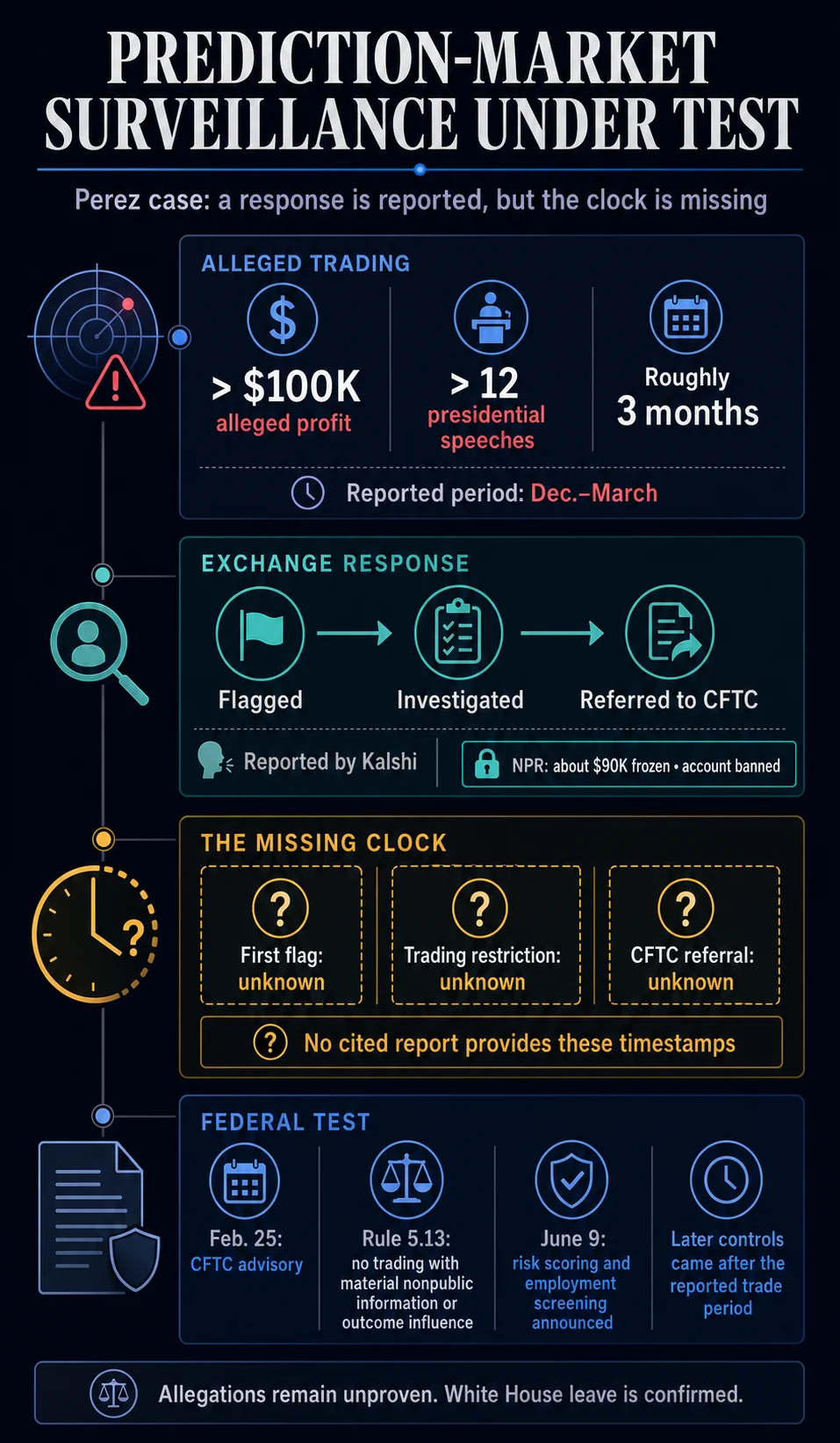
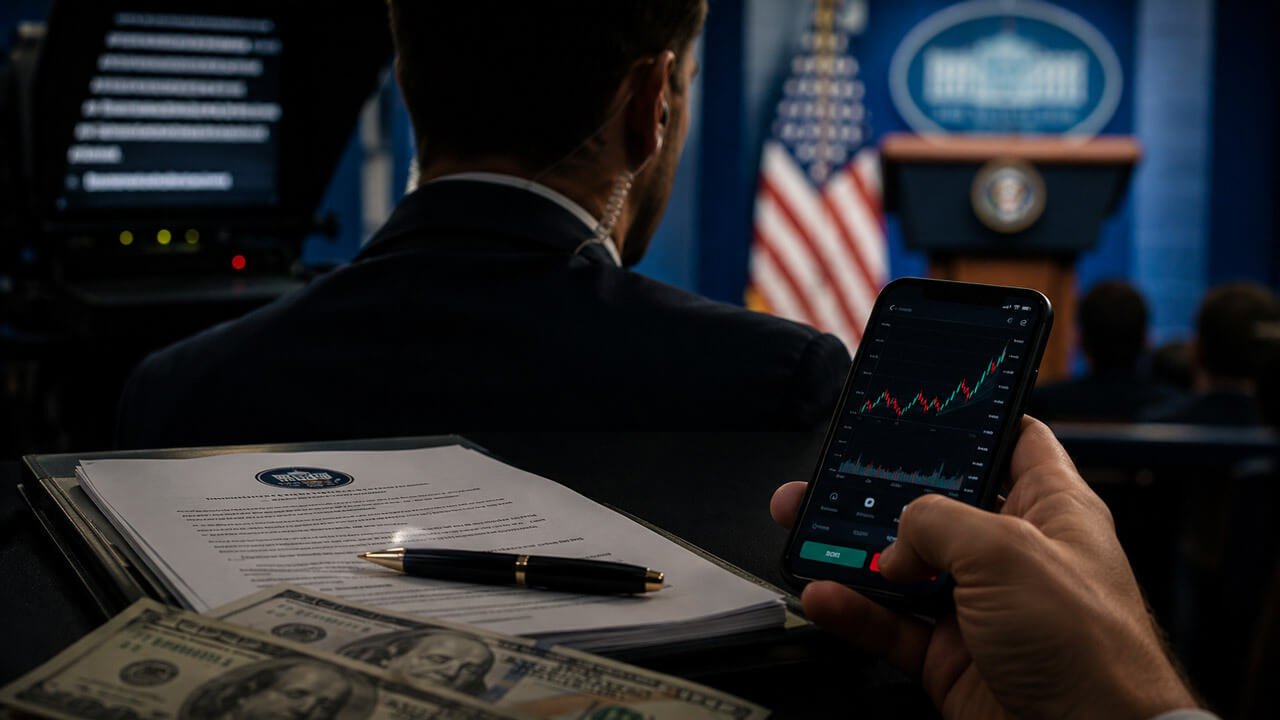
The White House has placed Gabriel Perez, a longtime teleprompter operator for President Donald Trump, on unpaid administrative leave. This action, effective July 16, follows allegations reported by ABC News that Perez leveraged advance access to President Trump’s prepared remarks to amass over $100,000 through trading on the prediction market platform Kalshi. Sources familiar with the matter, speaking to ABC News, indicated that the alleged trading activity spanned more than a dozen speeches over approximately three months. Furthermore, it is understood that Perez is currently engaged in discussions with the Commodity Futures Trading Commission (CFTC) regarding a potential settlement. The CFTC has declined to comment on the ongoing situation.
Kalshi, in a separate statement, confirmed that its internal surveillance team proactively identified, investigated, and subsequently referred the trades in question to the CFTC. This development was also independently reported by NPR, which, citing unnamed sources, stated that the exchange had frozen approximately $90,000 of Perez’s funds and issued a ban preventing him from further participation on the platform. The precise timeline of these actions, however, remains a critical point of inquiry.
Unfolding Allegations: A Timeline of Suspicion and Intervention
The core of the controversy centers on the alleged misuse of non-public information for financial gain. Gabriel Perez, whose role involved the critical task of managing President Trump’s teleprompter, is accused of exploiting his privileged access to upcoming speeches. These speeches, often containing policy announcements, economic outlooks, or political stances, could significantly influence various markets if their content were known in advance.
The alleged trading spree reportedly occurred over a period of roughly three months, encompassing more than a dozen distinct speeches. While the exact dates of these speeches are not publicly detailed in the initial reports, the timeframe suggests a sustained pattern of activity. The nature of prediction markets like Kalshi allows users to bet on the outcome of future events, which can include political developments, economic indicators, or even specific statements made by public figures. In this context, knowing the content of a presidential speech before its public delivery would provide an almost insurmountable informational advantage.
According to sources cited by ABC News, Perez is exploring a settlement with the CFTC. This suggests that federal regulators are actively investigating the allegations and may be seeking to resolve the matter without a lengthy legal battle. The CFTC’s involvement is significant, as the agency oversees the regulation of derivatives markets, including prediction markets that fall under its purview.
Kalshi’s response, as reported, indicates a functional internal control system. The exchange claims its surveillance team flagged the suspicious activity, launched an investigation, and then escalated the matter to the CFTC. This sequence of events, if accurately portrayed, suggests that Kalshi’s systems are designed to detect anomalies and enforce trading rules. However, the absence of specific timestamps for each step of Kalshi’s intervention leaves a crucial gap in understanding the full scope of the alleged illicit trading and the effectiveness of the exchange’s preventative measures.
The Crucial Gap: Timestamps and Regulatory Oversight
A significant point of contention and a key area for further investigation is the precise timing of Kalshi’s actions. Reports from ABC News, The Associated Press, and NPR, while detailing the allegations and Kalshi’s reported response, do not provide specific dates for when Kalshi first flagged Perez’s account, when trading restrictions were imposed, or when the referral to the CFTC was made in relation to the alleged series of speeches.
This lack of precise chronological data makes it challenging to determine whether Kalshi’s intervention occurred before all of the alleged illicit trades took place. If the flagging and restriction happened after the majority of the trading was completed, it would raise questions about the efficacy of Kalshi’s surveillance in preventing financial impropriety, rather than merely detecting it after the fact. The effectiveness of any regulatory framework hinges on its ability to act as a deterrent and to intervene swiftly to prevent harm.
The governing framework for such activities is outlined by the CFTC. A CFTC advisory issued in February of the current year emphasized that the misappropriation of confidential information, in violation of a duty, can constitute a breach of Section 6(c)(1) of the Commodity Exchange Act and Regulation 180.1. This advisory serves as a clear signal from the regulator that such practices are subject to enforcement.
Furthermore, the advisory highlighted the independent responsibility of designated contract markets, such as Kalshi, to maintain comprehensive audit trails, conduct rigorous trading surveillance, and enforce their own rules. Kalshi’s rulebook explicitly prohibits its members from trading contracts when they possess material nonpublic information or exert influence over the outcome of the event being traded. It also mandates the review and investigation of any unusual trading activity.
Kalshi’s Surveillance System: A Closer Look
The integrity of prediction markets is paramount, especially when they are regulated by federal bodies like the CFTC. Kalshi’s operations are subject to these regulations, and the exchange has publicly stated its commitment to maintaining market integrity. The platform’s surveillance system is a critical component of this commitment.
Sources indicate that Kalshi’s system is designed to monitor trading patterns for anomalies that could suggest insider trading or market manipulation. When such anomalies are detected, the system is intended to trigger an alert, prompting an internal investigation. If the investigation substantiates the suspicion, the information is then typically referred to the relevant regulatory authorities for further action.
In the case of Gabriel Perez, the allegations suggest that Kalshi’s surveillance system did identify unusual trading activity linked to his account. The subsequent investigation and referral to the CFTC appear to be the intended functioning of the exchange’s integrity protocols. However, the critical missing piece of information is the timing of these interventions relative to the alleged trades. Without this temporal context, it is difficult to assess whether Kalshi’s actions were sufficiently prompt to prevent the full extent of the alleged illicit profits.

The potential financial gain of over $100,000 suggests that the alleged trading was not insignificant. If these trades were executed over a period of three months, it implies a sustained opportunity for profit, and the question remains whether Kalshi’s surveillance was proactive enough to halt this activity earlier.
Broader Implications for Prediction Markets and Regulatory Enforcement
The allegations against Gabriel Perez, if proven, have significant implications for the broader landscape of prediction markets and the regulatory oversight thereof. These markets, while offering unique avenues for market participants to express views on future events, are inherently vulnerable to insider trading. The perceived advantage of having access to non-public information, especially in the political or economic spheres, can create strong incentives for illicit activity.
This case is not an isolated incident. The CFTC has previously issued general warnings about the growing problem of insider trading in prediction markets. Furthermore, CryptoSlate has reported on other cases, such as the involvement of a Special Forces soldier with Polymarket, highlighting a recurring theme of individuals attempting to profit from privileged information within these platforms. The current allegations are particularly noteworthy because they involve a direct link to the White House and a federally regulated exchange’s mention markets.
The timing of these allegations also coincides with a significant development from Trump Media & Technology Group. On July 16, the company announced the launch of Truth API, a paid data feed designed to deliver posts from influential Truth Social accounts, including President Trump’s, to institutional clients. This service, scheduled to commence on August 1, is explicitly aimed at high-frequency and algorithmic trading firms, for whom even minute delays in information can represent a substantial cost. While the Truth API concerns faster access to information after its public dissemination, it underscores the increasing commodification of timely information related to President Trump and his activities.
The Perez allegations and the Truth API development, while distinct, highlight adjacent market dynamics driven by the same underlying asset: the rapid dissemination of President Trump’s words and actions. The former involves illicitly accessing information before it is public, while the latter focuses on optimizing access to information immediately after its public release. Both scenarios underscore the high value placed on information speed and exclusivity in financial markets.
Kalshi announced new market integrity measures on June 9, including the implementation of market risk scores and employment verification for users accessing certain high-risk markets. These measures were introduced after the reported period of December to March during which Perez allegedly conducted his trading. It remains unclear whether these newly implemented safeguards were applied to presidential-mention markets or if similar checks were already in place prior to their broader rollout. The effectiveness and timing of these integrity measures will likely be a key factor in the ongoing investigation.
In conclusion, while Kalshi’s surveillance appears to have been effective enough to generate a referral to the CFTC and result in a reported freeze of funds and a ban, the repeated alleged trading and the absence of definitive timestamps leave the speed and deterrent impact of its response in this particular case unproven. The investigation into Gabriel Perez’s alleged trading activities will likely shed further light on the vulnerabilities of prediction markets and the robustness of regulatory oversight in safeguarding against insider trading.