admin
admin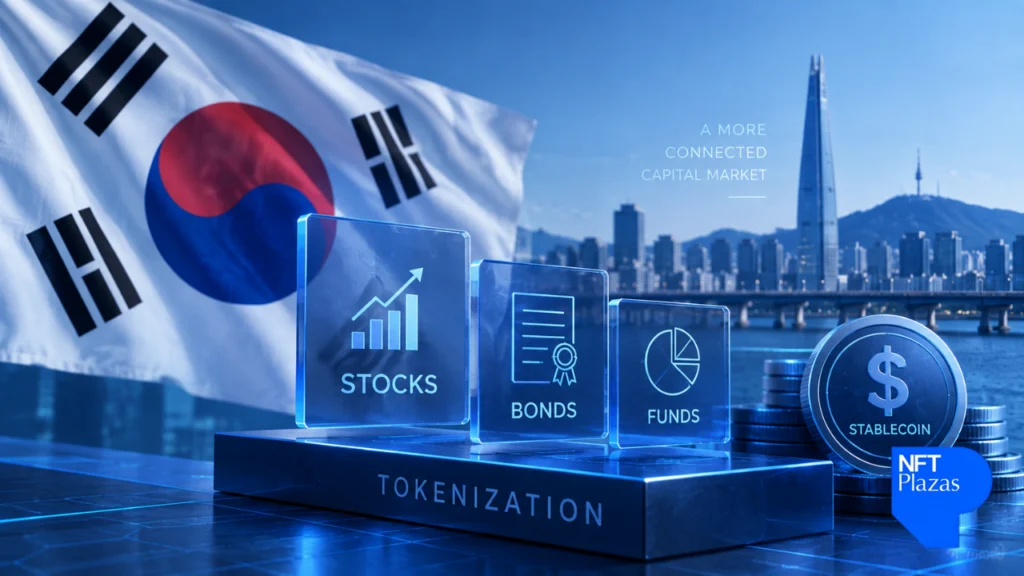
South Korea is poised to revolutionize its capital markets, embarking on a comprehensive, three-phase roadmap to integrate traditional securities onto blockchain infrastructure. This ambitious initiative, spearheaded by the Financial Services Commission (FSC), aims to eventually link tokenized stocks, bonds, and investment funds directly to stablecoin-based payment systems, promising a future of enhanced efficiency, transparency, and liquidity in the nation’s financial landscape. The announcement, made by the FSC on September 4 following extensive public-private consultations on securities tokenization, signals a pivotal shift from niche fractional investment products to a full-scale integration of distributed ledger technology (DLT) into mainstream financial instruments.
The initial phase of this transformative journey is slated to commence on February 4, 2027. This date is significant as it coincides with the anticipated enactment of amendments to the Act on Electronic Registration of Stocks and Bonds, which will legally recognize tokenized securities as legitimate digital forms of their conventional counterparts. This foundational legal recognition is crucial, paving the way for the secure and regulated issuance and circulation of a broad spectrum of tokenized assets. The move underscores South Korea’s proactive stance in embracing financial innovation, positioning itself at the forefront of countries exploring the profound implications of blockchain for capital markets.
A Deeper Dive into Seoul’s Strategic Three-Phase Roadmap
The meticulously planned roadmap is designed for gradual implementation, allowing regulators and financial institutions to adapt, test, and scale the infrastructure systematically.
Phase One: Laying the Foundation (February 2027 Onwards)
The inaugural phase, kicking off in early 2027, will focus on a carefully selected, limited group of assets to establish a robust legal and technical bedrock. This initial rollout will target:
- Privately Pooled Money Market Funds and Bonds Reserved for Institutional Investors: This segment offers a controlled environment to test the system with sophisticated participants who typically have higher risk tolerance and technical capabilities. The institutional focus allows for thorough debugging and refinement of the DLT infrastructure without immediate widespread retail exposure.
- Unlisted Stocks Held Through Trust Structures: Tokenizing unlisted equities held in trusts can enhance transparency and potentially simplify transfer processes for these often illiquid assets.
- Publicly Offered Fractional Investment Securities: While the roadmap moves beyond the existing fractional investment security token offerings (STOs), including these ensures continuity and integration of previous advancements into the new, broader framework.
This cautious yet determined approach for Phase One is vital. It allows the Korea Securities Depository (KSD), a critical partner in this initiative, to develop and fine-tune the technical requirements and shared infrastructure that securities firms will need to connect to. It also provides the FSC with the opportunity to refine subordinate rules under the Financial Services and Electronic Registration Acts, with initial revisions already planned for proposal by the end of September. The successful execution of this phase will be instrumental in building confidence and demonstrating the viability of DLT for financial assets.
Phase Two: Expanding to Mainstream Securities
Following the successful establishment and stabilization of the infrastructure in Phase One, the second phase will mark a significant expansion. It aims to broaden tokenization to encompass all publicly offered securities. This is where the true transformation of South Korea’s capital markets will become evident. Bringing blockchain-based infrastructure into mainstream securities markets – including widely traded stocks and bonds – signifies a departure from merely supporting specialized investment products. This phase will require extensive collaboration between regulators, exchanges, brokerages, and technology providers to ensure seamless integration and widespread adoption. The implications for market efficiency, liquidity, and accessibility at this stage are substantial, potentially redefining how conventional assets are issued, traded, and managed.
Phase Three: The Ultimate Digital Convergence – On-Chain Payments
The third and most ambitious phase targets the payment layer, envisioning an on-chain payments infrastructure directly linked to stablecoins. This is the ultimate goal of South Korea’s roadmap: a fully integrated digital ecosystem where the issuance, trading, and settlement of tokenized securities can operate entirely within connected digital systems. This vision aims to eliminate traditional settlement friction, automate significant portions of transaction processing, and create more direct, instantaneous links between asset ownership and payment. For instance, a tokenized stock trade could settle almost instantly on-chain using a regulated stablecoin, drastically reducing the "T+2" or "T+3" settlement cycles common in conventional markets, thereby lowering counterparty risk and freeing up capital.
However, the FSC has wisely not committed to fixed dates for the second and third phases. Their implementation will be contingent upon several critical factors: the demonstrable success and stability of the initial tokenization program, the pace of technological adoption by financial institutions, and crucially, the progress of pending stablecoin legislation. This cautious sequencing acknowledges the complexity of integrating novel technologies into highly regulated financial systems and the need for a robust regulatory framework for digital currencies.
New Rules and Safeguards for a Digital Market
Alongside the roadmap, the FSC has proactively established a robust regulatory framework designed to expand access to tokenized markets while safeguarding investors and maintaining financial stability.
Investor Protection Measures:
The model standards for fractional investment include specific caps to manage retail investor exposure:

- Individual Subscription Limits: Capped at the lower of 30 million won (approximately $22,000 USD) or 5% of an offering’s total issuance. This prevents overconcentration in a single investment for individual retail investors.
- Over-the-Counter (OTC) Trading Limits: Retail investors face annual net purchase caps of 100 million won (approximately $74,000 USD) per exchange for tokenized securities traded OTC. This measure aims to control speculative activity and ensure that retail participation remains within manageable limits as these markets mature.
These limits reflect a balanced approach, fostering innovation and broader market participation while mitigating the inherent risks associated with emerging digital asset classes. South Korea has a vibrant retail investment culture, and these rules are designed to channel that enthusiasm into a regulated and secure environment.
Requirements for Financial Firms:
Entities managing tokenized securities accounts will be held to stringent capital and technological standards:
- Equity Capital Requirement: A minimum of 4 billion won (approximately $2.9 million USD) in equity capital is mandated. This ensures that firms entering this space possess sufficient financial strength to absorb potential shocks and operate reliably.
- Personnel Requirements: Dedicated personnel responsible for account management, internal controls, and IT security are compulsory. This emphasizes the need for specialized expertise to handle the unique operational and cybersecurity challenges posed by DLT.
- Technical Readiness: The KSD is actively developing the technical requirements for securities firms to connect to the shared infrastructure. This ensures interoperability, security, and consistent standards across all participating entities.
These requirements underscore the regulatory commitment to ensuring the integrity and stability of the tokenized securities market, mirroring the robust oversight applied to traditional financial institutions.
The Rationale: Why South Korea is Leading the Charge
South Korea’s decision to aggressively pursue a blockchain roadmap for its capital markets is driven by a confluence of domestic factors and global trends. The nation boasts one of Asia’s most dynamic retail investment cultures, characterized by high participation rates in both traditional equities and, significantly, cryptocurrencies. This large, digitally native user base provides fertile ground for the adoption of tokenized assets. Regulators have increasingly focused on creating a framework that integrates digital assets and blockchain-based financial products into the regulated system, rather than allowing them to operate in a shadow economy, thereby enhancing investor protection and market integrity.
Furthermore, this initiative aligns with a broader regional push towards blockchain-based financial infrastructure. Japan, for instance, is actively exploring a blockchain settlement system for stocks and government bonds, demonstrating a similar ambition to leverage DLT for core financial operations. Financial hubs like Singapore, through initiatives like Project Guardian, are developing sophisticated regulatory frameworks for stablecoins and conducting pilot programs for tokenized assets across various asset classes. The European Investment Bank has already issued tokenized bonds on public blockchains, and major financial institutions globally, such as J.P. Morgan with its Onyx platform, are exploring DLT for wholesale payments and securities.
What makes South Korea’s plan particularly notable is its integrated approach. Unlike some jurisdictions that treat tokenized securities and stablecoins as separate regulatory domains, Seoul is explicitly considering an infrastructure where securities issuance, trading, and settlement can be digitally connected via blockchain-based payment rails. This holistic vision promises several transformative benefits:
- Reduced Settlement Friction: Real-time or near real-time settlement can significantly reduce counterparty risk and free up capital currently locked during multi-day settlement cycles.
- Automated Transaction Processing: Smart contracts can automate various aspects of the transaction lifecycle, from trade execution to corporate actions, reducing manual errors and operational costs.
- Enhanced Transparency: DLT’s immutable ledger provides a transparent and auditable record of ownership and transactions.
- Improved Liquidity: Fractionalization, facilitated by tokenization, can unlock liquidity for previously illiquid assets, making them accessible to a wider range of investors.
- Lower Costs: Streamlined processes and reduced intermediaries can lead to lower transaction and operational costs for market participants.
Challenges and the Path Forward: Infrastructure as the Ultimate Test
While the potential benefits are substantial, moving securities onto blockchain is not without its challenges. The technology introduces new complexities that must be meticulously managed:
- Cybersecurity: DLT systems, while inherently secure in some respects, are still vulnerable to sophisticated cyberattacks targeting smart contracts, wallets, or network infrastructure.
- Smart-Contract Vulnerabilities: Bugs or exploits in smart contract code could have widespread financial implications, necessitating rigorous auditing and testing.
- Liquidity Management: Ensuring sufficient liquidity in tokenized markets, especially for new or less common asset classes, will be crucial for efficient price discovery and trading.
- Regulatory Harmonization: As transactions increasingly cross national borders on DLT, questions over how tokenized assets should be supervised and how conflicting regulations can be harmonized will become paramount.
- Interoperability: Ensuring that different blockchain networks and existing legacy systems can communicate and exchange data seamlessly is a major technical hurdle.
- Scalability: The ability of DLT networks to handle the high volume of transactions characteristic of global capital markets without performance degradation is a critical concern.
The phased structure of South Korea’s roadmap is therefore a strategic advantage. By starting with a narrower group of securities and institutional participants, regulators are effectively creating a controlled environment for testing and refinement. The first phase, commencing in February 2027, will serve as a crucial litmus test, demonstrating whether financial institutions can successfully integrate distributed ledger infrastructure into existing market operations without compromising investor protection or financial stability. This pilot phase will provide invaluable insights into the practical challenges and solutions required for broader adoption.
If this initial system performs as intended, the subsequent phases could indeed be far more consequential. Tokenization would transition from a niche application, primarily used for fractional investments, into a foundational architecture for conventional securities across the entire market. South Korea’s ultimate goal – a digital capital market where tokenized stocks, bonds, and funds can eventually settle through blockchain-based payment infrastructure connected to stablecoins – represents a paradigm shift for financial markets.
For now, February 2027 stands as the immediate and critical milestone. However, the comprehensive roadmap articulated by the FSC unmistakably signals that Seoul no longer views security tokens as a peripheral experiment. Instead, it is actively positioning blockchain as a potential, indispensable foundation for the next generation of its regulated capital markets, aiming to enhance its competitiveness and solidify its position as a leader in financial innovation on the global stage. This strategic pivot promises to reshape not just South Korea’s financial landscape but also serve as a significant case study for other nations contemplating similar transformations.