admin
admin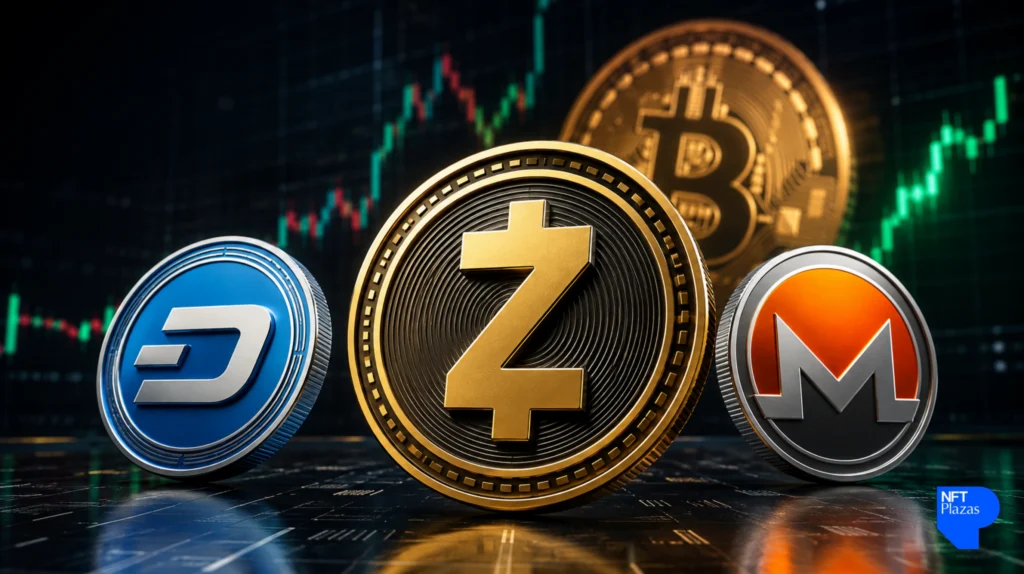
The cryptocurrency market witnessed a significant surge on September 5, with Bitcoin briefly crossing the formidable $81,000 mark before consolidating its gains. While the flagship cryptocurrency set a strong backdrop for market confidence, the most compelling narrative of the day emerged from the often-overlooked privacy coin sector. Zcash (ZEC) stood firm around the $1,000 threshold, Dash (DASH) experienced an astonishing surge of over 40% in a mere 24 hours, and Monero (XMR) also delivered notable gains, outperforming Bitcoin over the weekly timeframe. This concerted rally signaled a distinct shift in capital flows, with investors increasingly prioritizing tokens offering enhanced privacy features.
This robust performance by privacy coins, an asset class traditionally fraught with regulatory challenges, marks a pivotal moment. Zcash, in particular, became the undeniable centerpiece of this resurgence, largely propelled by a new and significant access point for investors: the listing of Grayscale’s ZCSH product on NYSE Arca. This institutional gateway not only legitimized Zcash in the eyes of many traditional investors but also ignited a broader rally that subsequently spilled over to other prominent privacy coins like Dash and Monero, firmly positioning the sector as a leading force in the market’s latest rebound.
Zcash’s Meteoric Rise: A Rally Rooted in Institutional Access
On September 5, Zcash was trading robustly around $1,025, successfully holding above the psychologically important $1,000 level following an impressive weekly run. Data compiled by CoinGecko revealed ZEC’s remarkable performance: an approximate 9.5% increase in 24 hours and a staggering 28.1% gain over the preceding seven days. This significantly outstripped Bitcoin’s comparatively modest 2.7% gain within the same seven-day period, underscoring the focused buying pressure on Zcash.
The rally propelled ZEC’s market capitalization to an estimated $17.3 billion, with its 24-hour trading volume soaring to nearly $1.3 billion. This substantial volume indicates active participation and strong demand from both retail and institutional players. Looking at a broader timeframe, Zcash’s performance is even more striking: the token gained approximately 102.8% over the past 30 days, and its one-year gain exceeded an astounding 2,400%. These figures firmly establish Zcash as one of the unequivocal standout performers among privacy coins and indeed, across the broader cryptocurrency market, during the current recovery phase. The ability of ZEC to maintain its price stability above the $1,000 mark, particularly after such rapid appreciation, suggests a fundamental shift in investor sentiment and a strong underlying support base.
The Grayscale Catalyst: Unlocking New Investor Pathways
The primary driver behind Zcash’s accelerated momentum was the successful listing of the Grayscale Zcash Trust (renamed The Zcash ETF) on NYSE Arca in late August, trading under the ticker ZCSH. According to official SEC filings, this landmark event occurred on August 25, 2026. This development represented a watershed moment not only for Zcash but for the entire privacy coin asset class.

The introduction of ZCSH on a mainstream stock exchange like NYSE Arca fundamentally alters the investment landscape for Zcash. It opens a critical new route for both institutional and traditional retail investors to gain exposure to ZEC through conventional brokerage accounts. This eliminates several significant barriers that have historically hindered broader adoption of cryptocurrencies, particularly privacy coins. Investors no longer need to navigate the complexities of direct token purchases on often-unregulated crypto exchanges, nor do they face the challenges and security risks associated with self-custodying their digital assets. For privacy coins, an asset class that has frequently grappled with listing restrictions and stringent compliance hurdles across various jurisdictions, having a regulated product trade on NYSE Arca is an extraordinary endorsement. It confers a level of legitimacy and accessibility that profoundly differentiates Zcash within its sector.
The impact of the Grayscale product was almost immediate and measurable. As of September 3, the ZCSH product held approximately $414.7 million in assets under management (AUM), encompassing about 428,613 ZEC. Furthermore, the product has logged at least $34.4 million in net inflows since its launch, indicating robust initial investor interest. September 2 marked a particularly strong day, with the largest single-day inflow recorded at around $12.6 million. These inflows signify a clear demand signal from traditional financial markets for regulated exposure to privacy-focused digital assets, suggesting a growing appetite for diversification within the crypto space, even into its more complex corners. The success of ZCSH could potentially pave the way for similar institutional products for other privacy coins, provided they can meet the rigorous compliance standards required for such listings.
Market Dynamics: The Ripple Effect of a Short Squeeze and Contagion
The upward trajectory of ZEC was further amplified by a classic market phenomenon known as a "short squeeze" once the token decisively cleared the $1,000 mark. Recent liquidation data provides compelling evidence of this acceleration. Within a 24-hour period, approximately $31.45 million worth of ZEC positions were liquidated, with a dominant $26.46 million originating from short positions. This overwhelmingly short-leaning ratio indicates that a significant number of traders had placed bets on Zcash’s price declining. As ZEC’s price surged unexpectedly, these short positions became unprofitable, forcing traders to buy ZEC to cover their positions and mitigate further losses. This forced buying pressure, in turn, fueled the rally, making ZEC’s upward move even steeper and more rapid.
The momentum generated by Zcash’s rally and the subsequent short squeeze quickly spread to other prominent privacy coins, demonstrating a clear contagion effect within the sector. Dash (DASH) experienced a particularly dramatic surge, trading around $65.88, representing an astonishing gain of approximately 44.6% in 24 hours and over 70% in seven days. Its 24-hour trading volume also spiked to about $535 million, reflecting heightened investor activity. Monero (XMR), while exhibiting more modest gains compared to the explosive performances of Zcash and Dash, nonetheless moved in tandem with the broader privacy sector’s bounce. XMR traded around $530.92, posting a respectable 4.7% increase in 24 hours and a solid 13.2% gain over seven days.
This divergence in performance, with privacy coins significantly outperforming the broader market and even Bitcoin, underscored a specific thematic rotation within the crypto space. It highlighted investor interest in assets offering distinct value propositions, even if those propositions come with inherent risks. However, the sharp and rapid gains also inherently leave the entire privacy coin group vulnerable to increased volatility, particularly if early profit-takers begin to unwind their positions.
Understanding Privacy Coins: Technology, Value Proposition, and Regulatory Headwinds
To fully appreciate the significance of this rally, it’s crucial to understand the fundamental nature of privacy coins. Unlike Bitcoin, which operates on a public ledger where all transactions are transparent, privacy coins are designed to obscure transactional details such as sender, receiver, and amount. They achieve this through various cryptographic techniques.

- Zcash (ZEC): Utilizes zero-knowledge proofs (zk-SNARKs) to allow users to shield transaction information selectively. This means transactions can be verified as valid without revealing any details about the parties involved or the amounts exchanged. Zcash offers both transparent and shielded transaction options, providing a degree of flexibility that some argue aids compliance.
- Monero (XMR): Employs ring signatures, stealth addresses, and RingCT (Ring Confidential Transactions) to ensure that all transactions are private by default. Ring signatures mix a user’s transaction with others to obscure the sender, while stealth addresses create one-time public addresses for each transaction to hide the receiver.
- Dash (DASH): Offers an optional feature called PrivateSend, which uses a CoinJoin mechanism to mix transactions from multiple users, making it harder to trace individual transactions. While not as inherently private as Monero, PrivateSend provides an enhanced level of anonymity compared to typical public blockchains.
The core value proposition of privacy coins lies in their ability to offer financial sovereignty and protection against surveillance, which resonates with proponents of individual liberty and digital rights. However, this very feature has made them a focal point of intense scrutiny from global regulators. Governments and financial watchdogs, particularly concerned with anti-money laundering (AML) and counter-terrorist financing (CTF) efforts, view the opaque nature of privacy coin transactions as a potential enabler for illicit activities.
Regulatory Challenges and Historical Precedents
The regulatory landscape has historically been the biggest impediment to the widespread adoption and institutional acceptance of privacy coins. Exchanges in various jurisdictions have previously restricted or entirely delisted privacy tokens due to compliance pressures. For instance, in 2020 and 2021, several exchanges in South Korea and Japan delisted Monero, Zcash, and Dash, citing concerns about their ability to comply with FATF (Financial Action Task Force) recommendations regarding "travel rule" implementation, which requires financial institutions to share customer information during transactions. European regulators have also expressed similar concerns, leading to an uncertain operating environment for these assets.
The listing of Grayscale’s ZCSH on NYSE Arca is particularly significant in this context. It suggests that Zcash, or at least Grayscale’s interpretation and offering of it, has found a pathway to navigate some of these regulatory complexities. This could involve stringent Know Your Customer (KYC) and AML procedures at the point of entry into the ZCSH product, effectively "on-ramping" fiat into a regulated wrapper around the ZEC asset. This distinction between the underlying protocol and the regulated investment vehicle is crucial and represents a potential blueprint for other privacy-focused assets seeking broader institutional integration.
Bitcoin’s Steady Hand and Remaining Market Risks
While privacy coins captured the immediate spotlight, Bitcoin continued to serve as the foundational backdrop for the broader cryptocurrency recovery. BTC briefly surged past $81,000 before a slight pullback, consolidating around $79,600. Its 24-hour trading range saw it fluctuate between $78,706 and $81,379. The $80,000-$81,000 zone remains a critical area for market observers to watch; a sustained break above this resistance would signal an extension of the current "risk-on" sentiment to larger assets and potentially fuel further upward momentum across the entire market. Bitcoin’s stability and continued ascent provide a crucial anchor, demonstrating robust demand for digital assets even as speculative capital rotates into other sectors.
Despite the recent enthusiasm, significant risks persist, particularly for the privacy coin sector. As highlighted, the specific nature of privacy coins makes them inherently volatile and acutely sensitive to regulatory developments. The ongoing global push for stricter AML and KYC regulations means that capital inflows into this sector, while strong now, can reverse much faster than in more established and compliant major crypto assets. Any new regulatory pronouncements or enforcement actions could quickly undermine confidence and lead to rapid price corrections.
In the short term, the sustainability of the privacy coin rally will heavily depend on two key factors: whether demand for the Grayscale ZCSH product continues to persist, indicating sustained institutional interest, and ZEC’s ability to defend the critical $1,000 price level following the initial wave of forced buying from the short squeeze. If the intense buying pressure cools down and new catalysts fail to emerge, the sector that has so spectacularly led this rally could also face the heaviest profit-taking pressure, leading to a period of consolidation or even a sharp correction. The coming weeks will be crucial in determining whether this privacy coin surge represents a lasting shift in market dynamics or a transient, albeit significant, speculative event.