admin
admin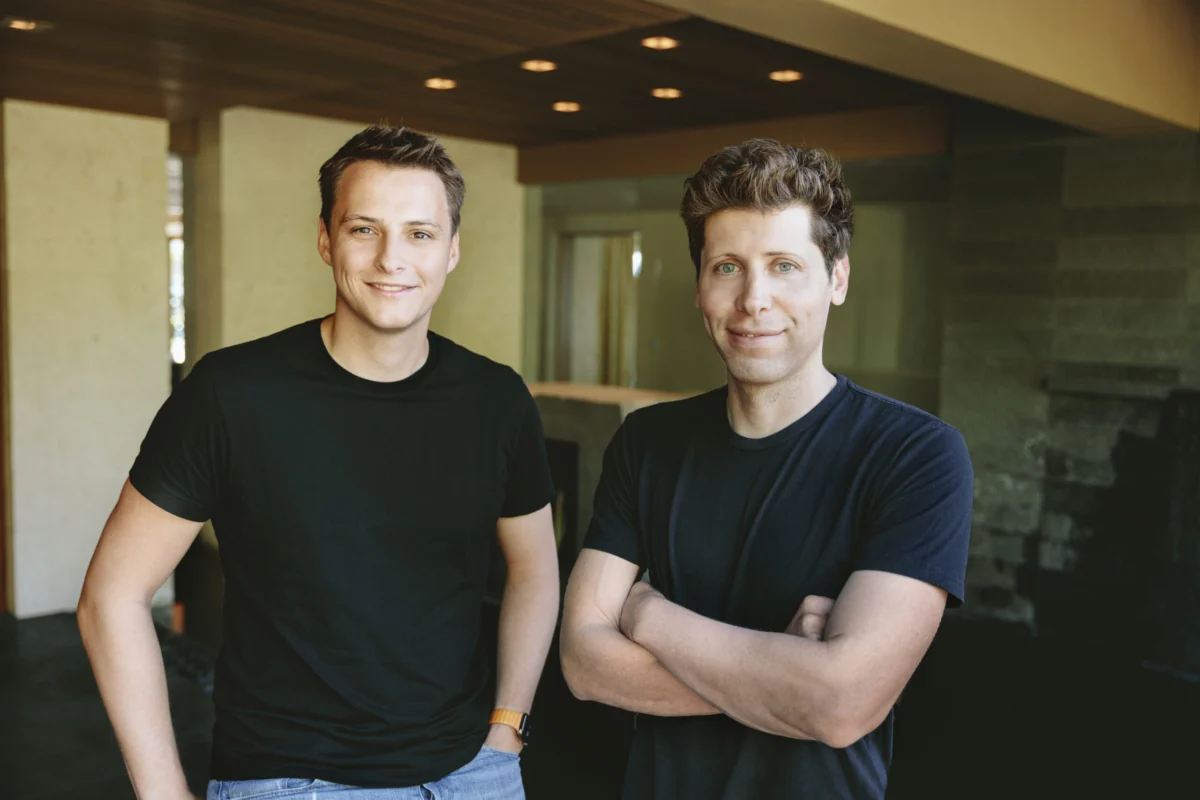
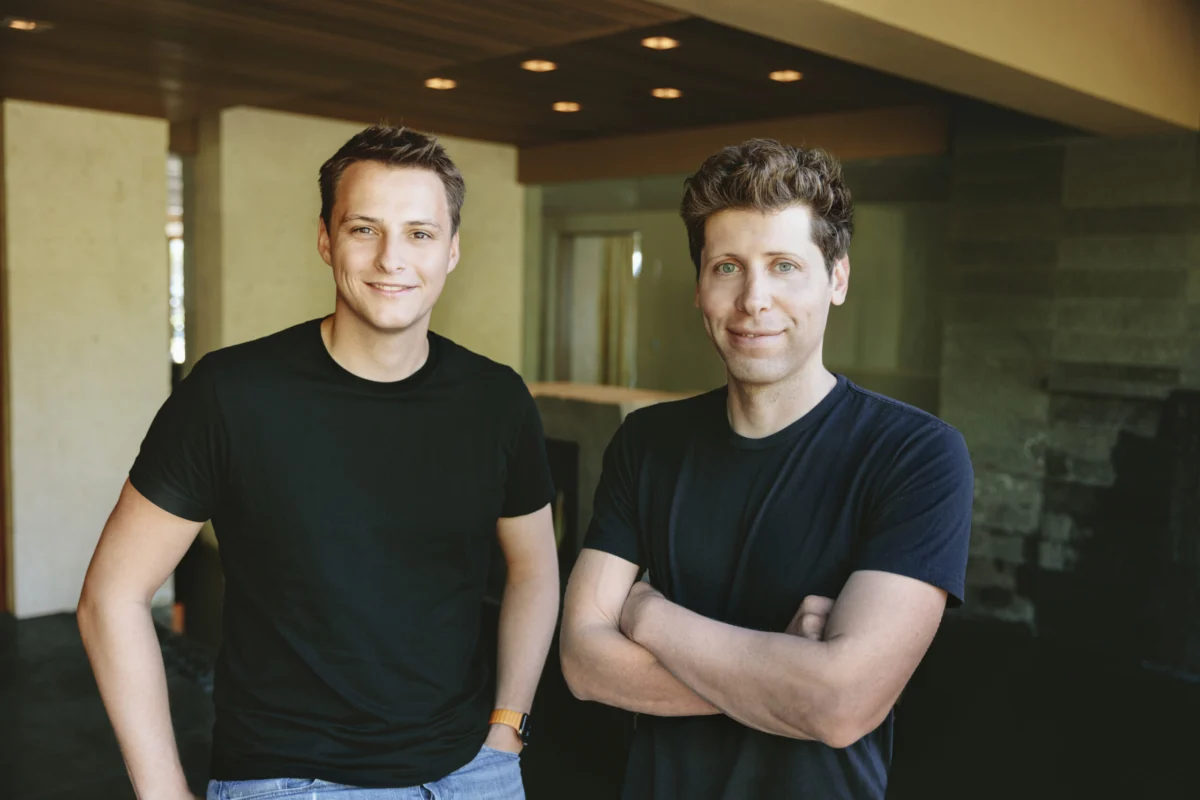
World, the ambitious online verification project co-founded by OpenAI Chief Executive Officer Sam Altman and Alex Blania, has successfully raised $52.5 million through a targeted sale of its native cryptocurrency token, WLD. The capital injection, sourced from a cohort of high-profile strategic investors, marks a significant milestone for the company as it navigates a complex landscape of biometric technology, digital identity, and the rapidly evolving artificial intelligence sector. This latest funding round was structured as a token sale with a mandatory 12-month lockup period, a mechanism designed to ensure investor stability and signal a long-term commitment to the platform’s ecosystem.
The primary recipient of the funds is the World Foundation, an exempted limited guarantee foundation headquartered in the Cayman Islands. This entity is tasked with the governance and expansion of the World network, serving as a non-profit steward for the project’s decentralized ambitions. The sale was led by Pantera Capital, a prominent venture capital firm specializing in digital assets and blockchain technology. Other notable participants in the round included Eightco Holdings, Bain Capital Crypto, Susquehanna Crypto, and Selini Capital. According to a press release issued by the company, the 12-month lockup demonstrates a "long-term commitment to World’s continued growth and utility," effectively preventing these institutional buyers from liquidating their positions in the immediate future.
The Mechanics of the "Proof of Human" Protocol
At the core of the World project is a specialized hardware and software ecosystem designed to solve a problem that Sam Altman and his colleagues believe will define the next decade of the internet: the distinction between human beings and artificial intelligence agents. As generative AI becomes increasingly capable of mimicking human speech, writing, and visual appearance, the traditional methods of online verification—such as CAPTCHAs or email-based multi-factor authentication—are becoming obsolete.
To address this, World utilizes a proprietary biometric device known as the "Orb." The Orb is a sleek, metallic spherical camera that performs high-resolution scans of a user’s iris. This biometric data is then processed into a unique cryptographic identifier, which the company refers to as a "World ID." This ID serves as a digital passport or "proof of human" marker. Crucially, the company maintains that the system is designed with privacy in mind; the iris scan is converted into a code (an iris hash), and the original image is deleted unless the user explicitly opts into data sharing for system training purposes.
The project is operationally managed by Tools for Humanity (TFH), a San Francisco-based technology startup. Alex Blania serves as the CEO and co-founder of TFH, while Altman remains a central figure as co-founder and chairman. The synergy between Altman’s roles at OpenAI and World is notable, as the proliferation of AI tools developed by the former creates the very demand for the verification tools developed by the latter.
A Chronology of Evolution: From Worldcoin to World
The project’s journey has been marked by both rapid technical advancement and significant public relations challenges. Initially launched under the name "Worldcoin," the project was inextricably linked to the broader cryptocurrency movement. The WLD token was designed not just as a medium of exchange, but as a potential vehicle for a global Universal Basic Income (UBI) system, where individuals would receive tokens simply for being human and verifying their identity.
However, the "Worldcoin" brand faced substantial headwinds following the 2022-2023 downturn in the cryptocurrency markets and increased regulatory scrutiny regarding biometric data privacy. In response, the project underwent a strategic rebranding to "World." This shift was intended to distance the project from the speculative volatility of the crypto sector and refocus public attention on its utility as a foundational layer for identity in the age of AI.
Timeline of Key Developments:
- 2019–2021: The project is conceived and enters a stealth development phase, focusing on the engineering of the Orb.
- July 2023: Worldcoin officially launches its global network and the WLD token, initiating Orb deployments in major cities including London, Tokyo, and New York.
- Early 2024: The project reaches a milestone of several million verified users globally, though it faces temporary suspensions or investigations in jurisdictions such as Spain, Kenya, and Hong Kong over data protection concerns.
- April 2024: The company launches a revamped version of its mobile application and announces a suite of high-profile integrations.
- June 2024: Amidst a broader push for operational efficiency, Tools for Humanity conducts a round of layoffs, reflecting the challenges of scaling a hardware-intensive global business.
- July 2024: The World Foundation secures the $52.5 million strategic investment led by Pantera Capital.
Strategic Partnerships and Integration Efforts
Despite its operational hurdles, World has made significant strides in integrating its "proof of human" technology into mainstream digital platforms. The company’s goal is to become the "de facto" verification layer for the internet. In April, World announced partnerships and integrations with several major service providers, including the dating app Tinder, the video conferencing giant Zoom, and the electronic signature platform DocuSign.
In the context of Tinder, a World ID verification could potentially eliminate "catfishing" and bot-driven accounts, ensuring that users are interacting with real individuals. For Zoom and DocuSign, the technology offers a layer of security against deepfake-based fraud, which has become a growing concern for corporate entities. While earlier reports suggested a partnership with Ticketmaster, the company has since clarified that no such partnership exists.
The utility of the WLD token itself remains a point of interest for investors. Beyond its role in the verification process, the token is integrated into the World App, which serves as a custodial wallet. Users can hold, trade, or use the token within the ecosystem, providing a financial incentive for participation in the network.
Supporting Data and Market Analysis
The $52.5 million raise comes at a time when the venture capital landscape for both AI and crypto is undergoing a transformation. While general crypto funding has seen a decline from its 2021 peaks, "AI-adjacent" blockchain projects are seeing renewed interest. The WLD token has experienced significant volatility since its inception, influenced by both broader market trends and news specifically related to Sam Altman and OpenAI.
According to market data, the WLD token maintains a multi-billion dollar fully diluted valuation (FDV), reflecting high expectations for its future utility despite a relatively small circulating supply. The decision by Pantera Capital to lead this round is seen by analysts as a bet on the "identity layer" of the internet. Pantera has a history of investing in foundational infrastructure, and their participation provides a layer of institutional credibility to a project that has often been viewed with skepticism by privacy advocates.
The 12-month lockup is a critical detail. In the cryptocurrency world, "token dumps" by early investors can lead to price collapses that alienate the broader user base. By committing to a year-long freeze, Pantera and its peers are signaling that they do not view WLD as a short-term speculative play, but rather as an asset that will appreciate as the network’s "Proof of Human" tools become more integrated into the global digital economy.
Official Responses and Broader Implications
The World Foundation has characterized this funding as a vital resource for global expansion. "The mission of the World network is more urgent than ever," the foundation noted in a statement. "As AI agents become more sophisticated, the ability to verify humanness while maintaining privacy will be the cornerstone of a trusted digital world."
Industry analysts suggest that the success of World will depend on two primary factors: regulatory compliance and user adoption. The company has invested heavily in legal and compliance teams to address the concerns of data protection authorities in Europe and Asia. By utilizing "Zero-Knowledge Proofs" (ZKPs)—a cryptographic method that allows one party to prove to another that a statement is true without revealing any information beyond the validity of the statement itself—World hopes to satisfy regulators that it can verify identity without compromising personal privacy.
From a broader perspective, the $52.5 million raise underscores the growing intersection of AI and blockchain. As AI creates a world of abundant, often indistinguishable content, blockchain technology provides a ledger of authenticity. Sam Altman’s involvement in both spheres positions him at the center of this technological convergence.
Operational Challenges and Future Outlook
While the funding provides a financial cushion, World faces the daunting task of scaling its hardware distribution. The Orb, while a feat of engineering, is expensive to produce and requires physical presence for user onboarding. This creates a bottleneck that purely software-based competitors do not face. The June layoffs at Tools for Humanity suggest that the company is currently focused on streamlining its operations to ensure that the capital raised is used efficiently for technical development rather than just administrative overhead.
Looking forward, the World project aims to expand its Orb presence into more "partner stores" and public spaces globally. The company is also working on "World Chain," a blockchain designed specifically to prioritize human users over automated bots, further deepening the integration between its verification tools and its financial ecosystem.
As the 12-month lockup period begins, the tech industry will be watching closely to see if World can translate its significant capital and high-profile leadership into a ubiquitous standard for digital identity. In a world increasingly dominated by algorithms and synthetic media, the value of being able to prove one’s humanity may eventually become the most valuable asset of all.