admin
admin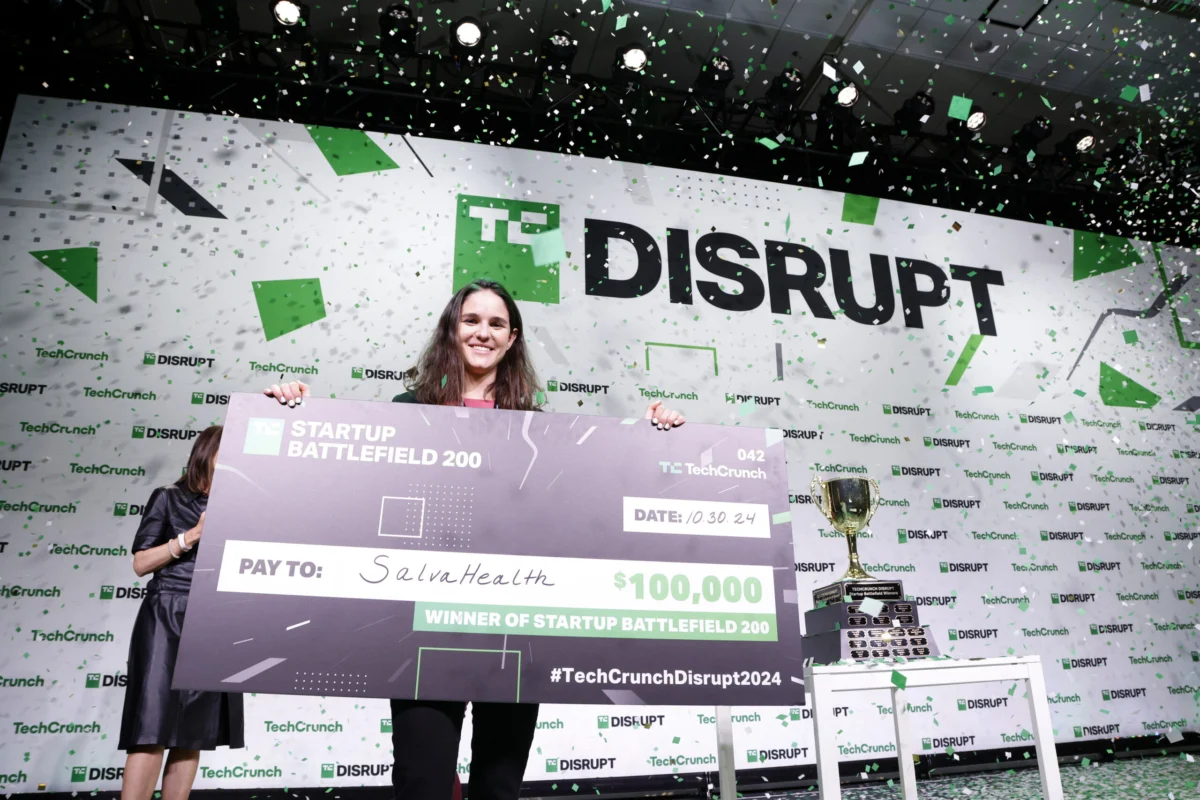
Today marks the final opportunity for global entrepreneurs and early-stage founders to secure a place in the Startup Battlefield 200, the premiere startup competition hosted annually at TechCrunch Disrupt. With the application window set to close officially at 11:59 p.m. PT, the tech industry is bracing for a final surge of submissions from companies vying for a chance to win $100,000 in equity-free funding. This deadline represents the culmination of a months-long search for the world’s most disruptive and innovative early-stage companies, offering them a platform that has historically served as the launchpad for some of the most influential names in the modern technology ecosystem.
The Startup Battlefield 200 is more than a simple pitch competition; it is a curated cohort of the 200 most promising startups from around the globe. Those selected to join this group receive a comprehensive package of benefits, including free exhibition space on the TechCrunch Disrupt floor, access to exclusive workshops, and direct networking opportunities with top-tier venture capitalists and corporate leaders. For founders, the stakes are high, as the exposure gained during the three-day event in San Francisco can often dictate the trajectory of a company’s series funding and market entry.
A Legacy of Market-Defining Innovation
The prestige of the Startup Battlefield is rooted in its remarkable track record of identifying category-defining companies long before they become household names. Since its inception, the competition has featured more than 1,700 startups. Collectively, these alumni have raised a staggering $32 billion in venture capital and have seen more than 250 successful exits through acquisitions or initial public offerings (IPOs).
Prominent examples of past participants illustrate the competition’s role in tech history. Dropbox, now a leader in cloud storage and collaboration, famously demoed its product to a skeptical audience at a time when the concept of the "cloud" was still in its infancy. Similarly, Cloudflare utilized the platform to pitch its edge infrastructure and security solutions before the industry fully grasped the importance of content delivery networks. Discord, which began its journey as a scrappy gaming startup named Hammer & Chisel, also rose through the ranks of the Battlefield. Other notable alumni include Mint, Fitbit, Trello, and Getaround.

The common thread among these success stories is not necessarily the polish of the initial pitch, but the fundamental disruptiveness of the underlying technology. TechCrunch’s editorial team has long maintained that the competition is designed to reward potential rather than current revenue or market share. This philosophy allows pre-launch startups and those with early traction to compete on equal footing with more established Series A companies, provided their vision has the power to reshape an entire industry.
The Selection Process and Participant Criteria
The selection process for the Startup Battlefield 200 is notoriously rigorous. Thousands of applications are submitted annually from every corner of the globe, representing sectors ranging from artificial intelligence and SaaS to sustainability, fintech, and hardware. To qualify for the 200, startups must meet several specific criteria designed to ensure the quality and viability of the cohort.
First, the startup must be an early-stage company, typically defined as pre-Series A. While some Series A companies are occasionally admitted, the focus remains on those in the seed and pre-seed stages. Second, the company must have a functional Minimum Viable Product (MVP). The competition places a high premium on "showing, not just telling," requiring founders to demonstrate that their technology actually works. Third, the technology must be innovative and possess a clear competitive advantage. Finally, the startup must be independent and not a subsidiary of a larger corporation.
Once the application window closes tonight, a team of expert editors and industry analysts will begin the process of vetting each submission. They look for "breakout" potential—the rare combination of a talented founding team, a massive addressable market, and a unique solution to a significant problem. The 200 companies that make the cut are invited to San Francisco to exhibit at TechCrunch Disrupt, where they will undergo further evaluation to determine which 20 startups will advance to the final round on the main Disrupt Stage.
The Path to the $100,000 Grand Prize
For the 200 selected startups, the experience at TechCrunch Disrupt is a multi-layered journey. Every company in the cohort is given a "Pitch Showcase" opportunity, where they present their business model and technology to a live audience of investors, media representatives, and potential customers. This exposure is often cited by founders as the most valuable aspect of the program, as it generates a level of visibility that would otherwise take years of traditional marketing to achieve.

From the initial 200, the "Battlefield 20" finalists are selected to pitch on the Disrupt Stage in front of a panel of expert judges. These judges typically include partners from world-renowned venture capital firms such as Sequoia Capital, Andreessen Horowitz, and Accel. The finalists are grilled on their technical architecture, go-to-market strategies, and competitive moats.
The culmination of the event is the crowning of the Startup Battlefield winner, who receives the $100,000 Disrupt Cup. This funding is notably equity-free, meaning the winning startup does not have to give up any ownership stake in exchange for the capital. In an era where venture capital terms can be stringent, this infusion of non-dilutive cash is a significant boon for any early-stage founder.
Strategic Value Beyond the Competition
While the $100,000 prize is a significant draw, the peripheral benefits of being part of the Startup Battlefield 200 often provide more long-term value. TechCrunch Disrupt attracts more than 10,000 attendees, including a high concentration of institutional investors and angel investors.
Selected startups receive:
- Direct Investor Access: The "Investor Day" program facilitates one-on-one meetings between founders and VCs, streamlining the fundraising process.
- Global Media Exposure: Journalists from major international news outlets attend Disrupt to find the next big story, offering startups a chance to gain earned media coverage.
- Masterclasses and Mentorship: Participants gain access to private workshops led by industry experts on topics such as scaling operations, legal compliance, and product-led growth.
- Community Building: Being part of a cohort of 200 high-potential founders creates a peer network that often leads to future collaborations and partnerships.
Industry analysts suggest that the current economic climate makes platforms like Startup Battlefield even more critical. As venture capitalists become more discerning with their capital, a "seal of approval" from a prestigious program like the SB 200 serves as a powerful signal of quality. It acts as a filtering mechanism for an overwhelmed investment community, highlighting companies that have already survived a rigorous vetting process.

The Broader Impact on the Tech Ecosystem
The Startup Battlefield 200 also serves as a barometer for emerging trends in the global tech landscape. By analyzing the composition of the cohort, observers can identify which sectors are seeing the most innovation. In recent years, there has been a noticeable shift toward generative AI, climate tech, and specialized enterprise software.
The global nature of the competition also reflects the decentralization of the tech industry. While Silicon Valley remains a central hub, the Startup Battlefield frequently features companies from emerging tech ecosystems in Europe, Africa, Latin America, and Southeast Asia. This diversity enriches the competition and provides a more accurate picture of where the next generation of global giants will emerge.
Furthermore, the competition emphasizes the importance of resilience. Many of the companies that participate are in the "trough of disillusionment," where they have a product but are struggling to find the necessary capital to scale. The platform provided by TechCrunch Disrupt often provides the "Disrupt Bounce"—a surge in interest and valuation following a successful showing at the event.
Final Call for Submissions
As the 11:59 p.m. PT deadline approaches, the message from the organizers is clear: do not wait until the final minutes to submit. The surge in traffic on the application portal during the closing hours can lead to technical delays, and an incomplete application is a missed opportunity. Founders who have been nominated by others are also urged to finalize their personal submissions to ensure they are considered for the 2026 cohort.
For the ambitious founder, this is the moment to move from the shadows of development into the spotlight of the global stage. The history of the Startup Battlefield proves that a single pitch can change the trajectory of a company, turning a small team with a big idea into a market leader. Whether it is the $100,000 prize, the investor connections, or the simple validation of being named one of the 200 most promising startups in the world, the rewards for taking the leap are substantial.

The clock is ticking toward the close of the application window. For those building the future of technology, tonight represents the final gate to the arena where the next legends of the industry will be made.