admin
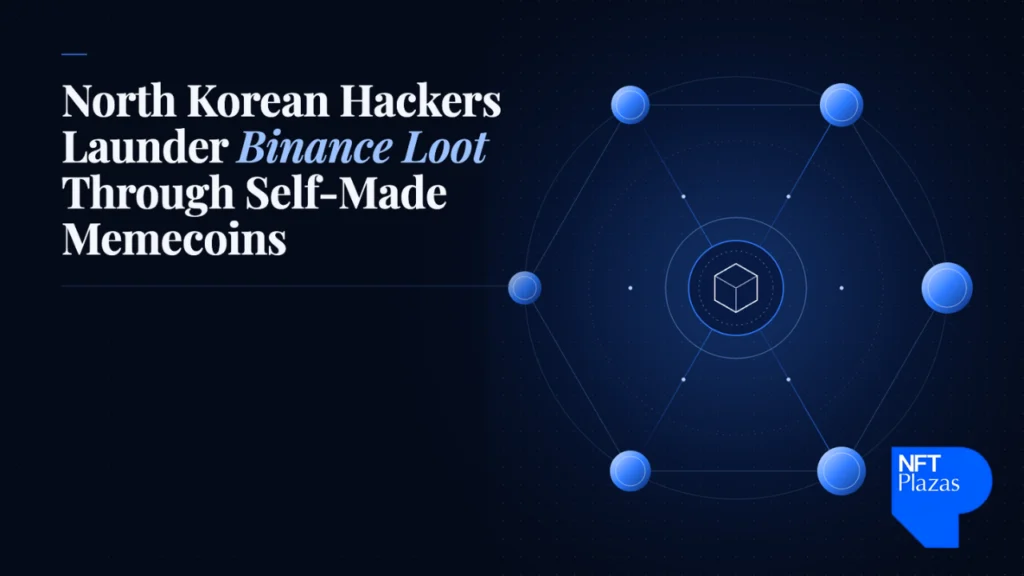
North Korean state-sponsored cybercriminals, identified as the perpetrators behind the staggering $6.3 billion Binance theft, have deployed a sophisticated new tactic involving the creation of bespoke memecoins to obscure the origins of a portion of the stolen cryptocurrency. This innovative laundering method leverages fabricated trading activity on decentralized exchanges (DEXs) to convert illicit funds into what appears to be legitimate market proceeds, adding a complex layer to the ongoing global efforts to trace and recover the vast sums pilfered in one of the largest cryptocurrency heists to date.
According to a detailed analysis by blockchain analytics firm Elliptic, the attackers successfully moved approximately 117,000 NEAR tokens, valued at an estimated $430,000, through a network of six newly minted memecoins. This intricate operation unfolded rapidly between November 5 and November 7. Instead of direct transfers that are easily traceable on the blockchain, the scheme involved choreographed trading of these tokens between multiple wallets under the hackers’ direct control. This strategic maneuver was designed to mimic genuine market transactions, thereby creating a deceptive veneer of legitimacy over the movement of stolen assets and significantly complicating the efforts of investigators to follow the money trail.
The Anatomy of Deception: Self-Created Memecoins as Laundering Vehicles
Elliptic’s forensic investigation pinpointed six distinct tokens utilized in this laundering spree: FUK, OLCCL, MEILI, MMLI, DABI, and SINU. True to the volatile and often whimsical nature of memecoins, their nomenclature and visual branding adhered closely to prevailing internet trends, incorporating elements of animal themes, popular internet humor, and speculative motifs. One particular token, for instance, prominently featured an image of Elon Musk positioned beneath a banner proclaiming "Elon 2028 President," a design choice that capitalized on the widespread speculative interest often associated with public figures in the crypto space. However, Elliptic explicitly clarified that no evidence was found suggesting any involvement or endorsement from Elon Musk himself in the creation or promotion of this particular token.
The technical execution of this scheme was remarkably simple yet effective. The hackers established separate liquidity pools for each of their self-created tokens, pairing them with NEAR tokens on various decentralized exchanges. The laundering process then involved two distinct groups of wallets: one set used the stolen NEAR tokens to acquire the newly minted memecoins, while another, controlled by the same actors, subsequently sold those very memecoins to receive clean NEAR tokens in return. By routing these transactions through liquidity pools rather than direct wallet-to-wallet transfers, the attackers effectively disguised the movement of stolen funds as routine trading activity. Tom Robinson, co-founder and chief scientist at Elliptic, succinctly articulated the core of the strategy to CoinDesk: "The launderers made six of these crypto tokens, and traded them only with themselves. That makes the stolen funds look like trading proceeds."
The artificiality of this market activity was evident in the trading volumes. Elliptic’s analysis revealed that almost the entirety of the trading volume for these memecoins originated from wallets directly linked to the laundering operation. External buyers, representing genuine market participants, accounted for a negligible fraction – less than 1% – of the trading volume for even the most actively traded token within the scheme. The operation was short-lived, with all activity ceasing by November 8. Following this, the attackers systematically withdrew liquidity from four of the six pools, effectively dismantling their temporary market infrastructure. The cost efficiency of this laundering method was striking, with each token reportedly costing only approximately 25 NEAR, or about $90, to create, demonstrating a high return on investment for their illicit purposes.
A Multi-Chain Laundering Nexus: Expanding the Scope of Illicit Operations
The memecoin strategy on the NEAR blockchain is not an isolated incident but rather a component of a much broader and more intricate money laundering operation orchestrated by the North Korean hackers. Elliptic’s investigations have uncovered similar techniques being deployed across other prominent blockchain networks, specifically TRON and Solana, highlighting the adaptive and multi-faceted nature of the cybercriminals’ tactics.
On the TRON blockchain, the attackers engineered a comparable scheme, creating a new token and pairing it with a stablecoin to generate artificial trading volumes. This allowed them to churn stolen assets through a fabricated market, mimicking legitimate trades. The Solana blockchain also saw activity, where stolen SOL tokens were funneled through existing low-liquidity tokens before being converted into USDC, a stablecoin, and subsequently transferred across different blockchain networks. A key distinction here was the use of pre-existing tokens on Solana, unlike the custom-created ones on NEAR and TRON.

This sophisticated approach has a documented precedent. Following the Bybit hack in February 2025 – an incident Elliptic estimated resulted in at least $24 million in stolen funds – North Korean-linked hacking groups employed a remarkably similar methodology on the TRON network. In that instance, a seemingly worthless token was created and traded against a stablecoin through a network of controlled wallets, effectively cleaning a substantial portion of the stolen cryptocurrency. The consistency in these methods underscores a well-rehearsed playbook used by these state-sponsored actors.
The overall scale of the laundering effort linked to the Binance theft is staggering. Elliptic’s November 9 update revealed that the attackers have utilized an extensive network comprising over 20,000 distinct cryptocurrency wallets spread across 16 different blockchains. Their activities have touched at least 36 various decentralized and centralized cryptocurrency services, encompassing a total of more than 65,000 individual transactions. This demonstrates an unparalleled level of logistical coordination and technical prowess in moving and obfuscating illicit funds across the fragmented landscape of the cryptocurrency ecosystem.
North Korea’s Cyber Warfare: A Persistent Threat to Global Finance
The attribution of the October 29 Binance theft to TraderTraitor, a hacking collective directly linked to the Democratic People’s Republic of Korea (DPRK), by the Federal Bureau of Investigation (FBI), places this incident within a broader context of North Korea’s state-sponsored cyber warfare. TraderTraitor, also known by aliases such as Lazarus Group or APT38, is notorious for its highly sophisticated and persistent cyberattacks aimed at financial institutions and cryptocurrency platforms worldwide.
North Korea’s motivation for these large-scale cyber heists is rooted in its desperate need to circumvent stringent international sanctions imposed due to its nuclear weapons and ballistic missile programs. By siphoning off vast amounts of cryptocurrency, the regime effectively funds its illicit weapons development, military operations, and elite expenditures, bypassing traditional financial systems that are subject to global oversight. Past high-profile attacks, including the 2022 Ronin Bridge hack ($625 million), the 2022 Harmony Bridge hack ($100 million), and the 2021 Axie Infinity hack, all attributed to North Korean groups, underscore their consistent targeting of the burgeoning DeFi sector. These groups typically employ a combination of social engineering (phishing), supply chain attacks, and exploitation of vulnerabilities in smart contracts and cross-chain bridges to gain access to funds. The Binance theft is a stark continuation of this financially motivated cyber aggression, with the staggering $6.3 billion figure making it one of the largest in history.
The Laundering Toolkit: Mixing, Conversion, and the Pursuit of Anonymity
The intricate laundering operation extends far beyond the memecoin scheme. The North Korean hackers have deployed a diverse array of tools and protocols to move and obfuscate the stolen assets, demonstrating a comprehensive understanding of the cryptocurrency landscape. These include cross-chain bridges, which facilitate the transfer of assets between different blockchains, decentralized exchanges (DEXs) for swapping various cryptocurrencies, and lending protocols to further entangle the transaction history.
Bitcoin has emerged as a primary destination for the laundered funds, a strategic choice due to its decentralized nature and the absence of a central issuer that could freeze assets, unlike stablecoins such as USDT and USDC. By November 9, approximately 3,000 BTC, with an estimated value of $225 million, had been successfully converted from other stolen assets and transferred into a labyrinthine network of new Bitcoin addresses controlled by the attackers. To further obscure the trail within the Bitcoin network, the hackers employed CoinJoin transactions. This technique combines funds from multiple users into a single transaction, making it exceedingly difficult to link specific incoming transactions to their corresponding outgoing ones. Around 130 BTC, valued at approximately $10 million, had passed through these CoinJoin mixers by the same date.
Another critical component of their laundering strategy involved the use of privacy-enhancing protocols. Since November 8, the attackers had deposited approximately 7,000 ETH, worth around $15 million, into Tornado Cash, a well-known Ethereum-based mixing service. Tornado Cash allows users to deposit Ether or ERC-20 tokens and withdraw them to a new address, breaking the on-chain link between the source and destination. While regulatory bodies and law enforcement have increasingly targeted such mixers, their continued use by sophisticated actors like TraderTraitor highlights the ongoing challenge in curbing illicit financial flows in the crypto space.
The Unseen Trail: Challenges for Investigators and the Fight for Transparency
While these sophisticated transactions, including the memecoin scheme, significantly complicate investigations, they do not erase the fundamental principle of blockchain technology: the immutable record. Every transaction, no matter how obscured, leaves a digital trace. Investigators from firms like Elliptic, along with law enforcement agencies, can still meticulously examine liquidity pool interactions, analyze wallet activity patterns, and employ advanced forensic techniques to establish connections between seemingly disparate addresses. However, each additional layer of obfuscation—be it through memecoin self-trading, cross-chain bridging, or mixing services—adds substantial time and resources to the investigation process, making the task of attributing and recovering funds exponentially more difficult and time-consuming.

The cat-and-mouse game between cybercriminals and blockchain security experts is constantly evolving. As new laundering techniques emerge, so too do the analytical tools and methodologies designed to counteract them. The very transparency of the blockchain, which allows for public scrutiny of transactions, also provides the raw data necessary for these forensic investigations, albeit requiring increasingly sophisticated interpretation.
Official Response and Industry Vigilance
In response to the unprecedented scale and sophistication of the Binance theft and subsequent laundering, the FBI issued a public attribution to TraderTraitor, providing a list of cryptocurrency addresses associated with the operation. The agency concurrently urged all cryptocurrency platforms, DeFi protocols, cross-chain bridge operators, and other service providers to proactively block transactions originating from or interacting with these identified addresses. This collaborative effort between law enforcement and the private sector is crucial in creating chokepoints and making it harder for the stolen funds to move freely.
Elliptic has been at the forefront of this battle, publishing comprehensive lists of addresses linked to the theft. These resources are invaluable for businesses in the crypto ecosystem to screen suspicious transactions and implement robust compliance measures. Furthermore, Elliptic has issued a stern warning against automatically treating funds received through decentralized liquidity pools as legitimate trading proceeds, especially when newly created tokens and highly concentrated, artificial trading activity are involved. This highlights the need for heightened due diligence and more sophisticated transaction monitoring systems that can discern genuine market behavior from manipulated flows.
The fluidity of the hackers’ operations has also been observed in their constant adaptation to restrictions. When specific routes, such as THORChain – which had facilitated conversions of stolen assets into Bitcoin – temporarily halted certain swap functionalities during the laundering campaign, the hackers swiftly pivoted to explore and utilize alternative routes, demonstrating their agility and deep network of available services.
The Lingering Shadow: Unrecovered Funds and Future Implications
Despite the extensive efforts to trace and recover the stolen assets, a substantial portion of the funds remains at large. Elliptic estimated that approximately $3 billion was still held in addresses directly linked to the Binance theft as of November 9, primarily in Bitcoin and Ethereum holdings that had yet to be moved or further laundered. On a more positive note, around $2.85 billion of the stolen funds had reportedly been frozen or successfully seized by law enforcement and security partners, a testament to the effectiveness of rapid response and collaborative efforts.
The Binance theft and the subsequent, highly elaborate laundering operations, particularly the innovative use of self-created memecoins, underscore the growing challenges facing cryptocurrency compliance teams and regulatory bodies worldwide. Monitoring direct wallet transfers is no longer sufficient in an ecosystem where stolen assets can be seamlessly routed through complex webs of liquidity pools, lending protocols, cross-chain services, and privacy mixers. This incident necessitates a paradigm shift in security protocols, transaction monitoring, and forensic analysis within the cryptocurrency industry. It also reinforces the urgent need for enhanced international cooperation among law enforcement agencies and blockchain analytics firms to combat state-sponsored cybercrime effectively. The ongoing battle against these sophisticated financial cybercriminals will undoubtedly shape the future of cryptocurrency security, regulation, and the broader digital economy.