admin

Hackers executed a protracted, multi-stage infiltration of Binance, the world’s largest cryptocurrency exchange, spanning several months and culminating in the theft of an estimated $6.34 billion in digital assets. This elaborate operation, which involved fake job interviews, the deployment of malicious software, and the compromise of internal development tools, was meticulously detailed in a security report released by Binance on Tuesday. The incident underscores a critical evolution in cybercrime, where attackers increasingly leverage human vulnerabilities and trusted workplace infrastructure to penetrate even the most fortified digital financial platforms.
A Coordinated Campaign of Deception and Malice
The audacious attack, which reached its critical phase on October 29, targeted the computers of three software engineers, gradually granting the perpetrators deep access to critical systems responsible for authorizing wallet transactions. Binance’s extensive post-mortem investigation revealed a highly coordinated campaign that began with an initial breach through a compromised software download in June, escalated significantly with a fraudulent recruitment drive in September, and ultimately led to one of the largest cryptocurrency heists recorded in history. This event serves as a stark reminder of the persistent and sophisticated threats facing the rapidly evolving digital asset landscape, challenging assumptions about cybersecurity resilience.
The Initial Foothold: Malicious Software Disguised as a Developer Tool
The intricate plot began subtly in June, when an engineer within Binance’s crucial Wallet DevOps team inadvertently downloaded a tampered version of Homebrew, a widely used and trusted package manager for macOS and Linux, while searching online for an AI coding tool. The malicious installer was reportedly promoted through a sophisticated online advertisement campaign, cunningly designed to appear higher in search results than the legitimate software. This tactic, often referred to as search engine poisoning or malvertising, is a growing threat vector, exploiting users’ reliance on search engines for legitimate tools.
Binance’s internal security systems detected suspicious activity emanating from the affected device. In response, the company swiftly replaced the compromised computer and revoked the employee’s credentials. However, the attackers had already achieved a significant objective: they had harvested critical information regarding the engineer’s role, responsibilities, and, crucially, details about colleagues responsible for managing the exchange’s expansive wallet infrastructure. This initial compromise, though seemingly contained, provided the intelligence necessary for the next, more targeted phase of their operation. This highlights a persistent challenge in cybersecurity: even when initial breaches are detected and mitigated, the intelligence gathered by attackers can fuel subsequent, more dangerous assaults.
Escalation Through Deception: The Fake Recruitment Drive
Building on the intelligence gained from the initial breach, the hackers launched a more personalized and sophisticated social engineering campaign in September. Their target: a second software engineer, lured by what appeared to be a legitimate recruitment opportunity advertised on a prominent job-search platform. The employee engaged in a series of convincing interactions, including a video interview with a supposed human resources representative, followed by a subsequent interview conducted via a messaging application with an individual claiming to be the chief executive of a fictitious company.
During this elaborate recruitment process, the engineer was instructed to complete a coding assignment. This assignment required downloading a repository that, unbeknownst to the victim, contained hidden malware specifically designed to evade conventional security detection mechanisms. This gave the attackers another critical foothold deep within Binance’s internal systems, bypassing perimeter defenses through the trusted actions of an employee. This tactic, known as "watering hole" or "supply chain" attack in the context of job applications, leverages the natural human desire for career advancement and trust in professional platforms, turning them into conduits for malicious payloads. The incident underscores the increasing need for organizations to vet third-party interactions, even those seemingly benign like recruitment processes, with extreme caution.
Leveraging Internal AI Tools for Deeper Access
With two compromised employee computers, the attackers systematically began to pivot and move laterally deeper into Binance’s infrastructure. The sophistication of their approach became even more apparent on October 20. On this date, they combined their existing access to the infected computers with an internal AI tool used by Binance employees. This move was crucial, as it allowed them to gain control over the systems of two additional wallet developers. The use of an internal AI tool as a vector for expansion is particularly noteworthy, raising new questions about the security implications of integrating artificial intelligence into corporate environments. While AI applications can significantly enhance productivity and operational efficiency, compromised employee accounts can transform these powerful tools into unforeseen pathways to sensitive infrastructure, effectively turning an asset into a vulnerability.
Nine days later, on October 29, the attackers leveraged the second developer’s compromised computer, along with credentials stolen from the first engineer, to deploy a malicious script. This script initiated the final stage of the attack: the unauthorized transfer of billions in cryptocurrency. Richard Teng, Binance’s co-CEO, later clarified that the breach was not the result of a single security failure or the actions of one employee, but rather the culmination of a months-long, multi-pronged operation. Speaking to CNBC, Teng detailed the progression from the tampered developer tool, through the fake recruitment process, and finally to the exploitation of internal AI tools to reach the systems responsible for authorizing wallet transactions. This protracted nature of the attack highlights the advanced persistent threat (APT) capabilities often associated with state-sponsored actors.
The Heist: $6.34 Billion Stolen in Minutes, Manipulated Over Hours
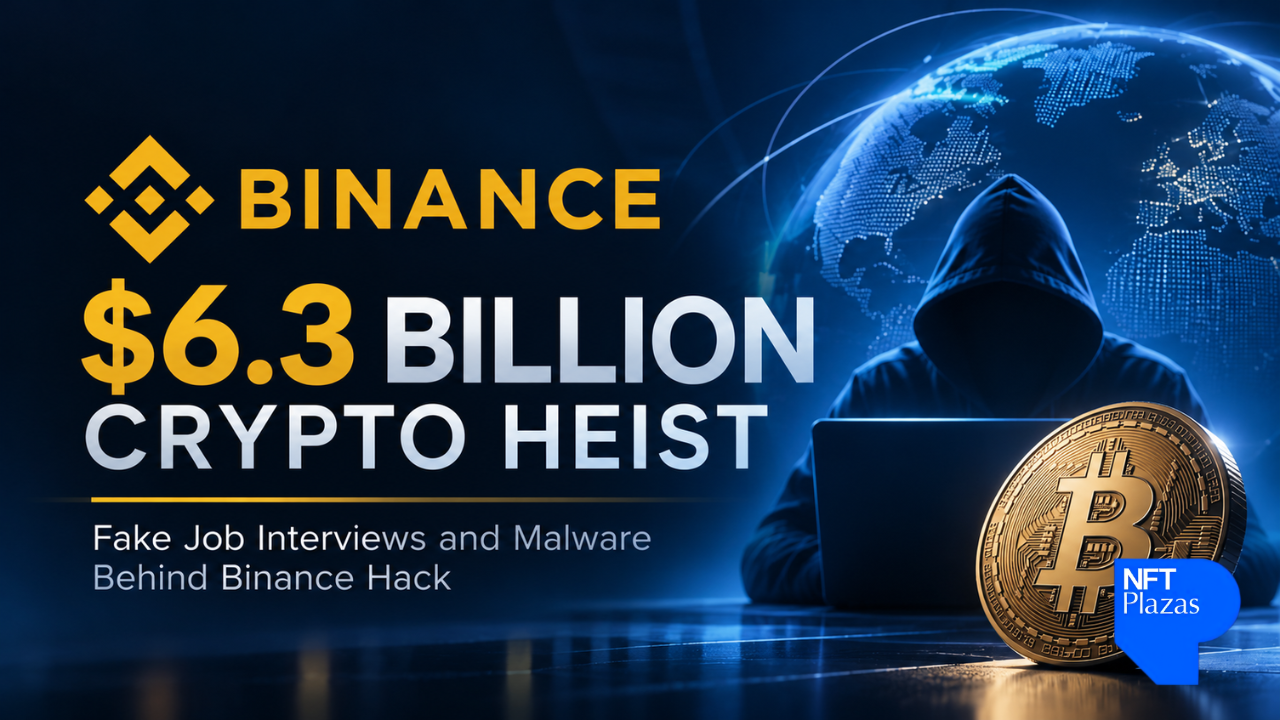
The climactic phase of the operation unfolded rapidly on October 29, when the attackers exploited their unauthorized access to Binance’s wallet transaction-signing system. According to Binance’s report, within an astonishing four minutes, the hackers transferred 233.46 million XRP from five of Binance’s hot wallets – online wallets used for liquidity and faster transactions, inherently more vulnerable than cold storage. This massive quantity of XRP was siphoned off to an address under the attackers’ direct control. Following this initial XRP transfer, the perpetrators proceeded to withdraw other significant digital assets, including Bitcoin and Solana, demonstrating a clear intent to diversify their illicit gains.
Binance’s sophisticated internal alert systems promptly detected the unusually large transfers, triggering an immediate investigation. The exchange reacted by suspending all withdrawals and working to freeze affected assets and revoke unauthorized permissions. However, the complexity of the attack meant these initial measures were not immediately sufficient to halt the ongoing theft. Binance revealed that the hackers executed 50 signing transactions, manipulating account authorizations through Ethereum’s EIP-7702 mechanism. EIP-7702 is an Ethereum Improvement Proposal that allows accounts to delegate certain execution rights to smart contracts, providing flexibility but also a potential attack surface if compromised. Because these malicious authorizations operated independently of Binance’s normal withdrawal infrastructure, merely suspending withdrawals was insufficient to prevent further transfers. The exchange had to develop and implement additional, specialized procedures to revoke these granular permissions. The final unauthorized transfer, according to the report, occurred at 23:56 UTC, nearly four hours after the initial theft began, underscoring the attackers’ persistent efforts and the challenge of containing such a sophisticated breach in a dynamic blockchain environment.
Binance’s Response and Recovery: Replenishing User Funds
In the aftermath of the unprecedented breach, Binance moved swiftly to mitigate the damage and reassure its vast user base. The exchange reported that approximately $2.85 billion of the stolen assets had been successfully frozen or intercepted, a significant achievement made possible through rapid coordination with law enforcement agencies and industry partners across the globe. This cross-jurisdictional cooperation is increasingly vital in combating crypto crime, where assets can be moved across borders and blockchains instantaneously.
Crucially, Binance publicly pledged to cover all customer losses using its own substantial resources, ensuring that the financial burden of the sophisticated hack would not fall upon its users. This commitment is a testament to the exchange’s dedication to maintaining user trust and its robust financial reserves. As of October 31, Binance had replenished approximately 98% of the affected assets, as confirmed by Richard Teng. The remaining portion consisted of less liquid cryptocurrencies, which the company stated it was actively working to acquire to complete full restitution.
Beyond financial restitution, Binance undertook a comprehensive overhaul of its security infrastructure. This included rebuilding the affected wallet infrastructure and internal AI tools, replacing all compromised devices, revoking all credentials associated with the targeted engineers, and significantly expanding security monitoring across all employee devices. Furthermore, the exchange committed to increasing investment in AI-powered threat detection systems, commissioning an independent cybersecurity review to identify and address any remaining vulnerabilities, and establishing a dedicated security research fund to bolster its long-term defenses against future attacks. In a statement reflecting the gravity of the incident, Binance acknowledged, “This should not have happened, and we apologise for the concern, disruption and uncertainty it caused our users, partners and the wider industry.”
Attribution and Geopolitical Dimensions: North Korea’s Alleged Involvement
In the wake of the heist, the Federal Bureau of Investigation (FBI) quickly attributed the attack to North Korean hackers. Specifically, the FBI pointed fingers at the TraderTraitor group, also known as Lazarus Group, a notorious state-sponsored cybercriminal entity widely linked to numerous large-scale cryptocurrency thefts, including the $625 million Ronin Bridge hack in March 2022 and the $100 million Harmony Bridge hack in June 2022. These illicit gains are believed to be a critical source of funding for North Korea’s weapons programs, bypassing international sanctions.
North Korea vehemently rejected the allegations. Kim Yo-jong, the influential sister of leader Kim Jong-un, publicly dismissed Washington’s claims as "absurd rhetoric," accusing the United States of attempting to unfairly portray Pyongyang as a global hub for cybercrime. While Binance acknowledged the FBI’s assessment, it did not independently confirm the identity of the attackers in its report. However, the exchange did disclose that it had detected and prevented 57 suspected North Korea-linked cyberthreats in 2026 alone, highlighting the relentless and persistent security pressure faced by cryptocurrency platforms from state-sponsored actors. The ongoing dispute over attribution underscores the complex geopolitical landscape of cyber warfare, where definitive proof can be elusive and political motivations often cloud investigations.
Broader Implications and Lessons for the Digital Asset Industry
The Binance breach stands as a watershed moment for the cryptocurrency industry, revealing the evolving sophistication of cyber threats and the critical vulnerabilities that lie beyond traditional network perimeters. It unequivocally demonstrates how attackers are willing to invest months in exploiting seemingly routine workplace activities – from downloading common developer software to participating in what appear to be legitimate recruitment interviews – to achieve their high-value objectives.
For the wider crypto industry and indeed, the broader digital economy, the incident reinforces several crucial lessons:
- Human Element as the Weakest Link: Social engineering remains an incredibly effective attack vector. Organizations must invest more in continuous security awareness training, simulating phishing attacks, and educating employees on the dangers of suspicious downloads and unsolicited recruitment attempts.
- Supply Chain Security: The compromise through a tampered Homebrew installer highlights the pervasive risk of supply chain attacks. Companies must implement stringent vetting processes for all third-party software, libraries, and tools, regardless of their perceived legitimacy or popularity. This includes robust code integrity checks and sandboxing for developer environments.
- AI Adoption Risks: The exploitation of internal AI tools for lateral movement introduces a new dimension to corporate cybersecurity. As AI becomes more integrated into business operations, securing these applications and the data they access, as well as managing the access permissions of accounts that interact with them, will be paramount.
- Layered Security (Defense-in-Depth): No single security measure is foolproof. The multi-stage nature of this attack, where initial breaches were contained but intelligence was still harvested, underscores the need for a holistic, layered security architecture that includes robust endpoint detection and response (EDR), identity and access management (IAM), network segmentation, and continuous threat hunting.
- Incident Response Preparedness: Binance’s ability to freeze a significant portion of the stolen assets and quickly replenish user funds, despite the attack’s complexity, showcases the importance of a well-rehearsed incident response plan, strong relationships with law enforcement, and robust financial backing.
- Regulatory Scrutiny: Such high-profile heists invariably invite increased scrutiny from financial regulators worldwide. This incident will likely accelerate calls for stricter cybersecurity standards, mandatory reporting requirements, and enhanced collaboration between crypto exchanges and regulatory bodies to combat illicit activities and protect consumers.
In conclusion, the Binance heist is more than just another large-scale crypto theft; it is a profound indicator of the escalating sophistication of state-sponsored cyber warfare targeting critical digital infrastructure. It compels the entire industry to not only fortify digital wallets and transaction systems but also to meticulously secure every facet of their operational environment, from employee devices and software supply chains to internal applications and the human element itself, against an ever-evolving array of sophisticated threats. The stakes, as demonstrated by the $6.34 billion loss, could not be higher.