admin
admin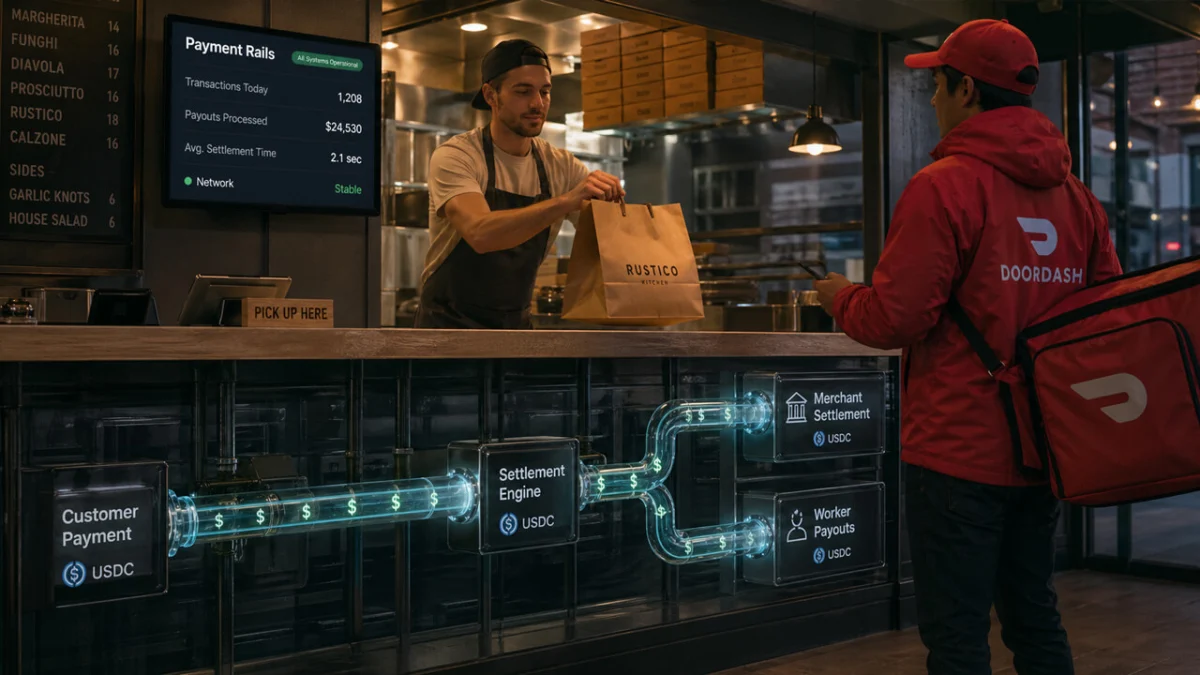
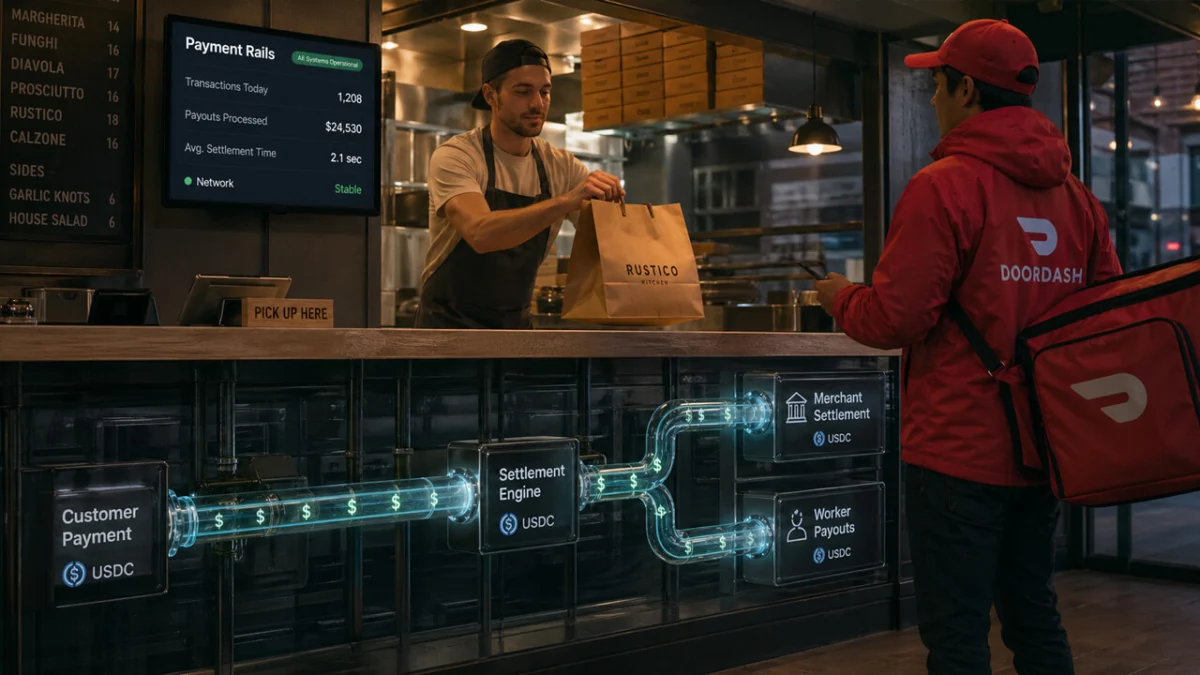
DoorDash, the world’s leading food delivery and logistics platform, has officially entered into a strategic partnership with Tempo, a blockchain infrastructure project backed by Stripe and Paradigm, to integrate stablecoin-powered payouts into its global marketplace. This development marks a significant milestone in the institutional adoption of digital assets, signaling a shift from speculative trading toward the use of blockchain as a foundational layer for real-world commercial operations. Operating across more than 40 countries, DoorDash manages a complex, three-sided marketplace involving millions of customers, hundreds of thousands of merchants, and a vast fleet of independent contractors known as "Dashers." The movement of capital within this ecosystem is constant and multi-directional: customers pay at the point of checkout, merchants await the settlement of their daily sales, and Dashers rely on timely payouts to cover immediate operational costs like fuel and maintenance. By leveraging stablecoin rails, DoorDash aims to bypass the inherent inefficiencies of the traditional banking system, which is often characterized by regional fragmentation, restrictive banking cutoffs, and settlement delays that can span several days.
The integration of Tempo’s Layer 1 blockchain technology into the DoorDash ecosystem is one of the most prominent examples to date of stablecoins moving into the core operating infrastructure of a major multinational corporation. The move addresses a fundamental question currently facing the cryptocurrency industry: can digital assets provide a practical, scalable solution for moving money through the "plumbing" of global commerce? For DoorDash, the answer appears to be a definitive yes, as the company seeks to mitigate the friction associated with foreign exchange (FX) costs and payout reliability—issues that directly impact the financial health of its workers and merchant partners.
The Evolution of Tempo and the Role of Stripe
Tempo was introduced last year as a payments-focused blockchain protocol specifically engineered to meet the demands of enterprise-scale commerce. Developed through a collaboration between the fintech giant Stripe and the crypto-focused investment firm Paradigm, Tempo was designed to solve the throughput and finality issues that have historically prevented public blockchains from being used for high-volume commercial payments. Unlike general-purpose blockchains that may experience congestion or high transaction fees during periods of peak activity, Tempo utilizes a design architecture optimized for sub-second finality and stablecoin-native fee structures.
The partnership list for Tempo is already extensive, reflecting a broad consensus among major tech and financial institutions regarding the future of money movement. Alongside DoorDash, the protocol’s partner ecosystem includes Shopify, OpenAI, Revolut, Visa, and Deutsche Bank. This coalition suggests that the industry’s leaders are increasingly viewing stablecoins not as a fringe asset class, but as a superior alternative to the legacy "rails" of the financial system. Stripe, in particular, has been a vocal proponent of this transition. In recent months, the company has published extensive documentation regarding stablecoin payout strategies, emphasizing how blockchain-based settlement can reduce overhead costs, expand a company’s geographical reach, and improve the predictability of cross-border treasury movements.
Addressing the Payout Problem in the Gig Economy
The primary motivation for DoorDash’s adoption of stablecoin payouts lies in the "payout problem"—a systemic bottleneck in the gig economy and global marketplaces. In a traditional financial setup, even if a customer’s payment feels instantaneous at the point of sale, the backend reconciliation process is often tethered to antiquated systems. These systems are governed by banking holidays, time-zone differences, and the requirements of multiple intermediary banks. For a company like DoorDash, which operates in dozens of jurisdictions, these delays create a "liquidity gap."
DoorDash co-founder Andy Fang has noted that the appeal of the Tempo integration lies in making payouts both faster and more affordable. In the delivery marketplace, the consumer experience is compressed into a few taps on a smartphone, but the financial architecture behind that experience remains fragmented. Merchants often feel this friction in their working capital; a two-day delay in settlement can disrupt payroll cycles, inventory procurement, and short-term liquidity planning. For Dashers, the impact is even more immediate. Many contractors operate on thin margins where the timing of a payout determines their ability to fund their next shift.
The urgency of this issue was highlighted last year when DoorDash announced emergency gas relief measures for Dashers in the United States and Canada in response to rising fuel prices. When operational costs for workers rise, the speed at which they can access their earnings becomes a critical factor in their continued participation in the platform. Stablecoin-powered payouts offer a "T+0" (same day) settlement capability that traditional banking rails simply cannot match, particularly in cross-border scenarios where funds would otherwise have to pass through the SWIFT network or regional clearinghouses.
Chronology of Stablecoin Integration in Mainstream Finance
The DoorDash and Tempo partnership is the latest entry in a timeline of increasing corporate engagement with stablecoins. To understand the significance of this move, it is necessary to view it within the broader context of the last 24 months of financial technology evolution:
- Early 2023: Stripe and Paradigm begin the development of Tempo, aiming to create a blockchain specifically for "internet-native" commerce.
- Mid-2023: Major payment processors, including Visa and Mastercard, announce expanded pilots for USDC (USD Coin) settlement on networks like Solana and Ethereum to speed up merchant payouts.
- Late 2023: Shopify integrates stablecoin payment options via Solana, allowing merchants to accept digital dollars with near-zero transaction fees.
- Early 2024: Stripe officially reintroduces crypto payments for its merchants, allowing them to accept USDC and settle in fiat or stablecoins.
- Current Phase: DoorDash joins the Tempo ecosystem, signaling the move from "accepting" crypto payments to using crypto as the primary "payout" engine for a global workforce.
This timeline demonstrates a clear trajectory: the industry has moved from theoretical experimentation to the implementation of backend infrastructure that serves millions of non-crypto users.
Data Analysis: The Scale of the Stablecoin Economy
The business case for DoorDash is supported by staggering data regarding the growth of stablecoin transaction volumes. Recent reports indicate that in the first quarter of 2024 alone, approximately $28 trillion in value flowed through the stablecoin economy. While a significant portion of this volume—estimated at 76%—is driven by automated bots and high-frequency trading within the decentralized finance (DeFi) space, the remaining "organic" volume is increasingly tied to commercial settlement.
For a company like DoorDash, the economics of scale are a major driver. On a single transaction, a saving of 1% in FX fees or a reduction of $0.50 in intermediary bank fees might seem negligible. However, when multiplied across billions of dollars in annual gross order value (GOV), these efficiencies translate into hundreds of millions of dollars in saved costs and unlocked liquidity. Furthermore, the use of stablecoins eliminates the "settlement risk" associated with traditional banking failures or regional instability, providing a consistent unit of account across diverse markets.
Broader Implications and the "Invisible" Crypto Narrative
The most profound implication of the DoorDash-Tempo partnership is that the next wave of "mainstream" crypto adoption likely will not involve consumers learning how to manage private keys or navigate decentralized exchanges. Instead, it will arrive through backend infrastructure that the average user never sees. This "invisible" adoption focuses on the functional utility of the technology rather than the speculative nature of the assets.
In this model, a Dasher in Vancouver or a restaurant owner in Tokyo may receive their funds through a stablecoin rail, but the end-product they interact with remains a digital balance in their local currency or a highly liquid digital dollar. The blockchain acts as a superior "financial plumbing" system that moves value more efficiently than the 50-year-old systems currently in use.
This development also highlights a growing divide within the digital asset market. While Bitcoin continues to solidify its role as a "digital gold" or a macro-reserve asset sought by institutional investors and ETFs, stablecoins are carving out a separate identity as the transactional layer of the internet. One captures capital seeking exposure to price appreciation, while the other captures the mechanics of how that capital is moved and utilized in the real economy.
Technical Considerations and Future Outlook
Despite the clear advantages, the transition to stablecoin-powered payouts is not without its challenges. DoorDash has yet to release a full technical breakdown of which specific payout flows will be migrated to the Tempo blockchain first. It is likely that the company will employ a "hybrid" model in the short term, where blockchain handles the cross-border movement and settlement finality, while traditional "fiat ramps" handle the local distribution to bank accounts.
Furthermore, regulatory compliance remains a critical hurdle. Moving money across 40 countries requires strict adherence to Anti-Money Laundering (AML) and Know Your Customer (KYC) regulations. The Tempo protocol’s design, which includes features for enterprise-grade compliance, will be put to the test as it handles the operational complexity of DoorDash’s global scale.
As this partnership matures, it will serve as a bellwether for other large-scale marketplaces. If DoorDash can successfully demonstrate that stablecoin rails improve settlement speed and reduce costs without introducing new operational risks, it is highly probable that other gig economy giants—such as Uber, Lyft, and Airbnb—will follow suit. The redesign of the financial plumbing under work and commerce is no longer a theoretical exercise; it is an active transformation being led by some of the largest players in the digital economy. The real measure of adoption will not be found in a "consumer frenzy," but in the quiet, efficient movement of money that solves real-world problems before the end-user even realizes the technology has changed.