admin
admin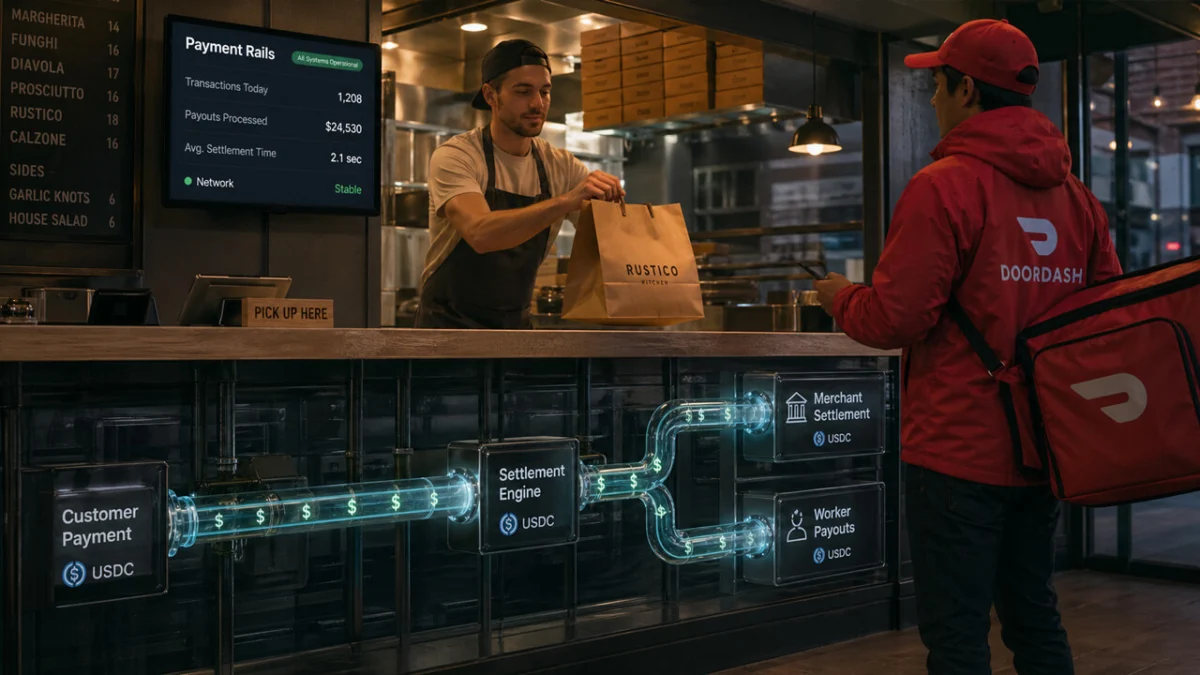
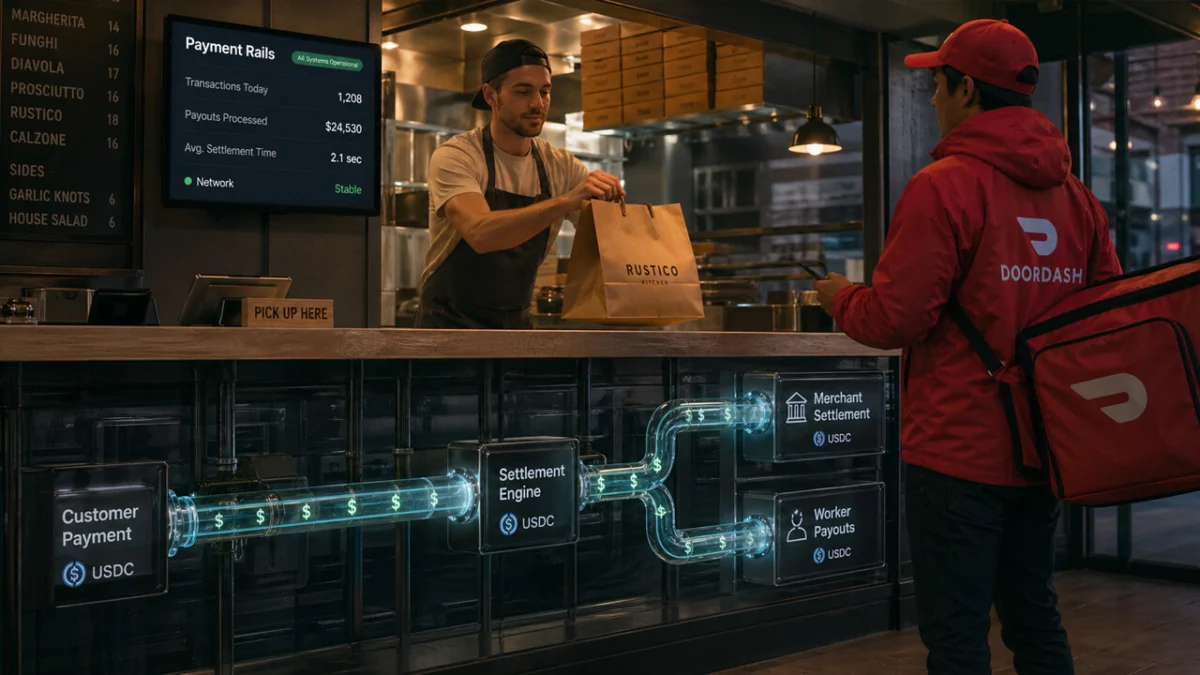
DoorDash, the leading global food delivery and logistics platform, has officially announced a strategic partnership with Tempo, a Stripe-backed blockchain infrastructure provider, to integrate stablecoin-powered payouts into its vast marketplace ecosystem. This move marks one of the most significant real-world applications of stablecoin technology to date, signaling a shift from speculative digital asset trading toward the integration of blockchain into the core operating infrastructure of multinational corporations. Operating in more than 40 countries, DoorDash manages a complex web of financial transactions where capital moves simultaneously in multiple directions: customers pay at checkout, merchants await settlement for goods sold, and "Dashers" (delivery contractors) rely on timely payouts to manage their daily livelihoods. By leveraging stablecoin rails, DoorDash aims to resolve the inherent friction of traditional banking systems, which often struggle with cross-border delays, high foreign exchange costs, and rigid settlement windows.
The integration is facilitated by Tempo, a Layer 1 blockchain specifically engineered for payment efficiency, which was co-developed by the fintech giant Stripe and the investment firm Paradigm. The announcement confirms that DoorDash will join a high-profile cohort of early adopters, including Stripe itself, Coastal Bank, and ARQ, all of whom are set to introduce stablecoin-based payment and payout solutions. For DoorDash, the appeal of this technology is rooted in operational necessity rather than technological novelty. Co-founder Andy Fang emphasized that the primary motivation is to make payouts faster and more affordable, addressing a long-standing bottleneck in the gig economy and merchant services sectors.
The Operational Bottleneck: Bridging the Gap in Real-Time Logistics
In the modern delivery marketplace, the consumer experience is defined by speed and simplicity. A customer can order a meal or groceries in a few taps, and a Dasher can accept the job instantly. However, the financial architecture supporting these transactions has historically lagged behind. Traditional money movement is tethered to a fragmented global banking system characterized by regional "rails," arbitrary banking cutoffs, and settlement delays that can range from several hours to multiple business days. This delay creates a liquidity gap that disproportionately affects the most vulnerable participants in the ecosystem.
For merchants, particularly small and medium-sized enterprises (SMEs), slow settlement times can strain working capital. When a restaurant must wait 48 to 72 hours to receive funds from a busy weekend of sales, it can interfere with their ability to purchase fresh inventory, manage payroll, or cover emergency repairs. In an industry with razor-thin margins, liquidity is often the difference between growth and insolvency. On the other side of the transaction, Dashers often view their earnings as immediate cash. During periods of economic volatility, such as the recent surges in global fuel prices and the rising cost of living, the ability to access earnings instantly becomes a critical retention factor. DoorDash has previously acknowledged these pressures, launching gas relief measures and emergency support programs in the United States and Canada. By moving to stablecoin-powered payouts, the company is seeking a systemic solution to these financial pressures rather than relying on temporary relief funds.
Tempo and the Rise of Payments-Focused Blockchains
The technological backbone of this initiative, Tempo, represents a new breed of blockchain designed specifically for the enterprise. Unlike general-purpose blockchains that may prioritize decentralization at the expense of speed or cost-predictability, Tempo was built with a clear thesis: existing chains often struggle to serve payment flows at a global enterprise scale. The network features high throughput, sub-second finality (the time it takes for a transaction to be considered permanent), and stablecoin-native fees. These design choices are intended to mirror the reliability of traditional financial networks while offering the 24/7 availability of distributed ledgers.
The partnership list for Tempo underscores its institutional credibility. Beyond DoorDash and Stripe, the ecosystem involves heavyweights such as Deutsche Bank, Shopify, OpenAI, Revolut, and Visa. The involvement of these entities suggests that the financial industry is moving toward a consensus: stablecoins, when paired with the right infrastructure, are the most viable "internet-native" way to move fiat-pegged value. For DoorDash, utilizing a network backed by Stripe—a company that has spent a decade refining the world’s online payment processing—provides a layer of trust and compliance that is often missing from more experimental crypto projects.
A Chronology of Stablecoin Evolution in Corporate Finance
The move by DoorDash is part of a broader timeline of stablecoin maturation. While early crypto adoption was driven by retail investors looking for exposure to Bitcoin, the "second wave" of adoption is being led by treasury departments and logistics platforms.
- 2014–2018: The Emergence of Stablecoins. Early stablecoins like Tether (USDT) were primarily used by crypto traders to move between volatile assets without exiting the blockchain ecosystem.
- 2019–2021: Institutional Interest and Regulation. The launch of USD Coin (USDC) by Circle and Coinbase brought a focus on transparency and regulatory compliance, making stablecoins more palatable to Western corporations.
- 2022–2023: The Infrastructure Build-Out. Stripe and Paradigm began developing Tempo, recognizing that while stablecoins existed, the "rails" they ran on were still too clunky for high-volume commerce.
- 2024: The Integration Phase. Major platforms like Shopify (via Base) and now DoorDash (via Tempo) begin integrating these assets into their backend payout systems to solve specific operational problems.
This chronology highlights a shift in narrative. The "crypto" element is increasingly being moved to the background, replaced by a focus on "settlement efficiency." For a company like DoorDash, which operates in over 40 jurisdictions, the ability to bypass the complexities of local banking hours and different regional payment standards represents a massive competitive advantage in operational cost reduction.
Supporting Data: The Scale of the Stablecoin Economy
The scale of the stablecoin market has reached a point where it can no longer be ignored by mainstream finance. Recent data indicates that the stablecoin sector is currently one of the few areas in the digital asset space where utility is clearly measurable. In the first quarter of 2024, transaction volume for stablecoins reached a staggering $28 trillion. While a significant portion of this—roughly 76%—is attributed to automated bots and high-frequency trading, this figure actually reinforces the argument for DoorDash’s move. It demonstrates that digital dollars are already moving at an enormous scale to serve concrete operational needs, such as liquidity provision and arbitrage.
Furthermore, Stripe’s recent internal research and public explainers on stablecoin payout strategies suggest that businesses can reduce cross-border transfer costs by as much as 80% in certain corridors by utilizing stablecoin rails instead of traditional wire transfers or correspondent banking networks. For a platform like DoorDash, which handles billions of dollars in annual gross order value, even a 1% improvement in settlement efficiency or a reduction in FX friction translates into hundreds of millions of dollars in unlocked value for the ecosystem’s participants.
Impact and Implications: The Invisible Blockchain
The most profound implication of the DoorDash-Tempo partnership is that the future of cryptocurrency may be "invisible." The vast majority of Dashers and merchants do not want to manage private keys, understand gas fees, or worry about the volatility of unbacked tokens. They simply want their earnings to be available in their local currency as quickly as possible. DoorDash’s implementation likely involves a hybrid backend where the blockchain handles the heavy lifting of moving value across borders and through settlement layers, while the end-user interacts with a familiar, fiat-denominated interface.
This "backend-first" approach to adoption bypasses the hurdles of consumer education and the skepticism often associated with retail crypto apps. If a merchant receives their funds on a Sunday evening instead of Tuesday morning because of a stablecoin rail, they have experienced the benefit of blockchain without ever needing to "onboard" into crypto. This subtle redesign of the financial plumbing under work and commerce is likely where the next decade of fintech innovation will occur.
Unanswered Questions and Future Outlook
Despite the clear benefits, several operational details remain to be seen. DoorDash has not yet released a full technical breakdown regarding which specific payment flows will move to the blockchain first. It is also unclear how much of the process will remain on-chain versus how much will rely on "fiat ramps" provided by partners like Coastal Bank. The regulatory environment also remains a factor; while Tempo is built for compliance, the varying legal status of stablecoins across 40 different countries will require a sophisticated, jurisdiction-by-jurisdiction approach.
However, the general direction is undeniable. Large-scale platforms are no longer viewing stablecoins as a niche experimental asset but as essential operating rails. By integrating these systems, DoorDash is positioning itself at the forefront of a movement that treats money as a programmable, 24/7 utility. As other global marketplaces watch the DoorDash experiment, the success of this integration could lead to a domino effect, where settlement speed becomes a standard feature of the global economy rather than a luxury. The real measure of blockchain’s success will not be found in the price of a token, but in the shortening of the gap between work completed and payment received for millions of people worldwide.