admin
admin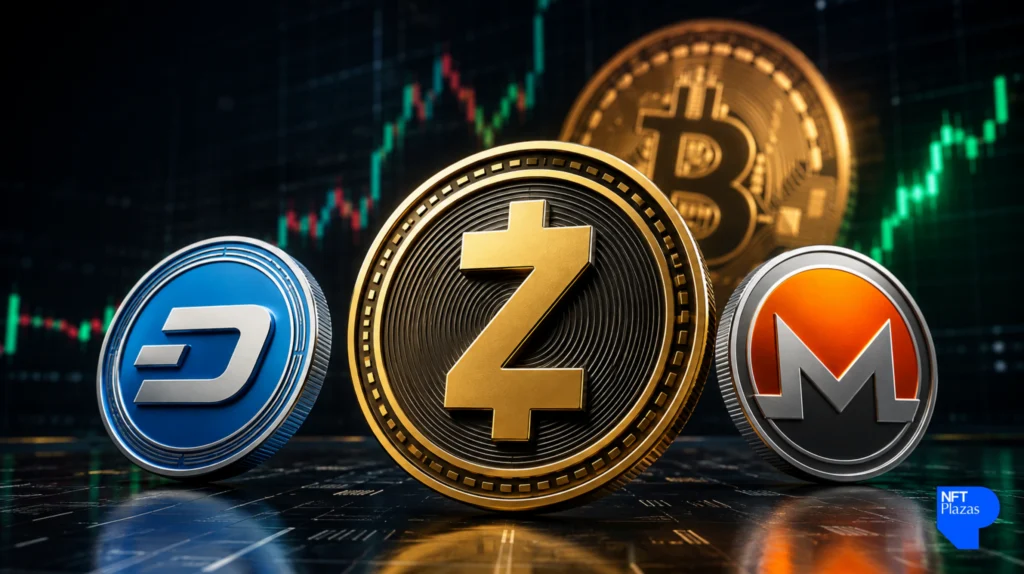
The cryptocurrency market witnessed a significant surge on September 5, 2026, as Bitcoin (BTC) impressively breached the $81,000 threshold. However, the most compelling narrative of this market upswing emerged from the privacy coin sector, which dramatically outshone broader market gains. Zcash (ZEC) anchored itself firmly around the $1,000 mark, while Dash (DASH) experienced an explosive rally of over 40% within a 24-hour period. Monero (XMR), another prominent privacy-focused digital asset, also recorded substantial gains, outperforming Bitcoin over the preceding week. This collective surge emphatically signals a strategic reallocation of capital, with investors increasingly prioritizing tokens designed for enhanced anonymity and transaction privacy.
This pronounced shift in market sentiment towards privacy coins was largely catalyzed by Zcash, which became the undeniable centerpiece of the rally. The digital asset gained unprecedented accessibility for a wider investor base following the launch of Grayscale’s ZCSH product on NYSE Arca. This pivotal development provided a regulated and traditional financial access point to ZEC, subsequently igniting a ripple effect across the entire privacy coin ecosystem. The momentum from ZEC’s impressive ascent effectively spilled over to its counterparts, Dash and Monero, positioning the privacy coin sector as the leading force in the market’s latest and most robust recovery phase.
Zcash’s Ascendant Trajectory: A Rally Anchored by Institutional Access
On September 5, Zcash (ZEC) was observed trading robustly around $1,025, successfully maintaining its position near the psychologically significant $1,000 level after an extraordinary weekly performance. Data compiled by CoinGecko revealed ZEC’s remarkable short-term growth, registering an approximate 9.5% increase within 24 hours and an even more impressive 28.1% gain over the preceding seven days. These figures starkly contrast with Bitcoin’s more modest 2.7% gain during the identical seven-day period, underscoring Zcash’s superior performance and the distinct market dynamics at play.
The sustained buying pressure and investor confidence propelled ZEC’s market capitalization to an estimated $17.3 billion, with a robust 24-hour trading volume approaching $1.3 billion. Expanding the timeframe, Zcash’s performance becomes even more striking; the token recorded an approximate 102.8% gain over 30 days, while its one-year gain exceeded a staggering 2,400%. This multi-fold appreciation firmly established Zcash as one of the unequivocal standout performers not only within the privacy coin segment but across the entire cryptocurrency landscape during the prevailing market recovery. Its ability to command such significant capital inflows and price appreciation reflects a growing institutional and retail appetite for privacy-centric digital assets, particularly when presented through accessible investment vehicles.
Grayscale’s ZCSH Product: A Gateway to Mainstream Adoption
The potent momentum driving Zcash’s rally received a critical boost from a groundbreaking institutional development: Grayscale’s listing of the ZCSH product on NYSE Arca in late August 2026. This event marked a significant milestone for the privacy coin sector, which has historically faced considerable hurdles in gaining mainstream financial acceptance. According to official SEC filings, the Grayscale Zcash Trust underwent a strategic renaming to "The Zcash ETF" and commenced trading under the ticker symbol ZCSH on August 25, 2026. While technically structured as a trust, its listing on a major stock exchange and its ticker mirroring an ETF (Exchange Traded Fund) provided traditional investors with an analogous access mechanism.
The introduction of ZCSH on NYSE Arca fundamentally alters the landscape for ZEC investment. It establishes a new, streamlined pathway for investors to gain exposure to Zcash through conventional brokerage accounts. This innovation effectively circumvents the complexities and often intimidating requirements associated with directly purchasing tokens on cryptocurrency exchanges or managing self-custody of digital assets. For privacy coins, an asset class frequently encumbered by stringent listing requirements, regulatory scrutiny, and compliance challenges across various jurisdictions, having a product trade on a venerable platform like NYSE Arca is a monumental achievement. It not only lends an air of legitimacy but also provides a distinct competitive advantage for Zcash within its specialized sector, differentiating it from other privacy tokens that lack such institutional backing and accessibility.

The initial performance of the ZCSH product further solidified its impact on the market. As of September 3, just over a week after its listing, ZCSH had accumulated approximately $414.7 million in assets under management (AUM), representing holdings of around 428,613 ZEC. More tellingly, the product recorded at least $34.4 million in net inflows since its inception. September 2, 2026, stood out as a particularly strong day, marking its largest single-day inflow at approximately $12.6 million. These robust inflow figures underscore the significant institutional and retail demand for a regulated Zcash investment vehicle, validating Grayscale’s strategic move and indicating a strong appetite for privacy-focused digital assets within traditional finance.
Leverage and Liquidations: Fueling the ZEC Ascent
Beyond institutional inflows, market dynamics, specifically the unwinding of leveraged positions, played a crucial role in accelerating ZEC’s upward trajectory, particularly once the token decisively breached the $1,000 price level. Recent liquidation data provides compelling evidence of this phenomenon, revealing approximately $31.45 million in ZEC positions liquidated within a concentrated 24-hour window. A closer examination of this data shows that a substantial $26.46 million of these liquidations originated from short positions.
This overwhelmingly short-leaning ratio is highly indicative of a "short squeeze" scenario. As ZEC’s price began to climb, traders who had bet on a price decline (short sellers) found their positions moving into significant losses. To mitigate further losses or meet margin calls, these short positions were forcibly closed, which necessitated buying ZEC in the open market. This sudden influx of buying pressure, driven by the need to cover short positions, added considerable momentum to the existing upward price movement, effectively creating a feedback loop that amplified ZEC’s rally and made its ascent even steeper. This cascade of liquidations served as a powerful secondary catalyst, pushing ZEC’s price beyond what fundamental buying pressure alone might have achieved in the short term.
The Ripple Effect: Dash and Monero Join the Privacy Rally
The powerful momentum generated by Zcash’s surge and the subsequent short squeeze was not confined to ZEC alone; it swiftly propagated across the broader privacy coin sector. Dash (DASH), another prominent privacy-focused cryptocurrency, experienced an equally dramatic price appreciation. It traded around $65.88, reflecting an astonishing increase of approximately 44.6% in 24 hours and a gain exceeding 70% over the seven-day period. This explosive growth was accompanied by a significant 24-hour trading volume of about $535 million, indicating widespread interest and capital rotation into the asset.
Monero (XMR), recognized as one of the pioneering and most robust privacy coins, also participated in the sector’s impressive bounce, albeit with more modest gains when compared to the meteoric rises of Zcash and Dash. XMR traded around $530.92, showing a respectable 4.7% increase in 24 hours and a solid 13.2% gain over the seven-day period. While not as explosive as its counterparts, Monero’s performance still outpaced Bitcoin’s during the same timeframe, confirming the broader bullish sentiment pervading the privacy coin market.
This collective and often divergent performance of privacy coins allowed them to stand out dramatically from the broader cryptocurrency market. While Bitcoin recorded steady gains, the sheer velocity and magnitude of the rallies in Zcash, Dash, and Monero underscored a focused capital rotation. However, this sharp and rapid appreciation also introduces an inherent vulnerability. Such rapid gains often precede periods of increased volatility, as early investors and short-term traders may begin to take profits, potentially leading to swift price corrections.
Bitcoin’s Backdrop: A Steady Ascent Amidst Sectoral Outperformance

While the spotlight firmly remained on the explosive performance of privacy coins, Bitcoin continued its steady and foundational role as the backdrop for the broader market recovery. On September 5, BTC briefly ascended past the significant $81,000 mark, demonstrating persistent bullish sentiment across the crypto landscape. Following this peak, it experienced a minor pullback, stabilizing around $79,600. Throughout the 24-hour period, Bitcoin traded within a range of $78,706 to $81,379, indicating strong underlying support and continued investor interest at these elevated levels.
The ability of Bitcoin to not only maintain but also push beyond the $80,000 threshold is crucial. The $80,000-$81,000 zone now represents a critical psychological and technical resistance level. Should the market manage to sustain and extend its current "risk-on" sentiment, effectively translating positive momentum to larger assets, these price points will be key indicators of further upward movement. Bitcoin’s consistent performance, even when overshadowed by more volatile sectoral surges, reassures the market and provides a stable foundation upon which altcoin rallies can build, demonstrating the overall health and maturity of the digital asset ecosystem.
The Enduring Conundrum: Privacy, Regulation, and Market Risks
Despite the undeniable excitement generated by the privacy coin rally, the asset class inherently carries significant risks, primarily stemming from its "specific nature." Privacy coins are notoriously volatile, often experiencing sharper price swings than major cryptocurrencies. More critically, they are highly sensitive to regulatory concerns, particularly those related to anti-money laundering (AML) compliance and counter-terrorist financing (CTF) efforts. The very features that make them attractive – enhanced anonymity and untraceable transactions – are also precisely what make them targets for regulatory scrutiny.
Historically, exchanges in various jurisdictions have either restricted trading or completely delisted privacy tokens due to compliance pressures. Regulators frequently express concerns that these assets could be exploited for illicit activities, posing challenges to financial transparency and national security. This regulatory overhang means that capital inflows into the privacy coin sector, while robust in the short term, can reverse much faster and more dramatically than in major crypto assets like Bitcoin or Ethereum, which generally have clearer regulatory pathways or greater institutional acceptance. The Grayscale ZCSH product, by offering a regulated wrapper, attempts to mitigate some of these concerns for institutional investors, but the underlying assets themselves remain subject to an evolving and often uncertain regulatory environment.
The long-term sustainability of the current privacy coin rally will largely hinge on several key factors. Foremost among these is whether the demand for Grayscale’s ZCSH product persists and continues to attract significant inflows. Continued institutional interest would provide a crucial foundation for ZEC’s price stability. Equally important is ZEC’s ability to defend the critical $1,000 price level in the aftermath of the initial wave of forced buying from short liquidations. If the underlying buying pressure, decoupled from short squeezes, begins to cool, the sector that spearheaded this remarkable rally could also become the primary target for profit-taking, leading to potential sharp corrections.
Furthermore, the broader narrative surrounding digital privacy continues to evolve. As concerns about data surveillance and financial traceability grow in the digital age, privacy coins offer a compelling value proposition. However, this must be balanced against the imperative for regulatory compliance and the prevention of illicit finance. The ongoing success of privacy coins like Zcash, Dash, and Monero will depend on their developers’ ability to innovate while navigating this complex regulatory landscape, potentially exploring solutions that offer selective transparency or comply with specific jurisdictional requirements without compromising their core privacy features. The current rally serves as a powerful reminder of the market’s inherent demand for such features, but also of the unique challenges these assets face in achieving widespread, sustained adoption.