admin
admin
London, UK – September 9, 2026 – A substantial cache of Bitcoin, originally mined in 2010, has been transferred from long-dormant addresses, ending over 16 years of inactivity. The movement, which occurred on Saturday, September 5, 2026, instantly ignited widespread speculation across the cryptocurrency community regarding a possible connection to Bitcoin’s enigmatic creator, Satoshi Nakamoto. However, swift on-chain analysis by leading blockchain tracking platforms has largely tempered these initial theories, asserting no direct link to Nakamoto’s known holdings.
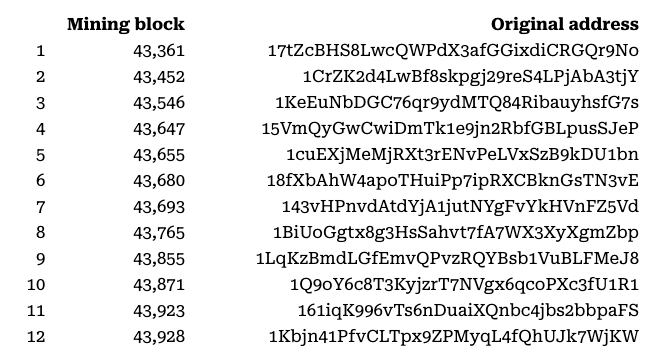
The transaction involved a total of 600 Bitcoin (BTC), valued at approximately $48 million at the time of the transfer. These coins originated from a dozen distinct addresses that had remained untouched since March 2010, a period when Bitcoin was in its nascent stages and Nakamoto was still actively involved in its development and public communication. The sudden activation of such early-era coins invariably triggers intense scrutiny due to the immense historical and financial significance of Satoshi Nakamoto and the profound impact their identity or actions could have on the digital asset ecosystem.
The Anatomy of the Movement: 600 BTC from Early Blocks
According to detailed on-chain data reviewed by blockchain analytics firm Cointelegraph, the 600 BTC were consolidated from twelve individual block rewards. Each of these blocks, mined in March 2010, originally yielded a reward of 50 BTC. In those pioneering days of Bitcoin, mining was a far less complex and competitive endeavor than it is today, often achievable with standard computer CPUs, and the block subsidy was at its highest initial value.
The tracking platform Whale Alert, renowned for monitoring large and historically significant cryptocurrency movements, was among the first to identify and report the activity. A spokesperson for Whale Alert confirmed their findings to Cointelegraph, stating, "None of the blocks can be connected to Satoshi based on our research." This direct assessment serves to significantly cool the initial wave of speculation that frequently accompanies the movement of Bitcoin from the so-called "Satoshi era." Their research involved meticulous cross-referencing of known Satoshi patterns and mining behaviors, which have been extensively documented by the community.
Debunking the Satoshi Link: On-Chain Forensics in Action
The allure of Satoshi Nakamoto’s potential re-emergence is a recurring theme in the cryptocurrency world. Any movement of Bitcoin mined during the network’s infancy, particularly from addresses that have been dormant for over a decade, is instantly flagged by sophisticated analytics tools and scrutinized by a dedicated community of on-chain researchers. This is because Satoshi Nakamoto is believed to possess a vast fortune of early-mined Bitcoin, estimated to be around one million BTC, most of which has never been moved. The pattern and timing of Nakamoto’s mining activities are distinct, often referred to as the "Patoshi pattern," which sophisticated algorithms can identify.

Whale Alert’s investigation specifically focused on the characteristics of the twelve mining blocks. Their analysis indicated that these blocks did not exhibit the unique fingerprint or ‘Patoshi pattern’ associated with Satoshi Nakamoto’s early mining operations. The Patoshi pattern refers to an observable regularity in the extra nonce values found in blocks mined by Satoshi, which suggests a distinct mining setup and behavior. By comparing the newly active blocks against this established pattern, Whale Alert and other analytics platforms like Lookonchain were able to confidently differentiate them from Nakamoto’s likely holdings.
Earlier, Lookonchain had independently identified seven of these miner wallets, noting their 16.5 years of inactivity before the recent 350 BTC transfer. Their initial observations aligned with Whale Alert’s broader findings, reinforcing the conclusion that these were not Nakamoto’s coins. The rapid and convergent analysis from multiple independent on-chain research groups underscores the advanced capabilities now available for forensic examination of the Bitcoin blockchain.
A Glimpse into Bitcoin’s Early Days: The 2010 Context
The significance of these 600 BTC moving in 2026, after being mined in March 2010, cannot be overstated without understanding the context of that period. In March 2010, Bitcoin was a niche project, understood and supported by a small community of cypherpunks and early adopters. Its market value was negligible, often traded for mere fractions of a cent, or for goods and services, famously exemplified by the "Bitcoin Pizza Day" in May 2010, where 10,000 BTC were exchanged for two pizzas. The concept of Bitcoin as a global, decentralized digital currency was still largely theoretical, its future far from certain.
Miners in 2010 were typically hobbyists, often running mining software on their personal computers. The reward for successfully mining a block was a generous 50 BTC, a figure that has since undergone four "halving" events. The first halving occurred in November 2012, reducing the reward to 25 BTC. Subsequent halvings in July 2016 (12.5 BTC), May 2020 (6.25 BTC), and most recently in April 2024 (3.125 BTC) have systematically decreased the block subsidy, illustrating Bitcoin’s programmatic scarcity. The miners of these 600 BTC thus received rewards 16 times larger than what a miner would earn for discovering a block today. This stark difference highlights the incredible foresight or sheer luck of those early participants who chose to hold onto their coins for so long.
The decision to hold 50 BTC from 2010, when its value was virtually zero, until 2026, when it commands a significant price, represents an extraordinary display of conviction or, perhaps, simply forgetfulness. The current value of $48 million for 600 BTC is a testament to Bitcoin’s journey from an obscure digital experiment to a globally recognized asset class.
The Lifecycle of Dormant Wallets: Why They Matter
The movement of dormant wallets, particularly those from Bitcoin’s genesis era, serves as a critical indicator for several reasons:
- Market Sentiment: Such movements can temporarily influence market sentiment, especially if a Satoshi link is perceived. A confirmed Satoshi movement could trigger extreme volatility, either positive (due to perceived validation) or negative (due to potential large-scale selling).
- Historical Significance: These coins represent tangible links to Bitcoin’s earliest days, offering insights into the behavior and motivations of its first participants.
- Security and Custody: The successful transfer of coins from wallets dormant for over a decade demonstrates the robustness of Bitcoin’s cryptographic security and the ability of owners to retain access to their private keys over extended periods. It also raises questions about the security practices employed by these early miners, as the loss of private keys is a common fate for forgotten digital assets.
- Supply Dynamics: While 600 BTC is a relatively small fraction of Bitcoin’s total circulating supply, the movement of old coins can contribute to the overall liquid supply on exchanges, potentially impacting short-term price dynamics.
Potential Motivations Behind the 2026 Transfer
Given the now-debunked Satoshi connection, the motivations behind this significant 2026 transfer likely fall into more conventional categories for long-term holders:
- Profit-Taking: After 16 years of holding, the current market value of $48 million for 600 BTC represents a monumental return on investment. The owner(s) may have decided to realize some or all of these gains.
- Security Consolidation: It is common for holders of large, fragmented sums of cryptocurrency to consolidate their holdings into newer, more secure wallet setups. This could involve moving funds from older, potentially less secure wallet software or hardware to modern solutions.
- Estate Planning or Inheritance: In some cases, such movements could be related to estate planning or an heir finally gaining access to a deceased individual’s holdings. The complexity of securing and passing on cryptocurrency assets means that it can take years for dormant funds to be activated.
- Diversification: The owner might be looking to diversify their portfolio into other cryptocurrencies, traditional assets, or real estate.
- Testing Access: Whale Alert noted that one reward moved several blocks before most of the others, a pattern consistent with a test transaction before the remaining transfers. This suggests a deliberate, cautious approach by the owner, perhaps verifying access to their private keys before moving the entire sum.
Broader Implications and the Enduring Satoshi Mystery
While the latest movement of 2010-mined Bitcoin has been definitively attributed to entities other than Satoshi Nakamoto, the event serves as a powerful reminder of the enduring mystery surrounding Bitcoin’s creator. The fact that any significant transfer from the early era still instantly triggers Satoshi speculation underscores the profound impact of their anonymity on the cryptocurrency narrative.
The approximately one million BTC believed to be held by Satoshi Nakamoto remain untouched, representing a colossal sum that, if ever moved, would send shockwaves through global financial markets. The community continues to monitor these "Patoshi" addresses with vigilance, knowing that any activity would be an event of unprecedented historical and economic significance.
For now, the 600 BTC moved on Saturday, September 5, 2026, will likely find new homes in more active wallets, potentially contributing to market liquidity or being held for continued long-term investment. The event stands as a testament to the incredible journey of Bitcoin and the remarkable patience and conviction of its earliest adopters, who, whether by design or by chance, held onto their digital gold for over a decade and a half, witnessing its transformation from a niche curiosity into a global financial phenomenon.
Cointelegraph is committed to independent, transparent journalism. This news article is produced in accordance with Cointelegraph’s Editorial Policy and aims to provide accurate and timely information. Readers are encouraged to verify information independently.