admin
admin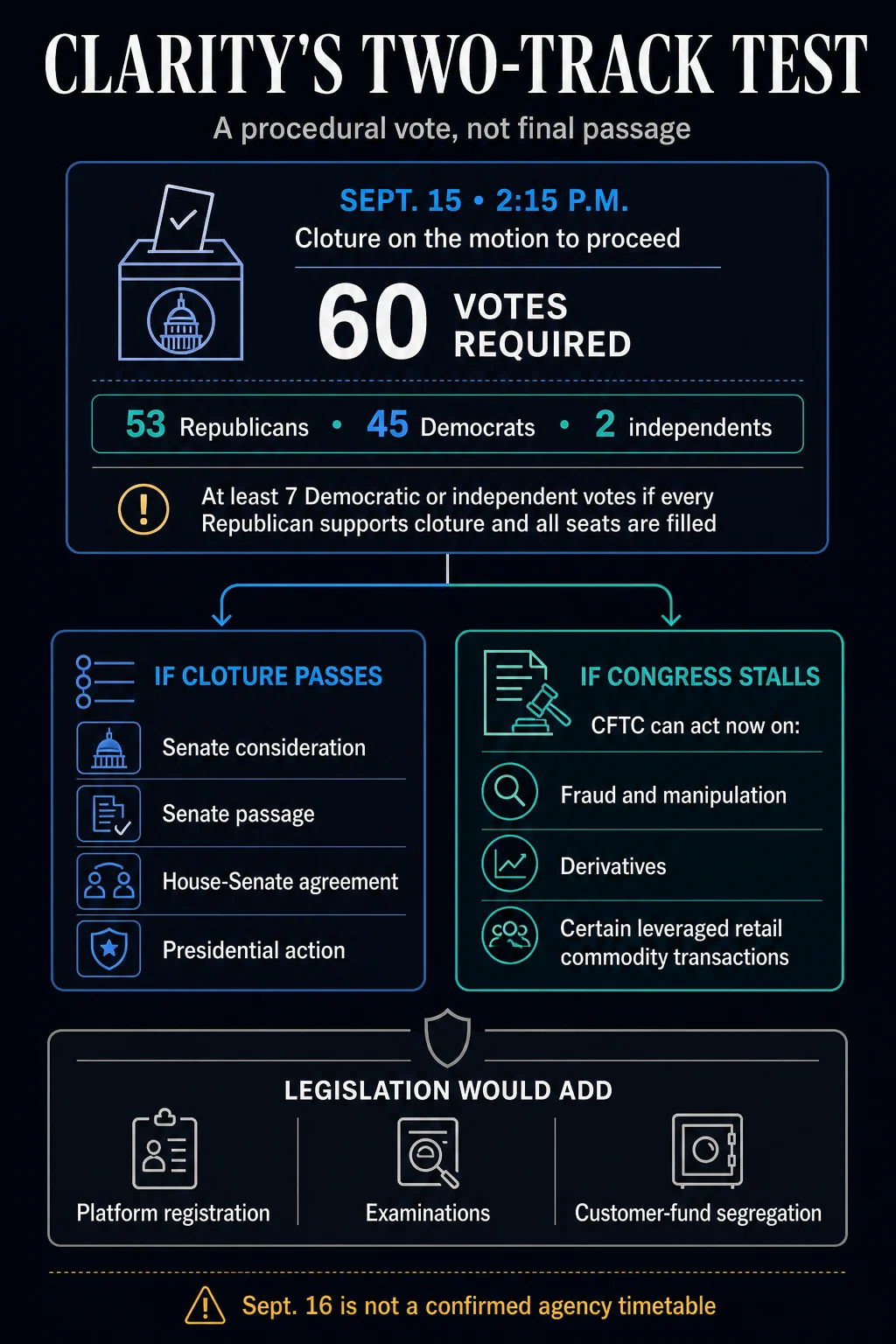
The U.S. Senate is set to formally consider the Digital Asset Market Clarity Act, a landmark piece of legislation aimed at establishing a comprehensive federal framework for digital asset markets, with a procedural cloture vote scheduled for September 15. This pivotal vote will serve as a crucial test of the bill’s ability to garner the necessary 60-vote supermajority required to overcome potential filibusters and advance to broader debate and amendment. While the Senate’s upcoming action signals a significant step forward for legislative efforts to regulate the burgeoning digital asset space, existing regulatory bodies, such as the Commodity Futures Trading Commission (CFTC), have indicated their intent to implement measures within their current authority should legislative progress continue to falter.
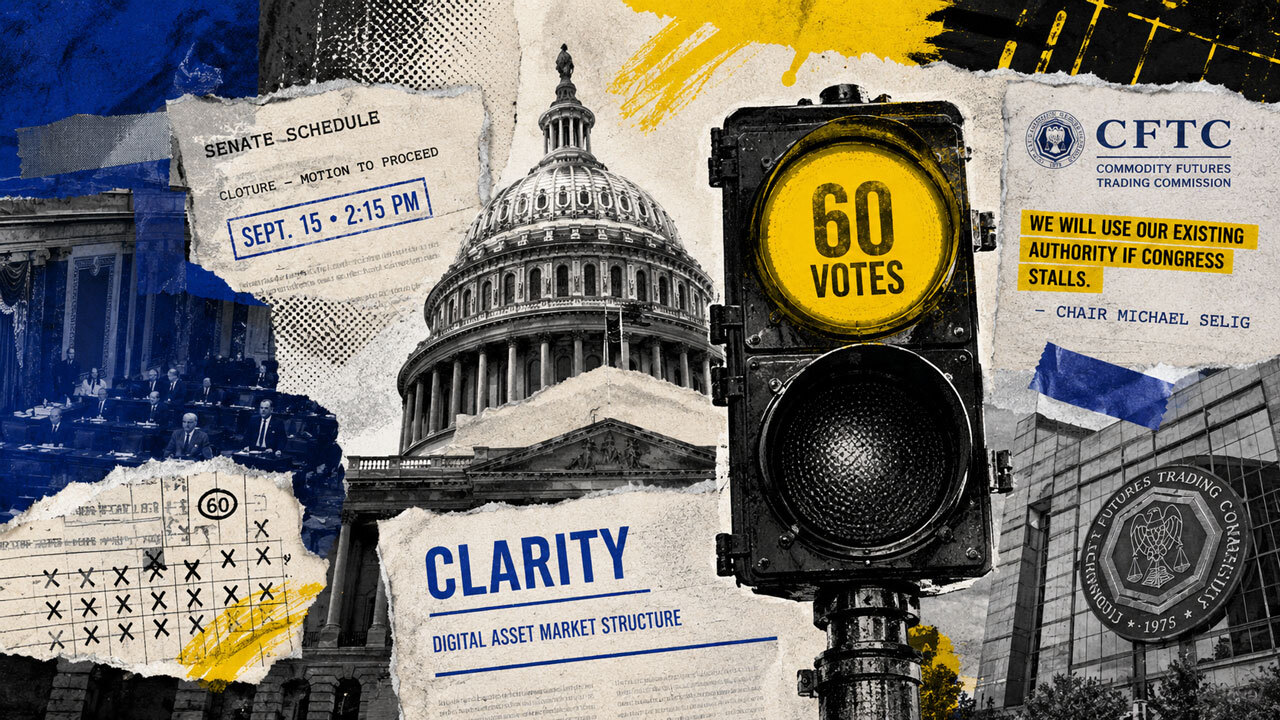
The scheduled vote, detailed in the official floor schedule, will focus on the motion to proceed to H.R. 3633, the designated number for the Digital Asset Market Clarity Act. The cloture vote is slated to occur at 2:15 p.m. It is critical to understand that a successful cloture vote does not signify the bill’s passage into law. Instead, it merely allows the Senate to move beyond procedural hurdles and commence deliberations on the bill’s substance, including potential amendments and further debate.
The Significance of the Senate’s 60-Vote Threshold
Senate rules mandate that a three-fifths majority of senators duly chosen and sworn is required to invoke cloture on a legislative motion. In a fully seated Senate, this equates to 60 votes. The current composition of the Senate stands at 53 Republicans, 45 Democrats, and two independents. For the CLARITY Act to advance, proponents would need to secure the support of virtually all Republican senators and at least seven Democratic or independent votes. This coalition-building effort underscores the bipartisan nature required for significant legislative achievements in the current political climate.
The bill previously navigated the Senate Banking Committee, advancing in May with a bipartisan vote of 15-9. This committee-level support, while encouraging, does not guarantee the necessary consensus on the Senate floor. Notably, in July, seven Democratic senators – Angela Alsobrooks, Cory Booker, Catherine Cortez Masto, Ruben Gallego, John Hickenlooper, Mark Warner, and Raphael Warnock – expressed reservations about the bill’s current text. Their concerns, as articulated in a joint statement, centered on perceived shortcomings in ethics, consumer protection, measures against illicit finance, prevention of conflicts of interest, and the overall integrity of the market. This indicates that achieving the 60-vote threshold will necessitate considerable negotiation and potential revisions to address these expressed Democratic concerns.
Republican Senator Jim Risch, a proponent of advancing the CLARITY Act, has publicly supported moving the bill forward, characterizing September 15 as the commencement of the Senate’s legislative process. However, a comprehensive whip count detailing the exact level of support among all senators has not been made public, leaving the outcome of the cloture vote uncertain.
CFTC’s Existing Authority: A Regulatory Fallback
The ongoing legislative uncertainty surrounding the CLARITY Act has amplified discussions about the extent to which regulatory bodies can act unilaterally. CFTC Chair Michael Selig, in a public statement on August 20, indicated the agency’s readiness to take proactive steps within its existing statutory authority to address the digital asset market if legislative progress on CLARITY continued to be impeded, citing what he characterized as Democratic obstruction. This suggests a potential divergence in regulatory approaches, with the CFTC seeking to fill perceived gaps in oversight through administrative action rather than waiting for comprehensive congressional legislation.
Selig’s January agenda outlined several key areas of focus for the CFTC, including collaborative efforts with the Securities and Exchange Commission (SEC) to clarify jurisdictional boundaries concerning various digital assets. The agenda also touched upon the development of rules for tokenized collateral, the regulation of leveraged retail transactions, the establishment of pathways for perpetual derivatives, and the exploration of potential exemptions or safe harbors for certain digital asset activities. These initiatives, if pursued, could significantly shape aspects of the digital asset market without the need for new legislation.
However, it is crucial to differentiate these potential regulatory actions from the broader, more structured framework envisioned by the CLARITY Act. While the CFTC possesses the authority to police fraud and manipulation within spot digital commodity markets and regulate derivatives under its purview, including certain leveraged or margined retail commodity transactions, these powers are not as expansive as the legislative regime being considered by Congress.
Testifying before senators, Selig emphasized that new legislation would be instrumental in establishing a more robust framework for the registration and oversight of trading platforms, implementing stringent examination protocols, and ensuring the segregation of customer funds. These are critical components that the CFTC’s existing authority may not fully replicate.

The Path Forward: Legislative Hurdles and Regulatory Action
The speculation surrounding potential regulatory announcements has led to predictions of new rules emerging shortly after the Senate’s scheduled vote. Coinbase CEO Brian Armstrong, for instance, suggested that regulators might unveil new rules on September 16. However, neither Chair Selig’s statements nor the CFTC’s officially published agenda confirms this specific date or the scope of any such forthcoming regulations.
Should the CLARITY Act successfully clear the procedural hurdle of the cloture vote, its journey to becoming law would still be protracted. The Senate would then need to engage in a thorough process of debate, amendment, and a final vote on the bill itself. Following Senate passage, any differences between the Senate’s version of the bill and the version previously approved by the House of Representatives would need to be reconciled through a conference committee. Only once identical legislation has been passed by both chambers and sent to the President for signature would the Digital Asset Market Clarity Act have the potential to become law.
The implications of both legislative action and regulatory maneuvers are substantial for the digital asset industry. A comprehensive federal framework, as envisioned by the CLARITY Act, could provide much-needed clarity and certainty for businesses operating in the space, potentially fostering greater innovation and investment. Conversely, a reliance on existing regulatory authority, while offering some immediate oversight, may lead to a fragmented and less predictable regulatory landscape. The interplay between these two potential paths will be closely watched by market participants, investors, and policymakers alike as the U.S. grapples with the evolving challenges and opportunities presented by digital assets. The September 15th vote represents a critical juncture in this ongoing regulatory and legislative dialogue.