admin
admin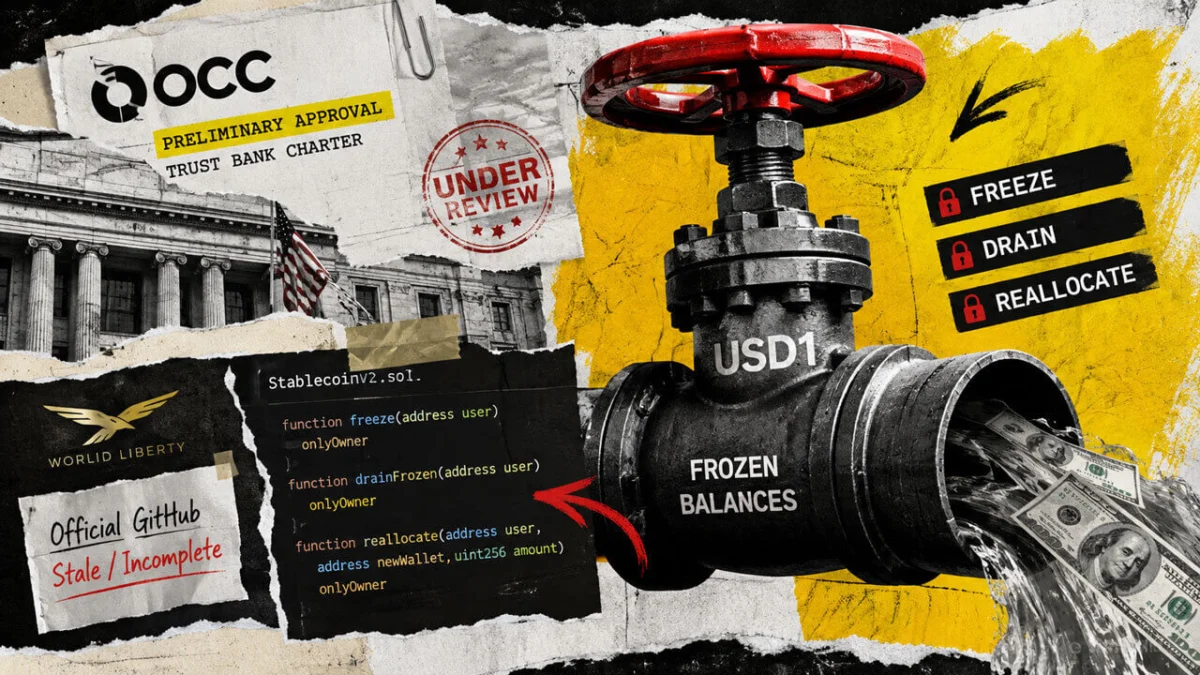
Justin Sun, the influential founder of the Tron blockchain, has intensified his public confrontation with World Liberty Financial, a venture backed by figures associated with Donald Trump, by lodging serious accusations against its USD1 stablecoin. On Friday, Sun alleged that the stablecoin’s underlying smart contract possesses administrative powers that could permit privileged operators to unilaterally move funds from frozen wallets, circumventing the consent of token holders. This latest salvo marks a significant escalation in a protracted and increasingly acrimonious dispute between Sun and the burgeoning financial entity.
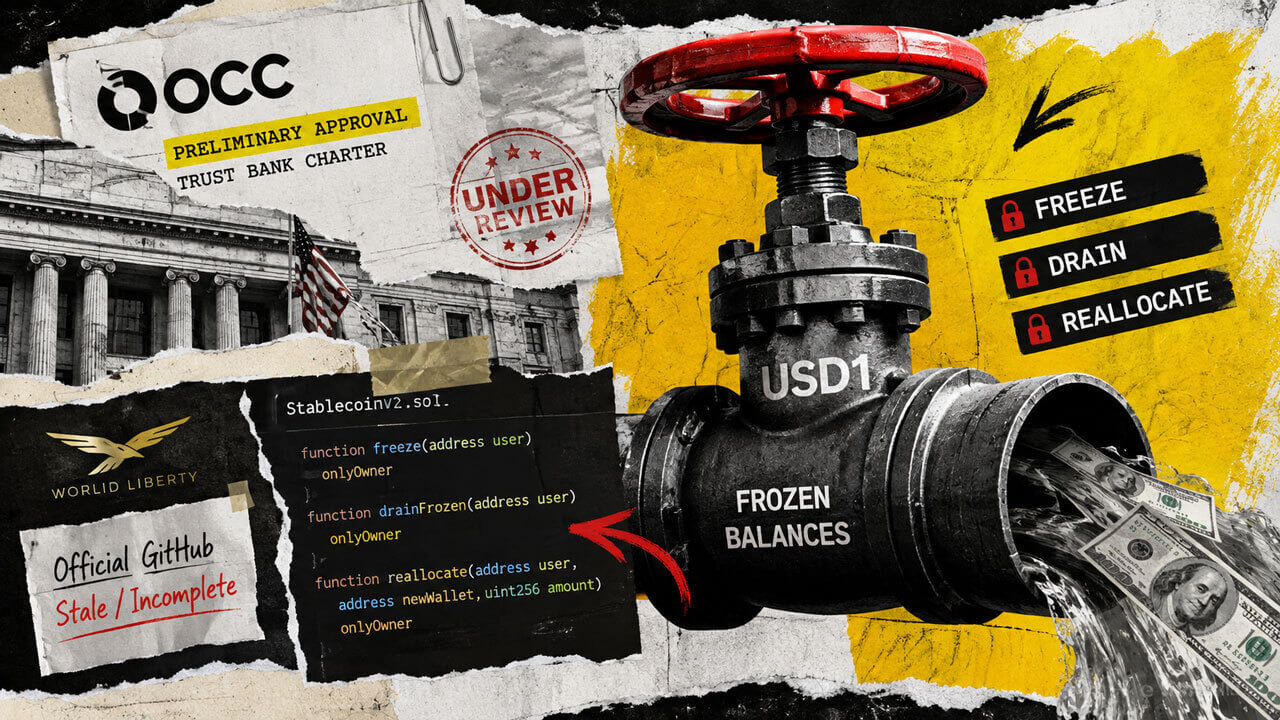
The core of Sun’s recent allegations, first voiced on August 21st, centers on a perceived discrepancy between World Liberty Financial’s publicly available source code and the live contract currently deployed on the blockchain. Sun contends that this divergence constitutes evidence of deceptive practices, drawing parallels to the tactics employed in "rug pulls" – a malicious scheme where developers abandon a project and abscond with investor funds. He asserts that the live USD1 implementation includes functionalities described as drain and reallocate which, when applied to frozen addresses, enable intervention at the token contract level, rendering traditional security measures like cold storage or multisignature wallets ineffective. Furthermore, Sun claims that similar privileged functions were retroactively added to the WLFI token, the project’s native utility token.
"USD1’s highest-level permissions allow the issuer to move USD1 out of YOUR account into its own wallet – or anyone else’s – without your consent," Sun stated in a public communication. "Cold wallet? Multisig? Doesn’t matter. The authority operates at the token contract level. Nothing you do can stop it."
Technical Examination of USD1’s Live Contract
A deeper technical examination of USD1’s operational framework reveals that the stablecoin operates through an upgradeable proxy mechanism. This system transitioned to its current StablecoinV2 implementation on April 5th. The audited version of this contract indeed contains drain and reallocate functions that specifically target frozen accounts. According to a technical review of the contract, the drain function facilitates the transfer of an entire balance from a frozen address directly to the contract owner. The reallocate function, meanwhile, grants the ability to move a specified amount from a frozen address to another designated address. Crucially, neither of these actions necessitates explicit approval from the account holder whose funds are being manipulated.
Sun’s assertion that a user’s personal custody arrangements cannot override these contract-level controls once an address has been frozen appears technically accurate. However, the analysis also indicates that these functions do not grant arbitrary users unfettered access to other individuals’ USD1 holdings or allow for unrestricted transfers from any wallet at any given time. These privileged functions are gated and specifically operate on balances that have already been designated as frozen.
The more contentious issue, as Sun highlights, lies in the disparity between the deployed smart contract and the code repository maintained by World Liberty Financial itself. The project’s official GitHub repository, specifically the Stablecoin.sol file, lists functions for minting, burning, freezing, and pausing tokens. However, it conspicuously omits the drain, reallocate, and V2 initializer functions that are present in the live implementation. While the deployed code is transparent and verifiable on blockchain explorers, meaning these functions are not inherently hidden from those who actively scrutinize the on-chain contract, developers or investors who rely solely on the project’s public repository would be unaware of the full scope of administrative controls governing USD1.
This lack of transparency is significant, particularly in the context of stablecoins. Centralized stablecoins routinely reserve the right to intervene in token movements. For instance, issuers of major stablecoins like USDT (Tether) and USDC (USD Coin) possess the authority to freeze or blacklist specific addresses. BitGo, the current issuer and technical provider for USD1, outlines in its terms of service that it reserves the right to freeze or upgrade USD1, and under certain legal or compliance circumstances, may render assets permanently unusable. While these disclosures acknowledge the existence of centralized control mechanisms, they do not explain the apparent disconnect between World Liberty’s public code repository and its actively deployed smart contract.
Escalation of the Dispute Amidst Regulatory Scrutiny
Sun’s latest accusations mark a dramatic intensification of a dispute that has been simmering for months. Sun was an early investor in World Liberty Financial, initially committing $45 million to the project. However, the relationship soured considerably. World Liberty Financial subsequently restricted Sun’s access to tokens, accused him of improper asset movements and market manipulation aimed at influencing WLFI’s price, and initiated defamation lawsuits against him. Sun has vehemently denied these allegations.
The legal battle intensified on August 20th, when Sun announced a procedural victory, claiming he had secured the right to pursue his personal claims against World Liberty Financial in federal court. The following day, he broadened the conflict by focusing on the USD1 stablecoin, arguing that the discrepancy between the published code and the live contract served as irrefutable evidence of fraudulent deployment. "Anyone in crypto knows exactly what that pattern is," Sun remarked, reiterating his comparison to rug pull tactics and alleging that World Liberty Financial had previously employed similar strategies with its WLFI token.
Despite Sun’s strong rhetoric, the available evidence does not definitively establish that World Liberty Financial intentionally maintained an outdated repository to deceive users or auditors. Furthermore, the code discrepancy, in itself, does not prove a reserve shortfall, impaired backing, or unauthorized fund movements from holder accounts.
However, the timing of these allegations is particularly sensitive for World Liberty Financial. Sun’s intensified attack comes just a week after the Office of the Comptroller of the Currency (OCC) granted preliminary conditional approval to World Liberty Trust Company. This proposed national trust bank is slated to assume the responsibilities of USD1 issuance, redemption, and reserve management from BitGo. While this approval is a significant milestone, it remains contingent upon meeting pre-opening requirements and does not yet authorize the bank to commence operations.
Adding to the complex landscape, USD1 is approaching this pivotal transition with a diminished market presence. Data from DeFiLlama indicates that the circulating supply of USD1 has fallen by over $1.3 billion from its peak of more than $5.3 billion in February, currently standing at approximately $4 billion. This decline predates Sun’s most recent allegations and does not necessarily correlate with holders redeeming their stablecoins due to the contract dispute. Nevertheless, it positions World Liberty Financial to pursue final bank approval while its flagship stablecoin operates below its recent market highs.
World Liberty Financial has also contested Sun’s characterization of the ongoing legal proceedings. Zach Witkoff, Chief Executive Officer of World Liberty Financial, publicly stated that Sun’s account of a recent arbitration hearing was "riddled with falsehoods." Witkoff argued that the court had not issued any rulings and asserted that certain claims brought by Sun’s companies should be resolved through arbitration. World Liberty Financial is also independently seeking the dismissal of Sun’s personal claims.
Broader Implications and Future Outlook
The ongoing dispute between Justin Sun and World Liberty Financial, while characterized by strong accusations and counter-accusations, appears to be based on a narrower technical issue than Sun’s rhetoric might suggest. At present, there is no concrete evidence to substantiate claims that USD1 constitutes a rug pull or that its administrative controls were implemented with fraudulent intent.
However, the disclosure gap remains a significant concern. The disparity between the capabilities of USD1’s live smart contract and the information presented in World Liberty Financial’s public code repository is difficult to dismiss, especially as the company aims to secure final approval for a regulated trust bank that would ultimately oversee the stablecoin.
The implications of this ongoing conflict extend beyond the immediate parties involved. For the broader cryptocurrency market, the situation raises questions about transparency, code auditing, and the reliability of project repositories. The involvement of entities linked to prominent political figures also introduces an additional layer of complexity and public scrutiny.
As World Liberty Financial navigates the final stages of obtaining bank approval, the continued allegations from a figure as influential as Justin Sun could impact investor confidence and regulatory perception. The stablecoin market, already subject to intense regulatory focus, is particularly sensitive to any perceived vulnerabilities or lack of transparency. The resolution of this dispute, both legally and technically, will be closely watched by the industry. The successful transition to a regulated banking structure for USD1, coupled with clear and accurate disclosures regarding its operational framework, will be critical for its long-term viability and acceptance. The market will be looking for World Liberty Financial to provide a definitive explanation for the code discrepancies and to reassure stakeholders about the security and integrity of the USD1 stablecoin.