admin
admin
In a significant advancement for the convergence of digital assets and traditional finance, Better Mortgage, a leading digital-first homeownership company, and Coinbase, one of the world’s largest cryptocurrency exchanges, have announced the general availability of their innovative Bitcoin-backed mortgage product. This groundbreaking offering allows eligible US homebuyers to leverage their Bitcoin (BTC) holdings as collateral for a down payment, circumventing the need to sell their digital assets and potentially incur capital gains taxes. The joint venture, initially introduced through an early-access program in March, officially opened its doors to a broader market on Wednesday, marking a pivotal moment in the evolution of mortgage financing.
The product’s core mechanism is ingeniously structured to integrate volatile digital assets within the regulated framework of traditional home lending. It pairs a standard Fannie Mae-backed home loan with a distinct down payment loan, the latter exclusively secured by Bitcoin. According to details elucidated in Coinbase’s Help Center, prospective borrowers are required to pledge a substantial amount of BTC, specifically valued at a minimum of 250% of the down payment loan amount. This pledged Bitcoin is then securely transferred to Better’s designated custodial account within Coinbase Prime, Coinbase’s institutional platform renowned for its robust security and asset management capabilities. This over-collateralization strategy is a critical risk mitigation measure designed to absorb potential price fluctuations in Bitcoin, offering a buffer against market volatility for the lender.
Both the primary Fannie Mae home loan and the Bitcoin-secured down payment loan are designed to operate in harmony, featuring identical interest rates and amortization terms. This streamlined approach simplifies the borrower’s experience, as repayments are consolidated into a single, convenient monthly payment. A key differentiating feature of this product, and a significant advantage for borrowers, is its immunity to Bitcoin price declines alone not triggering margin calls or alterations to the mortgage terms. This provision addresses one of the primary concerns associated with crypto-backed lending – the forced liquidation of collateral during market downturns. However, robust safeguards are in place for the lender; Better retains the right to liquidate the pledged BTC if a borrower defaults on payments for 60 days or more. Upon the full repayment or refinancing of the mortgage, the pledged Bitcoin is returned to the borrower, contingent on adherence to the stipulated loan terms.
Eligibility for this novel financing solution is currently restricted to US residents who possess a verified Coinbase account. Beyond these digital asset-specific criteria, applicants must also satisfy Better’s standard and rigorous credit, income, and other underwriting requirements, ensuring that fundamental lending principles are upheld. As an added incentive, Coinbase One members are extended an exclusive offer: a 1% rebate from Better, capped at $10,000, which can be strategically utilized to offset closing costs and associated fees, further enhancing the product’s appeal to active cryptocurrency users.
The Mechanics of the Bitcoin-Backed Mortgage: A Deep Dive
Understanding the intricate mechanics of this Bitcoin-backed mortgage reveals the thoughtful engineering behind its design, aimed at bridging the gap between innovative finance and established regulatory frameworks. The two-loan structure is paramount. The primary loan, backed by Fannie Mae, adheres to conventional mortgage standards, providing a layer of familiarity and regulatory compliance that is essential for widespread adoption. Fannie Mae, as a government-sponsored enterprise (GSE), plays a crucial role in providing liquidity to the mortgage market, and its involvement implicitly lends credibility and stability to the overall product.
The second, separate loan is where Bitcoin truly enters the equation. This "down payment loan" is collateralized entirely by the borrower’s BTC. By segmenting the down payment into a distinct, crypto-backed loan, Better Mortgage and Coinbase navigate the complexities of integrating a volatile asset into a typically conservative lending environment without fundamentally altering the structure of the primary home loan. The 250% over-collateralization requirement is not arbitrary; it is a carefully calculated buffer. For example, if a borrower needs a $50,000 down payment loan, they would need to pledge $125,000 worth of Bitcoin. This substantial cushion means that Bitcoin’s price would need to fall by more than 60% before the collateral value equals the loan amount, providing significant protection against market dips. This design mitigates immediate risk for Better Mortgage, allowing them to offer the "no margin call" feature that distinguishes this product from many other crypto-backed lending offerings.
The choice of Coinbase Prime as the custodian for the pledged Bitcoin is also critical. Coinbase Prime is a robust institutional platform offering advanced security measures, including multi-party computation (MPC) technology, cold storage solutions, and comprehensive insurance policies. This level of security is vital in building trust among borrowers and regulators alike, ensuring that the valuable digital assets are protected from theft, loss, or unauthorized access. The seamless integration between Better’s lending platform and Coinbase Prime’s custodial services is a testament to the technological sophistication underpinning this product.
For borrowers, the ability to avoid selling Bitcoin to fund a down payment offers several compelling advantages. Firstly, it allows them to maintain exposure to potential future appreciation of Bitcoin, a significant draw for long-term holders. Secondly, it helps defer or avoid capital gains taxes that would typically be incurred upon the sale of appreciated crypto assets. This tax efficiency can translate into substantial savings, making homeownership more accessible and financially advantageous for Bitcoin holders. The single monthly payment structure further simplifies financial management, ensuring that borrowers only interact with one payment schedule for their entire home financing needs.

A New Era for Home Financing: The ‘Why’ Behind the Innovation
The introduction of Bitcoin-backed mortgages arrives at a juncture characterized by unprecedented challenges and opportunities in the US housing market and the broader financial landscape. US housing prices have remained stubbornly near historic highs for several years, making traditional homeownership increasingly difficult, particularly for first-time buyers struggling to accumulate substantial cash down payments. According to data compiled by the Federal Reserve Bank of St. Louis from the US Census Bureau and the Department of Housing and Urban Development, the median sales price of a new US home hovered around $400,000 in 2026. While showing some retreat from 2022 peaks, these figures underscore a persistent affordability crisis. In this environment, innovative financing solutions that unlock alternative forms of capital are not merely novelties but increasingly vital.
Simultaneously, the adoption and mainstream acceptance of cryptocurrencies, particularly Bitcoin, have surged. What was once considered a niche asset class is now held by millions of Americans, often representing a significant portion of their accumulated wealth. Many of these holders are long-term investors, colloquially known as "HODLers," who are reluctant to liquidate their assets due to strong conviction in Bitcoin’s future value or a desire to avoid tax events. The Better-Coinbase product directly addresses this demographic, offering a mechanism to utilize their digital wealth without divesting it. This caters to a growing segment of the population that has accumulated wealth in a non-traditional format, aligning financial products with evolving consumer asset preferences.
The move by Better and Coinbase also reflects a broader industry trend toward recognizing and integrating digital assets into conventional financial services. This isn’t just about facilitating transactions; it’s about acknowledging crypto as a legitimate form of collateral and wealth. By allowing homeowners to pledge Bitcoin, these companies are tapping into a vast pool of previously illiquid or inaccessible capital for traditional lending purposes.
Regulatory Landscape and Industry Momentum
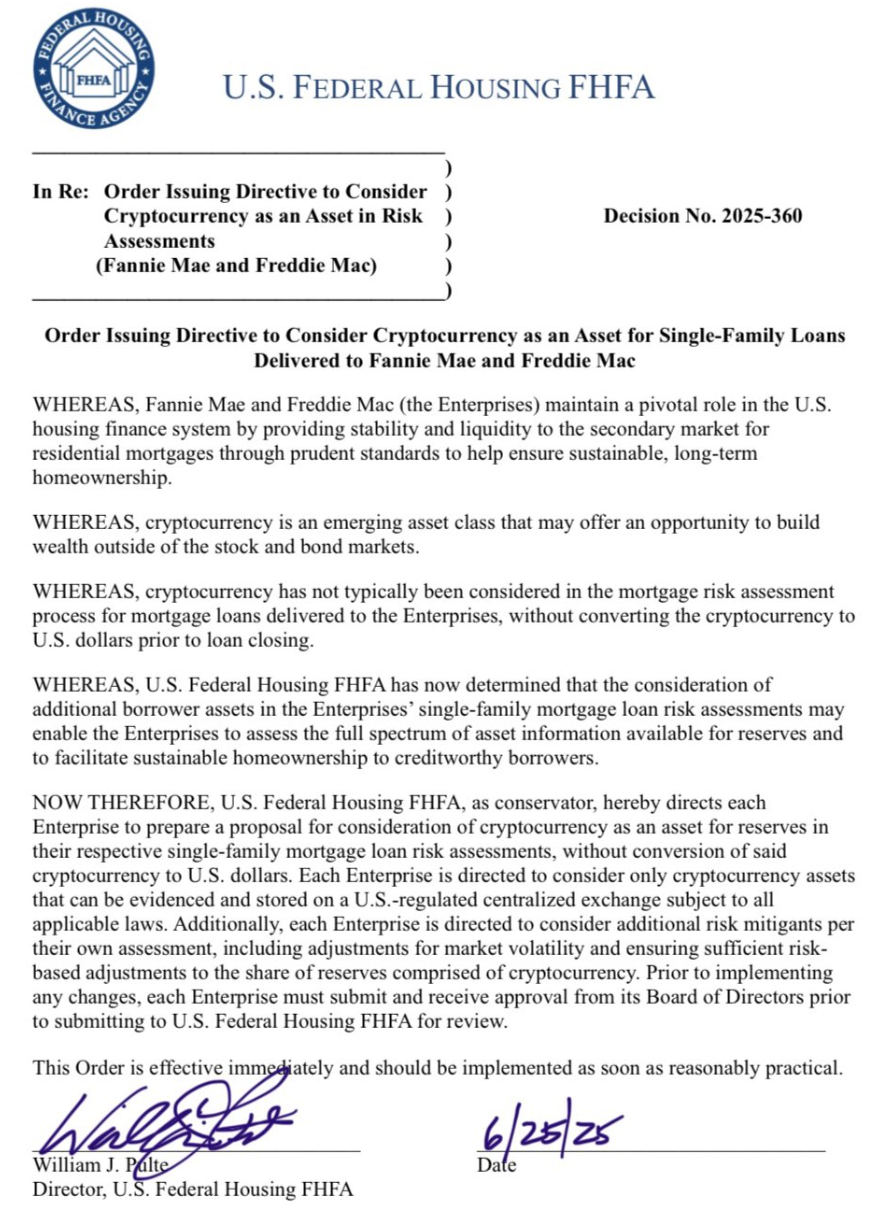
The general availability of this product is not an isolated event but rather a culmination of broader efforts to integrate digital assets into the US mortgage underwriting ecosystem, significantly influenced by evolving regulatory perspectives. A crucial development occurred in June 2025 when the Federal Housing Finance Agency (FHFA), which oversees Fannie Mae and Freddie Mac, issued a landmark directive. This directive explicitly instructed both government-sponsored enterprises to develop proposals for considering cryptocurrency held on US-regulated centralized exchanges as a recognized asset in single-family mortgage risk assessments. Crucially, this consideration was to occur without requiring conversion to US dollars.
The FHFA’s move signaled a fundamental shift in regulatory thinking, moving beyond a skeptical view of crypto to one that seeks to understand and integrate it responsibly. The directive also mandated that Fannie Mae and Freddie Mac propose concrete risk-mitigation measures to address crypto’s inherent volatility, and submit any proposed changes to their respective boards for approval before final FHFA review. This proactive regulatory guidance creates a more conducive environment for products like the Better-Coinbase offering, providing a roadmap for how digital assets can be safely incorporated into federally backed mortgage programs.
Beyond the FHFA’s guidance, other US lenders have also begun to acknowledge the growing role of cryptocurrency in personal finance. For instance, mortgage lender and servicer Newrez announced in January that it would start recognizing certain cryptocurrency holdings when evaluating mortgage applications, effective February. This applied to both new home purchases and refinancing. These parallel developments underscore a growing consensus within the financial services industry that digital assets are here to stay and must be accommodated within traditional lending frameworks. The trend indicates a future where crypto holdings might become a more commonplace component of a borrower’s financial profile, alongside traditional assets and income streams.
Navigating the Risks: Volatility, Delinquency, and Underwriting
While the Bitcoin-backed mortgage presents significant opportunities, an objective analysis also necessitates a clear understanding of the inherent risks and how they are being addressed. The most prominent risk, undoubtedly, is the extreme volatility of Bitcoin. Although the product cleverly sidesteps immediate margin calls for price drops, the underlying value of the collateral remains subject to market swings. The 250% over-collateralization is designed to absorb substantial drops, but in extreme, prolonged bear markets, the collateral could theoretically fall below the value of the down payment loan. However, the lender’s ultimate recourse is liquidation only if the borrower becomes 60 days delinquent on payments. This means that as long as the borrower continues to make their single monthly payment, their Bitcoin collateral remains untouched, regardless of its market value.
The risk of borrower delinquency remains a critical factor. If a borrower defaults, Better Mortgage would proceed with liquidating the pledged Bitcoin to recover the outstanding down payment loan amount. In a scenario where Bitcoin’s price has significantly declined, the proceeds from liquidation might be less than the initial collateral value, though the 250% buffer aims to prevent the collateral from falling below the loan amount itself. This mechanism places the primary risk of Bitcoin’s price decline on the lender in the event of default, but it’s a calculated risk managed by the substantial collateral ratio.
Underwriting remains a cornerstone of responsible lending. Better Mortgage’s requirement for applicants to meet traditional credit, income, and other underwriting standards ensures that borrowers are assessed for their overall financial health and ability to repay the loan, independent of their Bitcoin holdings. This multi-faceted approach to risk assessment combines traditional metrics with an innovative collateral structure, aiming for a balanced and secure lending environment.
From a regulatory standpoint, while the FHFA directive provides a framework, the broader regulatory landscape for cryptocurrencies in the US is still evolving. Future legislative changes or new interpretations could impact the operational parameters or perceived risks associated with such products. Both Better Mortgage and Coinbase will need to remain agile and adaptable to an ever-changing regulatory environment.
Market Reactions and Future Outlook
The announcement has garnered considerable attention across financial markets and the cryptocurrency community. Industry analysts generally view the product as a significant step towards the mainstream adoption of digital assets within traditional finance. Many experts suggest that this initiative could inspire other major lenders and financial institutions to explore similar offerings, accelerating the integration of crypto wealth into conventional financial products.
Spokespersons for Better Mortgage and Coinbase have consistently emphasized their commitment to innovation and democratizing access to homeownership. They likely view this product as a strategic move to cater to a new generation of homebuyers who have accumulated wealth in digital assets and seek flexible, tax-efficient ways to deploy it. By offering solutions that resonate with the preferences of crypto-savvy individuals, these companies aim to capture a growing market segment.
The implications extend beyond just home financing. This product could set a precedent for how other illiquid or alternative assets might be leveraged as collateral in the future, fostering a more dynamic and inclusive financial system. It also highlights the growing sophistication of crypto market infrastructure, particularly institutional-grade custody solutions like Coinbase Prime, which are essential for enabling such large-scale integrations.
Looking ahead, the success of the Bitcoin-backed mortgage will be closely watched. Factors such as borrower uptake, default rates, and the long-term performance of Bitcoin itself will determine its sustained impact. Should it prove successful, it could pave the way for other cryptocurrencies to be accepted as collateral, or for similar models to be applied to other forms of lending. The journey from a speculative asset to a recognized form of collateral in a Fannie Mae-backed mortgage underscores the rapid maturation of the cryptocurrency ecosystem and its increasing relevance to the global economy. This partnership between Better Mortgage and Coinbase represents not just a new product, but a tangible manifestation of a future where digital and traditional finance are increasingly intertwined, offering new avenues for wealth utilization and economic participation.