admin
admin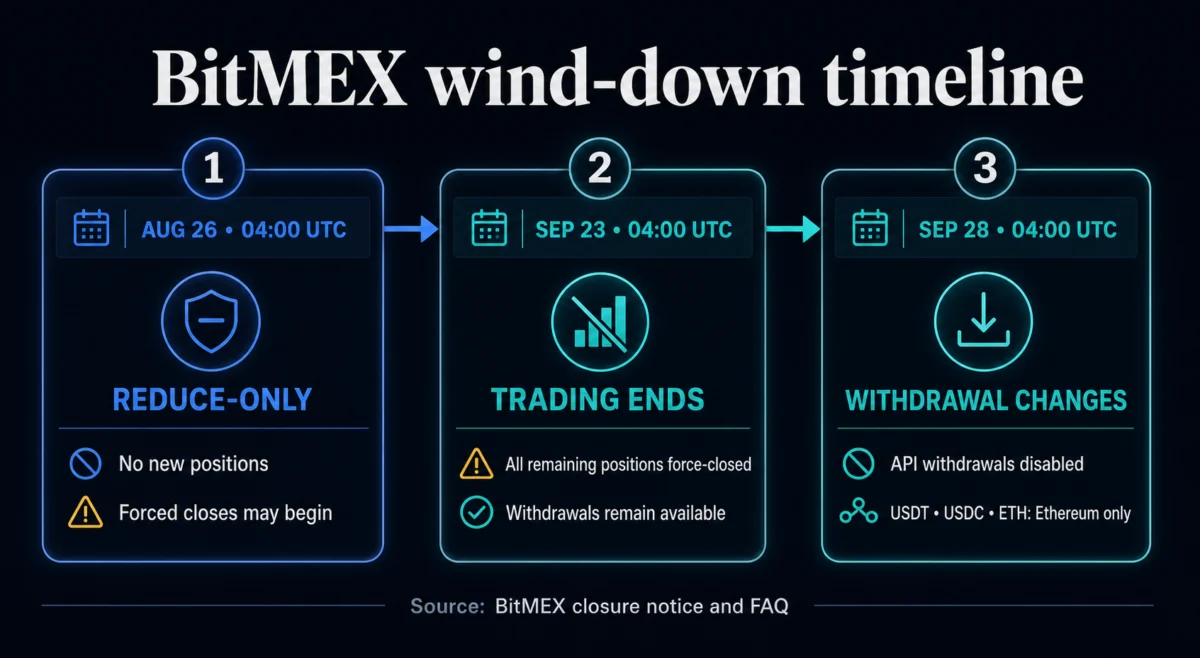
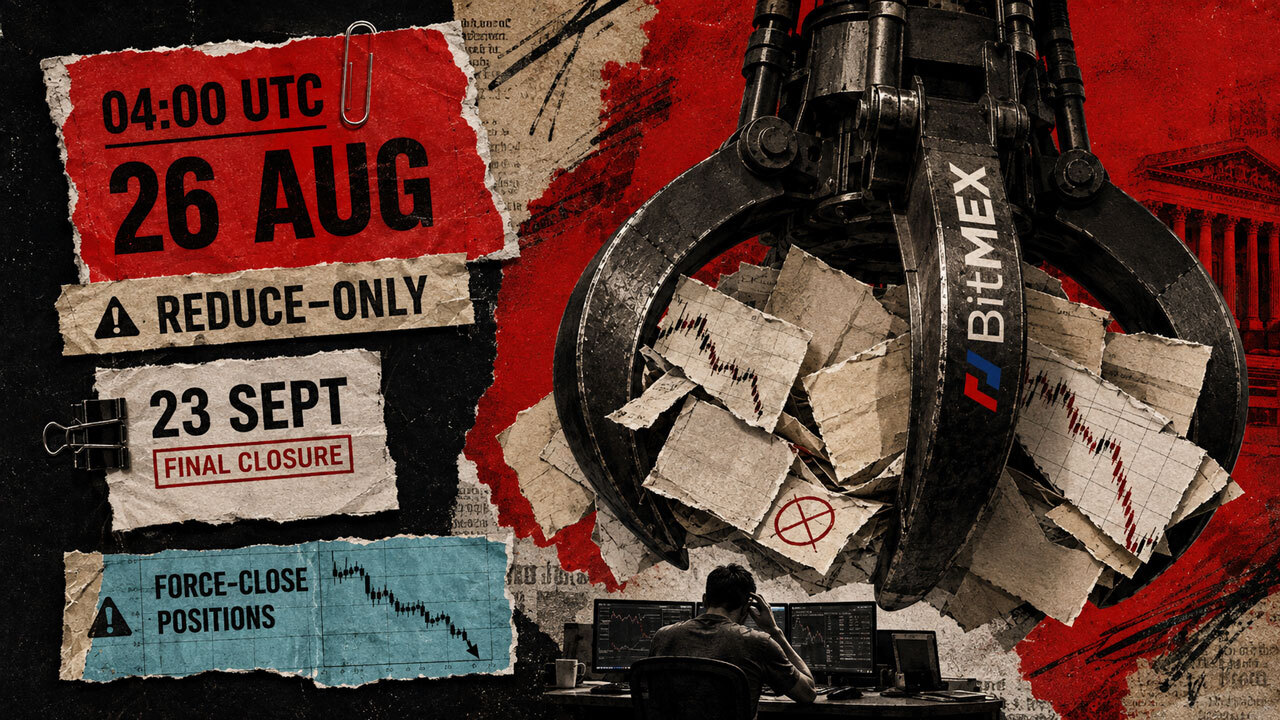
The impending closure of BitMEX, once a titan of the cryptocurrency derivatives market, is entering a critical phase as the exchange transitions to a "reduce-only" mode starting at 04:00 UTC on August 26th. This pivotal shift signifies a substantial loss of control for traders, who will be barred from opening new positions and will face the increasing possibility of their existing trades being forcibly liquidated by the exchange before the final shutdown on September 23rd. This move marks a significant turning point in the operational life of the platform, raising concerns among its user base about potential trading losses and the management of their assets during this extended wind-down period.
The decision to cease operations, announced by HDR Global Trading Limited, BitMEX’s owner and operator, stems from a comprehensive strategic review. While the exchange has explicitly stated that financial distress, a past security breach, or immediate regulatory pressure were not the primary drivers behind this decision, the implications for the broader derivatives landscape are substantial. BitMEX, which rose to prominence during the crypto bull runs of previous years, was instrumental in popularizing high-leverage perpetual futures contracts, shaping the trading strategies of a generation of crypto investors. Its departure from the market signals a maturing, albeit often turbulent, industry landscape.
Under the detailed closure timetable and operational Frequently Asked Questions (FAQ) published by BitMEX, traders will still have the limited ability to reduce their existing exposure after the August 26th deadline. However, the exchange has reserved the right to forcibly close positions to facilitate an orderly wind-down process. Crucially, BitMEX has disclaimed responsibility for any trading losses incurred by users who are unable to close their positions during this period, a statement that is likely to be a point of contention for affected traders. This policy underscores the exchange’s commitment to a controlled exit, prioritizing operational closure over individual trader autonomy in the final weeks.
Chronology of the BitMEX Closure
The transition to a "reduce-only" mode on August 26th is the first of several critical dates leading to the complete cessation of BitMEX’s trading services. This date marks the point at which traders lose the ability to initiate new trades or increase their existing exposure. Any open positions that remain after this deadline will be subject to the exchange’s intervention.
The subsequent major milestone is September 23rd, at 04:00 UTC, when BitMEX will execute a full and immediate force-close of all remaining open positions. This will effectively end all trading activity on the platform. The exchange has stated that it will utilize the relevant settlement price or contract index to determine the liquidation value of these positions, with the resulting funds being credited to each user’s wallet balance.
Following the complete closure of trading, users will retain limited access to their accounts. From September 28th onwards, BitMEX will disable API withdrawals, a move that will impact institutional integrations and automated trading systems. This necessitates manual withdrawal processes through the BitMEX website. Support for API withdrawals via platforms such as Fireblocks and Copper will be terminated. Furthermore, after this date, withdrawals will be limited to USDT, USDC, and ETH, and will only be supported on the Ethereum network.
The "Reduce-Only" Phase: A Period of Surrendered Control
The period between August 26th and September 23rd is critical for traders. While positions may continue to exist on paper, the trader’s ability to manage them is significantly curtailed. The inability to add to existing positions or open new ones means that traders cannot adjust their strategies in response to market movements, potentially leaving them exposed to adverse price action. The looming threat of forced closure by BitMEX adds another layer of uncertainty. This proactive intervention by the exchange, aimed at ensuring a smooth exit, effectively shifts the timing of execution out of the trader’s hands. Therefore, August 26th is not the end of trading for all, but rather the beginning of an era where users start to relinquish control over when their trades are finalized, with the ultimate deadline for all positions being September 23rd.
Operational Changes and Potential Fees
Beyond the cessation of trading, BitMEX is implementing further operational changes that will affect users’ ability to access and manage their funds. After the final closure on September 23rd, the trading interface and other discontinued exchange services will become inaccessible. However, users will still be able to view their wallet balances, transaction history, and utilize withdrawal pages.
A significant point of concern for users with remaining balances is the introduction of a monthly account fee. For fully verified balances left on the platform after September 23rd, BitMEX will charge a fee of 1% per annum, or $50, whichever is greater. This fee will be levied until users withdraw their entire balance and may potentially increase over time, incentivizing prompt withdrawals. It is important to note that this fee will only be deducted from the existing account balance. BitMEX has clarified that it will not push a user’s balance below zero, nor will it leave a user owing additional money. However, if a balance is below the minimum withdrawal amount, the fee could reduce it to zero, effectively forfeiting the remaining funds.
The disabling of API withdrawals on September 28th is another significant operational change. This will require users, including those with sophisticated institutional integrations, to revert to manual withdrawal processes via the BitMEX website. This move signifies a complete withdrawal of automated withdrawal capabilities, necessitating a direct user interface interaction for asset retrieval. The focus on supporting only USDT, USDC, and ETH for withdrawals on the Ethereum network also signals a streamlining of BitMEX’s post-closure financial infrastructure.

Background and Industry Context
BitMEX, founded in 2014, quickly became a dominant force in the cryptocurrency derivatives market, particularly for its perpetual futures contracts which allowed traders to speculate on Bitcoin and other cryptocurrencies with leverage. At its peak, the exchange handled billions of dollars in daily trading volume. However, its trajectory has been marked by significant regulatory scrutiny. In 2020, BitMEX and its founders faced charges from the U.S. Commodity Futures Trading Commission (CFTC) and the U.S. Securities and Exchange Commission (SEC) for alleged violations of anti-money laundering laws and operating an unregistered derivatives exchange. These regulatory pressures, alongside increased competition from newer, more compliant platforms, have undoubtedly contributed to the changing market dynamics and the strategic review leading to the current closure.
The departure of a platform of BitMEX’s scale has broader implications for the cryptocurrency derivatives market. It signals a potential consolidation or a shift in market share towards exchanges that have successfully navigated the evolving regulatory landscape. For traders, it serves as a stark reminder of the inherent risks associated with centralized exchanges, including platform shutdowns, regulatory interventions, and the potential for asset loss. The increasing emphasis on "reduce-only" modes and forced liquidations during such transitions highlights the importance of proactive risk management and timely asset withdrawal.
Analysis of Implications
The BitMEX closure has several key implications:
- Market Share Shift: The void left by BitMEX will likely be filled by other derivatives exchanges, potentially accelerating the growth of platforms that have established strong regulatory compliance frameworks. This could lead to a more fragmented, yet potentially more regulated, derivatives market.
- Trader Behavior: The event underscores the need for traders to diversify their trading platforms and to be acutely aware of the risks associated with centralized entities. Proactive management of open positions and timely withdrawal of funds will become even more critical.
- Regulatory Precedent: While BitMEX states regulatory pressure wasn’t the direct cause, its past encounters with regulators highlight the increasing scrutiny faced by crypto exchanges globally. This closure may serve as a cautionary tale for other platforms operating in a similar environment.
- Asset Management Risks: The introduction of account fees and the eventual disabling of withdrawals for certain assets and methods emphasize the risks of leaving funds on inactive exchanges. This reinforces the principle of "not your keys, not your crypto" and the importance of self-custody where appropriate.
As the countdown to BitMEX’s final closure continues, traders are left with a limited window to manage their positions and withdraw their assets. The exchange’s staged shutdown, marked by the "reduce-only" phase and subsequent force-closes, represents a significant shift in operational control, moving the decision-making power from the trader to the exchange. This era of BitMEX’s operation is a critical period for its users, demanding swift action to mitigate potential losses and secure their remaining funds.