admin
admin
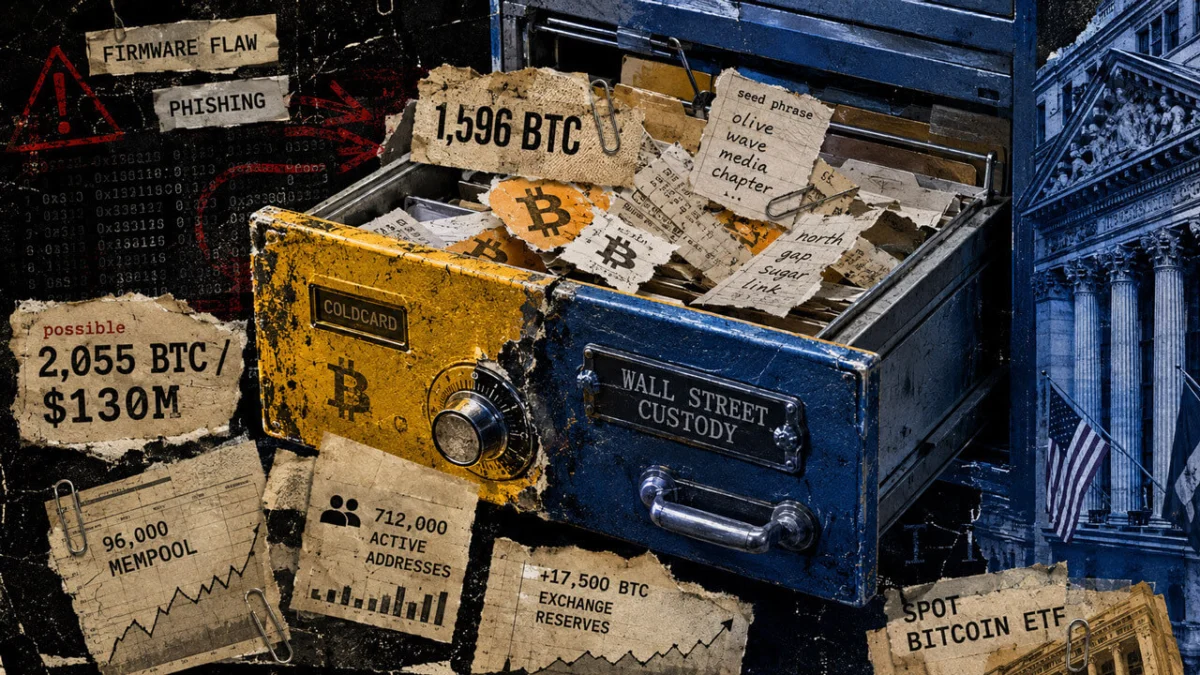
The cryptocurrency world is reeling from a significant security breach impacting Coldcard hardware wallets, a popular choice for users prioritizing self-custody of their digital assets. This vulnerability has led to the estimated theft of at least 1,596 Bitcoin (BTC), valued at approximately $130 million, from an estimated 7,300 addresses. As the fallout continues, users are in a race against time, scrambling to migrate their funds from potentially compromised devices, a process that has injected an unprecedented surge of activity into the Bitcoin network and ignited a renewed debate about the security of digital asset custody.
Genesis of the Exploit: A Flaw in Randomness
The crisis stems from a critical flaw embedded within the Coldcard firmware, dating back to a March 2021 update. At its core, the vulnerability lies in how certain Coldcard devices generated recovery seeds. Instead of relying solely on the robust randomness provided by the hardware’s built-in random-number generator, a coding error caused some devices to utilize a weaker software-based process for seed generation. This deviation meant that the generated recovery seeds possessed significantly fewer possible combinations than intended.
This deficiency created a backdoor for malicious actors. By exploiting this reduced entropy, attackers were able to remotely reconstruct the private keys associated with affected wallets. Crucially, this could be achieved without physically possessing the Coldcard device itself or obtaining the user’s recovery words – the very safeguards designed to protect against such breaches. While a subsequent firmware update from Coldcard manufacturer Coinkite addresses the issue by preventing the creation of additional weak seeds, it offers no protection for wallets whose recovery phrases were already generated through the flawed process. This leaves an ongoing and active threat for a substantial number of users.
The Scale of the Heist: Confirmed Losses and Potential Future Impact
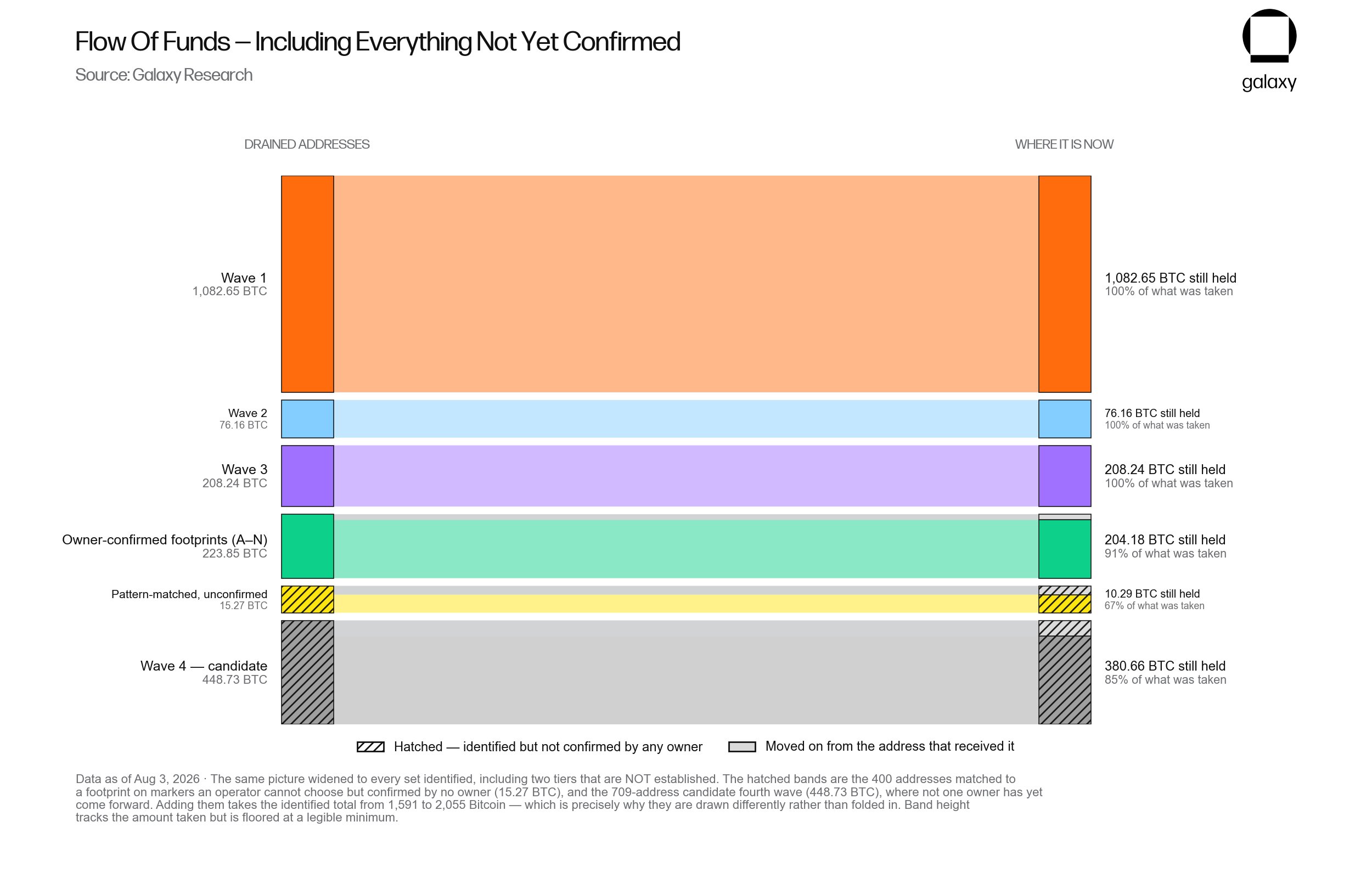
Analysis by Galaxy Research has meticulously tracked the ramifications of this exploit. The firm has confirmed losses stemming from three major attack waves, alongside 14 smaller, more targeted incidents. These attacks have resulted in the confirmed theft of 1,596 BTC, impacting approximately 7,300 distinct addresses.
However, the full extent of the damage may still be unfolding. Galaxy Research has identified a potential fourth wave of attacks that could escalate the total Bitcoin lost to 2,055 BTC, pushing the estimated value to around $130 million. These addresses, currently outside the confirmed loss figures, await additional victim reports to be officially categorized.

The investigation has been aided by victims themselves. At least 73 individuals have proactively reached out to Alex Thorn, Galaxy’s head of research, seeking assistance in tracing their stolen Bitcoin. These direct reports have been instrumental in helping researchers identify emerging attack patterns and have led to the conclusion that at least 15 distinct attackers may now be actively exploiting this vulnerability.
A significant portion of the stolen assets, approximately 90%, remains untouched in attacker-controlled wallets. Notably, all Bitcoin linked to the initial three confirmed attack waves have yet to be moved. Galaxy Research has proactively shared the identified addresses with relevant U.S. law enforcement agencies, cryptocurrency exchanges, and blockchain investigation firms. This crucial step aims to flag any attempts by attackers to move the illicitly obtained funds through centralized platforms, enhancing the chances of recovery or seizure.
The Great Migration: Bitcoin Network Activity Soars
The immediate and stark reality of the Coldcard exploit has triggered a mass exodus from potentially compromised wallets. This "great migration" is vividly reflected in the surge of activity across the entire Bitcoin network, with on-chain metrics climbing to levels not seen since periods of significant market stress, such as the FTX collapse.
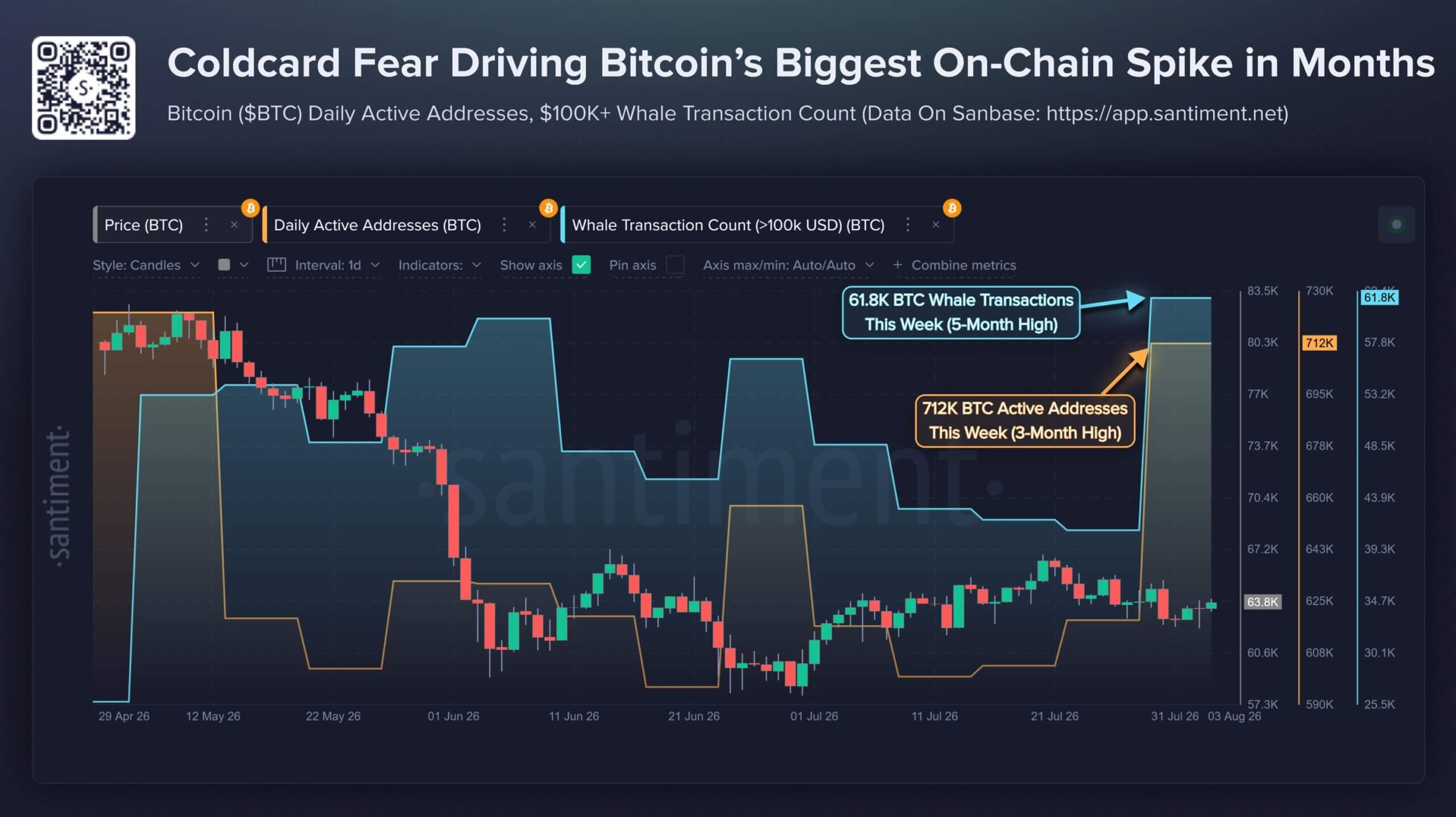
Data from Santiment reveals a dramatic uptick in network engagement. Over the past seven days, the number of active Bitcoin addresses has exceeded 712,000, marking a three-month high. Concurrently, the volume of transactions exceeding $100,000 has reached 61,800 in the same period, representing a five-month peak.
CryptoQuant, a prominent on-chain analytics firm, has identified the Coldcard crisis as the primary driver behind this heightened network activity. Affected users are actively moving their Bitcoin, either into newly generated, more secure wallets, consolidating existing balances, or, in some cases, transferring funds to custodial platforms for temporary safekeeping.
In a detailed report shared with CryptoSlate, CryptoQuant highlighted that transactions valued below $100,000 alone amounted to $3.2 billion, the highest volume since November 2024. This indicates a broad spectrum of users, from large holders to smaller investors, participating in the urgent migration.
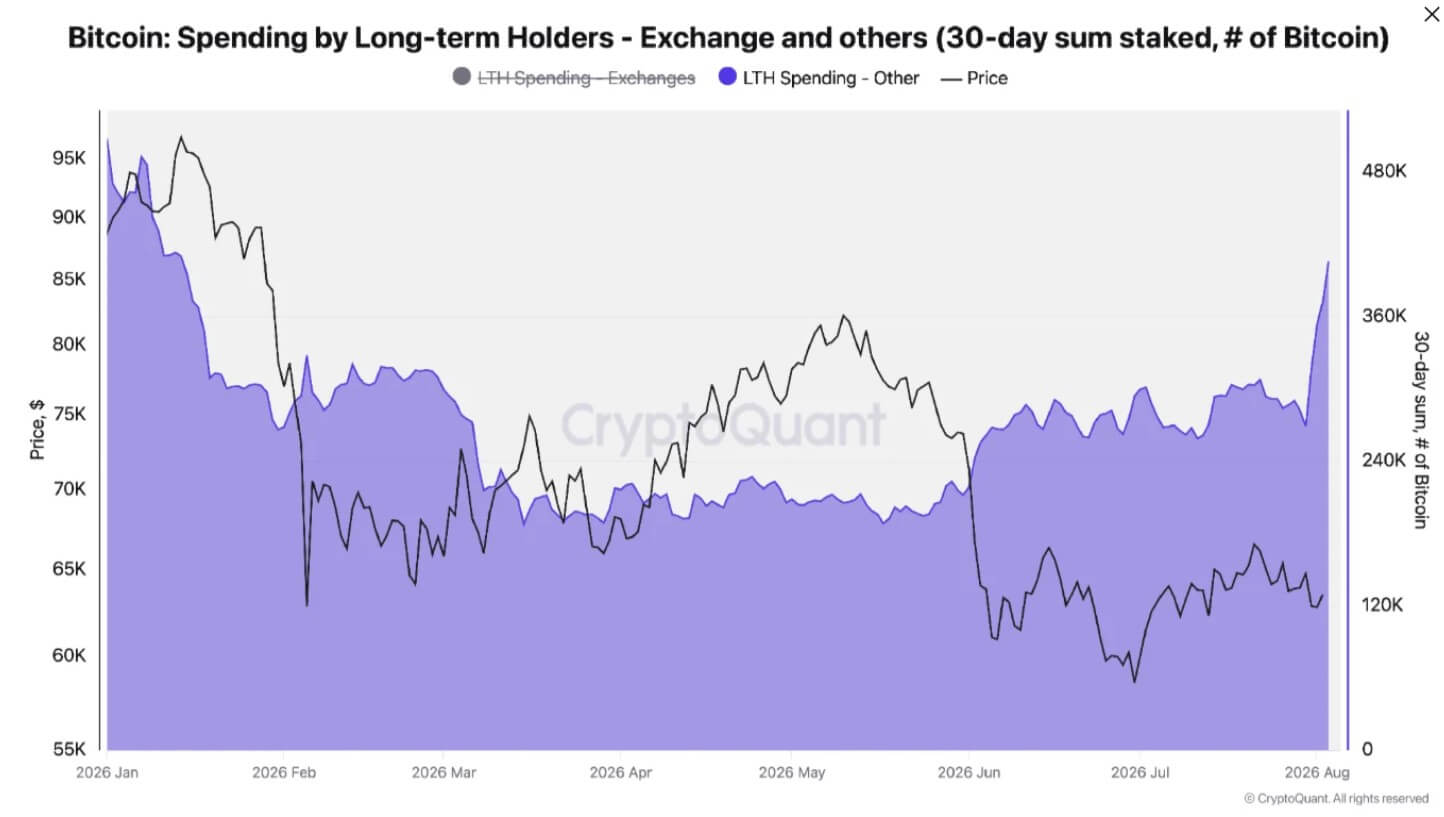
Furthermore, the spending activity of long-term Bitcoin holders outside of exchanges has seen a significant increase. As of August 3rd, this metric reached 406,000 BTC on a 30-day basis, a substantial jump from the 269,000 BTC recorded before the exploit was widely known. This figure represents the highest level of long-term holder spending since January, underscoring the widespread concern and proactive measures being taken within this segment of the market.
It is important to note that this surge in "spending" by long-term holders does not necessarily equate to outright selling. A transfer from a vulnerable Coldcard address to a newly secured wallet, for instance, is recorded on the blockchain as a spent transaction, even though the ultimate ownership of the Bitcoin remains unchanged. The primary objective is to move funds to a secure environment.
The sheer volume of these migration efforts has also led to network congestion. The number of transactions waiting in Bitcoin’s mempool, the holding area for unconfirmed transactions, swelled from approximately 33,000 to around 96,000. This represents the highest level of mempool congestion since June 20th, as thousands of users simultaneously attempted to process their critical fund transfers.
Exchange Inflows and the Shadow of Phishing Scams
As users scramble to secure their Bitcoin, a portion of these migrated funds has found its way into centralized exchanges. CryptoQuant data indicates that deposits from smaller holders have reached their highest point since February 6th. This suggests that some users, uncertain about their next self-custody steps or seeking an immediate safe haven, are opting for temporary storage on custodial platforms.
Between July 28th and August 3rd, total exchange reserves saw an increase of approximately 17,500 BTC, rising from roughly 2.702 million BTC to 2.719 million BTC. Binance emerged as a primary recipient, absorbing about 51% of this net increase, with its reserves climbing by approximately 9,000 BTC to 659,000 BTC.
While these inflows contribute to the immediate availability of Bitcoin for trading and could exert short-term selling pressure, they do not definitively signal an intent to sell by the holders. Many of these deposits may represent temporary custody arrangements as users navigate the complex process of replacing compromised seeds and testing new wallet solutions.
However, the migration process itself has created a fertile ground for opportunistic criminals. Fraudulent migration instructions and impersonation of wallet support teams have become rampant. Scammers are actively targeting users attempting to move their funds, exploiting the urgency and confusion surrounding the crisis.
Trezor, a prominent competitor in the hardware wallet market, has issued a stark warning regarding the surge in phishing attempts. The company has explicitly advised its users never to share their recovery seeds or input them into websites, applications, or forms received through unsolicited messages. Trezor emphasizes that recovery words should only be entered directly onto a Trezor device during a legitimate wallet restoration process. They have urged users to disregard any migration instructions received via email, direct messages, or phone calls and have confirmed that their own devices are unaffected by the Coldcard vulnerability.
This warning underscores the precarious situation faced by affected Coldcard users. They are caught between the immediate threat of their private keys being compromised and the parallel risk of falling victim to phishing scams designed to steal their recovery words. The process of migrating funds from a vulnerable Coldcard wallet is more intricate than a simple firmware update or standard wallet restoration. Importing an existing weak seed into another device does not rectify the underlying issue. Users must generate an entirely new recovery phrase and meticulously transfer their Bitcoin to an address derived from this secure seed. Scammers can exploit this complexity by directing users to fake applications, requesting recovery words under the guise of security checks, or providing fraudulent addresses for fund transfers.
Re-evaluating Custody: The ETF Debate Intensified
The Coldcard breach, coupled with the subsequent surge in exchange inflows and the heightened risk of phishing, has inadvertently strengthened the case for regulated investment products, such as spot Bitcoin Exchange-Traded Funds (ETFs).
Eric Balchunas, a senior ETF analyst at Bloomberg Intelligence, has suggested that the Coldcard incident could prompt a shift in investor behavior, potentially encouraging some, including long-term holders, to migrate towards spot Bitcoin ETFs. Traditionally, Bitcoin maximalists and self-custody advocates have voiced criticisms of ETFs, arguing that investors relinquish direct control over their coins and private keys. In an ETF structure, institutional custodians hold the underlying assets on behalf of the fund.
However, Balchunas posits that this arrangement may now appear more appealing when contrasted with the perceived risk of relying on a smaller hardware wallet manufacturer. ETF issuers and their custodians are typically large, established financial institutions with extensive experience in safeguarding client assets. In stark contrast, Coldcard, while reputable, is operated by a Canadian company with a comparatively smaller workforce.
While institutional custody does not eliminate the possibility of theft or operational failure, Balchunas notes that a successful attack on an ETF custodian would likely trigger an immediate and thorough regulatory investigation. Such an event would invariably involve a coordinated response from the fund manager, the custodian, and relevant law enforcement agencies, potentially offering a more robust and systemic approach to mitigation and recovery.
Currently, there is no direct evidence to suggest that Coldcard users have specifically purchased ETF shares as a direct consequence of this exploit. Similarly, the observed increase in exchange deposits might prove to be a temporary phenomenon as users establish new, secure wallets and revert to self-custody.
Nevertheless, the Coldcard breach has undeniably altered the calculus for investors making critical decisions about where and how to store their Bitcoin. While self-custody offers the allure of complete independence from banks, exchanges, or fund managers, it places the entire burden of security squarely on the user’s shoulders, encompassing the integrity of both hardware and software used for private key generation. For individuals now navigating the complex and potentially perilous journey of escaping compromised seeds while simultaneously evading sophisticated phishing attacks, the institutional framework, once criticized for its perceived alignment with traditional finance, may emerge as a more accessible and perhaps safer option. The crisis has underscored that while "not your keys, not your coins" remains a vital tenet, the security of the key generation process itself is paramount and can be surprisingly fragile.