admin
admin
The revelation of a significant vulnerability within the Coldcard hardware wallet, a device trusted by many for securing Bitcoin, has triggered a widespread migration of digital assets, resulting in substantial losses and a dramatic surge in network activity. As of recent reports, at least 1,596 Bitcoin (BTC), valued at approximately $130 million, have been stolen from an estimated 7,300 compromised addresses. This crisis underscores the inherent risks associated with even the most secure self-custody solutions and has prompted a re-evaluation of Bitcoin storage strategies, potentially benefiting regulated investment vehicles.
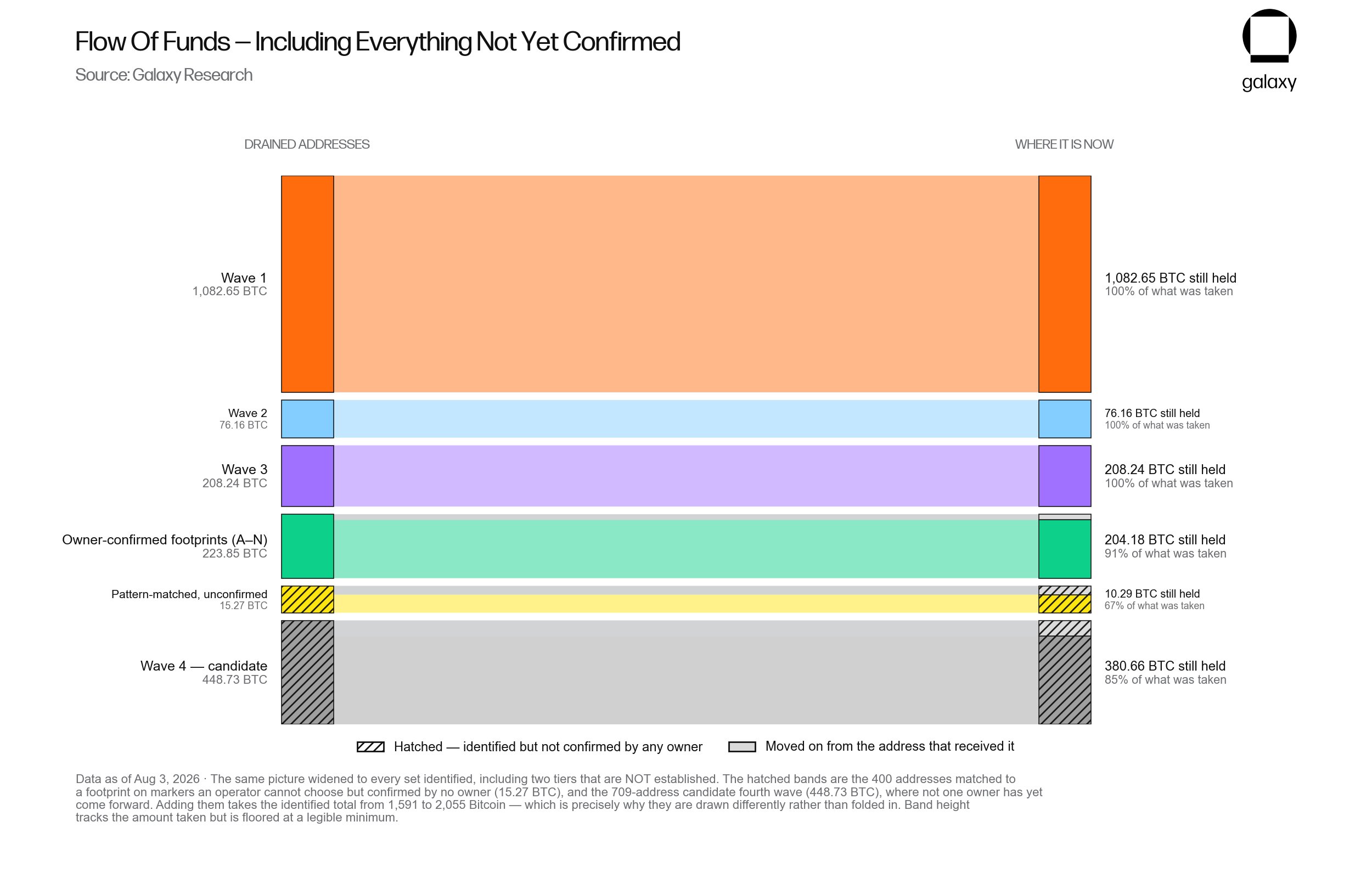
The full extent of the financial fallout is still being determined. Galaxy Research, a prominent analytics firm, has confirmed losses stemming from at least three major attack waves and 14 smaller incidents. However, researchers have identified a potential fourth wave of attacks that could elevate the total stolen Bitcoin to 2,055 BTC, a figure currently valued at around $130 million. These additional affected addresses are not yet included in the confirmed loss estimate pending further victim reports and forensic analysis.
The Genesis of the Vulnerability: A Flaw in Randomness
The root cause of the exploit lies in a coding error within the Coldcard firmware, dating back to March 2021. This flaw caused certain devices to generate recovery seeds, the critical backup phrases for accessing wallets, using a less secure software-based process. Instead of relying sufficiently on the hardware’s robust random-number generator, the affected units produced seeds with a significantly reduced number of possible combinations. This predictability allowed malicious actors to remotely reconstruct private keys without needing physical access to the device or the owner’s recovery words.
While Coinkite, the manufacturer of Coldcard, has released a firmware update to prevent the generation of further vulnerable seeds, this update offers no protection to wallets whose recovery phrases were already compromised by the flawed process. The threat remains active for all affected users until their funds are securely transferred to a new wallet generated from a provably secure seed.

A Wave of Exploitation: Attack Patterns and Victim Impact
The ongoing nature of the attacks is evidenced by the growing number of victims seeking assistance. Alex Thorn, head of research at Galaxy, has been contacted by at least 73 individuals attempting to trace their stolen Bitcoin. These reports have been instrumental in helping researchers identify additional attack vectors and refine their understanding of the exploit. It is now estimated that at least 15 distinct attackers may be actively exploiting this vulnerability.
Despite the significant sums stolen, a striking observation is that approximately 90% of the misappropriated Bitcoin has remained unmoved. All coins linked to the initial three confirmed attack waves are currently held at the addresses controlled by the attackers. Galaxy Research has proactively shared these identified addresses with U.S. law enforcement agencies, cryptocurrency exchanges, and blockchain investigation firms. This collaboration aims to flag any attempts by the perpetrators to move the stolen funds through centralized platforms, increasing the likelihood of recovery or apprehension.
The Ripple Effect: Bitcoin Network Activity Surges
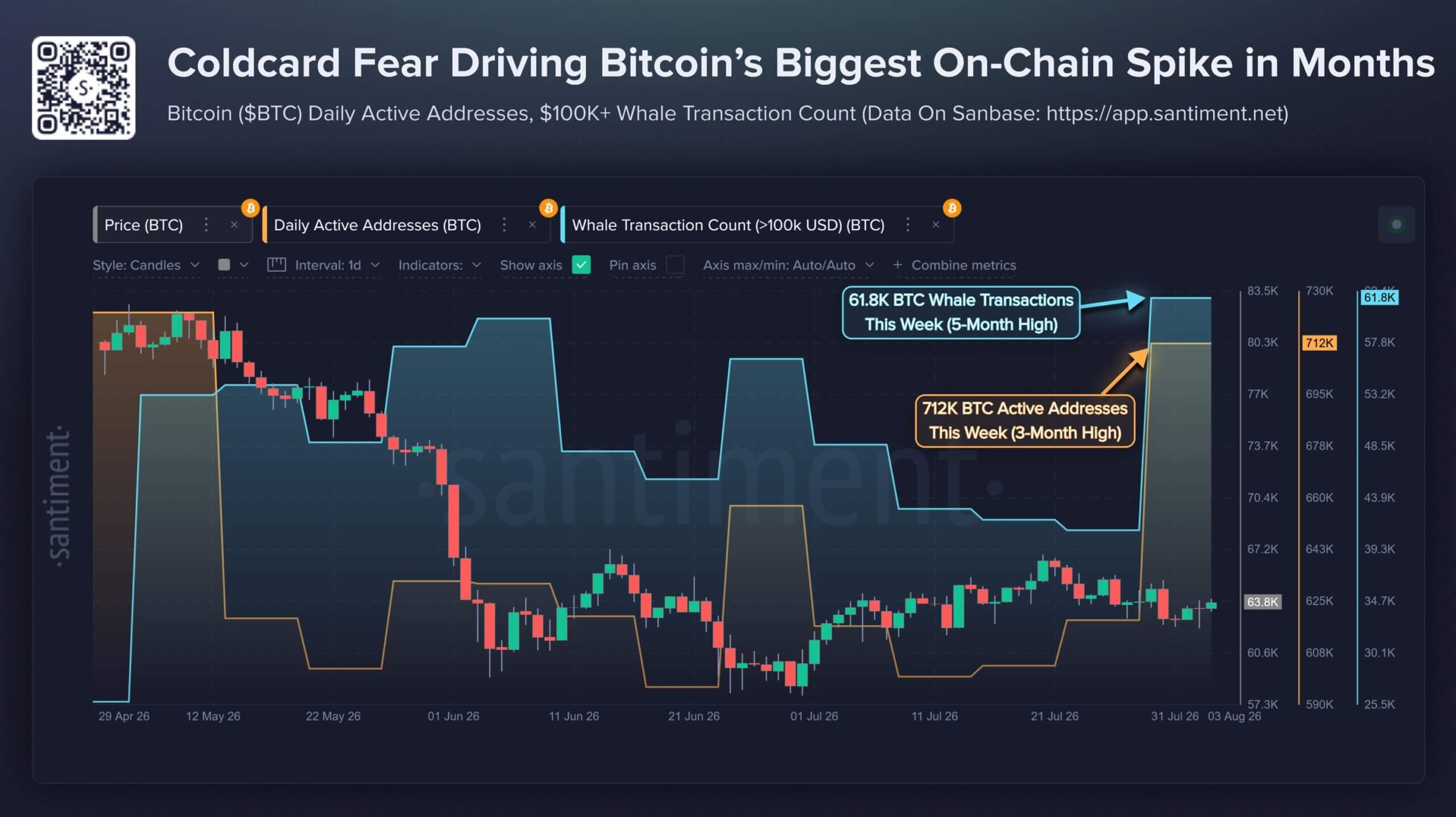
The urgent need for affected Coldcard users to migrate their funds has sent shockwaves through the entire Bitcoin network, driving on-chain activity to levels not seen in months. Data from Santiment indicates a significant uptick, with 712,000 active Bitcoin addresses recorded over the past seven days, marking a three-month high. Furthermore, the number of transactions exceeding $100,000 reached 61,800 in the same period, the highest in five months.
CryptoQuant, another analytics firm, has identified the Coldcard crisis as the primary catalyst for this surge. Affected users are actively moving their Bitcoin to newly generated, secure wallets, consolidating balances, or, in some cases, transferring funds to custodial platforms for safekeeping. CryptoQuant’s analysis reveals that transactions valued below $100,000 surged to $3.2 billion, a figure not observed since November 2024.
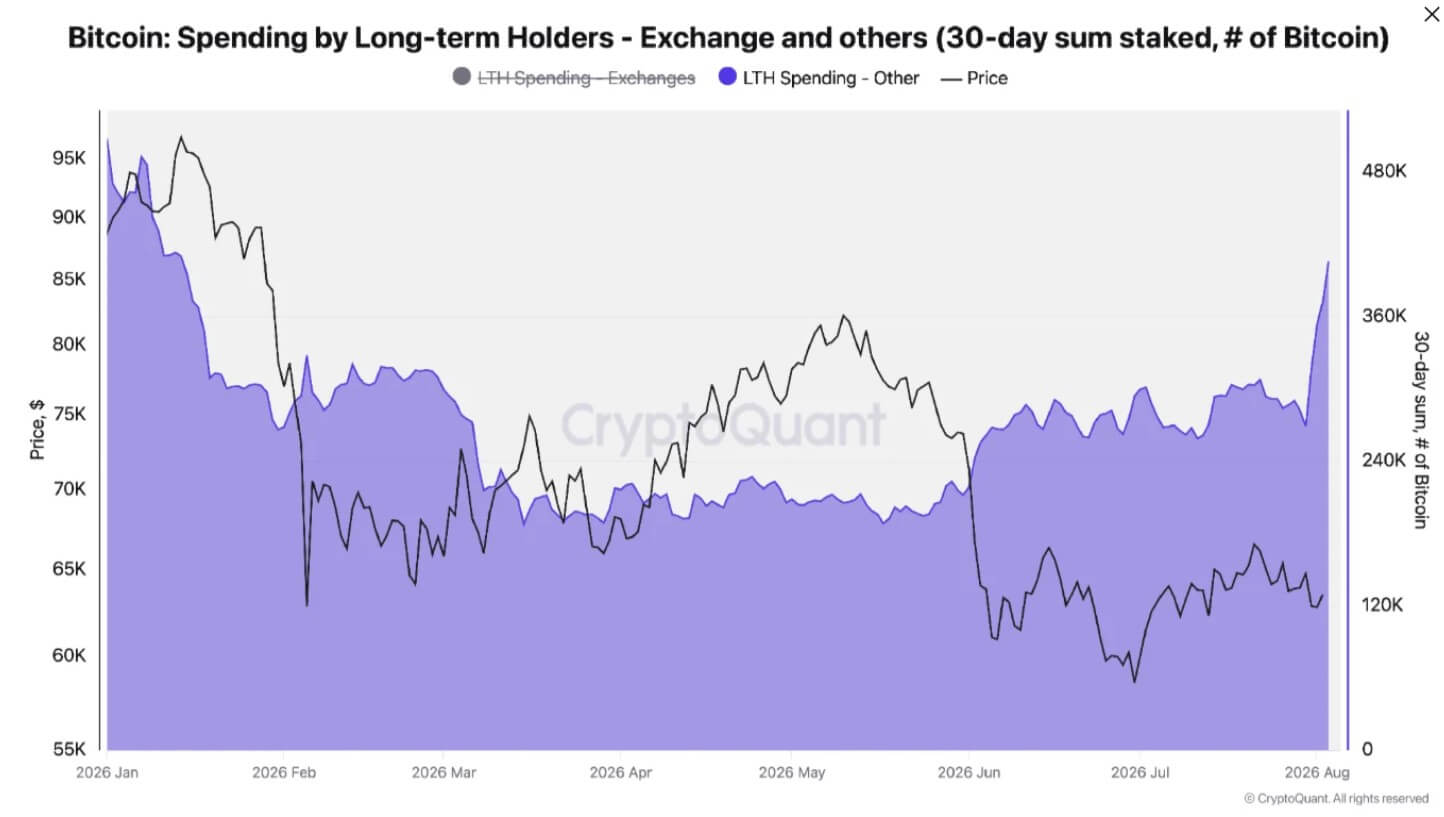
The increased spending by long-term holders outside of exchanges has also seen a notable rise. As of August 3rd, this metric reached 406,000 BTC on a 30-day basis, a substantial increase from 269,000 BTC prior to the exploit and the highest level recorded since January. It is crucial to note that these movements do not necessarily signify that long-term holders are liquidating their positions. A transfer from a vulnerable Coldcard address to a newly secured wallet will appear on the blockchain as a spent transaction, even if the ownership of the Bitcoin remains with the original holder.
The sheer volume of these migration transactions led to significant network congestion. The number of transactions awaiting confirmation in Bitcoin’s mempool rose from approximately 33,000 to around 96,000, the highest point since June 20th, as thousands of users simultaneously attempted to secure their funds.
Exchange Inflows and the Shadow of Phishing
As users scramble to secure their assets, a portion of the migrated Bitcoin has flowed into centralized exchanges. CryptoQuant data indicates that deposits from smaller holders have reached their highest levels since February 6th. Some users are opting to deposit their Bitcoin into existing custodial accounts while they deliberate on their next steps, whether to establish a new self-custody wallet or switch hardware providers.
Between July 28th and August 3rd, total exchange reserves saw an increase of approximately 17,500 BTC, rising from roughly 2.702 million BTC to 2.719 million BTC. Binance, the world’s largest cryptocurrency exchange, absorbed a significant portion of this net increase, receiving about 51% of the inflow, with its reserves climbing by approximately 9,000 BTC to 659,000 BTC. While these inflows can increase the immediate availability of Bitcoin for trading and potentially exert short-term selling pressure, they do not definitively indicate an intention to sell. These deposits may represent temporary custodial arrangements while users transition to more secure wallets.
However, this period of heightened activity has also created fertile ground for malicious actors. Scammers are actively distributing fraudulent migration instructions and impersonating wallet support teams to trick users into revealing their recovery seeds. Trezor, a competitor in the hardware wallet market, issued a public warning, highlighting a significant increase in phishing attempts following the disclosure of the Coldcard flaw. Trezor reiterated its long-standing advice: never share recovery seeds or enter them into websites, applications, or forms received through unsolicited messages. Recovery words should only be entered directly on a Trezor device during a legitimate wallet restoration process. Users are urged to disregard any migration instructions received via email, direct message, or phone call. Trezor confirmed that its devices were not affected by the Coldcard vulnerability.
The challenge for affected Coldcard users is multifaceted: they must move their Bitcoin swiftly to outpace potential key reconstruction by attackers, all while navigating a landscape rife with scammers seeking to obtain their recovery words directly. Crucially, importing an existing vulnerable seed into another hardware wallet does not rectify the issue. Users must generate an entirely new, secure recovery phrase and transfer their funds to an address derived from it. This process is more complex than a simple firmware update or a standard wallet restoration, making users more susceptible to sophisticated phishing schemes that might direct them to fraudulent applications, solicit recovery words under the guise of security checks, or provide fake secure addresses.
The ETF Argument Gains Traction in the Custody Debate
The current crisis, marked by mass migrations to exchanges and the escalating risk of phishing attacks targeting wallet transfers, has inadvertently bolstered the case for holding Bitcoin through regulated investment products like spot Bitcoin Exchange-Traded Funds (ETFs).
Eric Balchunas, a Senior ETF Analyst at Bloomberg Intelligence, has suggested that the Coldcard breach could prompt some investors, including long-term holders who prioritize security, to consider migrating their holdings to spot Bitcoin ETFs. Historically, Bitcoin purists have criticized ETFs, arguing that investors do not directly control the underlying coins or private keys. Instead, institutional custodians manage these assets on behalf of the ETF.
However, in light of the Coldcard incident, this arrangement may appear increasingly attractive when contrasted with the perceived risks of relying on a smaller hardware wallet manufacturer. ETF issuers and their custodians are typically large, established financial institutions with extensive experience in safeguarding client assets. In contrast, Coldcard is operated by a relatively small Canadian company.
While institutional custody does not eliminate the possibility of theft or operational failures, a successful attack on an ETF custodian would likely trigger an immediate and thorough regulatory investigation. Such an event would prompt a coordinated response involving the fund manager, custodian, and relevant law enforcement agencies, offering a level of institutional oversight and accountability that individual hardware wallet users might not experience in the same manner.
It is important to note that there is no direct evidence at this time suggesting that Coldcard users have specifically purchased ETF shares as a direct consequence of the exploit. Similarly, the observed increase in exchange deposits might prove temporary, as many users may eventually return to self-custody after securing their funds in new, robust wallets.
Nevertheless, the Coldcard breach has fundamentally altered the risk-reward calculation for investors deciding on the safest place to store their Bitcoin. While self-custody offers independence from banks, exchanges, or fund managers, it places the entire burden of security on the individual, including the integrity of the hardware and software used to generate private keys. For those currently navigating the complex and perilous process of escaping compromised seeds while evading sophisticated phishing attacks, the institutional framework of ETFs, once criticized for placing Bitcoin under the influence of Wall Street, may now present a more straightforward and arguably safer option.