admin
admin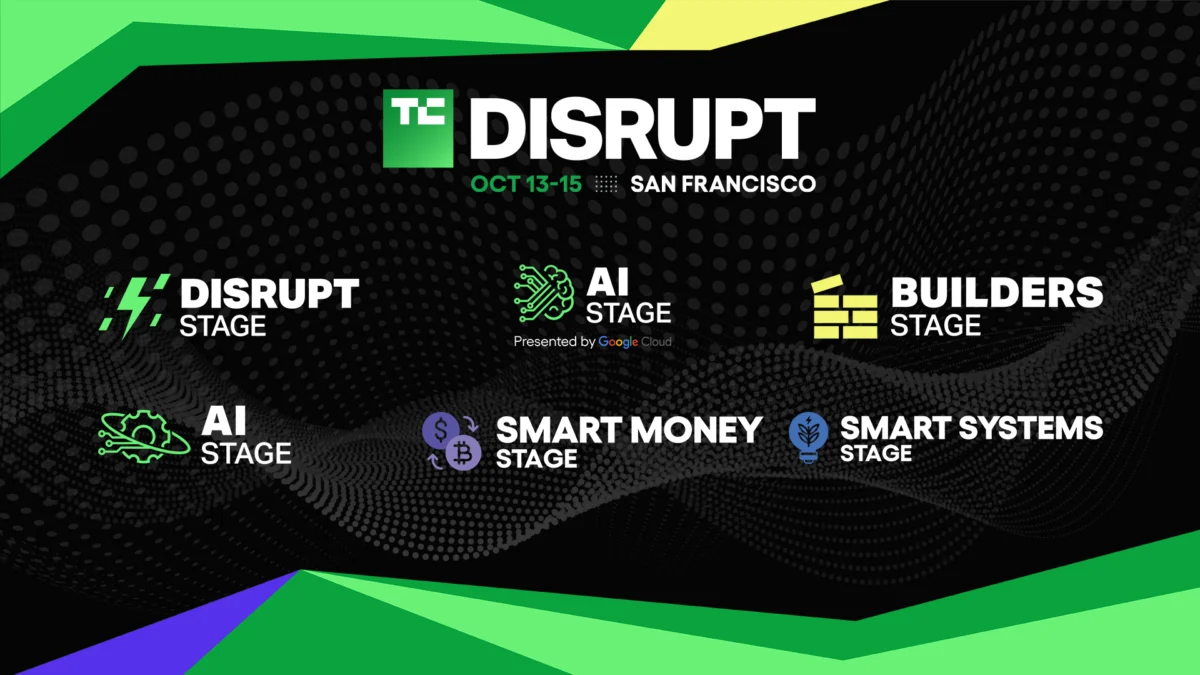
TechCrunch Disrupt 2026 will return to the Moscone West convention center in San Francisco from October 13 to 15, positioning itself as a critical diagnostic and strategic hub for an industry grappling with rapid market shifts and structural volatility. With an anticipated attendance of over 10,000 founders, investors, and operators, the three-day summit is structured to address the specific operational pressures reshaping global innovation. As the venture capital landscape moves away from the speculative fervor of previous years toward a model defined by infrastructure resilience and enterprise adoption, the event will feature more than 250 sessions distributed across six specialized stages.
The core thesis of the 2026 conference is the risk of delayed reaction. In a market where AI-native competition can disrupt established software-as-a-service (SaaS) models in months rather than years, and where infrastructure bottlenecks—particularly in energy and data center capacity—dictate the pace of growth, the event organizers have pivoted the agenda toward high-velocity, informed decision-making. The 2026 iteration marks a significant evolution in the Disrupt franchise, reflecting a broader tech ecosystem that is increasingly focused on the intersection of advanced software and physical-world constraints.

The Evolution of the Disrupt Stage and Startup Battlefield
The Disrupt Stage remains the primary forum for high-level discourse, hosting headline founders, tier-one investors, and global technology leaders. This stage serves as the event’s center of gravity, focusing on macro-economic shifts, regulatory changes, and the long-term trajectory of the technology sector. Central to this stage is the Startup Battlefield 200, a curated competition that has historically served as a launchpad for companies that eventually achieve unicorn status.
The significance of the Battlefield competition is rooted in its historical success; previous participants include companies like Dropbox, Trello, and Mint. For the 2026 cycle, the application deadline is set for May 29, 2026. The competition offers attendees a direct view of emerging startups that have been vetted for breakout potential. In the current investment climate, where "dry powder" remains high but deployment is cautious, the Battlefield provides a concentrated look at where capital is likely to flow. Discussions on this stage will specifically analyze the concentration of investor attention, the acceleration of specific categories like "Sovereign AI," and the defensive positioning required for companies operating in increasingly saturated markets.
Tactical Realities at the Builders Stage
Recognizing the heightened scrutiny founders face during fundraising and scaling, the Builders Stage is designed to provide tactical, operational answers to contemporary challenges. Unlike generalized "how-to" sessions, the 2026 programming focuses on the specific pressures of building in an AI-dominated landscape. A key theme for this stage is the survival and growth of non-AI startups—companies that must compete for the same pool of venture capital and talent while investors remain heavily focused on generative AI.

The Builders Stage will feature a roster of industry veterans, including Nina Achadjian, partner at Index Ventures, and Rajeev Dham, managing partner at Sapphire Ventures. These speakers are expected to provide insights into the "Series A crunch" and the rising bar for product-market fit. Other confirmed speakers include Josh Reeves, CEO of Gusto, and Grant Lee, CEO of Gamma, who will discuss go-to-market execution and the nuances of scaling a workforce in a remote-hybrid environment. For founders, the Builders Stage represents a workshop environment where the abstract concepts of the Disrupt Stage are translated into actionable strategies for hiring, fundraising, and operational efficiency.
The Smart Money Stage: Fintech and Financial Infrastructure
As the fintech sector moves past its initial "hype cycle," the Smart Money Stage will examine the durable growth models emerging from the rubble of previous market corrections. The focus here is on the evolution of digital financial systems and the maturation of financial infrastructure. Sessions will delve into why certain embedded finance models failed to scale and where real-time payment systems are finding genuine traction in B2B and B2C markets.
Success in the 2026 fintech market hinges on navigating increased regulatory scrutiny and higher interest rates, which have fundamentally changed the cost of capital for lending-based models. Industry leaders such as Jack Zhang, founder and CEO of Airwallex, and Lotti Siniscalco, general partner at Emergence Capital, will lead discussions on the transition from "fintech for fintech’s sake" to digital financial systems that provide essential utility for global trade and enterprise operations. This stage is particularly relevant for investors seeking to identify which fintech segments are moving toward long-term profitability versus those that remain dependent on unsustainable subsidies.

Infrastructure as a Bottleneck: The Smart Systems Stage
Perhaps the most significant addition to the 2026 agenda is the Smart Systems Stage, which addresses the physical infrastructure required to sustain the AI revolution. As software companies become increasingly dependent on data centers, the demand for energy, grid connectivity, and industrial efficiency has become a primary constraint on growth. This stage focuses on the "physical-world" operational systems that modern software often overlooks but can no longer ignore.
Programming on the Smart Systems Stage will explore the logistics of energy procurement, the development of specialized hardware for AI workloads, and the role of robotics in streamlining industrial supply chains. Speakers like Jeff Lawson, co-founder and CEO of Inertia, and David Kirtley, CEO of Helion, will discuss the intersection of climate tech and energy production. For founders and investors in energy, logistics, and infrastructure, this stage provides a roadmap for how physical constraints are creating new market opportunities, particularly in the realm of decentralized energy and high-density computing.
AI in the Real World: Reliability and Production
While much of the tech discourse in 2024 and 2025 focused on AI prototypes and large language model (LLM) capabilities, the AI in the Real World Stage at Disrupt 2026 shifts the focus toward reliability and production-grade deployment. When AI systems move into robotics, autonomous vehicles, manufacturing, and drug discovery, the margin for error disappears. Reliability becomes a business-critical issue rather than a technical curiosity.

The sessions on this stage will explore the challenges of building trustworthy systems that can operate with limited cloud access—a concept known as "edge AI." It will also cover the scaling of physical AI products and the financial risks associated with deployment failures. This stage is essential for investors evaluating the "second wave" of AI companies—those that are moving beyond the chat interface and into the physical operation of global industries. The focus is on which business models can survive the transition from a impressive demo to a reliable production environment.
The AI Stage: Rewriting the Software Business Model
The AI Stage, presented by Google Cloud, is dedicated to the fundamental ways generative AI and autonomous agents are rewriting the software industry. A central theme of this stage is the erosion of traditional SaaS advantages. In a world where AI can automate code generation and user interface design, the "moats" that protected legacy software companies are thinning.
Key sessions, such as "Rewriting SaaS: Why AI Breaks the Old Business Model," will analyze the shift from seat-based pricing to outcome-based or compute-based economics. The programming will also address the rise of "agentic workflows," where AI agents perform complex tasks autonomously, potentially replacing the need for many traditional software tools. For operators, the value of the AI Stage lies in understanding how to adapt to these changes before their existing competitive advantages disappear.

Event Timeline and Economic Context
The lead-up to TechCrunch Disrupt 2026 occurs during a pivotal moment for the San Francisco tech ecosystem. After several years of debate regarding the city’s status as a tech hub, the "AI Renaissance" has firmly re-established San Francisco as the global epicenter for the next generation of computing. The October 13–15 timeline places the event toward the end of the fiscal year, a period when many venture capital firms are finalizing their investment strategies for the following calendar year.
Chronology of Key Dates:
- May 29, 2026: Final deadline for Startup Battlefield 200 applications.
- June – August 2026: Selection and vetting process for the Battlefield 200 startups.
- September 2026: Finalization of the full agenda and speaker roster.
- October 13, 2026: Event kickoff at Moscone West.
- October 15, 2026: Conclusion of the event and crowning of the Startup Battlefield winner.
Supporting data suggests that while overall venture deal counts have fluctuated, the average deal size for AI-infrastructure and specialized fintech companies has seen a steady increase since 2024. TechCrunch Disrupt 2026 aims to capture this momentum, providing a venue where the 10,000+ attendees can navigate a market that is more complex and less forgiving than the previous decade.

Broader Impact and Industry Implications
The implications of TechCrunch Disrupt 2026 extend beyond the immediate three-day schedule. The event serves as a barometer for the health of the global startup economy. By dedicating significant space to physical infrastructure and "real-world" AI, the conference acknowledges that the next decade of innovation will likely be defined by how well software integrates with the physical world.
The shift toward a more tactical, operational focus reflects a broader trend in the venture community: the demand for "hard tech" solutions that address systemic problems in energy, finance, and labor. As enterprise adoption of AI reaches a critical mass, the sessions at Disrupt will likely set the tone for the 2027 investment cycle. Furthermore, the event’s location in San Francisco reinforces the city’s continued dominance in the tech sector, providing a significant economic boost to the local hospitality and service industries.
For the founders and investors attending, the objective is clear: gain the insights necessary to move faster than the market shifts. In an era of high-speed disruption, the information shared across the six stages of Disrupt 2026 may be the difference between a company’s survival and its obsolescence. The event remains a vital venue for the exchange of ideas that will shape the technological landscape for years to come.