admin
admin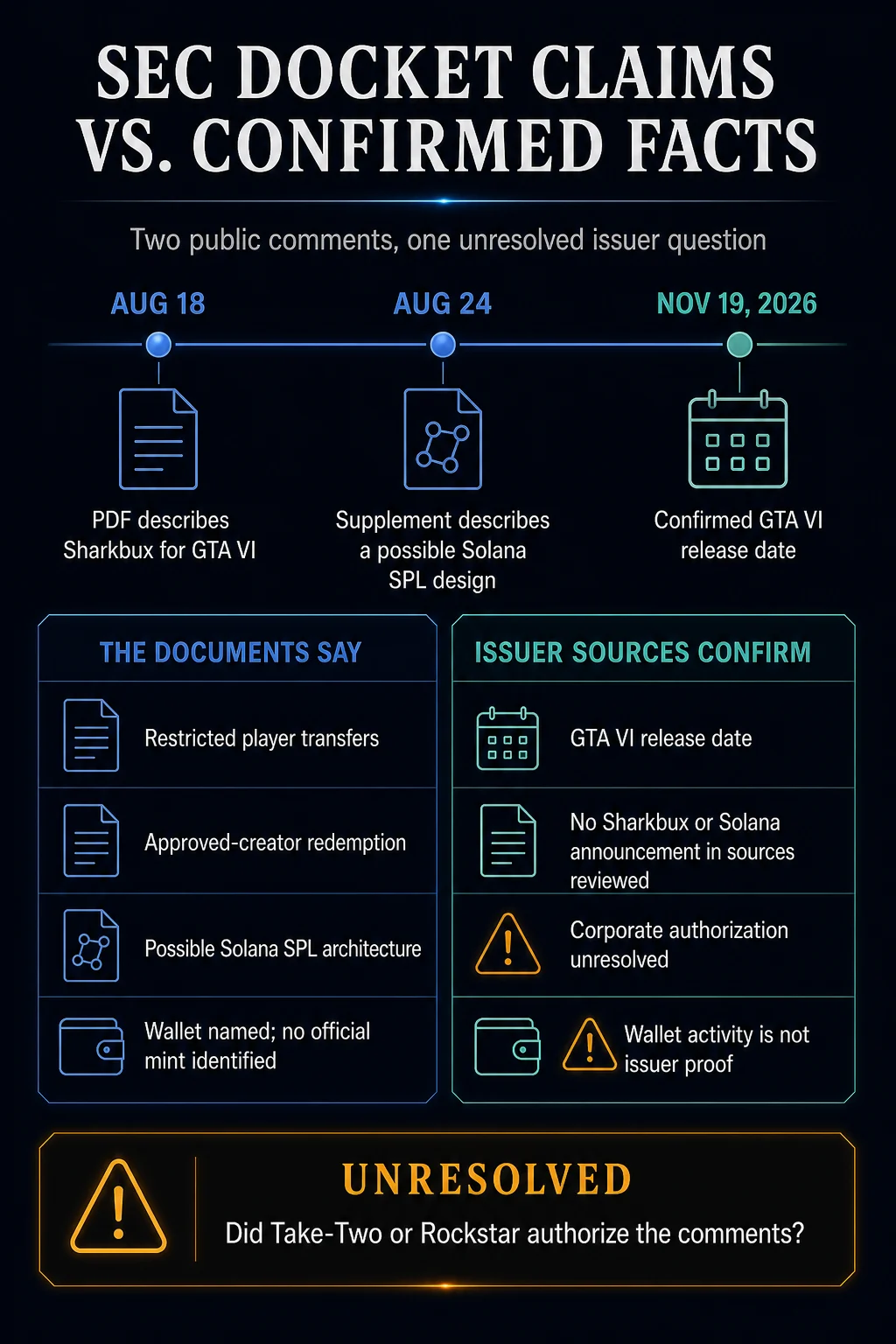
Two public-comment PDFs submitted to the U.S. Securities and Exchange Commission (SEC) docket have ignited a firestorm of speculation regarding a potential cryptocurrency integration for the highly anticipated Grand Theft Auto VI (GTA VI). These documents, seemingly bearing the branding of Take-Two Interactive Software, Inc. and its subsidiary Rockstar Games, detail a proposed in-game currency named "Sharkbux" and explore a possible implementation on the Solana blockchain. However, the corporate authorization of these submissions remains critically unconfirmed, leaving the true nature and intent of these filings open to intense scrutiny.
At present, the most that can be definitively stated is that these documents place an unauthenticated proposal into the public record. Any concrete cryptocurrency plan by Rockstar Games for GTA VI remains unproven and speculative. While the evidence strongly suggests an attempt to artificially inflate the value of an unaffiliated memecoin, the extent to which definitive conclusions can be drawn from a Solana wallet address mentioned within one of the filings is limited. This situation underscores the complex interplay between corporate disclosures, public commentary, and the volatile world of digital assets, particularly within the gaming industry.
Unpacking the SEC Filings: Sharkbux and Solana Architecture
The genesis of this controversy lies within the SEC’s public comment portal, specifically a submission dated August 24th, listed under the name Take-Two Interactive Software, Inc. A deeper dive into the SEC-hosted PDF, dated August 18th, reveals the concept of "Sharkbux" as a proposed currency intended for use within the GTA VI ecosystem. According to the August 18th document, the transferability of Sharkbux would be heavily restricted for ordinary players, confined to company-mediated mechanisms. Furthermore, approved content creators would possess the ability to redeem earned Sharkbux through a separate, company-controlled program. This suggests a model designed to maintain tight control over in-game economies and player interactions.
A supplemental PDF, filed on August 24th, purports to clarify the earlier proposal. This document explicitly mentions Take-Two’s consideration of an SPL token architecture on the Solana blockchain, contingent upon legal and operational feasibility. However, a critical examination of this supplemental filing reveals a conspicuous absence of key information: no official token mint, no designated mint authority, no freeze authority, no established transfer-control program, and no indication of a completed deployment. The language employed describes a theoretical technical framework rather than a finalized product, an approved integration, or a concrete launch schedule for any associated cryptocurrency.
Taken in conjunction, these documents outline a concept for a restricted in-game currency and a potential blockchain-based technical design. Crucially, however, they do not provide definitive proof that any Solana integration has been completed or is actively being pursued by Take-Two or Rockstar Games. The narrative presented is one of exploration and conceptualization, not of execution.
The On-Chain Trail: A Tangled Web of Speculation
Adding another layer of complexity, the supplemental filing names a specific Solana wallet address. On August 25th, blockchain explorer Solscan identified this wallet as holding 600,000 units of a newly created token dubbed "TAKE2." However, the on-chain data itself does not authenticate the origin or authorization of the document that named the wallet. Solscan further categorized the token as a "Meme" and "Pump.fun" asset, common descriptors for speculative, community-driven cryptocurrencies often launched on platforms designed for rapid token creation and trading.
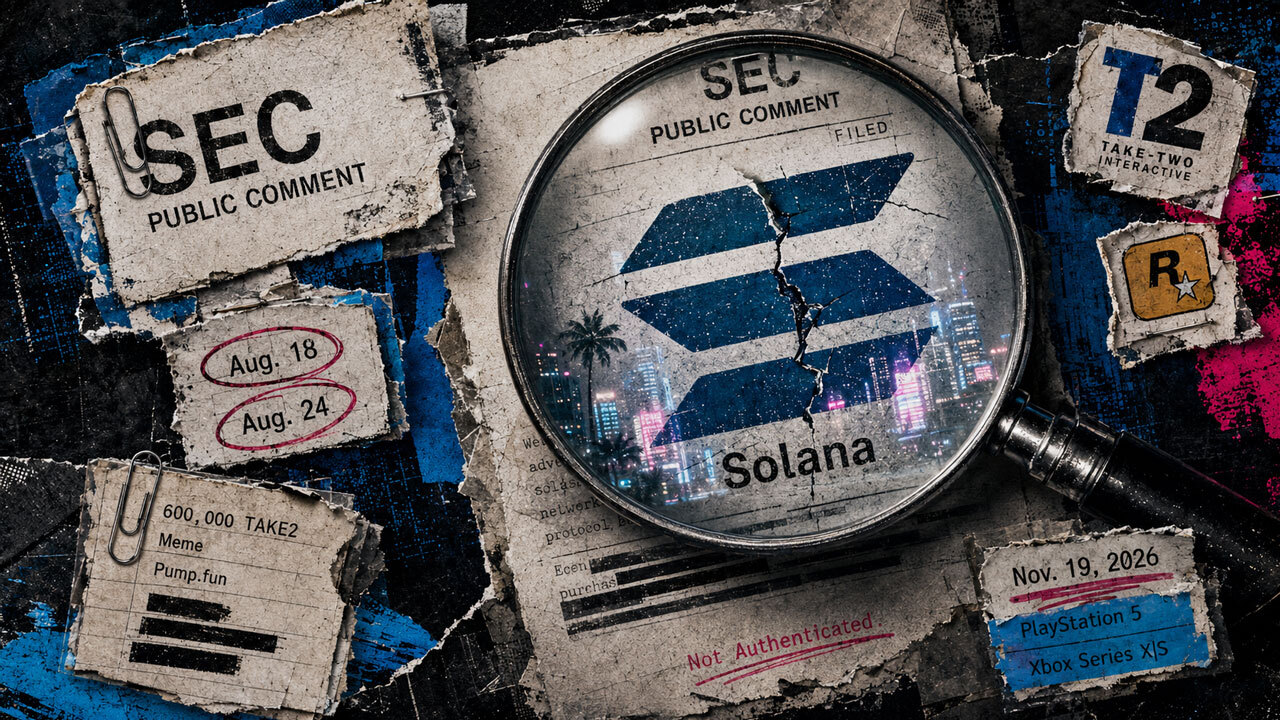
Crucially, the blockchain explorer displayed no public "Take-Two" label or any other form of official endorsement that would authenticate the wallet or the token. This on-chain trail, rather than definitively linking the activity to GTA VI, Sharkbux, Take-Two, or Rockstar Games, appears to point more strongly towards an external party leveraging the public SEC record to promote an unrelated memecoin. The timing of the token’s creation and its association with the SEC filing suggests a deliberate attempt to capitalize on the anticipation surrounding GTA VI.
Further evidence that challenges the direct involvement of Take-Two and Rockstar Games can be found in their official communications. Take-Two’s earnings release on August 7th and Rockstar’s official GTA VI product page both confirm the game’s scheduled release date of November 19, 2026, for PlayStation 5 and Xbox Series X|S. Neither of these official sources makes any mention of Sharkbux, a Solana integration, an official token mint, or any specific timing for a GTA VI online component that would involve cryptocurrency. This silence from official channels further amplifies the doubts surrounding the authenticity of the SEC submissions.
Chronology of Events and Unanswered Questions
The unfolding situation can be traced through a series of key dates and events:
- August 7, 2026: Take-Two Interactive releases its Q2 earnings report. This official communication provides no mention of cryptocurrency or blockchain initiatives related to GTA VI.
- August 18, 2026: An SEC-hosted PDF surfaces, detailing a proposed in-game currency named "Sharkbux" for GTA VI.
- August 24, 2026: A supplemental PDF, purportedly from Take-Two, is submitted to the SEC docket. This document discusses a potential SPL token architecture on Solana and names a specific wallet address.
- August 25, 2026: Blockchain explorer Solscan identifies the named Solana wallet holding a token labeled "TAKE2," tagged as "Meme" and "Pump.fun," with no official affiliation to Take-Two.
- November 19, 2026: The official release date for Grand Theft Auto VI is slated for PlayStation 5 and Xbox Series X|S.
The critical question remains: who is behind these SEC submissions? Without explicit confirmation or denial from Take-Two Interactive or Rockstar Games, these documents exist in a legal and informational grey area. The possibility that an external entity has submitted these documents under the guise of Take-Two’s branding to manipulate the market cannot be dismissed. Such tactics are not uncommon in the cryptocurrency space, where projects often seek to associate themselves with high-profile events or entities to gain traction.
Implications and Broader Market Context
The implications of this situation extend beyond the immediate speculation surrounding GTA VI. It highlights the growing interest, and indeed the potential, for blockchain technology and digital assets to be integrated into the gaming industry. Major game developers have been exploring various applications of NFTs and cryptocurrencies, ranging from in-game items to entirely new economic models. However, this incident also serves as a cautionary tale about the potential for misinformation and market manipulation.
The gaming industry, with its massive and engaged player base, represents a significant potential market for cryptocurrency adoption. Companies are likely weighing the benefits of enhanced player engagement, new revenue streams, and innovative monetization strategies against the risks associated with regulatory uncertainty, volatile markets, and potential backlash from players who may be wary of or opposed to such integrations.

Furthermore, the involvement of the SEC, even indirectly through public comment dockets, underscores the increasing regulatory scrutiny that the cryptocurrency space is facing. The SEC has been actively investigating and taking action against entities deemed to be engaging in unregistered securities offerings or other forms of market manipulation. If the "TAKE2" token is indeed found to be part of a coordinated pump-and-dump scheme, it could attract the attention of regulatory bodies, leading to potential legal repercussions for those involved.
The Solana blockchain itself has been a significant player in the recent cryptocurrency bull run, known for its high transaction speeds and low fees, making it an attractive platform for decentralized applications and gaming initiatives. However, the association of a potential memecoin with a prominent gaming franchise, even if unauthorized, could influence public perception of both the game and the blockchain.
Official Responses and Future Outlook
As of the time of this report, neither Take-Two Interactive nor Rockstar Games has issued an official statement addressing the SEC filings or the "TAKE2" token. This silence, while understandable given the unconfirmed nature of the submissions, fuels further speculation. In the absence of official clarification, the market and the public are left to interpret the available information.
It is possible that Take-Two will issue a formal denial of any involvement, or conversely, provide clarification on the origin and intent of the submitted documents. Should the company confirm its exploration of blockchain technology for GTA VI, it would mark a significant development for the gaming industry and the broader adoption of cryptocurrencies. However, the current evidence strongly suggests that the named wallet and token are unrelated to any official Take-Two or Rockstar Games initiative and are more likely a speculative play by an external party.
The situation serves as a potent reminder of the need for due diligence and critical evaluation when encountering information related to cryptocurrencies, especially when it involves high-profile brands. Investors and consumers alike should rely on verified information from official sources and be wary of claims that appear too good to be true or that seek to leverage established reputations for personal gain. The true story behind the "Sharkbux" and the "TAKE2" token remains to be definitively written, but the current chapter is one of intrigue, speculation, and a stark illustration of the evolving landscape where gaming, technology, and finance intersect. The confirmed release date of GTA VI in November 2026 will eventually provide a clearer picture of the game’s actual features and economic systems, potentially settling this debate once and for all. Until then, the SEC docket remains a focal point of intense interest and conjecture.