admin
admin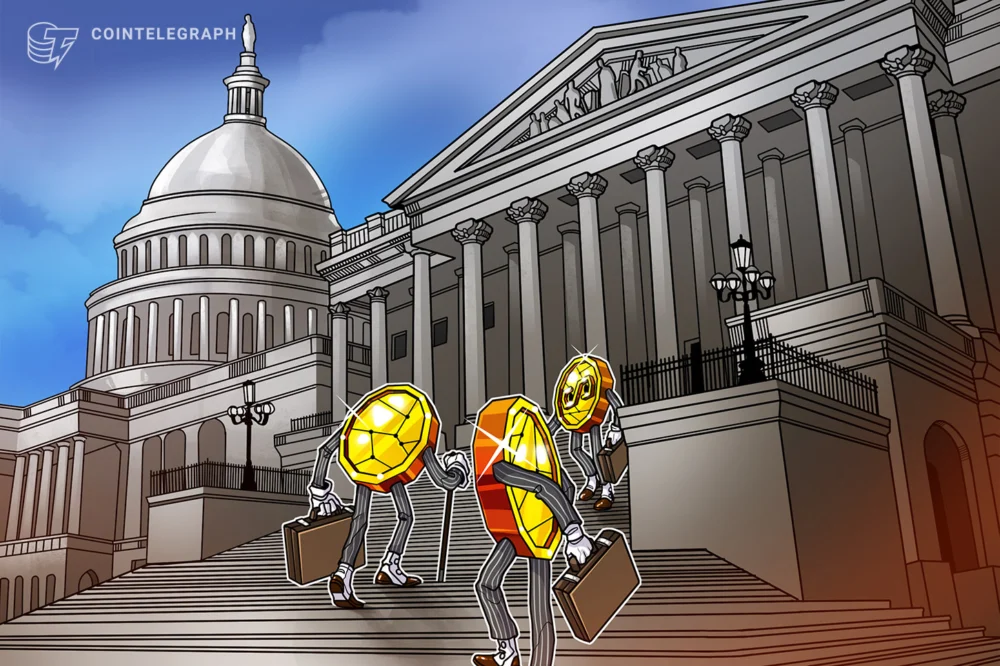
Washington D.C. — The highly anticipated advancement of legislation designed to establish a comprehensive market structure for digital assets in the United States faces further delays, with Senate Majority Leader John Thune indicating that the chamber is unlikely to move forward on the matter before April. This revelation, stemming from a Thursday report by Punchbowl News, underscores the complex interplay of political priorities, legislative hurdles, and divergent views within Congress regarding the burgeoning digital asset industry.
Thune’s comments clarify the Senate’s immediate legislative agenda, which will prioritize a vote on the SAVE America Act. This bill, a significant piece of electoral reform legislation, seeks to mandate that voters provide in-person proof of U.S. citizenship for voter registration. The Majority Leader, addressing reporters on Thursday, confirmed that the SAVE America Act is slated to reach the Senate floor next week, effectively pushing back other legislative efforts, including the crucial digital asset market structure bill and other bipartisan initiatives. "Market structure is a bill that’s, I’m hoping, going to come out of the Banking Committee soon, probably not before, I would say, the April time period," Thune was quoted as saying, highlighting the continued legislative pipeline for the crypto bill.
The Legislative Bottleneck: A Chronology of Delays
The path to establishing a clear regulatory framework for digital assets in the United States has been protracted and fraught with challenges. The industry, valued at trillions of dollars globally and attracting significant investment and innovation, has long clamored for regulatory certainty to foster growth, protect consumers, and prevent illicit activities. However, the unique characteristics of digital assets—spanning elements of commodities, securities, and currencies—have complicated legislative efforts, creating jurisdictional disputes among existing regulatory bodies and ideological divides among lawmakers.
The proposed market structure legislation, known as the CLARITY Act when it successfully passed the House of Representatives in July of a previous legislative session, aims to provide much-needed clarity. A key provision of this bill is to grant the U.S. Commodity Futures Trading Commission (CFTC), the agency primarily responsible for derivatives and commodities, expanded authority in overseeing certain digital assets. This move is largely supported by many in the crypto industry who view the CFTC’s framework as potentially more adaptable to the decentralized and innovative nature of digital assets compared to the traditional securities regulations enforced by the Securities and Exchange Commission (SEC).
Despite the House’s earlier action, the bill has encountered significant headwinds in the Senate. The legislative process typically involves different committees reviewing and amending versions of a bill before it can be brought to a floor vote. In the Senate, the Agriculture Committee had already advanced its version of the digital asset market structure bill. However, progress stalled when the Senate Banking Committee, another crucial body with jurisdiction over financial markets, postponed a necessary markup session in January. A markup is a critical step where committees debate, amend, and ultimately approve a bill before it can be combined with other versions and proceed towards a full chamber vote. This postponement signaled early concerns about the bill’s readiness and the consensus required for its passage.
The delay articulated by Senator Thune stands in stark contrast to earlier, more optimistic projections from other lawmakers. Notably, Ohio Senator Bernie Moreno had expressed hope in February that the market structure bill could pass through Congress by April. This divergence in expectations underscores the internal complexities and the significant political capital required to push novel legislation through a divided Congress, especially on a topic as technically intricate and politically charged as digital asset regulation.
What’s at Stake: The CLARITY Act and its Contentious Provisions
The digital asset market structure bill, often referred to as the CLARITY Act or similar iterations in the Senate, seeks to define the regulatory landscape for cryptocurrencies and other digital assets. Its central objective is to clarify which federal agencies have jurisdiction over various types of digital assets, thereby reducing the current regulatory ambiguity that industry participants often cite as a major impediment to innovation and investment within the United States.
Key provisions within the bill have sparked considerable debate and represent significant sticking points among lawmakers. These include:
- Tokenized Equities: The classification and oversight of "tokenized equities"—digital representations of traditional securities—raise fundamental questions about how existing securities laws apply to novel technological forms. Lawmakers grapple with whether these should fall under traditional securities regulations, be treated as a distinct asset class, or be subject to a hybrid regulatory approach. The implications for investor protection, market liquidity, and cross-border transactions are profound.
- Ethics: The bill also touches upon ethical considerations within the digital asset space, potentially addressing issues such as market manipulation, insider trading in decentralized environments, and conflicts of interest among developers, exchanges, and other market participants. Crafting enforceable ethical guidelines in a rapidly evolving and often pseudonymous environment presents unique challenges.
- Stablecoin Yield: The regulatory treatment of stablecoins, particularly those offering yield-bearing products, is another contentious area. Stablecoins, digital assets pegged to the value of traditional currencies, have grown significantly in popularity and utility. However, products that offer yield on stablecoin holdings raise questions about their classification as deposits, securities, or other financial instruments, and the appropriate level of consumer protection and systemic risk management. The collapse of certain stablecoins and crypto lending platforms in recent years has amplified these concerns, pushing lawmakers to consider robust frameworks.
The lack of agreement on these critical provisions highlights the complex technical and philosophical debates underlying digital asset regulation. Resolving these differences requires not only legislative consensus but also a deep understanding of the technology and its potential economic impacts.
Broader Political and Industry Engagement
The legislative saga surrounding digital assets extends beyond the halls of Congress, drawing in prominent political figures and industry stakeholders. Former President Donald Trump, for instance, weighed in on the stalled crypto bill, accusing banks of holding the legislation "hostage" in posts to social media. Trump’s intervention underscores the growing political salience of digital assets and the intricate power dynamics at play. The banking industry, a powerful lobbying force, has expressed concerns about the rapid growth of the crypto sector, citing potential risks to financial stability, consumer protection, and the traditional banking system if not adequately regulated. Their influence in legislative discussions is undeniable, and their perspectives often shape the contours of financial legislation.
In an effort to bridge the divide, the White House has reportedly hosted at least three meetings between representatives from the crypto and banking industries. These discussions aimed to find common ground and forge a path forward for the market structure bill. However, as of Thursday’s reports, it remained unclear whether policymakers had achieved any significant agreement that would facilitate the bill’s advancement, further contributing to the atmosphere of uncertainty.
The crypto industry, for its part, has consistently advocated for clear and consistent regulation. Industry leaders argue that regulatory clarity is essential for fostering innovation, attracting investment, and ensuring that the United States remains a leader in the global digital economy. The absence of a comprehensive framework is often cited as a reason for some companies and talent to migrate to jurisdictions with more defined rules. Organizations like Coinbase and its CEO Brian Armstrong have been vocal proponents of legislative clarity, engaging actively with policymakers to shape the discourse around digital asset regulation.
Parallel Legislative Action: The CBDC Ban
Adding another layer to the complex digital asset policy landscape, the Senate took separate action on Thursday by voting to include an amendment in a housing bill, the 21st Century Road to Housing Act, that would prohibit the U.S. Federal Reserve from issuing a central bank digital currency (CBDC). This amendment, if passed by both chambers and signed into law, would impose a ban on a U.S. CBDC until December 2030.
The debate over a U.S. CBDC has been robust, with proponents arguing it could enhance financial inclusion, improve payment efficiency, and bolster the dollar’s international standing. Critics, however, raise concerns about privacy, government surveillance, and the potential disruption to the commercial banking sector. The Senate’s vote to include a ban reflects a growing apprehension among some lawmakers about the implications of a government-issued digital currency, signaling a cautious approach to financial innovation that directly involves the state. This move, while distinct from the market structure bill, collectively illustrates the fragmented and often ideologically driven nature of digital asset policy-making in Washington. It indicates a broader congressional engagement with digital assets, albeit one that is not always cohesive or uniformly supportive of all forms of digital financial innovation.
Implications and Future Outlook
The continued delay in passing comprehensive digital asset market structure legislation carries significant implications for various stakeholders:
- For the Crypto Industry: Prolonged regulatory uncertainty can stifle innovation, deter investment, and potentially drive crypto businesses and talent to more accommodating jurisdictions. Companies face challenges in long-term planning, compliance, and product development without clear rules of the road. This can lead to a competitive disadvantage for the U.S. in the global digital asset race.
- For Investors and Consumers: The absence of a clear framework leaves investors vulnerable to scams, market manipulation, and the risks associated with unregulated platforms. Without defined roles for agencies like the CFTC and SEC, consumer protection mechanisms may remain inadequate, leading to potential financial losses and erosion of trust in the digital asset ecosystem.
- For Financial Stability: While the crypto market is still relatively small compared to traditional finance, its interconnectedness and rapid growth mean that regulatory gaps could pose systemic risks. Clear market structure rules are essential for monitoring and mitigating these risks, ensuring the stability of the broader financial system.
- For U.S. Global Competitiveness: As other major economies, including the European Union with its Markets in Crypto-Assets (MiCA) regulation, move forward with comprehensive frameworks, the U.S. risks falling behind in establishing itself as a global hub for responsible digital asset innovation. This could have long-term economic and geopolitical consequences.
- Political Dynamics: The prioritization of the SAVE America Act over digital asset legislation highlights the influence of broader political agendas, particularly in an election cycle. Issues perceived as more directly impacting voters or aligned with core party platforms often take precedence, regardless of the economic significance of other legislative items. The 2026 elections, already being considered, likely play a role in the strategic sequencing of bills.
The path forward for digital asset market structure legislation remains uncertain. Overcoming the current impasse will require significant bipartisan cooperation, resolution of contentious provisions, and perhaps a renewed push from the White House to broker an agreement between the diverse stakeholders. As Senator Thune indicated, the earliest potential movement on the bill is now projected for April, but even that timeline appears contingent on the successful navigation of other pressing legislative priorities and the ability of the Senate Banking Committee to achieve consensus on a complex and transformative piece of legislation. The digital asset industry, investors, and global observers will continue to monitor Washington for signs of progress, recognizing that the future of digital finance in the U.S. hinges on these critical policy decisions.