admin
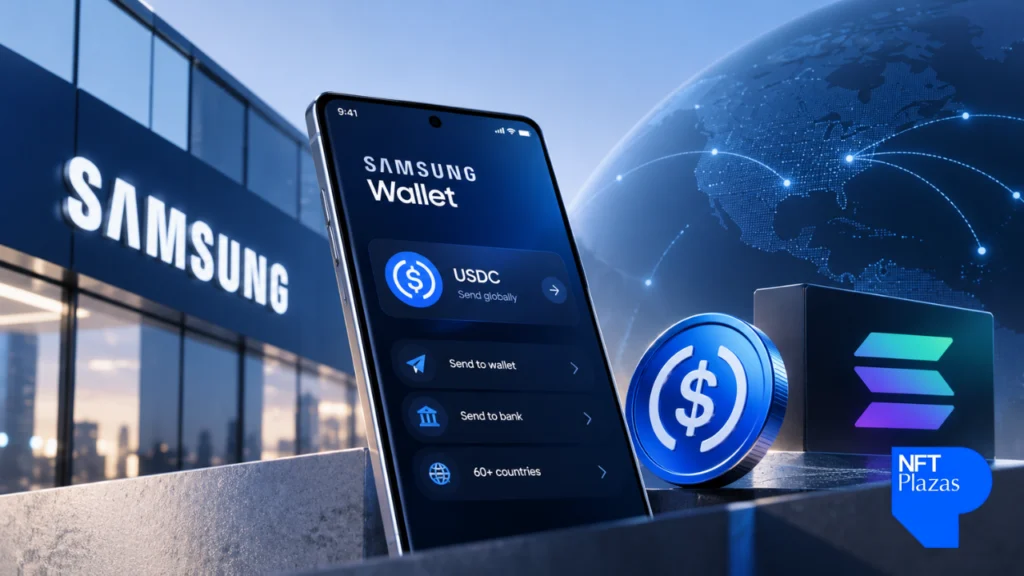
In a landmark move set to reshape the landscape of digital finance and cross-border remittances, Samsung Electronics is poised to integrate stablecoin transfers directly into its widely used Samsung Wallet application. Commencing in the last week of October 2026, this strategic enhancement will empower an estimated 82 million eligible Galaxy device users in the United States to send Circle’s USDC (USD Coin) to compatible crypto wallets or qualifying bank accounts across more than 60 countries. This initiative marks one of the most significant endeavors by a major smartphone manufacturer to embed blockchain-powered stablecoins into the fabric of everyday payments, signaling a profound shift towards greater accessibility and efficiency in global money transfers.
The integration into Samsung Wallet is designed to offer a seamless and intuitive user experience, eliminating many of the traditional barriers associated with cryptocurrency transactions. Unlike existing crypto platforms, users will not be required to download a separate crypto application or navigate the complexities of managing private keys. Instead, the functionality will reside within the familiar Samsung Wallet interface, which already serves as a central hub for credit cards, digital IDs, boarding passes, and other essential credentials. This approach is expected to dramatically lower the entry barrier for mainstream consumers, making stablecoin transfers as convenient as traditional mobile payment methods.
Woncheol Chai, head of Samsung Electronics’ Digital Wallet Team, articulated the company’s vision, stating, "Sending money abroad should feel as convenient as using the wallet already on your phone." This sentiment underscores Samsung’s commitment to prioritizing user experience and leveraging its vast ecosystem to democratize access to advanced financial technologies. The sheer scale of its potential reach, encompassing tens of millions of active Galaxy devices in the U.S. alone, provides stablecoins with an unprecedented distribution channel—a challenge that has historically hampered widespread crypto adoption among general consumers.
A New Era for Cross-Border Payments
The global remittance market, valued at over $800 billion annually, has long been characterized by high transaction fees, slow processing times, and opaque conversion rates, particularly for low-value transfers critical to developing economies. Traditional banking rails and legacy money transfer services often involve multiple intermediaries, each adding to the cost and complexity. Stablecoins, by leveraging blockchain technology, offer a compelling alternative: near-instantaneous transfers, significantly lower fees, and enhanced transparency, all while maintaining a stable value pegged to fiat currencies like the U.S. dollar.
USDC, issued by Circle, stands as one of the most prominent dollar-pegged stablecoins, boasting a substantial market capitalization and widespread acceptance across the crypto ecosystem. Its design as a programmable digital dollar allows for efficient movement of value across borders without direct reliance on the often-cumbersome conventional banking infrastructure. Samsung’s integration capitalizes on these inherent advantages, translating them into tangible benefits for its user base. Senders in the U.S. will initiate transfers in USDC, while recipients in supported countries can elect to receive funds directly into their local bank accounts, converted into their native currency. This critical feature means that recipients do not need to possess a cryptocurrency wallet or understand blockchain technology themselves, further broadening the appeal and utility of the service.
From a cost perspective, Samsung has clarified that it will not impose fees for USDC transfers to compatible external crypto wallets. However, receiving wallets or exchanges may levy their own charges. For bank transfers, a transparent fee structure based on the destination country and transaction amount will be displayed within Samsung Wallet, alongside an estimated delivery time, prior to transaction confirmation. This transparency and competitive fee model represent a direct challenge to incumbent remittance providers, potentially driving down costs across the industry and offering substantial savings to users, especially those sending money to support families abroad.
The Technological Backbone: Solana, Sui, and a Regulated Ecosystem
To ensure the robust and compliant operation of this ambitious undertaking, Samsung is relying on a consortium of specialized partners, each contributing a crucial layer to the underlying infrastructure. The blockchain network support will be provided by Solana and Sui, two high-throughput, low-latency blockchain platforms known for their scalability and efficiency. Solana, a layer-1 blockchain, has gained prominence for its ability to process thousands of transactions per second at minimal cost, making it ideal for high-volume payment applications. Sui, another next-generation blockchain, similarly focuses on speed and scalability, utilizing a unique object-centric data model that can further optimize transaction processing. The choice of these networks underscores Samsung’s commitment to leveraging cutting-edge blockchain technology capable of handling mainstream payment volumes.
The regulated stablecoin infrastructure will be supplied by Bastion, a company specializing in compliant digital asset services. Crucially, Bastion will utilize Coinbase as its sub-custodian, with USDC funds safeguarded through Coinbase Prime Vault, a highly secure, institutional-grade cold storage solution. This multi-layered partnership structure is designed to address key concerns around security, regulatory compliance, and asset custody. By delegating these specialized functions to established and regulated entities, Samsung effectively insulates itself from the direct operational and regulatory burdens of being a bank, money transmitter, or digital-asset custodian, allowing it to concentrate on delivering a superior consumer experience. This strategic outsourcing highlights the evolving model of mainstream tech companies entering the crypto space, emphasizing collaboration with regulated financial service providers.

Security remains paramount, especially when dealing with financial transactions. Samsung has implemented robust security protocols, requiring biometric authentication on the registered Galaxy device before users can initiate any transfer. This layer of protection ensures that only the authorized device owner can approve transactions, mitigating risks associated with unauthorized access.
A Broader Vision for Digital-Dollar Payments
Samsung’s foray into stablecoin remittances is not an isolated initiative but rather a significant milestone in its broader strategic vision for digital-dollar payments across its vast Galaxy ecosystem. The company has previously articulated its intentions to explore stablecoin-based savings and payment features, and the October 2026 launch represents the first major consumer-facing deployment of this strategy.
The implications extend far beyond the impressive number of supported devices. By embedding blockchain-based payments directly into a familiar mobile wallet, Samsung is fundamentally altering how consumers interact with digital assets. Instead of demanding that users actively enter the complex world of cryptocurrency, Samsung is bringing the benefits of blockchain to them, seamlessly integrated into an application they already trust and use daily. This "invisible" integration is key to overcoming the "complexity barrier," which has historically been the biggest impediment to crypto’s mainstream adoption.
Lily Liu, president of the Solana Foundation, underscored this point, stating, "Stablecoins have the potential to make moving money around the world faster and easier." She further noted that while stablecoins have demonstrated blockchain’s efficiency for money movement, mainstream distribution has remained a significant challenge. Samsung’s extensive global footprint and user base could very well provide that missing distribution layer, transforming stablecoins from a niche financial tool into a ubiquitous payment rail.
While the initial rollout is focused on the U.S., Samsung’s ambitions are clearly global. The company has indicated that future expansion beyond the U.S. will be contingent on navigating diverse local regulations and securing the necessary banking and stablecoin partners in new jurisdictions. The phased approach allows Samsung to refine its service and adapt to the evolving regulatory landscape.
Eligibility for the service will be clearly defined: users must be 18 years or older, reside in the U.S., possess a valid Samsung Account, and utilize a compatible Galaxy device running Android 13 or later. Identity verification and biometric authentication will be mandatory to comply with financial regulations and ensure user security. Furthermore, supported countries, networks, and recipient accounts will dictate transfer availability, with strict exclusion of sanctioned jurisdictions in adherence to international compliance standards.
Analysis: Potential to Reshape the Financial Landscape
The launch of stablecoin transfers within Samsung Wallet holds the potential to significantly disrupt several sectors of the global financial industry.
- Remittances: As discussed, traditional remittance services face a formidable new competitor offering lower costs and greater speed. If widely adopted, this could force existing players to innovate or risk losing market share. The convenience of sending money directly from a smartphone, with transparent fees and fast delivery, is a compelling proposition for millions of migrant workers and international families.
- Stablecoin Adoption: This initiative dramatically increases the visibility and utility of stablecoins for everyday consumers. By integrating USDC into a mainstream application, Samsung validates stablecoins as a legitimate and practical tool for financial transactions, potentially accelerating their broader acceptance and usage.
- Samsung’s Ecosystem: For Samsung, this move strengthens its Wallet offering, enhancing its value proposition beyond payments and digital IDs. It positions Samsung Wallet as a cutting-edge financial platform, potentially increasing customer loyalty to Galaxy devices and attracting new users seeking advanced payment solutions. It aligns with a broader industry trend where tech giants are increasingly vying for control over users’ digital financial lives.
- Traditional Banking: While Samsung explicitly states it is not a bank, its service directly competes with certain aspects of traditional banking, particularly international transfers. This could spur traditional banks to accelerate their own digital transformation efforts and explore blockchain-based solutions or partnerships to remain competitive.
- Regulatory Scrutiny: The move will undoubtedly draw increased attention from regulators globally. As stablecoins gain mainstream traction, governments are keen to establish clear regulatory frameworks to ensure financial stability, consumer protection, and anti-money laundering (AML) compliance. Samsung’s emphasis on partnering with regulated entities and adhering to strict KYC/AML protocols is a proactive step in this regard.
Beyond remittances, Samsung has hinted at broader ambitions, including future support for online payments and tap-to-pay transactions using stablecoins on eligible Galaxy devices. Should these plans materialize, Samsung Wallet could evolve from a simple digital wallet for cards and credentials into a comprehensive payment platform where stablecoins operate quietly in the background, powering a wide array of consumer transactions without the user ever needing to understand the underlying blockchain technology.
This strategic move by Samsung represents a critical test case for the mass adoption of blockchain-based payments. It challenges the prevailing notion that cryptocurrency is solely for tech-savvy investors or niche applications. By making the underlying crypto infrastructure largely invisible and focusing on a familiar, user-friendly experience, Samsung is betting that mainstream smartphone users are ready to embrace blockchain payments when they no longer need to think like crypto users to utilize them. The success of the October 2026 launch could set a powerful precedent, paving the way for a future where stablecoins are an integral, yet transparent, component of global digital commerce.