admin
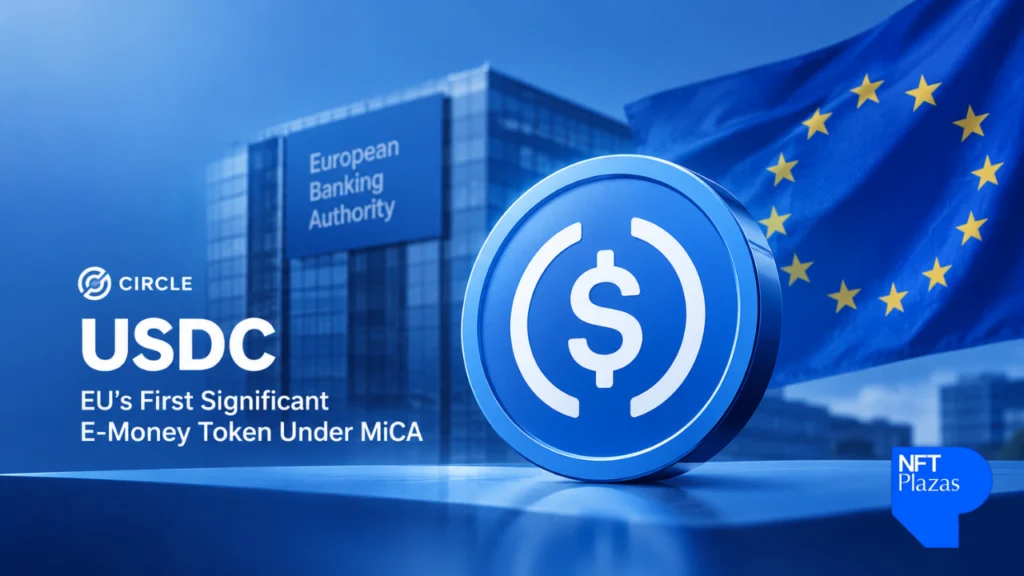
Circle’s widely-used USDC stablecoin has achieved a pivotal regulatory milestone, becoming the first e-money token (EMT) to be officially designated with "significant" status under the European Union’s groundbreaking Markets in Crypto-Assets Regulation (MiCA). This landmark classification, announced by the European Banking Authority (EBA) on October 14, places the dollar-backed stablecoin under direct EBA supervision for critical financial safeguards, with the enhanced oversight set to commence on November 12, 2026. The move signals a new era for stablecoin regulation within the EU, setting a precedent for how large-scale digital assets will be governed to ensure financial stability and consumer protection.
The EBA’s decision follows a rigorous assessment of USDC against MiCA’s stringent significance criteria, marking a crucial step in the phased implementation of Europe’s comprehensive crypto regulatory framework. Out of the 45 e-money tokens that have been notified under MiCA, USDC stands alone as the inaugural recipient of this heightened designation, underscoring its prominent position and systemic relevance within the burgeoning European digital asset market. This classification does not alter USDC’s existing dollar peg or its authorization to operate within Europe; rather, it introduces an additional, deeper layer of regulatory oversight specifically tailored for tokens deemed to have a substantial impact on financial markets. It also meticulously delineates a clear division of supervisory responsibilities between the EBA and France’s national authority, the Autorité de Contrôle Prudentiel et de Résolution (ACPR), which currently oversees Circle’s European operations.
Understanding MiCA and the Significance of "Significant" Status
The Markets in Crypto-Assets Regulation (MiCA) represents a pioneering legislative effort by the European Union, making it the first major jurisdiction globally to implement a comprehensive regulatory framework for crypto-assets. Proposed in September 2020 and formally adopted in May 2023, MiCA aims to provide legal certainty, support innovation, ensure financial stability, and protect investors across the EU’s 27 member states. It covers a broad spectrum of crypto-assets, categorizing them into various types, including utility tokens, asset-referenced tokens (ARTs), and e-money tokens (EMTs). The rules for ARTs and EMTs, which largely encompass stablecoins, are set to apply from June 30, 2024, with the full regulation becoming applicable by December 30, 2024. However, the EBA’s direct supervision of significant EMTs like USDC will only begin in November 2026, allowing ample time for issuers and regulators to prepare for the new regime.
E-money tokens (EMTs) are defined under MiCA as crypto-assets that purport to maintain a stable value by referencing the value of a single fiat currency. USDC, being pegged 1:1 to the U.S. dollar, falls squarely into this category. The "significant" status is a special designation within MiCA designed for EMTs and ARTs that, due to their scale, market capitalization, number of holders, or transaction volumes, could pose a systemic risk to financial stability or impact market integrity if not adequately supervised. Article 56 of MiCA mandates the EBA to classify an e-money token as significant if it meets at least three of the criteria established under Article 43. These criteria include:
- The number of token holders exceeding 10 million.
- The value of issued tokens exceeding €5 billion.
- The average daily transaction value exceeding €100 million.
- The token’s interconnectedness with the financial system.
- The importance of its cross-border use.
- The volume of transactions and the market capitalization.
While the EBA’s October 14 announcement did not explicitly detail which specific criteria USDC met, its position as the world’s second-largest stablecoin by market capitalization, often exceeding tens of billions of dollars, and its widespread use for crypto trading, transfers, and various digital asset transactions, strongly indicate that it satisfies multiple thresholds related to market capitalization, transaction volume, and the number of token holders. USDC’s global reach and substantial liquidity make it a critical component of the broader crypto ecosystem, necessitating enhanced regulatory scrutiny to mitigate potential risks.
EBA to Assume Direct Oversight of USDC’s Financial Resilience
Under the new regulatory framework, the EBA will assume direct and paramount responsibility for supervising several crucial aspects of USDC’s financial health and stability, starting November 12, 2026. These areas include:
- Own-funds requirements: Ensuring Circle maintains adequate capital reserves to absorb potential losses.
- Reserve assets: Overseeing the composition, segregation, and management of the assets backing USDC, guaranteeing their safety and liquidity.
- Liquidity standards: Establishing and monitoring strict liquidity management policies to ensure Circle can meet redemption requests promptly, even under stressed market conditions.
- Recovery and redemption plans: Requiring robust plans to address financial difficulties and ensure an orderly unwinding or continuation of operations, protecting token holders’ interests.
These enhanced safeguards are fundamental to upholding the integrity and reliability of USDC, guaranteeing that its issuer, Circle, maintains sufficient financial resources, holds adequate and appropriate assets to support the stablecoin’s value, and possesses the operational capacity to fulfill all redemption requests. The recovery plans are particularly vital, outlining predefined procedures for responding to various financial stress scenarios, thereby minimizing disruption and protecting consumers.
The ACPR, as the national competent authority in France, will retain supervisory responsibility for other essential aspects of Circle’s European business operations. These include corporate governance, assessment of qualifying ownership interests, evaluation of senior management fitness and propriety, oversight of outsourcing arrangements, and management of conflicts of interest. This division of labor, explicitly laid out in Article 117 of MiCA, ensures a comprehensive and coordinated supervisory approach, leveraging the EBA’s systemic oversight capabilities and the ACPR’s expertise in local operational and governance matters. Both regulators are expected to coordinate their work meticulously to ensure seamless supervision and avoid regulatory gaps, reinforcing the EU’s commitment to a robust and integrated regulatory environment for digital assets.
A Chronology of Regulatory Milestones for MiCA and Circle
The journey to USDC’s "significant" designation is part of a longer regulatory timeline for both MiCA and Circle’s expansion into the European market:
- September 2020: The European Commission proposes the MiCA regulation as part of its broader Digital Finance Strategy.
- June 2022: Provisional agreement reached on MiCA text between the European Parliament and Council.
- May 2023: MiCA formally adopted by the European Council, paving the way for its phased implementation.
- July 2024: Circle Internet Financial Europe SAS obtains authorization from France’s ACPR as an electronic money institution (EMI). This crucial step allowed Circle to legally issue USDC and its euro-backed stablecoin, EURC, under the existing European regulatory framework, prior to the full applicability of MiCA’s stablecoin rules. This authorization underscored Circle’s proactive approach to compliance and its commitment to operating within regulated parameters.
- October 14, 2024: The EBA announces its decision to classify USDC as a "significant" e-money token under MiCA, following its assessment against the regulation’s criteria.
- November 12, 2026: The date from which the EBA’s direct supervision over USDC’s core financial safeguards (reserves, liquidity, etc.) will officially commence. This two-year lead time is intended to allow Circle to fully adapt its operations and reporting mechanisms to the EBA’s specific requirements and for the EBA to staff and prepare its supervisory teams.
This designation, therefore, does not represent USDC’s initial entry into the EU market, which was secured through the ACPR authorization. Instead, it signifies a qualitative shift in oversight, subjecting the token to an intensified layer of regulatory scrutiny due to its demonstrated systemic importance under MiCA.

Circle’s Stance Amidst Ongoing MiCA Debates
While Circle has consistently expressed its commitment to regulatory compliance and has proactively sought authorizations in various jurisdictions, the company has also been an active participant in the ongoing debate over specific aspects of the EU’s stablecoin rules. Notably, in October, around the same time as the EBA’s announcement, Circle publicly urged European policymakers to reconsider certain requirements governing the reserve assets that stablecoin issuers must hold.
Under MiCA, issuers are mandated to maintain reserves in accordance with specific requirements, which include minimum thresholds for deposits with commercial banks. Circle has articulated concerns that these mandatory deposits with traditional commercial banks could inadvertently expose stablecoin issuers to concentration risks associated with their banking partners. The company has pointed to the widely reported collapse of Silicon Valley Bank (SVB) in March 2023 as a salient example of such risks, during which approximately $3.3 billion of USDC reserves became temporarily inaccessible. Although these funds were ultimately recovered, the incident highlighted the potential vulnerabilities that can arise from relying heavily on a few banking partners, even if they are well-established financial institutions.
This debate over reserve requirements encapsulates a fundamental challenge for regulators: how to strike a delicate balance between ensuring robust financial stability and allowing for the practical operational needs and innovation potential of stablecoin issuers. While reserves must remain sufficiently liquid, secure, and accessible to support redemptions at all times, their precise composition can have far-reaching implications for both the issuers themselves and the broader banking system. The EBA’s decision to classify USDC as significant does not, at this stage, introduce changes to these underlying MiCA rules regarding reserve composition. Instead, it applies the existing MiCA framework and transfers specific supervisory responsibilities to the European authority, reinforcing the regulatory structure without altering the foundational rules themselves.
Strengthening Cross-Border Cooperation: EBA and NYDFS Memorandum
Recognizing the inherently global and cross-border nature of stablecoins, the EBA concurrently announced a significant step towards international regulatory cooperation. Alongside the classification of USDC, the EBA confirmed the establishment of a Memorandum of Understanding (MoU) with the New York State Department of Financial Services (NYDFS). This agreement is designed to facilitate robust information sharing and enhanced cooperation on cross-border stablecoin activities.
The rationale behind this MoU is compelling. Although Circle operates distinct legal entities for USDC issuance in the European Union (Circle Internet Financial Europe SAS) and the United States (Circle Internet Financial, LLC), their operations are inextricably linked through the overarching USDC ecosystem. Stablecoins, by their very design, often transcend national borders, enabling seamless value transfer across different jurisdictions. This global reach, while beneficial for users, presents unique supervisory challenges for individual national and regional regulators.
The collaboration between the EBA and the NYDFS, a prominent and often pioneering financial regulator in the United States, is crucial for monitoring relevant risks effectively and coordinating supervisory work to prevent regulatory arbitrage and ensure a consistent approach to oversight. This MoU, while not superseding either regulator’s existing legal responsibilities, establishes a formal channel for dialogue and information exchange, which is vital for understanding interconnected risks and developing coherent regulatory responses. The move reflects a growing recognition among international authorities, including bodies like the Financial Stability Board (FSB) and the Bank for International Settlements (BIS), that cross-jurisdictional cooperation is indispensable for supervising stablecoins that operate globally. For issuers like Circle, navigating and maintaining compliance across diverse and evolving regulatory systems is becoming an increasingly central and complex aspect of their global business strategy.
Broader Implications for Europe’s Stablecoin Market and Beyond
USDC’s designation as a "significant" e-money token under MiCA marks a profound new stage in the European Union’s oversight of large-scale stablecoins. From November 12, 2026, the direct involvement of the EBA in supervising critical financial safeguards for USDC, while the ACPR continues its oversight of other operational aspects, establishes a clear and comprehensive regulatory architecture for a major digital asset.
For Circle, this change signifies an undeniable increase in regulatory scrutiny, particularly concerning its reserve management, liquidity provisions, and overall financial resilience. While this may entail increased compliance costs and operational adjustments, it also confers a significant advantage: enhanced regulatory clarity and a stamp of approval from a leading European financial authority. This could, in turn, foster greater trust among institutional investors and traditional financial entities considering deeper engagement with digital assets, potentially expanding USDC’s adoption in regulated financial environments.
For the wider European stablecoin market, this decision provides a concrete and high-profile example of how MiCA’s enhanced supervisory framework applies to a systemically important stablecoin. It sets a benchmark and likely foreshadows similar designations for other large stablecoins that either operate or seek to operate within the EU, such as Tether’s USDT if it were to seek MiCA authorization, or any future large-scale euro-backed stablecoins. This will contribute to a more robust, but potentially more demanding, regulatory landscape for stablecoin issuers in Europe.
Furthermore, the establishment of a formal channel for cooperation between the EBA and the NYDFS underscores the critical importance of international coordination as digital assets increasingly operate across national borders. This collaboration serves as a model for how authorities can build effective mechanisms to address the complex challenges posed by stablecoins with international reach, potentially influencing regulatory approaches in other major jurisdictions.
While USDC’s classification does not definitively resolve the broader, ongoing debate over the optimal regulatory design for stablecoins in Europe—especially concerning the precise nature of reserve asset requirements—it unequivocally establishes a clearer, more centralized supervisory structure for one of the market’s largest dollar-backed tokens. As the EU continues its phased implementation of MiCA, this landmark decision represents a significant step towards creating a safer, more transparent, and financially stable environment for digital assets, solidifying Europe’s position at the forefront of crypto regulation globally. The market will now keenly observe how this enhanced oversight impacts USDC’s operations, its competitive landscape, and the broader evolution of the regulated stablecoin ecosystem.