admin
admin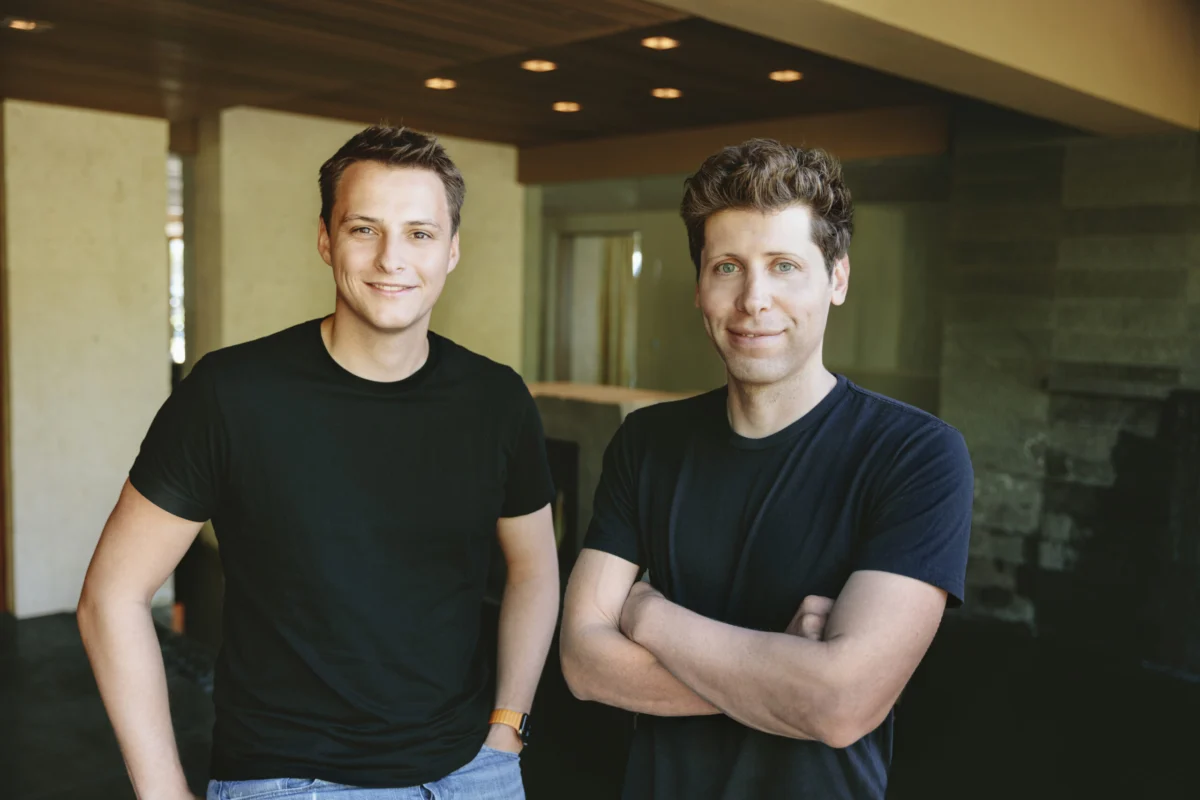
World, the ambitious digital identity and cryptocurrency project co-founded by OpenAI Chief Executive Sam Altman, has successfully raised $52.5 million through a strategic sale of its native cryptocurrency token, WLD. The capital injection, directed toward the World Foundation, marks a significant milestone for the startup as it attempts to solidify its position as the primary infrastructure for "proof of human" verification in an era increasingly dominated by generative artificial intelligence. This latest funding round involved a diverse group of high-profile institutional investors who committed to a 12-month lockup period, a move the company suggests reflects a long-term belief in the utility and scalability of the World ecosystem.
The World project, managed by the San Francisco-based firm Tools for Humanity (TFH), is led by Chief Executive Officer and co-founder Alex Blania, alongside Altman. The initiative represents a unique intersection of biometric hardware, blockchain technology, and digital identity management. By securing $52.5 million from strategic partners, the organization aims to bolster the World Foundation, an exempted limited guarantee foundation based in the Cayman Islands. This entity is tasked with overseeing the governance and expansion of the World network, ensuring that the project remains decentralized and globally accessible as it scales its operations across multiple continents.
Strategic Investment and the Token Lockup Mechanism
The primary buyer in this latest token sale was Pantera Capital, a prominent venture capital firm specializing in digital assets and blockchain technology. Pantera’s involvement underscores the institutional appetite for projects that address the systemic risks posed by AI-driven bot activity. Joining Pantera in the $52.5 million round were several other notable firms, including Eightco Holdings, Bain Capital Crypto, Susquehanna Crypto, and Selini Capital.
A critical component of this transaction is the 12-month lockup agreement. In the volatile world of cryptocurrency, lockup periods are essential mechanisms to ensure price stability and demonstrate investor confidence. By agreeing not to sell or trade their WLD tokens for a full year, these strategic investors have effectively signaled their commitment to the project’s long-term roadmap rather than seeking short-term speculative gains. In a press release following the announcement, World emphasized that this commitment is a testament to the "continued growth and utility" of the network, providing the foundation with the financial runway needed to execute its complex global deployment strategy.
This capital raise follows a history of significant private funding. Tools for Humanity previously raised $115 million in a Series C round led by Blockchain Capital in May 2023, which valued the project at a multibillion-dollar level. The transition from traditional equity rounds to strategic token sales highlights the project’s shift toward an ecosystem-driven model where the WLD token serves as the primary vehicle for value distribution and governance within the network.
The "Proof of Human" Mission in the Age of AI
The core proposition of World—formerly known as Worldcoin—is the creation of a "Proof of Personhood" (PoP) credential. As artificial intelligence becomes more sophisticated, the ability to distinguish between a biological human and an automated bot has become a critical challenge for digital platforms. World’s solution is the World ID, a digital passport that allows users to verify their humanity online without necessarily revealing their legal identity.
To achieve the highest tier of verification, users must undergo a biometric scan performed by a proprietary device known as the "Orb." The Orb is a chrome-plated, spherical device equipped with high-resolution cameras and sensors designed to scan a user’s iris. This scan is then converted into a unique cryptographic identifier—an iris code—which is stored on a blockchain. Importantly, the company maintains that the raw biometric images are deleted by default after the code is generated, though this process has remained a point of contention among privacy advocates and international regulators.
The rebranding from Worldcoin to simply "World" in late 2024 reflected a broader strategic pivot. While the project remains rooted in blockchain technology, the new branding emphasizes its identity-verification tools over its cryptocurrency origins. This shift was partly a response to the "crypto winter" and the subsequent public skepticism toward digital assets, but it also highlights the company’s ambition to become a foundational layer of the internet’s social fabric.
A Chronology of Development and Global Expansion
The journey of World began in 2021, when Sam Altman and Alex Blania first introduced the concept of a global identity and financial network that would distribute a universal basic income (UBI) in the form of cryptocurrency. Since then, the project has navigated a tumultuous path of rapid expansion and intense scrutiny.
- 2021-2022: The project enters its beta phase, deploying Orbs in various cities worldwide, including Berlin, Tokyo, and Nairobi. Initial reports focused on the "free money" aspect of the WLD token, which led to massive queues at Orb locations in developing nations.
- July 2023: Worldcoin officially launches its mainnet and lists the WLD token on major global exchanges. The launch is met with both excitement from the crypto community and immediate pushback from data protection authorities in Europe and Africa.
- April 2024: The project launches a significantly updated version of its mobile application, the World App. This update introduced "World ID 2.0," which offered more integrations with third-party platforms and different levels of verification, ranging from phone-based authentication to the full Orb-verified status.
- June 2024: Amidst a broader restructuring, Tools for Humanity announces a round of layoffs. While the exact number of affected employees was not disclosed, the move was seen as an effort to streamline operations as the company moved away from its initial hyper-growth phase toward a more sustainable operational model.
- Late 2024: The rebranding to "World" occurs, accompanied by the announcement of major integrations with global digital services including Zoom, Tinder, and DocuSign.
Integration with Global Platforms and Strategic Partnerships
The utility of the World ID is predicated on its adoption by third-party services. If digital platforms require a World ID to access certain features, the value of the network increases exponentially. Recent partnerships with Tinder, Zoom, and DocuSign represent a significant step toward this goal.
On Tinder, for instance, the integration of World ID could potentially eliminate the "catfishing" and bot-driven scams that plague dating apps. By requiring a "Proof of Human" check, Tinder can ensure that accounts are tied to unique biological individuals. Similarly, on Zoom and DocuSign, the World ID could serve as a high-security layer for verifying the participants in a sensitive video conference or the signatories of a legal document.
Despite these high-profile announcements, the project has faced challenges in scaling. The physical nature of the Orb—requiring a user to be physically present at a specific location—creates a bottleneck for user acquisition. To counter this, World has experimented with "Orb-to-door" services and has sought to place the devices in high-traffic retail environments through partnerships with local businesses.
Regulatory Scrutiny and Privacy Concerns
The most significant hurdle facing World is the regulatory environment regarding biometric data. In several jurisdictions, the project’s data collection practices have been halted or placed under investigation.
In Kenya, the government suspended Worldcoin’s operations in 2023 over concerns regarding data privacy and the legality of collecting biometric information from citizens. Similarly, in Spain and Germany, data protection agencies have scrutinized the project’s compliance with the General Data Protection Regulation (GDPR). The company has responded by emphasizing its commitment to privacy, noting that the iris codes are "non-reversible" and that the system uses zero-knowledge proofs (ZKPs) to allow users to prove their identity without sharing the underlying biometric data.
The $52.5 million raised for the World Foundation will likely be used, in part, to fund the legal and compliance efforts necessary to navigate these complex regulatory landscapes. Establishing the foundation in the Cayman Islands provides a neutral, international base for these operations, though it also invites further scrutiny from those wary of the "offshore" nature of many crypto-related entities.
Broader Implications for the Digital Economy
The success or failure of World has profound implications for the future of the digital economy. As AI agents become capable of performing complex tasks, the "Sybil attack"—where a single actor creates thousands of fake identities to manipulate a system—becomes a localized threat to everything from online voting to social media discourse and financial systems.
If World can successfully establish the World ID as a global standard, it could create a "human-only" layer of the internet. This would theoretically protect democratic processes from bot manipulation and ensure that resources, such as a future universal basic income, are distributed fairly to actual people. However, critics argue that placing the "keys" to human identity in the hands of a private, venture-backed startup—even one overseen by a foundation—poses significant risks of centralization and surveillance.
The recent $52.5 million token sale suggests that some of the most sophisticated investors in the technology sector believe the rewards outweigh the risks. By focusing on "Proof of Human" tools, World is positioning itself not just as a cryptocurrency project, but as a critical piece of the 21st-century infrastructure required to manage the friction between biological intelligence and artificial agents.
Future Outlook: Scaling the Orb and the Network
Looking ahead, the World project faces the daunting task of moving from a niche technology experiment to a global utility. The company must continue to innovate its hardware, making the Orb more portable and less intimidating to the general public, while simultaneously expanding its software ecosystem.
The $52.5 million in new capital provides the necessary resources to continue R&D and expand the foundation’s reach. However, the ultimate test for World will not be its ability to raise money, but its ability to convince billions of people that scanning their eyes is a fair price to pay for a verified digital future. As the 12-month lockup period for Pantera and other investors begins, the tech world will be watching closely to see if Sam Altman’s vision of a verified, human-centric internet can overcome the immense technical, regulatory, and social challenges that stand in its way.