admin
admin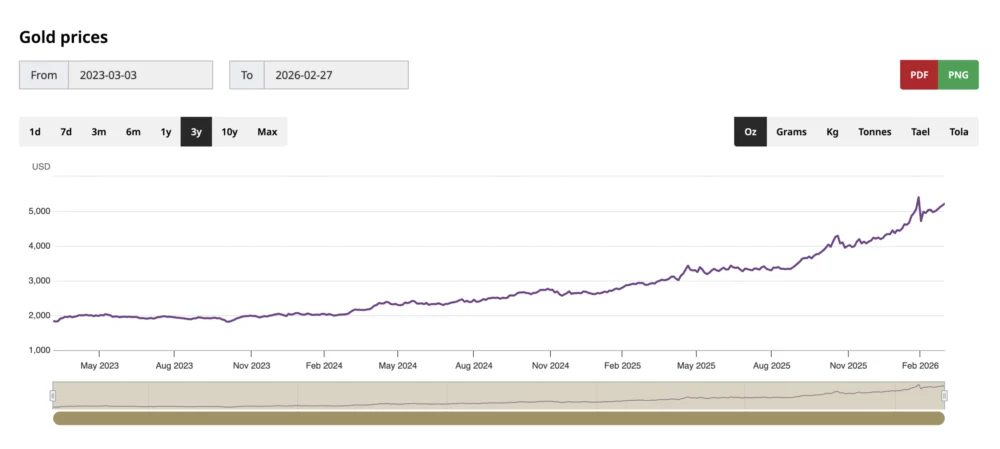
The geopolitical landscape has dramatically intensified, sending shockwaves across global financial markets as news of a joint US and Israeli military strike targeting Iran dominates international headlines. This unprecedented development has immediately placed markets worldwide on "red alert," prompting investors from traditional equities and bonds to the nascent Crypto/Web3 space to rapidly re-evaluate their portfolios. Amidst the ensuing chaos and profound uncertainty, a familiar question echoes through trading floors and digital exchanges: where will liquidity flow in these turbulent times? History, as always, offers a compelling answer, pointing unequivocally towards gold – the ultimate safe-haven asset. The stage appears set for what many analysts predict could be an historic bull run for the precious metal, fundamentally altering investment strategies for the foreseeable future.
The Geopolitical Quake: US-Israel Strike on Iran
The reported military action involving two major global powers and a significant Middle Eastern nation marks a seismic shift in international relations. While specific details remain fluid, intelligence reports indicate coordinated strikes against key Iranian strategic assets, purportedly in response to escalating regional aggressions and concerns over nuclear proliferation. This is not merely another chapter in regional tensions; it represents a direct military confrontation with profound implications for global stability, energy security, and economic interconnectedness.
For decades, the relationship between the United States, Israel, and Iran has been characterized by deep-seated animosity, proxy conflicts, and a delicate balance of deterrence. Iran’s nuclear program, its support for regional militant groups, and its strategic control over vital shipping lanes like the Strait of Hormuz have long been sources of international contention. Israel, facing existential threats from Tehran-backed entities, has consistently advocated for a robust response to Iranian activities. The US, balancing its regional alliances with broader strategic interests, has now seemingly moved beyond diplomatic pressure to direct military intervention alongside its key ally. Such an action immediately raises the specter of widespread regional escalation, threatening to draw in other regional and global powers, and potentially igniting a protracted conflict that could destabilize the entire Middle East.
Immediate Market Shockwaves: A Global Red Alert
Any seasoned trader adheres to a golden rule: markets absolutely despise uncertainty. The news of a direct military clash involving the US, Israel, and Iran transcends standard geopolitical risk; it constitutes a seismic shock capable of disrupting global energy supply chains, triggering widespread economic downturns, and undermining investor confidence on an unprecedented scale.
The moment this intel broke, immediate and widespread shockwaves reverberated across all asset classes. Stock markets globally plunged into a sea of red, with major indices in North America, Europe, and Asia registering steep declines. The Dow Jones Industrial Average, S&P 500, FTSE 100, DAX, Nikkei 225, and Hang Seng Index all experienced significant intraday losses, reflecting an immediate flight from risk. Simultaneously, risk-on assets, particularly those in the volatile cryptocurrency and Web3 space, showed pronounced signs of a panic sell-off. Bitcoin, Ethereum, and numerous altcoins witnessed sharp corrections, indicating that even assets once touted as uncorrelated safe havens were susceptible to broad market fear. Investors, both institutional and retail, are rushing to restructure their portfolios in a desperate search for a "safe harbor" amidst the tempest. This immediate reaction underscores the interconnectedness of global finance and the profound impact of high-stakes geopolitical events.
Gold’s Unyielding Ascent: The Ultimate Safe Haven
Like an unconditioned reflex honed over millennia, gold prices immediately responded to the geopolitical turmoil. Right after the breaking news hit, the charts for physical gold (XAU/USD) as well as gold-pegged assets in the crypto market (such as PAX Gold – PAXG, and Tether Gold – XAUT) witnessed a massive green candle shooting straight up, reflecting an intense surge in demand. This instantaneous price action is a testament to gold’s enduring role as the ultimate crisis asset.

Historically, gold has consistently demonstrated its resilience during periods of extreme economic and political instability. During the 1973 oil crisis, the 1979 Iranian Revolution, the 1990 Gulf War, the 9/11 attacks, and the 2008 global financial crisis, gold served as a reliable hedge, preserving wealth when other assets faltered. Its intrinsic value, universal acceptance, and lack of counterparty risk make it unique among commodities. In times of war, geopolitical tension, and inflationary pressures, fiat currencies can lose value, and government bonds can become less appealing due to sovereign risk concerns. Gold, however, remains a tangible asset, a store of value independent of any single government or financial institution.
The dominant emotion driving the market right now is profound fear, intertwined with FOMO (Fear of Missing Out) on the safe-haven rally. Both retail investors, wary of potential wealth erosion, and massive institutional whales, seeking to protect vast sums of capital, are aggressively diving into gold. Their objective is clear: to shield their wealth from potential fiat devaluation, plummeting stock markets, and the broader economic uncertainty that a prolonged conflict could unleash. This knee-jerk reaction unequivocally proves that no matter how far technology advances or how innovative new asset classes become, gold’s status as the quintessential safe-haven asset during times of war and profound crisis remains unshakable. While Bitcoin is often lauded as "Digital Gold" for its scarcity and decentralized nature, physical gold’s thousands of years of history as a tangible hedge against systemic risk provides a depth of trust and proven performance that is currently unmatched.
Chronology of Market Reaction and Investor Psychology
The market’s response unfolded in a predictable yet dramatic sequence following the initial reports of the US-Israel strike on Iran.
- Initial Intelligence Leak (Pre-Market Hours): Rumors and unconfirmed intelligence began circulating, causing initial jitters in futures markets and certain high-frequency trading algorithms.
- Official Confirmation/Breaking News (Market Open): Major news outlets confirmed the strikes. This served as the catalyst for immediate, widespread sell-offs across equity markets globally. Algorithmic trading systems, programmed to de-risk in response to such triggers, amplified the initial downward momentum.
- Flight to Quality: Concurrently, a surge of capital immediately flowed into traditional safe havens. Gold, US Treasury bonds, the Japanese Yen, and the Swiss Franc saw rapid appreciation. The volatility index (VIX) spiked, indicating extreme market fear.
- Crypto Market Contagion: Initially, some in the crypto space might have hoped for decoupling. However, the sheer scale of the geopolitical event triggered broad risk-off sentiment, leading to significant liquidations and a sharp downturn across the cryptocurrency market, especially in altcoins, reflecting their higher beta and sensitivity to overall market sentiment.
- Institutional Rebalancing: Major asset managers and institutional investors began actively rebalancing their vast portfolios, shedding riskier assets and increasing allocations to gold and other perceived safe havens. This process often takes days or weeks but begins with immediate tactical adjustments.
- Retail Investor Panic/FOMO: As the news permeated public consciousness, retail investors, driven by a mix of fear (of losses) and FOMO (of missing out on gold’s rally), contributed to the accelerated movements, further exacerbating volatility.
- Stabilization and Consolidation (Initial Phase): After the initial shock, markets typically attempt to find a temporary equilibrium as traders assess the immediate extent of the damage and speculate on potential future scenarios. However, underlying uncertainty remains exceptionally high.
This rapid sequence illustrates the interconnectedness of global finance and the powerful psychological drivers of fear and greed that dictate market movements during times of extreme stress.
Broader Economic Implications and Energy Market Volatility
The ramifications of a direct military confrontation in the Middle East extend far beyond immediate market reactions. A key area of concern is the global energy market. Iran is a significant oil producer, and critically, controls the Strait of Hormuz, a choke point through which roughly one-fifth of the world’s total petroleum consumption passes daily. Any disruption to this vital shipping lane, whether through direct conflict, mining, or blockades, would send crude oil prices skyrocketing. A sustained surge in oil prices would fuel global inflation, increase transportation costs, and act as a significant drag on economic growth worldwide, potentially pushing major economies into recession.
Furthermore, supply chains, already strained by recent global events, would face unprecedented pressure. Manufacturing inputs, consumer goods, and raw materials transported through the region could face delays, higher costs, or outright disruption. This would exacerbate inflationary pressures and contribute to a broader economic slowdown. Consumer confidence would likely plummet, leading to reduced spending and investment. Central banks, already grappling with inflation and interest rate hikes, would face an impossible dilemma: whether to prioritize curbing inflation at the risk of deepening a recession, or to loosen monetary policy to support growth, thereby risking runaway inflation. The prospect of a global recession, potentially exacerbated by an energy crisis, is a tangible threat that would fundamentally reshape the economic outlook for years to come.
Official Responses and Calls for De-escalation
In the wake of such a significant geopolitical event, the international community’s response would be swift and multifaceted.

- United Nations: The UN Security Council would undoubtedly convene emergency sessions, issuing strong condemnations of the violence and urgently calling for de-escalation, a cessation of hostilities, and a diplomatic resolution to prevent further regional instability. The Secretary-General would likely appeal to all parties for restraint and adherence to international law.
- Major World Powers: Leaders from nations like China, Russia, the European Union, and India would issue statements expressing deep concern, emphasizing the need for peace, and urging all parties to protect global energy supply lines. There would be intense diplomatic efforts behind the scenes, potentially involving various mediating parties, to contain the conflict and prevent its spread.
- Central Banks and Financial Institutions: Central banks, such as the US Federal Reserve, European Central Bank, and Bank of England, would likely issue statements aimed at reassuring markets of their readiness to provide liquidity if necessary and to monitor financial stability closely. They might signal a pause in monetary tightening cycles, or even a pivot, if economic conditions deteriorate sharply. The International Monetary Fund (IMF) and World Bank would likely issue warnings about the potential for global economic contraction and increased financial fragility.
- Regional Actors: Other Middle Eastern nations would react with a mix of alarm, condemnation, and tactical positioning, with some expressing solidarity and others calling for neutrality. The security of vital oil infrastructure and shipping lanes would become a paramount concern for all nations dependent on the region’s energy resources.
These official responses, while crucial for diplomatic signaling and market reassurance, would underscore the gravity of the situation and the immense pressure on global leaders to navigate an increasingly dangerous geopolitical landscape.
Short-Term Surge vs. Long-Term Trend: The Path Ahead for Gold
The fact that gold is pumping hard right now is undeniable, a clear manifestation of its safe-haven status. However, smart traders and prudent investors need to clearly distinguish between a panic-driven short-term surge and a sustainable long-term trend. The future trajectory of gold prices will largely depend on the duration and escalation of the conflict.
Scenario 1: Swift De-escalation and Resolution. If the conflict proves fleeting, and the involved parties reach a de-escalation agreement or a quick cessation of hostilities, the "hot money" that rushed into gold will likely flow out almost as quickly. Investors would then shift back into higher-yielding risk assets like equities and cryptocurrencies, seeking to capitalize on potential rebounds and growth opportunities. In this scenario, gold’s price might consolidate or retrace some of its initial gains, though it would likely settle at a higher baseline than pre-conflict levels due to the lingering memory of the event.
Scenario 2: Prolonged Conflict and Regional Proxy War. Conversely, if this attack spirals into a prolonged proxy war across the Middle East, drastically disrupting oil supplies, causing sustained energy price spikes, and pushing the global economy into a deep recession, gold’s upward trajectory will be cemented for months, or even years, to come. In such a scenario, gold would not only act as a hedge against geopolitical risk but also as a powerful inflation hedge and a sanctuary from systemic economic instability. Sustained demand from central banks, which have been net buyers of gold for over a decade, would also contribute to its long-term appreciation, as nations seek to diversify reserves away from potentially unstable fiat currencies. The potential for a multi-year bull market would become highly probable.
Will Gold Really Skyrocket?
So, will the price of gold actually skyrocket—shooting straight to the moon? The answer is YES, but under specific and severe conditions. If the conflict broadens beyond the initial strikes, leading to widespread regional instability, severe and sustained disruptions to global oil supplies, and consequently pushing the global economy into a prolonged recession or stagflationary environment, gold’s current price mark might just be the starting line for a much larger ascent. The psychological impact of such a protracted crisis, combined with real economic fallout, would cement gold’s appeal to an even wider investor base.
For savvy crypto investors, this period of heightened uncertainty is the perfect time to look into portfolio diversification. While the allure of high-growth potential in the Web3 space remains strong, the current macro climate underscores the importance of balancing risk with stability. Allocating a portion of capital into Tokenized Gold is rapidly becoming a massive trend on the blockchain, offering a sophisticated way to secure safe-haven exposure. Assets like PAXG (PAX Gold) and XAUT (Tether Gold) provide direct, verifiable ownership of physical gold through a digital token, allowing investors to protect their wealth from traditional market volatility and fiat devaluation with just a few clicks, without ever leaving the Web3 ecosystem. This integration of ancient wealth preservation with modern financial technology offers a compelling solution for navigating the volatile markets ahead.
The current geopolitical climate represents a critical juncture for global financial markets. Gold, with its millennia-old history as a trusted store of value, is once again demonstrating its unparalleled importance as a safe-haven asset. As the world watches the unfolding events in the Middle East, investors are urged to exercise extreme caution, conduct thorough due diligence, and consider strategic diversification to protect their capital. Buckle up, because the markets are about to get incredibly wild, and the price of gold will be a key barometer of global stability.