admin
admin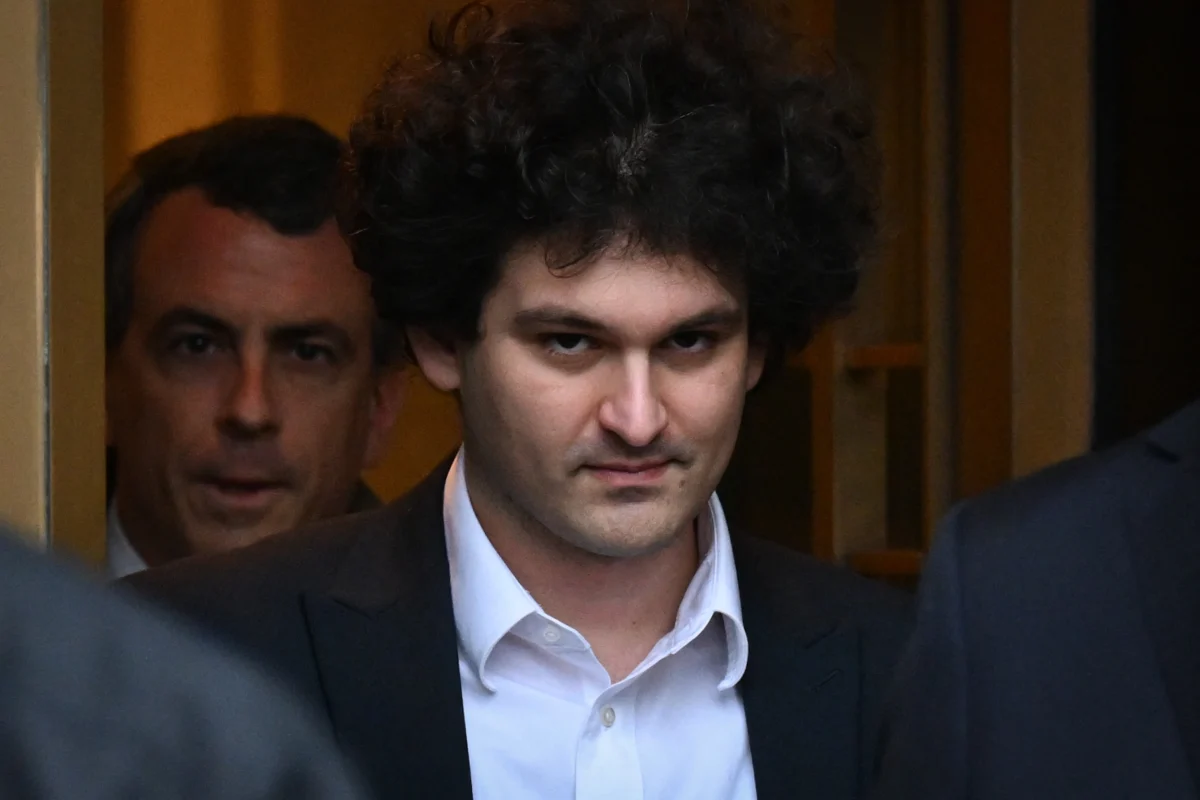
Sam Bankman-Fried, the disgraced founder of the collapsed cryptocurrency exchange FTX, has officially submitted an application for a presidential pardon to the United States Department of Justice’s Office of the Pardon Attorney. The petition, directed toward President Donald Trump during his second term in office, marks a significant legal maneuver for the former billionaire who is currently serving a 25-year federal prison sentence. Bankman-Fried was convicted in late 2023 on seven counts of fraud, conspiracy, and money laundering related to the misappropriation of billions of dollars in customer funds. The filing, first identified through public records on the Department of Justice website and reported by Bloomberg News, signals a shift in strategy for Bankman-Fried’s legal team as they seek executive clemency following the exhaustion of several traditional judicial appeals.
The Context of the Conviction and the Collapse of FTX
To understand the weight of Bankman-Fried’s pardon request, one must look back at the unprecedented rise and fall of FTX. Founded in 2019, FTX quickly became one of the world’s largest and most influential cryptocurrency exchanges, reaching a valuation of $32 billion at its peak. Bankman-Fried, often referred to by his initials "SBF," became the face of the industry, appearing on the covers of major financial magazines and testifying before Congress as a proponent of sensible crypto regulation.
However, the empire crumbled in November 2022 when a report by CoinDesk revealed that Bankman-Fried’s hedge fund, Alameda Research, held a massive position in FTT, a token created by FTX itself. This revelation sparked a liquidity crisis as customers rushed to withdraw their funds. The subsequent bankruptcy filing revealed a staggering $8 billion hole in the company’s balance sheet. Investigations by the Department of Justice (DOJ) and the Securities and Exchange Commission (SEC) quickly uncovered that FTX had been funneling customer deposits to Alameda Research to cover trading losses, make venture investments, and fund lavish real estate purchases in the Bahamas.
Following his extradition from the Bahamas in December 2022, Bankman-Fried faced a high-profile trial in the Southern District of New York. In November 2023, a jury found him guilty on all counts. During the sentencing phase in March 2024, U.S. District Judge Lewis Kaplan described Bankman-Fried’s actions as a "brazen" display of entitlement and noted a lack of genuine remorse. The 25-year sentence was intended to reflect the severity of what prosecutors called one of the largest financial frauds in American history.
A Chronology of the FTX Legal Saga
The timeline leading to the current pardon application is a complex series of rapid growth followed by an equally rapid legal reckoning:
- May 2019: Sam Bankman-Fried and Gary Wang found FTX.
- 2021–Early 2022: FTX raises billions in venture capital and launches a massive marketing campaign, including a Super Bowl ad and naming rights for the Miami Heat’s arena.
- November 2, 2022: A leaked balance sheet shows Alameda Research is heavily dependent on FTX’s FTT token.
- November 8–11, 2022: FTX faces a "bank run," halts withdrawals, and files for Chapter 11 bankruptcy. Bankman-Fried resigns as CEO.
- December 12, 2022: Bankman-Fried is arrested in the Bahamas at the request of the U.S. government.
- October 3, 2023: The criminal trial begins in Manhattan. Key witnesses include former Alameda CEO Caroline Ellison and FTX co-founder Gary Wang, both of whom pleaded guilty and testified against Bankman-Fried.
- November 2, 2023: Bankman-Fried is convicted on seven counts of wire fraud, securities fraud, and money laundering.
- March 28, 2024: Judge Lewis Kaplan sentences Bankman-Fried to 25 years in prison and orders the forfeiture of $11 billion.
- 2025–2026: Bankman-Fried’s legal team pursues various appeals while he remains incarcerated at a federal facility.
- June 2026: Bloomberg News confirms that Bankman-Fried has formally applied for a pardon through the DOJ’s Pardon Attorney Office.
Analyzing the Trump Administration’s Pardon Patterns
The decision to file for a pardon now is likely influenced by the historical trends observed during President Trump’s tenure in the White House. Analysis of executive clemency during the Trump administration reveals a distinct approach compared to previous presidents. While many modern presidents have focused on pardoning non-violent drug offenders or individuals recommended through the rigorous DOJ screening process, President Trump has frequently utilized his pardon power for high-profile figures and those convicted of white-collar crimes.
According to data compiled by NBC News, a significant portion of the pardons granted during the current and previous Trump administrations have benefited individuals convicted of financial crimes. The analysis indicates that more than 50% of individual pardons were granted to persons involved in money laundering, bank fraud, wire fraud, and other sophisticated financial schemes. This trend has emboldened the legal representatives of several high-profile white-collar defendants to bypass traditional appellate routes in favor of direct executive appeals.
Furthermore, the Bloomberg report highlights a notable deviation in the current pardon process. Historically, the Office of the Pardon Attorney serves as a gatekeeper, vetting applications before they reach the President’s desk. However, during the Trump administration, many successful pardon recipients did not file through this official channel, instead relying on personal connections, political allies, or media campaigns to gain the President’s attention. Bankman-Fried’s decision to file an official application suggests a multi-pronged strategy that seeks to satisfy institutional requirements while simultaneously appealing to the President’s discretionary power.
Supporting Data: White-Collar Crime and Executive Clemency
To put Bankman-Fried’s 25-year sentence in perspective, it is useful to compare it to other major financial fraud cases in U.S. history:
- Bernie Madoff: Sentenced to 150 years for a $64 billion Ponzi scheme.
- Allen Stanford: Sentenced to 110 years for a $7 billion fraud.
- Jeff Skilling (Enron): Initially sentenced to 24 years (later reduced to 14) for the collapse of Enron.
- Elizabeth Holmes (Theranos): Sentenced to 11.25 years for defrauding investors.
Bankman-Fried’s 25-year term is among the most substantial for a defendant of his age, reflecting the $8 billion in losses incurred by FTX customers. Proponents of a pardon or commutation often argue that such sentences are disproportionately harsh compared to other non-violent crimes, while critics argue that the scale of the theft and the global impact on the financial system necessitate a lengthy deterrent.
The NBC News analysis further notes that under the Trump administration, hundreds of millions of dollars in court-ordered punishments and fines were effectively wiped away through pardons. For Bankman-Fried, whose forfeiture order stands at $11 billion, a pardon would not only mean freedom from incarceration but could potentially complicate the ongoing efforts by the FTX bankruptcy estate to recover assets for victims.
Potential Implications and Official Responses
The news of the pardon application has already begun to generate reactions from various sectors of the legal and financial communities. While the White House has not issued a formal statement regarding this specific application, the administration’s general stance on "over-criminalization" and "judicial overreach" has been a consistent theme.
Legal experts suggest that Bankman-Fried’s past political activity could be a double-edged sword. During the 2022 election cycle, he was one of the largest donors to Democratic causes, contributing nearly $40 million. However, he later claimed in interviews that he also donated "dark money" to Republican candidates to maintain a bipartisan image. The Trump administration’s willingness to grant pardons has occasionally been linked to political loyalty or significant financial support, and it remains to be seen how Bankman-Fried’s complicated donor history will influence the executive’s decision.
For the victims of the FTX collapse, the prospect of a pardon is a contentious issue. John J. Ray III, the current CEO of FTX who is overseeing the bankruptcy and liquidation, has been vocal about the "utter lack of record-keeping" and "gross mismanagement" under Bankman-Fried’s leadership. Creditors, many of whom lost their life savings, have expressed concern that a pardon would undermine the justice served by the criminal trial.
Broader Impact on the Cryptocurrency Industry
The outcome of this pardon request will likely have lasting implications for the cryptocurrency industry and its relationship with federal law enforcement. The FTX trial was seen as a watershed moment, a signal that the "Wild West" era of crypto was over and that the same rules governing Wall Street would be applied to digital asset exchanges.
If Bankman-Fried were to receive clemency, it could be interpreted by some as a softening of the government’s stance on crypto-related fraud. Conversely, it could be framed by the administration as a correction of a "politically motivated" prosecution by the previous Department of Justice. Regardless of the outcome, the filing ensures that the ghost of FTX will continue to haunt the intersection of American politics, finance, and law for the foreseeable future.
As the Department of Justice’s Pardon Attorney Office processes the application, the financial world remains watchful. The case of Sam Bankman-Fried serves as a definitive study in the volatility of the digital age—where a multibillion-dollar fortune can vanish in a week, and a 25-year prison sentence can become the subject of a presidential pen stroke just two years later. For now, Bankman-Fried remains in federal custody, awaiting a decision that could redefine the remainder of his life and the legacy of the industry he once sought to lead.