Dwi Wanna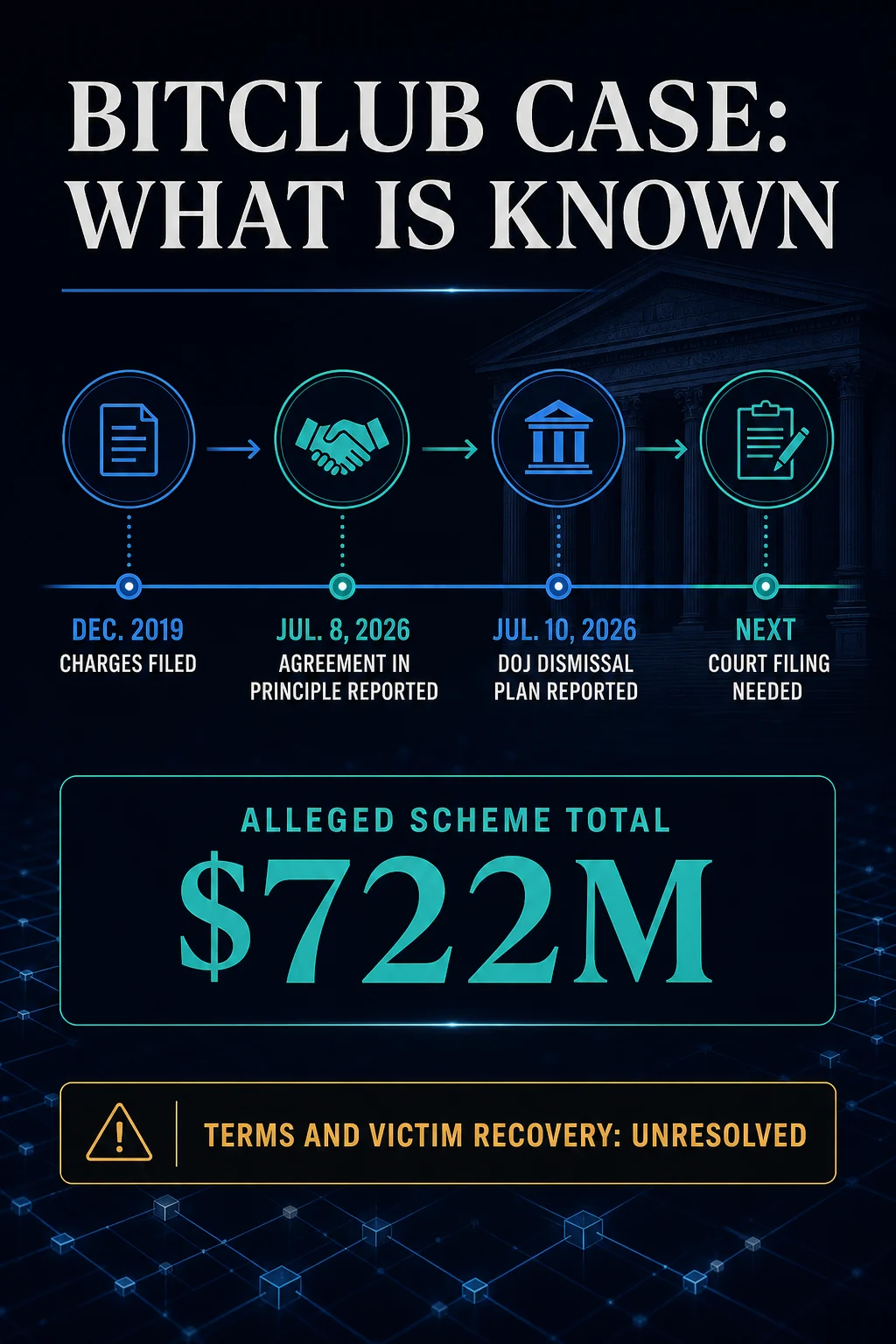
The United States Department of Justice (DOJ) has signaled a dramatic shift in one of the most high-profile cryptocurrency fraud cases in recent history. In a move that has caught legal analysts and thousands of global investors by surprise, federal prosecutors are preparing to move for the dismissal of criminal charges against Matthew Goettsche, the alleged mastermind behind the BitClub Network. The BitClub Network was a massive cryptocurrency mining scheme that federal authorities previously characterized as a "worldwide Ponzi scheme" that defrauded investors of at least $722 million between 2014 and 2019.
According to reports from Bloomberg Law, which cited two individuals familiar with the internal deliberations, the Office of the Deputy Attorney General has issued instructions to federal prosecutors in the District of New Jersey to seek a dismissal of the case with prejudice. A dismissal with prejudice is a final legal determination that prevents the government from ever refiling the same charges against the defendant. This development comes just months before a scheduled October 2026 trial that was expected to provide a definitive public accounting of the scheme’s inner workings.
On July 8, 2026, defense attorneys representing Goettsche informed the court that an "agreement in principle" had been reached to resolve the pending charges. While the specific terms of this agreement remain under seal, the parties requested additional time to finalize the language of the settlement and the subsequent court filings. As of mid-July, the DOJ has not formally presented the dismissal motion to the presiding judge, leaving a cloud of uncertainty over the fate of the $722 million in alleged losses and the thousands of victims seeking restitution.
The Mechanics of the BitClub Network Allegations
To understand the gravity of the DOJ’s decision to drop the case, it is necessary to examine the original allegations brought against Goettsche and his associates. According to the December 2019 indictment, the BitClub Network operated as a sophisticated multi-level marketing (MLM) scheme that preyed on the growing public interest in Bitcoin and cryptocurrency mining.
The defendants allegedly solicited investments from individuals by selling "shares" in purported cryptocurrency mining pools. Investors were promised consistent returns generated by the mining of Bitcoin and other digital assets. However, prosecutors alleged that the mining earnings figures displayed on the BitClub website were often fabricated or intentionally manipulated to give the illusion of profitability.
A central component of the government’s initial case was the internal communication between the co-conspirators. In court filings, prosecutors highlighted messages in which Goettsche allegedly referred to his target audience as "dumb" investors and "sheep," stating that he was "building this whole model on the backs of idiots." The government further alleged that the scheme functioned primarily through the recruitment of new members, with older investors being paid using funds from new arrivals—a classic hallmark of a Ponzi structure.

Chronology of the Legal Proceedings
The legal odyssey of the BitClub Network case has spanned over six years, involving multiple defendants and international jurisdictions.
- April 2014 – December 2019: The BitClub Network operates globally, aggressively marketing mining shares and recruitment bonuses.
- December 2019: The DOJ announces charges against Matthew Brent Goettsche, Jobadiah Sinclair Weeks, and Joseph Frank Abel. Goettsche is arrested and charged with conspiracy to commit wire fraud and conspiracy to offer and sell unregistered securities.
- 2020 – 2024: The case experiences numerous delays, partly due to the complexity of tracing digital assets across international borders and the disruptions caused by the global pandemic. During this period, several co-defendants, including Joseph Abel and Silviu Catalin Balaci (the scheme’s primary programmer), plead guilty to various charges.
- Early 2025: The DOJ issues a landmark policy memorandum regarding the prosecution of digital asset cases.
- July 8, 2026: Defense counsel notifies the court of an agreement in principle to resolve the charges against Goettsche.
- July 10, 2026: Reports emerge that the Deputy Attorney General’s office has directed the dismissal of the criminal case.
The 2025 DOJ Policy Pivot
The sudden reversal in the Goettsche case appears to be a direct consequence of a strategic shift within the Department of Justice. In early 2025, the DOJ issued a comprehensive memorandum outlining new guidelines for the prosecution of crimes involving digital assets. The memo stated that the department would move away from using criminal litigation as a primary tool to impose or define regulatory frameworks for the cryptocurrency industry.
The policy directive instructed federal prosecutors to review all ongoing matters to ensure they were consistent with this new approach. Specifically, the memo suggested that cases which relied on novel or aggressive interpretations of securities laws in the context of digital assets should be re-evaluated. While the memo also emphasized that the DOJ would continue to prioritize cases involving the victimization of investors, it created a high bar for maintaining criminal prosecutions where the regulatory status of the underlying asset was a central point of contention.
In the BitClub case, the government had charged Goettsche with conspiracy to sell unregistered securities. Legal experts suggest that the DOJ may have determined that pursuing a criminal conviction on these grounds was no longer aligned with the 2025 policy, or that the evidentiary burden required to prove criminal intent in the rapidly evolving crypto-regulatory landscape had become too high to justify a trial.
The Uncertainty of Victim Recovery
For the thousands of individuals who lost life savings to the BitClub Network, the news of a potential dismissal is met with a mix of confusion and anxiety. The primary concern for victims remains the recovery of funds. While the DOJ has alleged a $722 million fraud total, the actual amount of liquid assets currently held by the government is not publicly confirmed.
A spokesperson for the DOJ told Bloomberg Law that the government is in the process of recovering a "substantial amount" intended for investor restitution. However, without a public trial or a detailed settlement agreement, the mechanism for distributing these funds remains opaque. In many crypto-related cases, the appreciation of Bitcoin’s value since the time of the initial seizure complicates the restitution process. If the government seized Bitcoin in 2019 that was worth $50 million then, it could be worth significantly more today. Victims are left wondering if they will be compensated for the dollar value of their original investment or the current value of the digital assets they thought they owned.
The DOJ continues to direct potential victims to an FBI-administered questionnaire. This data-gathering tool is designed to identify the scope of the losses and the number of affected parties, but it does not guarantee a payout. The final agreement between Goettsche and the government will likely determine whether the recovery will be handled through criminal forfeiture, a separate civil settlement, or a court-ordered restitution plan.

Implications for the Cryptocurrency Industry
The decision to drop the charges against Goettsche carries significant implications for the broader digital asset sector. For years, the crypto industry has criticized "regulation by enforcement," arguing that the government was using the court system to set rules that should be established by Congress. The dismissal of the BitClub case may be seen as a victory for those who advocate for a more restrained approach to criminal crypto prosecutions.
However, some consumer advocacy groups express concern that this move could embolden bad actors. If a scheme as large as BitClub, which featured documented internal communications about "sheep" and "idiots," results in a dismissal of criminal charges for its lead figure, it may signal a softening of the government’s stance on crypto fraud.
Analysis of Potential Outcomes
As the legal community awaits the formal filing of the dismissal motion, several scenarios remain on the table:
- Substantial Financial Forfeiture: Even if the criminal charges are dropped, Goettsche may have agreed to forfeit hundreds of millions of dollars in assets as part of the "agreement in principle." This would allow the DOJ to claim a victory in terms of victim compensation while avoiding the risks and resources of a lengthy trial.
- Civil Settlements: The dismissal of criminal charges does not preclude civil action. The Securities and Exchange Commission (SEC) or private plaintiffs could continue to pursue Goettsche for damages, though the DOJ’s move to dismiss with prejudice may complicate certain legal theories.
- A New Precedent for Crypto Fraud: This case may serve as a benchmark for how the DOJ handles other aging crypto fraud investigations. It suggests that the department is willing to walk away from high-profile cases if they do not fit the current administration’s refined policy goals.
Conclusion and Next Steps
The BitClub Network case was once touted as a landmark victory for law enforcement in the "Wild West" of cryptocurrency. Now, it stands as a symbol of the shifting legal and political tides surrounding digital assets. The next few weeks will be critical as the DOJ is expected to file the necessary paperwork to formalize the dismissal.
For the victims, the focus now shifts from the punishment of the alleged perpetrators to the logistics of the recovery process. The upcoming court filings will be scrutinized for any details regarding the "agreement in principle" and whether it includes a clear path for returning funds to those who were caught in the BitClub web. While the criminal case against Matthew Goettsche may be ending without a jury’s verdict, the fallout from the $722 million scheme will continue to resonate through the legal and financial sectors for years to come.