admin
admin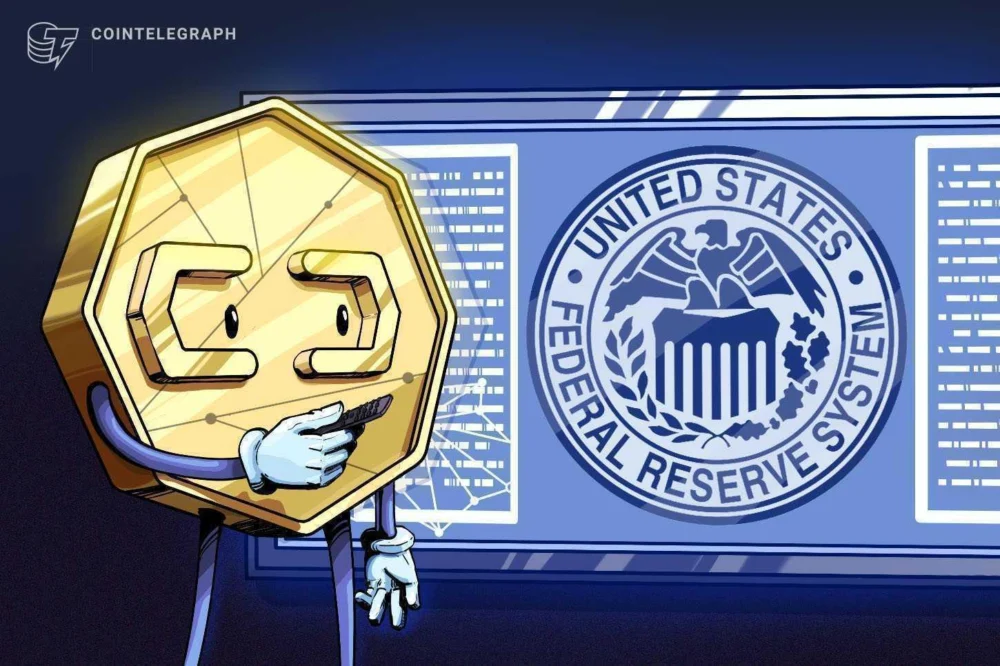
A US federal court has delivered a definitive blow to Custodia Bank, rejecting its final appeal to challenge the Federal Reserve’s authority in granting master accounts. This decision effectively ends the Wyoming-chartered, crypto-focused bank’s protracted five-year quest for direct access to the central bank’s crucial payment system, marking a significant moment for the nascent digital asset banking sector and the broader regulatory landscape. The US Court of Appeals for the Tenth Circuit, in a 7-3 vote announced in a filing on Friday, declined to hear Custodia’s final bid for a rehearing en banc on the pivotal issue of the Federal Reserve’s discretion over these vital accounts. This ruling reinforces the Federal Reserve’s stance on its gatekeeping role, while simultaneously igniting renewed debate over fair access for innovative financial institutions, particularly those operating in the cryptocurrency space.
The Indispensable Nature of a Master Account and Custodia’s Protracted Pursuit
For any bank, a master account at the Federal Reserve is not merely a convenience; it is, as one dissenting judge emphatically argued, "indispensable" for day-to-day operations. This direct access allows financial institutions to hold reserves directly at the Federal Reserve, thereby bypassing commercial intermediary banks. Crucially, it provides direct connectivity to the Fedwire Funds Service, the primary real-time gross settlement system for interbank transfers in the United States, and other critical Federal Reserve services. Without a master account, a bank must rely on correspondent banking relationships with larger institutions that do possess one, incurring additional costs, potential delays, and introducing an extra layer of systemic risk and operational dependency. For a bank like Custodia, which was specifically established to serve the digital asset industry, direct access was envisioned as a cornerstone of its business model, enabling it to offer robust and efficient settlement services for its institutional clients without the traditional friction points inherent in multi-party transactions involving legacy banking infrastructure.
Custodia Bank, initially known as Avanti Bank & Trust, first applied for a master account in October 2020. At that time, the landscape for crypto-native financial institutions was still largely undefined, with regulators grappling with how to integrate novel technologies and business models into existing frameworks. Custodia, having secured a special purpose depository institution (SPDI) charter from Wyoming – a state that has actively sought to attract blockchain and crypto businesses – believed it met the criteria for direct Fed access. The SPDI charter was specifically designed to allow institutions to custody digital assets and provide banking services to crypto companies, operating under a robust regulatory framework tailored for these activities. The bank’s argument was rooted in the Monetary Control Act of 1980, which, it contended, entitles all state-chartered banks to access Fed services, including a master account, without arbitrary denial. This act was intended to promote competition and efficiency in the financial system by ensuring all depository institutions had equitable access to Federal Reserve services.
A Tumultuous Timeline: From Initial Hope to Final Rejection
Custodia’s journey through the regulatory and judicial labyrinth has been a saga spanning half a decade, characterized by initial encouragement, subsequent delays, and ultimately, a series of legal setbacks.
- October 2020: Custodia (then Avanti) submits its application for a master account to the Federal Reserve Bank of Kansas City. This application was a critical step for the newly chartered SPDI, essential for its operational viability and its promise to bridge traditional finance with the burgeoning digital asset economy.
- January 2021: In a moment that offered significant hope, the Federal Reserve Bank of Kansas City reportedly indicated to Custodia that it was eligible for a master account and that there were "no showstoppers" with its application. This informal assurance suggested that the path to approval was clear, leading Custodia to proceed with its operational build-out with the expectation of imminent direct access.
- 2021-2022: Despite the initial positive signals, the application languished without a definitive decision. The delay became a source of increasing frustration for Custodia, hindering its ability to fully execute its business model and serve its target clientele effectively.
- June 2022: After nearly two years of waiting, Custodia filed a lawsuit against the Federal Reserve Board of Governors and the Federal Reserve Bank of Kansas City. The lawsuit sought to compel the Fed to process its master account application, arguing that the prolonged delay amounted to a de facto denial and violated the Administrative Procedure Act and the Monetary Control Act. Custodia asserted that the Fed lacked the discretion to indefinitely withhold a master account from a duly chartered bank.
- January 2023: The Federal Reserve officially denied Custodia’s master account application. The Board of Governors cited concerns about the bank’s novel business model and the associated risks to the financial system. Specifically, the Fed noted Custodia’s focus on digital assets, its proposed use of blockchain technology, and its lack of a robust track record as a financial institution. This formal denial solidified Custodia’s legal battle, shifting it from compelling a decision to challenging the denial itself.
- 2023: Multiple lower courts ruled against Custodia, consistently upholding the Federal Reserve’s broad discretion in granting or denying master accounts. These rulings emphasized that while the Monetary Control Act requires the Fed to provide services to all depository institutions, it does not mandate the automatic granting of a master account, allowing the Fed to assess an institution’s risk profile and compliance with supervisory expectations.
- Early 2024: Custodia pursued its final appeal, seeking a rehearing en banc (before the full court) at the US Court of Appeals for the Tenth Circuit. The bank hoped that a broader panel of judges would reconsider the legal arguments regarding the Fed’s discretion and the interpretation of the Monetary Control Act.
- March 2024: The Tenth Circuit, in a 7-3 vote, rejects Custodia’s request for a rehearing, effectively bringing its five-year legal and regulatory battle to a conclusive end.
The Dissenting Voices: "Akin to a Death Sentence"
While the majority of the Tenth Circuit judges sided with the Federal Reserve, the dissenting opinion penned by Judge Timothy Tymkovich offered a stark and powerful critique of the ruling and the implications of denying master accounts. Judge Tymkovich, joined by two other judges, argued vehemently that the majority’s interpretation granted the Federal Reserve an overly broad and effectively unchecked power, undermining the legislative intent of the Monetary Control Act.
In his dissent, Judge Tymkovich wrote, "A master account is ‘indispensable’ for a bank’s operations, and being denied one is ‘akin to a death sentence.’" This statement underscores the profound impact of the Federal Reserve’s decision on a bank’s viability. Without direct access, a bank like Custodia is relegated to a second-tier status, dependent on intermediary banks that may themselves be hesitant to partner with crypto-focused entities due to perceived regulatory risks or internal policies. This indirect access can lead to higher operational costs, reduced efficiency, and limitations on the types of services that can be offered, effectively stifling competition and innovation.
Judge Tymkovich further highlighted the initial positive signals Custodia received. He noted that just three months after Custodia’s application in October 2020, the Federal Reserve Bank of Kansas City had indicated that Custodia was eligible and that there were "no showstoppers" with its application. This initial encouragement, followed by a prolonged delay and eventual denial, formed a key part of the dissent’s argument that the Fed’s actions were arbitrary and inconsistent. "I do not agree that Reserve Banks have discretion over account applications and would have allowed the mandamus claim to go forward," Tymkovich asserted, arguing that the courts should have compelled the Fed to act rather than allowing it to exercise what he perceived as unbridled discretion. The dissent implies that the Fed’s actions might reflect a policy choice to disfavor crypto-related businesses rather than a strictly neutral application of existing rules, echoing broader industry concerns about an "Operation Chokepoint 2.0" scenario.
A Contrasting Narrative: Kraken’s "Skinny" Success
The final rejection for Custodia comes amidst a curious and contrasting development in the crypto banking sphere: the approval of a master account for Kraken, a prominent cryptocurrency exchange. On March 4, Kraken became the first crypto platform to receive a master account from the Federal Reserve Bank of Kansas City, the same regional Fed bank that handled Custodia’s application. This development, while seemingly positive for the crypto industry, also highlights the nuanced and often inconsistent approach of regulators.
Kraken’s master account, however, is characterized as a "skinny" or limited master account. It enables Kraken to connect directly to the Fedwire payments system, allowing for real-time settlement of transactions without relying on intermediary banks. This is a significant step, as it streamlines operations and reduces counterparty risk for Kraken’s institutional clients. However, it does not include the full range of services typically available to traditional banks, such as direct access to the discount window for emergency liquidity or participation in all Federal Reserve lending programs. This distinction suggests a cautious and tailored approach by the Fed, willing to grant limited access for specific payment functions while holding back on broader banking privileges due to the perceived risks associated with the crypto sector.
The approval for Kraken, despite its limited nature, had initially raised hopes within the digital asset industry that US regulators might be opening the door to greater integration of crypto firms into the traditional financial system through these "skinny" accounts. It signaled a potential pathway for crypto-native entities to gain some level of direct access to the central bank’s infrastructure. However, Custodia’s subsequent final rejection casts a long shadow over these hopes, suggesting that the criteria for even "skinny" accounts remain stringent and that the Fed retains significant discretion in picking and choosing which firms are deemed suitable. The difference in outcomes between Custodia and Kraken may lie in their business models (Custodia as a pure-play institutional crypto bank vs. Kraken as an exchange with payment settlement needs) or the specifics of their applications and risk mitigation strategies.
Broader Implications and the Regulatory Conundrum
The Custodia ruling has profound implications for the future of crypto banking in the United States and the broader regulatory environment.
- Reinforcement of Fed’s Discretion: The primary outcome is the judicial affirmation of the Federal Reserve’s broad discretion in granting master accounts. This means that even state-chartered banks that meet certain criteria cannot automatically assume direct access to the central bank’s payment systems. The Fed can continue to use its judgment to assess risks, including those associated with novel business models like crypto banking, without immediate judicial oversight compelling approval.
- Chilling Effect on Crypto Innovation: The "death sentence" argument by Judge Tymkovich resonates deeply within the crypto industry. If direct access to the Fed is virtually impossible for dedicated crypto banks, it severely limits their operational efficiency and competitiveness. This could push crypto innovation and financial services offshore, or force crypto firms to continue relying on traditional banks that may be hesitant to serve them, potentially leading to a less resilient and more concentrated financial system for digital assets.
- Uncertainty for State-Chartered Banks: The ruling creates uncertainty for other state-chartered financial institutions, particularly those in states like Wyoming that have proactively created frameworks for crypto banks. The viability of these state-level initiatives is diminished if the ultimate gatekeeper, the Federal Reserve, can deny essential access.
- The "Operation Chokepoint 2.0" Debate: The case further fuels the narrative of "Operation Chokepoint 2.0," a term used by some in the crypto industry to describe an alleged coordinated effort by federal regulators to discourage banks from doing business with crypto companies. While regulators deny such a coordinated effort, the consistent denial of essential services to crypto-focused entities, combined with the encouragement of "skinny" accounts for others, contributes to the perception of a targeted de-risking strategy by traditional finance away from digital assets.
- Call for Clearer Regulatory Frameworks: The ongoing legal battles and inconsistent outcomes highlight the urgent need for clearer, more consistent, and comprehensive federal regulatory frameworks for digital assets and crypto-focused financial institutions. The current piecemeal approach, relying on existing laws and the discretion of various agencies (Fed, OCC, FDIC), leads to ambiguity, regulatory arbitrage, and prolonged legal disputes.
- Future of Crypto Banking: The ruling suggests that pure-play crypto banks seeking full Fed access face an uphill battle. Future entrants might need to adopt hybrid models, integrate more traditional banking services, or focus on niche areas that present fewer perceived risks to the Federal Reserve. The path taken by Kraken, securing a "skinny" account for specific payment functions, might become the more viable, albeit limited, model for crypto firms seeking some level of direct integration.
In conclusion, the Tenth Circuit’s rejection of Custodia Bank’s final appeal marks a significant moment in the ongoing integration — or lack thereof — of the digital asset industry into the traditional financial system. While it reaffirms the Federal Reserve’s authority, it also underscores the deep divisions within the judiciary and the industry regarding fair access and the future of financial innovation. For Custodia, it represents the end of a long and arduous battle, leaving its future, and indeed the future of similar crypto-focused banking initiatives, in a state of precarious uncertainty. The broader implication is a reinforced message that the path to direct integration with the US central bank’s payment systems for crypto firms remains exceptionally narrow and subject to the discretionary powers of federal regulators, demanding either legislative clarity or a significant shift in regulatory policy to foster a more inclusive financial ecosystem for digital assets.