admin
admin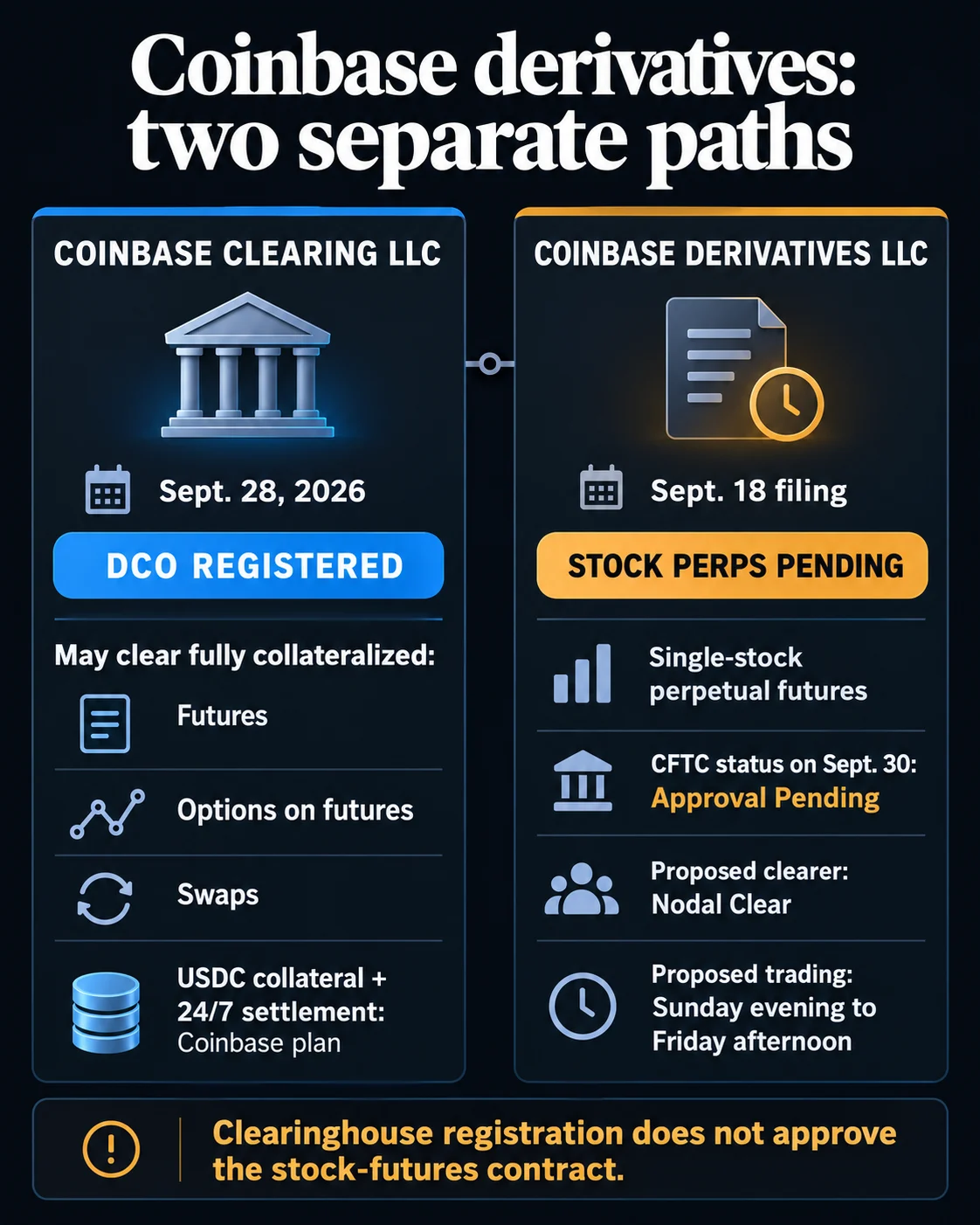
Coinbase, the preeminent US-based cryptocurrency exchange, has achieved a significant regulatory milestone by securing approval from the Commodity Futures Trading Commission (CFTC) for its own derivatives clearinghouse, Coinbase Clearing LLC. This strategic move effectively completes the company’s vertically integrated US derivatives trading infrastructure. The registration, finalized on September 28, grants Coinbase the authority to clear fully collateralized futures, options on futures, and swaps, bringing a crucial function in-house that was previously reliant on third-party clearing partners.
The establishment of Coinbase Clearing LLC marks the culmination of a multi-year effort by the exchange to build a comprehensive regulated derivatives ecosystem within the United States. With this approval, Coinbase now operates across the three foundational layers of the US derivatives market: Coinbase Financial Markets, which serves as a futures commission merchant (FCM); Coinbase Derivatives, functioning as a designated contract market (DCM); and now, Coinbase Clearing, acting as a registered clearinghouse. This end-to-end control over its derivatives operations is projected to streamline product development and enhance operational efficiency.
A Phased Approach to Derivatives Expansion
The immediate scope of Coinbase Clearing’s operations will focus on fully collateralized contracts. The exchange has highlighted the potential advantages of its clearinghouse, including the use of its stablecoin, USDC, as collateral and the provision of 24-hour settlement capabilities. This offering is particularly attractive for products designed for always-on markets, a characteristic often associated with digital asset trading. By internalizing this clearing function, Coinbase aims to shorten product development cycles and reduce its dependence on external entities for eligible contracts. The company anticipates that this enhanced infrastructure will foster more efficient operations and provide greater agility in introducing new regulated derivatives products over time.
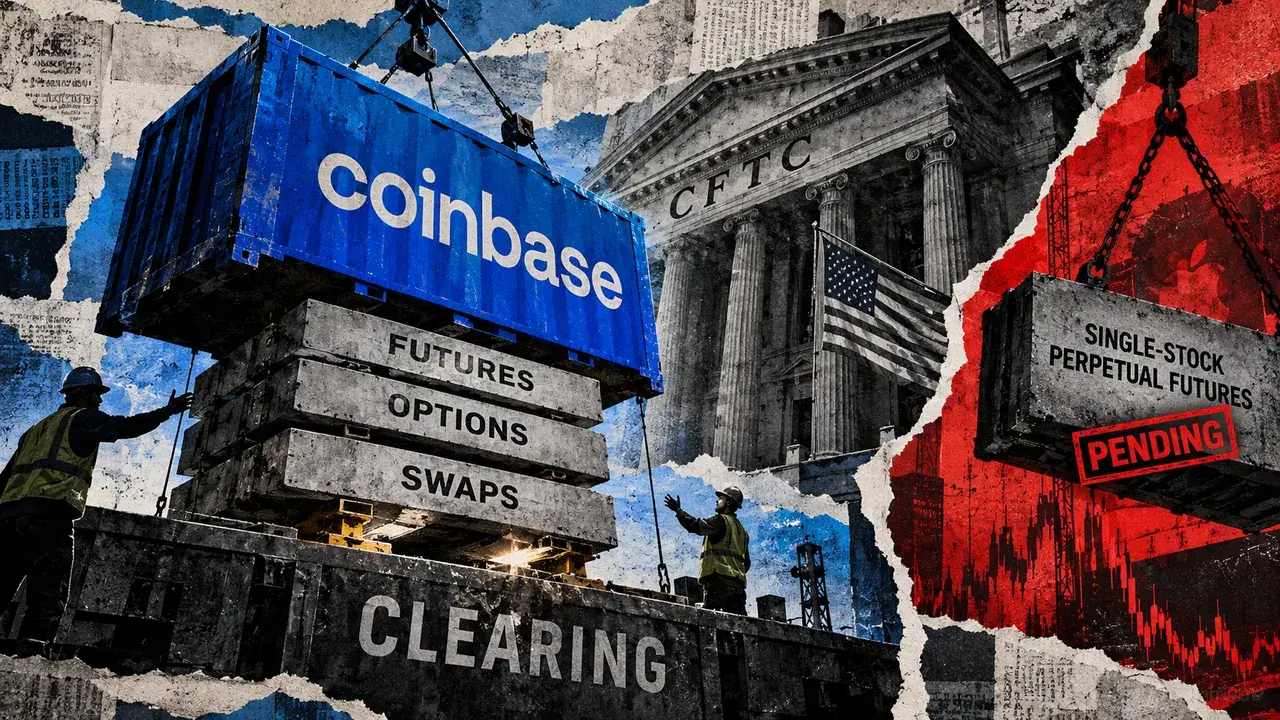
However, it is important to note that one of Coinbase’s most ambitious planned products, the single-stock perpetual futures, will initially operate outside of this newly established integrated clearing structure. These highly anticipated contracts, designed to track the performance of individual equities and exchange-traded funds, are still undergoing separate regulatory review by the CFTC. Despite the clearinghouse approval, these margined derivatives will continue to rely on existing third-party clearing partners for the foreseeable future.
Timeline of Developments
The journey towards this integrated derivatives stack has been a deliberate and phased process for Coinbase. The company began laying the groundwork for its US derivatives business several years ago, with a strategic vision to offer a regulated and robust platform for institutional and retail investors.
- Early Stages and Partner Reliance: Initially, Coinbase relied on established clearinghouses and FCMs to facilitate its derivatives offerings. This allowed the company to test the market and gauge demand for crypto-related derivatives.
- Establishment of Coinbase Financial Markets and Coinbase Derivatives: The formation of Coinbase Financial Markets as an FCM and Coinbase Derivatives as a DCM represented significant steps towards greater control and regulatory compliance. These entities were crucial for offering futures and options on crypto assets within the US regulatory framework.
- The Push for In-House Clearing: The ambition to establish its own clearinghouse, Coinbase Clearing LLC, was a strategic imperative to achieve true vertical integration. This move required extensive preparation, including building the necessary technological infrastructure, developing robust risk management protocols, and navigating the rigorous approval process with the CFTC.
- CFTC Approval of Coinbase Clearing: The September 28th registration of Coinbase Clearing LLC as a derivatives clearing organization by the CFTC is the most recent and significant development. This approval enables Coinbase to clear fully collateralized futures, options on futures, and swaps, directly impacting the operational efficiency and product innovation capabilities for these specific contract types.
- Pending Approval for Stock Perpetuals: Concurrently, Coinbase’s proposal for single-stock perpetual futures, filed on September 18th, continues to be under review. The CFTC’s product record for Coinbase Derivatives indicated the "Approval Pending" status for these contracts as of September 30th. The exchange had expressed its intention to list these contracts shortly after receiving approval, contingent on meeting any additional regulatory requirements.
The Nuances of Stock Perpetual Futures
The distinction between the approved clearinghouse function and the pending stock perpetual futures is critical for understanding Coinbase’s current derivatives landscape. While Coinbase Clearing is authorized to clear fully collateralized contracts, the proposed single-stock perpetual futures are margined products. This distinction often necessitates different clearing arrangements and regulatory considerations.
The filing for the single-stock perpetual futures contract specifically names Nodal Clear LLC, rather than Coinbase Clearing, as the proposed central counterparty. This indicates that even if approved, these particular contracts will initially utilize an external clearing mechanism. Furthermore, the proposed trading window for these equity-linked perpetuals is from Sunday evening to Friday afternoon, contrasting with the 24/7 settlement capability that Coinbase is promoting for its new clearing infrastructure.
The structure of these perpetual futures contracts is noteworthy. They are designed to be cash-settled, meaning that upon settlement, the difference in value between the contract and the underlying asset is paid in cash rather than the physical delivery of the asset itself. This mechanism avoids the complexities of physical delivery for stocks and ETFs. Crucially, perpetual futures do not have a fixed expiration date, unlike traditional futures contracts. Instead, they employ periodic funding payments. These payments are exchanged between traders who hold long and short positions, incentivizing the contract’s price to remain closely aligned with the spot price of the underlying equity.
The representative contract for this product line is slated to be based on Apple (AAPL) shares, a highly liquid and widely recognized stock, serving as a benchmark for the proposed product. The inclusion of exchange-traded funds (ETFs) in the proposal suggests a broader strategy to offer diversified exposure to various market segments through these innovative derivatives.
Broader Impact and Strategic Implications
The CFTC’s approval of Coinbase Clearing represents a significant stride for the company in solidifying its position in the regulated financial markets. By owning its clearing infrastructure for fully collateralized derivatives, Coinbase gains enhanced control over its product lifecycle, risk management, and operational costs. This vertical integration is a testament to Coinbase’s commitment to building a comprehensive and compliant trading platform that can cater to a wider range of institutional and sophisticated retail clients.
The ability to offer 24-hour settlement for collateralized products, particularly utilizing USDC, could be a game-changer in a market that often operates around the clock. This feature aligns with the inherent nature of digital asset markets and offers a compelling proposition for participants seeking continuous trading opportunities and efficient settlement processes.

The pending approval of single-stock perpetual futures, however, highlights the complexities of regulatory oversight for novel financial products. While Coinbase has demonstrated its capacity to meet stringent clearinghouse requirements, the margined nature of perpetual futures and their potential impact on market stability are likely factors influencing the CFTC’s review. The inclusion of external clearing for these specific products, even if approved, suggests that Coinbase is adopting a pragmatic approach, prioritizing market access while continuing to work towards full integration where feasible and strategically advantageous.
The bifurcation of infrastructure for different derivative types – in-house clearing for fully collateralized products and external clearing for margined stock perpetuals – allows Coinbase to strategically advance its derivatives business on multiple fronts. It demonstrates a dual approach: capitalizing on immediate regulatory approvals to build foundational capabilities while simultaneously pursuing more complex and potentially lucrative product offerings that require further regulatory engagement.
The successful launch and subsequent performance of these single-stock perpetual futures, should they receive approval, could represent a substantial expansion of Coinbase’s derivatives offerings. This product category has seen significant traction in other global markets and could attract a new wave of traders and investors to Coinbase’s platform. The decision to use Apple as the initial representative contract is a strategic choice, leveraging the stock’s high liquidity and investor interest to test and refine the product’s mechanics and market reception.
Future Outlook
The next critical regulatory milestone for Coinbase in the derivatives space remains the approval of its single-stock perpetual futures. If greenlit by the CFTC, this would unlock a significant new revenue stream and solidify Coinbase’s position as a key player in equity-linked derivatives. However, the company’s ability to eventually migrate these margined products to its own clearing infrastructure will be a key indicator of its long-term strategic success and its capacity to achieve comprehensive vertical integration across its entire derivatives business.
Coinbase’s strategic maneuvering underscores a broader trend in the digital asset industry: a deliberate and increasing engagement with traditional financial market structures and regulations. By building out its regulated derivatives stack, Coinbase is not only enhancing its own product offerings but also contributing to the maturation and mainstream acceptance of digital assets and related financial instruments. The company’s progress suggests a forward-looking strategy focused on building robust, compliant, and diversified financial services for a rapidly evolving market.