admin
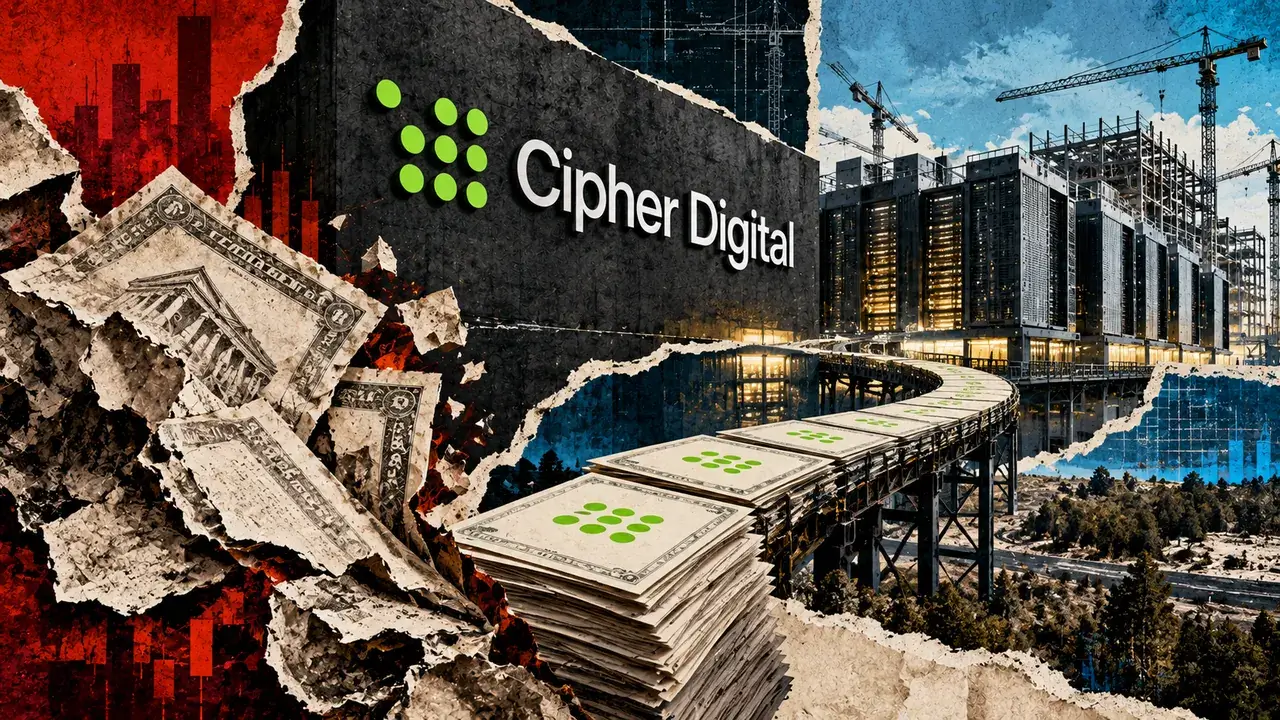
Cipher Digital shares experienced a significant downturn following the company’s announcement of issuing 40.7 million shares and securing $850 million in new debt to fuel its ambitious expansion into artificial intelligence (AI) infrastructure. The dual financial maneuvers, aimed at deleveraging existing debt and financing future growth, have heightened investor apprehension regarding the company’s strategic pivot and its impact on its balance sheet.
Data from financial markets indicates that Cipher Digital’s stock closed at $8.98 on October 16th, marking a 10.6% decline for the trading session and reaching its lowest point since September 2025. Over the preceding year, the company’s stock has seen a precipitous drop of over 52%, a trend that underscores growing concerns about its valuation as it embarks on a costly transformation from a dedicated Bitcoin miner to a provider of high-performance computing (HPC) infrastructure. This strategic shift positions Cipher Digital to capitalize on the burgeoning demand for AI-driven computational power, but it also introduces substantial financial complexities.
The company’s recent SEC filing on October 16th revealed the completion of an exchange transaction involving approximately $165.9 million in convertible notes originally due in 2030. In exchange for these notes, including accrued interest, Cipher Digital issued 40.7 million newly minted common shares. This transaction effectively extinguishes the majority of this specific debt series, leaving a residual balance of roughly $6.6 million. However, it also concurrently expands the company’s outstanding share count, leading to immediate dilution for existing shareholders.
This debt-for-equity swap occurred amidst a sharp market selloff for Cipher Digital, which had already seen its per-share market value diminish by approximately 31% since October 12th. The influx of new shares into the market, held by former bondholders, presents a potential for further selling pressure. These investors, now holding equity, may opt to liquidate their positions or unwind hedging strategies associated with their original debt holdings, thereby exacerbating the downward pressure on the stock price.
In parallel to the debt retirement, Cipher Digital simultaneously completed a separate $850 million convertible bond offering on the same day, October 16th. This substantial new borrowing increases the company’s overall debt obligations as it accelerates its investments in data centers specifically engineered to support AI workloads. These transactions collectively add approximately $684 million to Cipher Digital’s outstanding debt principal, alongside the immediate dilution of its equity base. This financial restructuring places a heightened emphasis on the company’s capacity to generate robust returns from its rapidly expanding infrastructure portfolio to service its increased financial commitments.
AI Expansion’s Strain on Cipher’s Balance Sheet
The newly issued convertible notes mature in November 2032 and are structured to carry no regular interest payments. This feature is designed to provide Cipher Digital with greater financial flexibility, allowing it to fund its extensive development projects without an immediate increase in coupon expenses. This approach is common for companies undertaking significant capital expenditure projects, aiming to defer interest costs until the revenue-generating capacity of the new assets is fully realized.
However, a crucial aspect of these notes is the provision that allows holders to demand cash repayment in November 2030, subject to specified conditions. This clause introduces a potential refinancing obligation for Cipher Digital well before the notes’ scheduled maturity date, creating a significant financial hurdle if market conditions are unfavorable or if the company’s financial performance has not met expectations.
The securities are also convertible at an initial price of approximately $15.31 per share, a figure that stands substantially above Cipher Digital’s most recent closing stock price. To mitigate the potential for significant dilution stemming from future conversions, the company has engaged in capped-call transactions. These transactions, which cost approximately $89.7 million, are intended to limit the dilution impact on shareholders by providing protection up to an initial share price of $28.35. This strategy aims to balance the benefits of convertible debt financing with the need to protect existing equity value.
Cipher Digital anticipates gross proceeds of approximately $835.1 million from the convertible bond offering, after accounting for initial purchaser discounts and commissions, and before deducting offering expenses. Following the costs associated with the capped-call transactions, the remaining capital is earmarked for further investment in its Barber Lake facility, alongside other high-performance computing developments and the acquisition of new sites.
This significant capital expenditure is part of Cipher Digital’s broader strategy to diversify its revenue streams away from the volatile Bitcoin mining sector. The company aims to establish recurring revenue by leasing its advanced infrastructure to major computing clients, thereby creating a more stable and predictable financial model. This pivot reflects a wider trend among some Bitcoin mining companies that are seeking to leverage their existing infrastructure and energy expertise for the rapidly growing AI market.
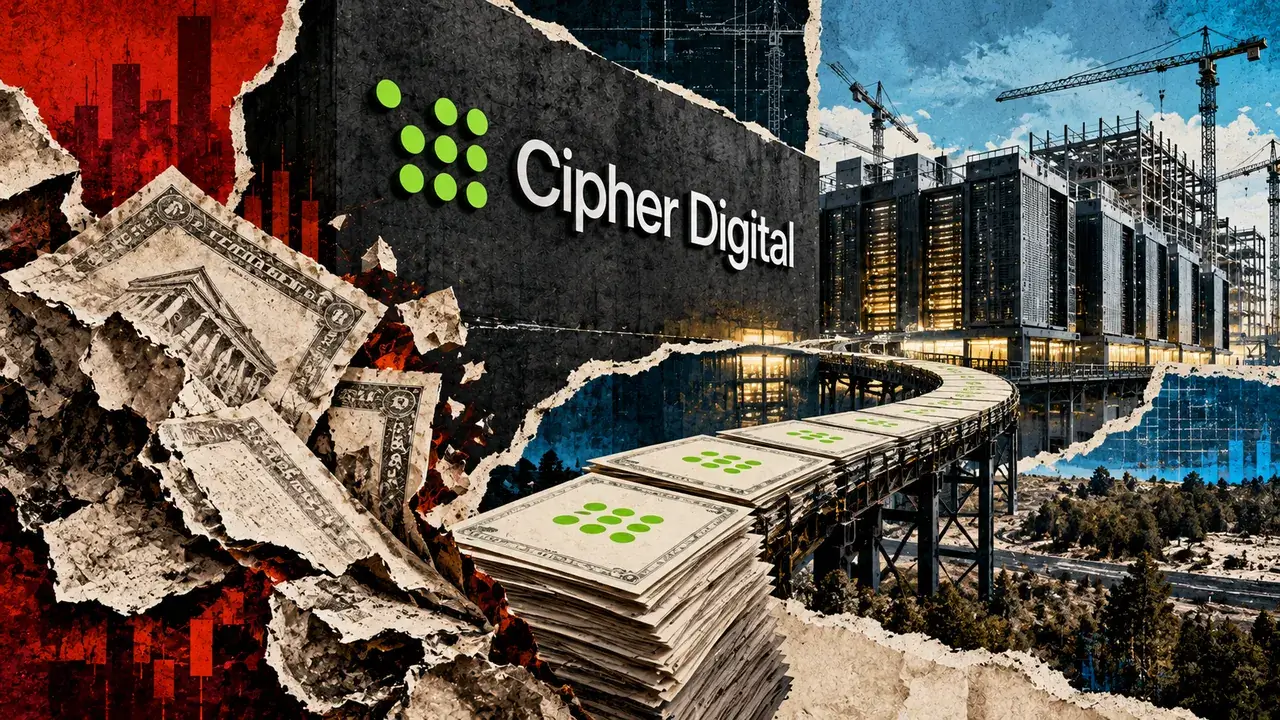
In its business update for the second quarter of 2026, released in August, Cipher Digital reported revenues of approximately $25 million and an adjusted EBITDA loss of $30 million. These figures highlight the considerable gap between the company’s current operational profitability and the substantial capital required to execute its ambitious expansion plans. The substantial operating loss underscores the immediate challenge of generating sufficient cash flow from existing operations to support ongoing and future development.
Despite these financial headwinds, Cipher Digital achieved a significant operational milestone by commencing capacity delivery at its Black Pearl data center in August, two months ahead of its projected schedule. This early operational launch has begun generating initial rental payments from its hyperscale tenant, providing a tangible early commercial foundation for its AI strategy. This development offers a positive signal regarding the company’s ability to execute its infrastructure projects and secure tenants.
However, the escalating financing commitments, coupled with the ongoing need for substantial capital investment, intensify the pressure on Cipher Digital to successfully complete additional projects and convert contracted capacity into consistent cash flow. The company is actively progressing with construction at its Barber Lake and Stingray sites and is simultaneously expanding its development pipeline for future projects. With the latest convertible offering now complete, the market will closely monitor whether the new rental income generated from its operational data centers can adequately support these considerable financial commitments, particularly before the convertible note holders gain the right to demand cash repayment in 2030. The success of this strategy hinges on the company’s ability to scale its AI infrastructure efficiently and attract and retain high-value clients in a competitive market.
Background and Chronology of Cipher Digital’s Strategic Shift
Cipher Digital’s journey into the AI infrastructure domain represents a calculated response to evolving market dynamics and technological advancements. Originally established as a Bitcoin mining operation, the company, like many of its peers, has faced increasing pressure from fluctuating cryptocurrency prices, evolving regulatory landscapes, and the ongoing need for substantial capital investment in energy-efficient mining hardware. The emergence of artificial intelligence as a transformative technology, with its insatiable demand for computational power, presented a compelling alternative and complementary business opportunity.
The timeline of this strategic pivot can be traced back to earlier initiatives where Bitcoin miners began exploring the dual use of their specialized hardware and abundant energy resources for tasks beyond mining. This exploration gained momentum as the AI revolution accelerated, highlighting the critical need for large-scale data centers equipped with advanced GPUs and robust cooling systems.
Early 2024: Cipher Digital, along with other Bitcoin mining companies, began publicly exploring potential diversification strategies into areas such as AI and high-performance computing. This period was characterized by feasibility studies and initial discussions with potential partners and clients in the AI sector.
Mid-2024: The company announced more concrete plans to transition into AI infrastructure, emphasizing its existing strengths in energy management and site development. Initial agreements for data center space were likely being negotiated during this phase, laying the groundwork for future revenue streams.
Late 2024 – Early 2025: Cipher Digital commenced significant capital expenditure on new data center development projects, such as Barber Lake and Stingray, specifically designed to accommodate AI workloads. This phase would have involved securing land, obtaining permits, and initiating construction. The company also likely began engaging in more formal discussions with potential hyperscale tenants.
August 2026: Cipher Digital provided a business update, reporting Q2 2026 revenues and an adjusted EBITDA loss. This update also highlighted the commencement of capacity delivery at its Black Pearl data center, two months ahead of schedule, and the initiation of rental payments from its hyperscale tenant. This marked a crucial step in operationalizing its AI strategy.
October 16, 2026: The company executed two major financial transactions:
- Debt Retirement: Exchange of approximately $165.9 million in convertible notes due 2030 for 40.7 million common shares. This action aimed to deleverage the balance sheet by eliminating a significant portion of its outstanding debt.
- New Financing: A $850 million convertible bond offering. This injection of capital is intended to fund further expansion and development of its AI-focused data center infrastructure.
These events signify a critical juncture for Cipher Digital, where its strategic aspirations are now intrinsically linked to its ability to manage a complex financial structure and deliver on its operational promises in the highly competitive AI infrastructure market.

Supporting Data and Market Context
The demand for AI-powered computing infrastructure is experiencing exponential growth. Major technology companies and startups are investing billions in developing AI models and applications, which require vast amounts of processing power. This demand translates directly into a need for specialized data centers capable of housing and operating high-density GPU clusters.
According to market research firms, the global AI infrastructure market is projected to reach hundreds of billions of dollars in the coming years. This growth is fueled by advancements in machine learning, deep learning, and natural language processing, all of which necessitate powerful and efficient computing resources. Bitcoin miners, with their existing expertise in managing large-scale energy consumption and data center operations, are uniquely positioned to tap into this market.
However, the capital requirements for building and operating these AI-ready data centers are substantial. The cost of high-performance GPUs, advanced cooling systems, and secure, reliable power infrastructure can be prohibitive. This necessitates significant financial backing, often through debt financing, equity issuance, or a combination of both.
Cipher Digital’s move to secure $850 million in new funding underscores the scale of investment required. The convertible bond structure offers a way to raise capital with deferred interest costs, but it also introduces the potential for future dilution and refinancing obligations. The company’s decision to pursue this financing route reflects a strategic assessment of the market opportunity and its capacity to generate sufficient returns to service its debt and satisfy equity holders.
The valuation of companies in the AI infrastructure space is increasingly being judged not only on their current revenues but also on their growth potential, contracted capacity, and the long-term demand for their services. Cipher Digital’s stock performance, which has seen a significant decline, suggests that investors are scrutinizing the execution risk associated with its ambitious expansion plans and the potential impact of increased leverage on its financial stability. The 52% drop in its stock price over the past year indicates a market repricing of the company’s risk profile.
Analysis of Implications
Cipher Digital’s strategic maneuvers present a dual-edged sword. On one hand, the company is positioning itself to capitalize on the immense growth potential of the AI infrastructure market, a sector poised for sustained expansion. By leveraging its existing operational expertise and infrastructure, Cipher Digital aims to build a diversified and resilient business model that is less susceptible to the volatility of the cryptocurrency market. The early operational success at its Black Pearl data center and the securing of a hyperscale tenant are positive indicators of its ability to execute this strategy.
On the other hand, the significant increase in debt and shareholder dilution introduces considerable financial risks. The $850 million convertible bond offering substantially increases the company’s leverage. While the absence of immediate interest payments offers some breathing room, the potential for bondholders to demand early repayment in 2030 poses a significant future financial challenge. Investors will be closely watching Cipher Digital’s ability to generate consistent and substantial cash flows from its AI infrastructure to service this debt and meet its obligations. The company’s current adjusted EBITDA loss indicates that it is still in an investment phase, and bridging the gap between expenditure and profitability will be critical.
The capped-call transactions are a prudent measure to protect existing shareholders from excessive dilution should the stock price rise significantly and conversions occur. However, the substantial cost of these transactions ($89.7 million) further adds to the capital outlay.
The market’s reaction, evidenced by the significant drop in Cipher Digital’s stock price, reflects a cautious investor sentiment. The decline suggests that investors are weighing the long-term growth prospects against the near-term financial pressures and execution risks. The company’s ability to successfully develop and monetize its AI data centers, attract and retain high-paying clients, and manage its debt obligations will be paramount in determining its future success. The coming years will be a critical test of Cipher Digital’s strategic vision and its financial discipline. The company’s performance will serve as a case study for other Bitcoin miners contemplating similar diversification strategies into the capital-intensive AI infrastructure market.