admin

The cryptocurrency world experienced a turbulent week marked by a high-profile arrest, escalating debates over hardware wallet security, and significant advancements in quantum computing that could reshape blockchain’s future. The market saw a substantial decline in a major altcoin following its founder’s detention in Turkey, while a leading hardware wallet provider faced scrutiny over past security lapses even as it unveiled a new, highly secure device. Meanwhile, the looming threat of quantum supremacy prompted a prominent Layer 2 solution to consider a radical shift to become a post-quantum Layer 1.
HEX Founder Richard Heart Detained in Istanbul, Market Cap Plummets by $246 Million
The cryptocurrency HEX witnessed a dramatic erosion of its market capitalization this week, plummeting by $246 million, after its controversial founder, Richard Schueler – widely recognized as Richard Heart – was detained by Turkish authorities in Istanbul on October 14. The token’s market cap fell sharply from an estimated $561 million to $315 million following news of his arrest, sending shockwaves through the HEX and PulseChain communities.
Background and Allegations
Richard Schueler, known for his flamboyant personality and strong advocacy for HEX, a cryptocurrency he launched in 2019, has long been a polarizing figure in the crypto space. HEX operates as a certificate of deposit on the blockchain, promising high returns for staking tokens over time. Schueler also founded PulseChain, a fork of Ethereum designed to complement HEX. His projects have attracted both fervent supporters and vocal critics, with debates often centered on their economic models and the founder’s perceived influence.
Turkish Justice Minister Akın Gürlek confirmed details of the raid, stating that police seized $7.15 million in cash, alongside a cache of firearms and ammunition during an early morning operation in Istanbul’s Beşiktaş district. The raid was part of a broader investigation that included searches of 15 related addresses, indicating a comprehensive law enforcement effort. Further reports from the Anadolu news agency revealed that authorities impounded nine luxury vehicles registered to Schueler’s wife, as well as 28 watches, 300 bags, and 19 graphics cards, suggesting a substantial accumulation of assets.
The detention comes two years after Interpol issued a "Red Notice" for Schueler, a global alert requesting law enforcement worldwide to locate and provisionally arrest a person pending extradition, surrender, or similar legal action. The Red Notice was reportedly issued at the behest of Finnish authorities, who sought his arrest over allegations of tax fraud and assault. A spokesperson for Finland’s National Bureau of Investigations, however, declined to comment on the ongoing matter, adhering to standard protocol for active investigations.
Legal and Community Fallout
Turkish media, referring to Schueler by the moniker “Whale James,” have also linked him to a purported $1 billion unregistered securities offering in the United States. This specific case, however, was dismissed by a U.S. judge in February 2025, adding a layer of complexity to the legal landscape surrounding Schueler. Despite the dismissal of the U.S. securities case, the Interpol Red Notice and the current detention in Turkey suggest a persistent and multi-jurisdictional legal challenge.
The visual aftermath of the raid quickly became a focal point on social media. Images circulating in Turkish media purportedly showed a surprised Heart, reportedly without trousers and with the lower half of his body blurred, a detail that ignited considerable "merriment" and discussion across platforms. Eric Wall, a prominent critic of HEX who has previously engaged in public debates with Schueler, initially expressed skepticism, believing the image to be AI-generated, but later stated his conviction that it was authentic. Cointelegraph noted it could only verify the image’s circulation, not its alteration status. The incident spurred further commentary, with one social media user quipping, "I’m pretty much certain I died in a plane crash in 2015 and ever since that day I am still only alive in a fringe reality where everything is designed to be as funny as possible."
Despite the widespread reporting, some HEX supporters maintain that authorities have yet to formally confirm if Schueler has been officially arrested or charged, highlighting the ongoing uncertainty within the community. The dramatic events underscore the inherent risks and regulatory challenges associated with founder-centric cryptocurrency projects, where the actions and legal status of a single individual can profoundly impact the entire ecosystem and investor confidence. The market’s sharp reaction to Heart’s detention serves as a stark reminder of the volatile nature of the crypto space, particularly for projects heavily reliant on their charismatic, yet often controversial, leaders.
Ledger Unveils Atom Wallet Amidst Tampering Scandal and Industry Backlash
Ledger, the prominent French hardware wallet manufacturer, found itself in a challenging position this week, simultaneously battling a public relations crisis stemming from compromised devices and attempting to regain trust with the unveiling of its new, highly secure hardware wallet, Atom. The new device was introduced on Thursday, just days after Ledger confirmed that a batch of wallets sold through a reseller in Asia contained malicious implants, leading to significant financial losses for users.
The Atom: A New Standard in Security?

The newly introduced Atom is priced at $849 and represents Ledger’s ambitious attempt to set a new standard for hardware wallet security. Designed with a smartphone-like aesthetic, Atom aims to seamlessly integrate crypto wallet functionalities with everyday applications. A key innovation in its architecture is the separation of Android applications from sensitive wallet operations, creating a more secure environment for managing digital assets.
Ledger claims that Atom includes advanced protections specifically engineered to thwart the type of malicious implants discovered in the recent Asia incident. The device reportedly boasts the ability to detect tampering even when it is switched off, offering a robust defense mechanism against sophisticated physical attacks. Looking further ahead, Atom is slated to support cutting-edge features such as AI agent approvals, encrypted messaging, and post-quantum cryptography, highlighting Ledger’s commitment to future-proofing its security offerings. However, the device is not expected to become available until summer 2027, leaving a significant gap for users seeking immediate enhanced protection.
Escalating Controversy and Public Spat
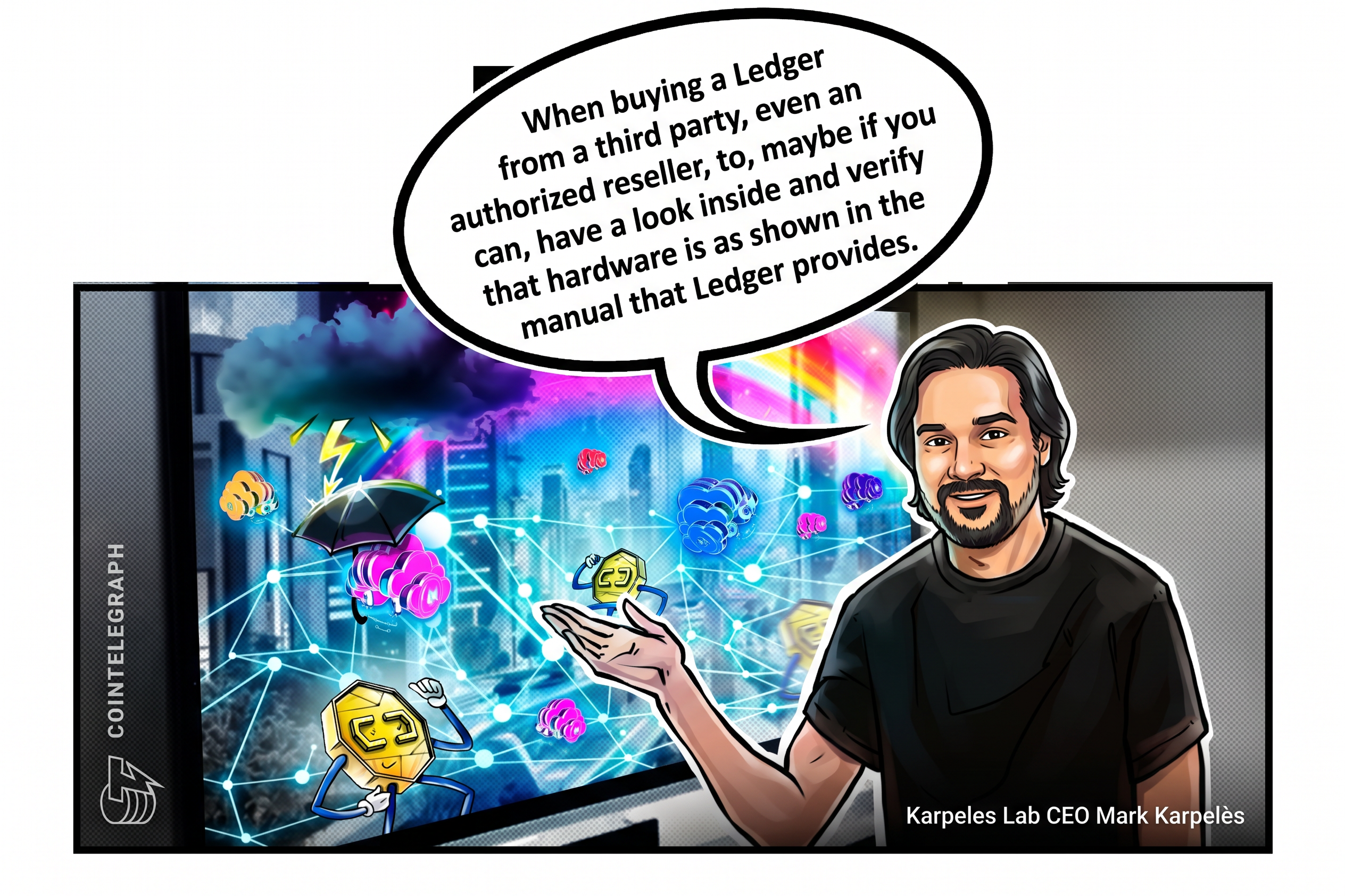
The announcement of Atom came amidst a brewing "war of words" between Ledger CEO Pascal Gauthier and Mark Karpeles, the former CEO of the infamous Mt. Gox exchange. Karpeles ignited the debate by publicly claiming that Ledger had received warnings about spyware found in tampered devices as early as December 2025. He further asserted that the company had even acknowledged the issue on its website in March 2026, suggesting a failure to act decisively to secure its reseller supply chains. The recent revelation of over $90 million stolen due to these tampered devices, which led Ledger to suspend its reseller network across Asia, lent considerable weight to Karpeles’ accusations.
Gauthier, in a sharp retort on X (formerly Twitter), dismissed Karpeles as "no white knight," drawing a direct parallel to Karpeles’ own failures leading up to the catastrophic Mt. Gox hack. This defensive stance, however, only fueled Karpeles’ criticisms. In his reply, Karpeles expressed profound disappointment, stating, "I was hoping you guys were better than that. I’ve been holding Ledger at a higher standard than what happened at MtGox, because I trusted you to do better by learning of my failure – to be better than me."
Implications for Trust and Security
The ongoing controversy and the delayed release of the Atom wallet raise critical questions about supply chain integrity, consumer trust, and the responsibility of hardware wallet manufacturers. The substantial financial losses incurred by users due to tampered devices underscore the urgent need for robust security measures not just in the devices themselves, but throughout the entire distribution network.
Analysts suggest that while the Atom wallet’s features represent a significant leap forward in security technology, its high price point and distant release date may not immediately alleviate the concerns of current Ledger users. The public exchange between Gauthier and Karpeles also highlights the deep-seated tensions and historical baggage within the cryptocurrency industry, where past failures continue to cast long shadows over present challenges. Ledger’s ability to restore its reputation and ensure the security of its existing product lines will be crucial in maintaining its market leadership in the competitive hardware wallet space.
Quantum Computing Advances Accelerate "QDay" Fears, Starknet Eyes Post-Quantum L1 Shift
The crypto world is increasingly grappling with the accelerating timeline of "QDay" – the theoretical moment when quantum computers become powerful enough to break the cryptographic algorithms underpinning modern blockchain security. Recent breakthroughs from Google and Theta Labs have intensified these concerns, prompting Starknet, a prominent Ethereum Layer 2 solution, to propose a radical transformation into a post-quantum Layer 1 blockchain.
Scientific Leaps in Quantum Computing
This week brought significant news from the quantum computing frontier. Google demonstrated a groundbreaking process dubbed "magic state cultivation" on its Willow quantum processor. This innovative technique successfully reduced quantum errors by an astonishing 40-fold, achieving a record 99.99% accuracy rate for a specialized quantum state critical for advanced calculations. Such precision is a crucial step towards building fault-tolerant quantum computers capable of solving complex problems currently intractable for classical machines.
Simultaneously, Theta Labs unveiled three novel quantum circuits that could further expedite the arrival of QDay. These circuits, according to Theta Labs, have the potential to reduce the number of qubits required to break elliptic curve cryptography (ECC) – the cryptographic backbone of most cryptocurrencies, including Bitcoin and Ethereum – by 28%. This reduction is significant, moving the estimated requirement closer than Google’s current projection of 1,175 logical qubits, which many experts already consider a conservative estimate.
The Looming Threat of AI and QDay

Beyond quantum hardware advancements, fears are growing that artificial intelligence (AI) could potentially accelerate the timeline even further. Some experts now speculate that AI, with its rapidly evolving mathematical prowess and pattern recognition capabilities, might be able to break ECC algorithms even before fully functional, large-scale quantum computers become widely available. This dual threat from both quantum computing and advanced AI has injected a new sense of urgency into the development of post-quantum cryptographic solutions.
Starknet’s Bold Pivot
In response to these escalating threats, StarkWare CEO Eli Ben-Sasson announced that Starknet has initiated a vote to transition from its current role as an Ethereum Layer 2 scaling solution to a fully post-quantum Layer 1 blockchain. Ben-Sasson articulated that Ethereum’s current post-quantum roadmap might be too slow to adequately address the imminent challenge posed by both quantum computing and advanced AI. "Quantum-proofing crypto is urgent, so we must move at lightning speed," he told Cointelegraph, underscoring the critical need for proactive measures.
The proposal has garnered overwhelming support within the Starknet community, with over 99% of votes cast to date favoring the move. While the long-term implications of such a significant architectural change are still being analyzed, the immediate market reaction to Starknet’s token (STRK) was volatile. After a strong surge last week, STRK lost almost 50% of its value this week, reflecting investor uncertainty and the inherent risks associated with such a fundamental reorientation.
Implications for Blockchain Security
Starknet’s bold decision highlights a growing divergence in strategies for addressing the quantum threat within the blockchain ecosystem. While many projects are working on post-quantum upgrades, Starknet’s move to become an independent Layer 1 suggests a belief that a faster, more agile approach is required. This development could catalyze other projects to re-evaluate their own timelines and strategies for quantum resistance. The race to implement post-quantum cryptography is no longer a distant theoretical exercise but an immediate and pressing concern for the long-term security and viability of digital assets. The coming years will likely see intense innovation and competition in this critical area of blockchain technology.
Stablecoin Market Evolution: Standard Chartered Revises Forecast, EU Embraces USDC
The stablecoin market is undergoing a significant evolution, as evidenced by a revised long-term forecast from Standard Chartered and a crucial regulatory endorsement for Circle’s USDC in the European Union. While the overall market capitalization has plateaued, underlying transaction activity suggests a maturing ecosystem driven by utility rather than speculative growth.
Standard Chartered’s Refined Outlook
Standard Chartered, a global banking giant, released an updated analysis on the stablecoin market, adjusting its projection for stablecoin market capitalization. The bank now expects the market to reach $2 trillion by 2030, pushing back its initial forecast by two years. This revision comes after the stablecoin market plateaued at approximately $309 billion this year, failing to achieve the rapid expansion previously anticipated.
Despite the stagnation in market value, Standard Chartered’s report highlighted a crucial trend: stablecoin transaction activity continues to grow. This observation suggests that existing stablecoins are circulating more frequently and being utilized in a wider array of applications, rather than new supply driving market cap growth. This shift indicates a transition from a phase primarily driven by new issuance to one characterized by increased utility and velocity of existing tokens. The increased transactional volume underscores the growing integration of stablecoins into payment systems, decentralized finance (DeFi), and cross-border remittances.
EU’s MiCA Framework and USDC’s "Significant" Status
In a landmark regulatory development for the European Union, the European Banking Authority (EBA) has officially classified Circle’s USDC stablecoin as a "significant e-money token" under the region’s comprehensive Markets in Crypto Assets (MiCA) framework. This classification is a pivotal moment for USDC and the broader stablecoin industry, as MiCA is one of the most extensive and harmonized regulatory regimes for crypto assets globally.
The "significant e-money token" designation means that USDC will be subject to heightened regulatory scrutiny and more stringent operational requirements within the EU. This includes enhanced capital requirements, robust governance structures, comprehensive risk management frameworks, and strict consumer protection measures. The EBA’s decision underscores the growing acceptance of stablecoins as a legitimate, albeit regulated, component of the financial ecosystem. Notably, this classification has only been granted to 45 projects to date, indicating the selective nature of the EBA’s assessment and the high standards required for such recognition.
Implications for Global Stablecoin Adoption
The confluence of these developments paints a picture of a stablecoin market moving towards greater maturity and regulatory clarity. Standard Chartered’s revised forecast, while more conservative on headline market cap growth, emphasizes the increasing real-world utility of stablecoins. This trend bodes well for their long-term integration into mainstream finance, as their transactional velocity becomes a more important metric than sheer market size.
The EU’s MiCA framework, and specifically the EBA’s classification of USDC, sets a precedent for how major jurisdictions will regulate stablecoins. This regulatory clarity is often viewed as a prerequisite for broader institutional adoption and greater integration with traditional financial systems. For Circle, the "significant" designation represents both a compliance challenge and a strategic advantage, positioning USDC as a trusted and regulated stablecoin within one of the world’s largest economic blocs. As other regions develop their own regulatory frameworks, the EU’s approach under MiCA will likely serve as a significant benchmark, shaping the future landscape of global stablecoin adoption and innovation.
Binance.US Seeks $1 Billion Valuation in Potential $100 Million Funding Round
Binance.US, the American affiliate of the world’s largest cryptocurrency exchange, is reportedly embarking on a new funding round aimed at raising up to $100 million. The exchange is seeking a valuation of $1 billion, a figure that represents a significant adjustment from its previous market assessment.
Funding Ambitions and Valuation Shift
According to a Bloomberg report published on Thursday, the U.S.-based crypto exchange is actively pursuing private investment to fuel its business expansion. The target of raising $100 million at a $1 billion valuation indicates a strategic move to secure capital in a challenging regulatory and market environment. This valuation, however, is notably lower than the $4.5 billion pre-money valuation Binance.US achieved in 2022 when it successfully raised $200 million in seed funding. The decrease reflects the broader shifts in the cryptocurrency market, characterized by increased regulatory scrutiny, a more cautious investor sentiment, and a re-evaluation of growth-stage crypto companies.
Navigating the U.S. Regulatory Landscape
Binance.US has faced significant hurdles in the U.S. market, largely due to intense regulatory pressures and ongoing legal challenges faced by its global parent company, Binance. The U.S. Securities and Exchange Commission (SEC) has brought enforcement actions against both Binance and Binance.US, alleging unregistered securities offerings and operating an unregistered exchange. These legal battles have undoubtedly impacted investor confidence and the exchange’s operational capabilities within the highly regulated American financial system.
The pursuit of new funding at a reduced valuation suggests that Binance.US is adapting to these realities, focusing on sustainable growth and compliance within the U.S. framework. The capital raised would likely be allocated towards strengthening its regulatory compliance infrastructure, expanding its product offerings, and potentially fending off legal costs. For investors, the $1 billion valuation, while lower than previous peaks, might be seen as a more realistic and de-risked entry point into a market that, despite its challenges, remains crucial for global crypto adoption. The outcome of this funding round will be a key indicator of investor appetite for U.S.-based crypto exchanges amidst a landscape defined by regulatory uncertainty and evolving market dynamics.
Market Performance: Winners, Losers, and a Glimmer of "Crypto Spring"
The cryptocurrency market concluded the week with mixed signals, as major assets experienced modest declines, while certain altcoins showed resilience amidst broader market volatility. However, a prominent investment firm offered an optimistic outlook, suggesting the onset of a "crypto spring."
Weekly Market Snapshot
As the week drew to a close, Bitcoin (BTC), the leading cryptocurrency, was down 3.8% to trade at $81,484. Ethereum (ETH), the second-largest by market cap, saw a 5.7% decrease, settling at $2,386. XRP (XRP) experienced a more significant drop of 8.3%, trading at $1.28. The total cryptocurrency market capitalization, according to CoinMarketCap, stood at $2.72 trillion.
Among the top 100 cryptocurrencies, a few altcoins managed to defy the downward trend. Monero (XMR) emerged as the top winner, gaining 9.7%. Injective (INJ) followed with a 5.6% increase, and Celestia (TIA) recorded a 5.1% gain. Conversely, some altcoins suffered considerable losses. Starknet (STRK) was the week’s biggest loser, plummeting by 46.7%, largely attributed to the market’s reaction to its proposed shift to a post-quantum Layer 1. Pump.fun (PUMP) fell by 27.1%, and Raydium (RAY) was down 26.5%.

Bitwise’s "Crypto Spring" Prediction
Despite the week’s fluctuations, Matt Hougan, Chief Investment Officer at Bitwise, presented a bullish assessment, arguing that Q3 may have been "one of the best quarters in crypto’s history" and signals the beginning of a "crypto spring." In its quarterly market review published on Thursday, Bitwise highlighted several key indicators supporting this optimistic outlook.
The firm reported a robust 46.4% quarterly gain in its large-cap crypto index, demonstrating a strong rebound in major digital assets. Furthermore, the U.S. spot Bitcoin ETF market saw significant inflows, totaling $6 billion, which successfully brought year-to-date net flows back into positive territory. Hougan emphasized the consistency of these positive trends across various metrics: "Page after page after page, it’s all the same: The most recent part of the chart is turning sharply upwards," he wrote. "That’s exactly what you want to see if you’re looking for the start of a crypto spring." This prediction offers a counter-narrative to the week’s short-term dips, suggesting underlying strength and growing institutional confidence that could propel the market into a new growth cycle.
Top FUD of the Week: Index Exclusions, Russian Ban, and Conflict of Interest
This week’s "Fear, Uncertainty, and Doubt" (FUD) in the crypto space was dominated by concerns over institutional index rules, a tightening regulatory grip in Russia, and ethical questions surrounding a former Trump adviser’s stablecoin dealings.
MSCI Adopts Index Exclusion Rules Impacting Crypto-Exposed Companies
Index provider MSCI has enacted new rules that could lead to the exclusion of several crypto-exposed companies from its global indexes. Specifically, Strategy, Metaplanet, and Upexi are facing potential removal, with other crypto treasury companies also at risk. These exclusions could impact institutional investment flows into these firms, as many passive funds track MSCI indexes.
Strategy, a prominent company known for its significant Bitcoin holdings, had previously opposed these changes in August. At the time, the company downplayed the potential disruption, stating that funds tracking MSCI’s Global Investable Market Indexes held approximately 13 million shares, representing only 3.1% of its basic shares outstanding – an amount it characterized as less than one day’s typical trading volume. Nevertheless, the adoption of these rules underscores a growing cautiousness among traditional finance gatekeepers regarding companies with substantial exposure to volatile crypto assets, potentially influencing broader institutional sentiment and investment strategies.
Russia to Ban Direct Peer-to-Peer Crypto Trades and Self-Custody Transfers
In a significant move to tighten its control over the cryptocurrency market, Russia announced it will ban direct peer-to-peer (P2P) cryptocurrency transactions between individuals starting July 1, 2027. Under the new regulations, individuals will be mandated to utilize authorized intermediaries for such trades, effectively eliminating direct, unregulated transfers between private parties.
Further restricting crypto activities, the Russian regulator also clarified that individuals will no longer be permitted to transfer crypto assets from their digital accounts to their own non-custodial, or self-custodial, wallets. This measure targets a core tenet of crypto decentralization – the ability for individuals to maintain full control over their private keys and assets. The ban signals an escalating regulatory crackdown by Russian authorities, aiming to enhance financial surveillance and control capital flows, which could severely limit crypto adoption and accessibility within the country.
Ex-Trump Crypto Adviser Allegedly Profited from Stablecoin Bill
A Wall Street Journal report this week shed light on a potential conflict of interest involving Bo Hines, a former crypto adviser to U.S. President Donald Trump, who later joined stablecoin issuer Tether. The report alleges that Hines maintained a one-third stake in an investment company, Nxum, that subsequently profited from the passage of a stablecoin bill while he was still serving at the White House.
According to the investigation, Hines was actively pushing U.S. lawmakers to pass the GENIUS Act, a stablecoin-related legislative initiative, during his time in government. Nxum reportedly received $6.3 million as part of a deal with Tether, with the first payment allegedly going through while Hines was still a federal employee. This revelation raises serious ethical questions about the intersection of political influence, crypto lobbying, and personal financial gain, potentially inviting further scrutiny from ethics watchdogs and regulators into the burgeoning crypto policy landscape in Washington.