Dwi Wanna

The Bitcoin network underwent a significant technical shift on Oct. 29, 2026, as mining difficulty surged by 5.54%, marking the second major upward adjustment in a single month. This increase, which brings the network’s difficulty to a staggering 148.36 trillion, comes at a time when global miners are grappling with the dual challenges of intensifying competition and a sharp decline in daily revenue. Data provided by Nodewitness confirms that this latest adjustment follows a 5.92% increase recorded on Oct. 16, creating a compounding effect that has significantly raised the barrier to entry for securing the world’s largest decentralized ledger.
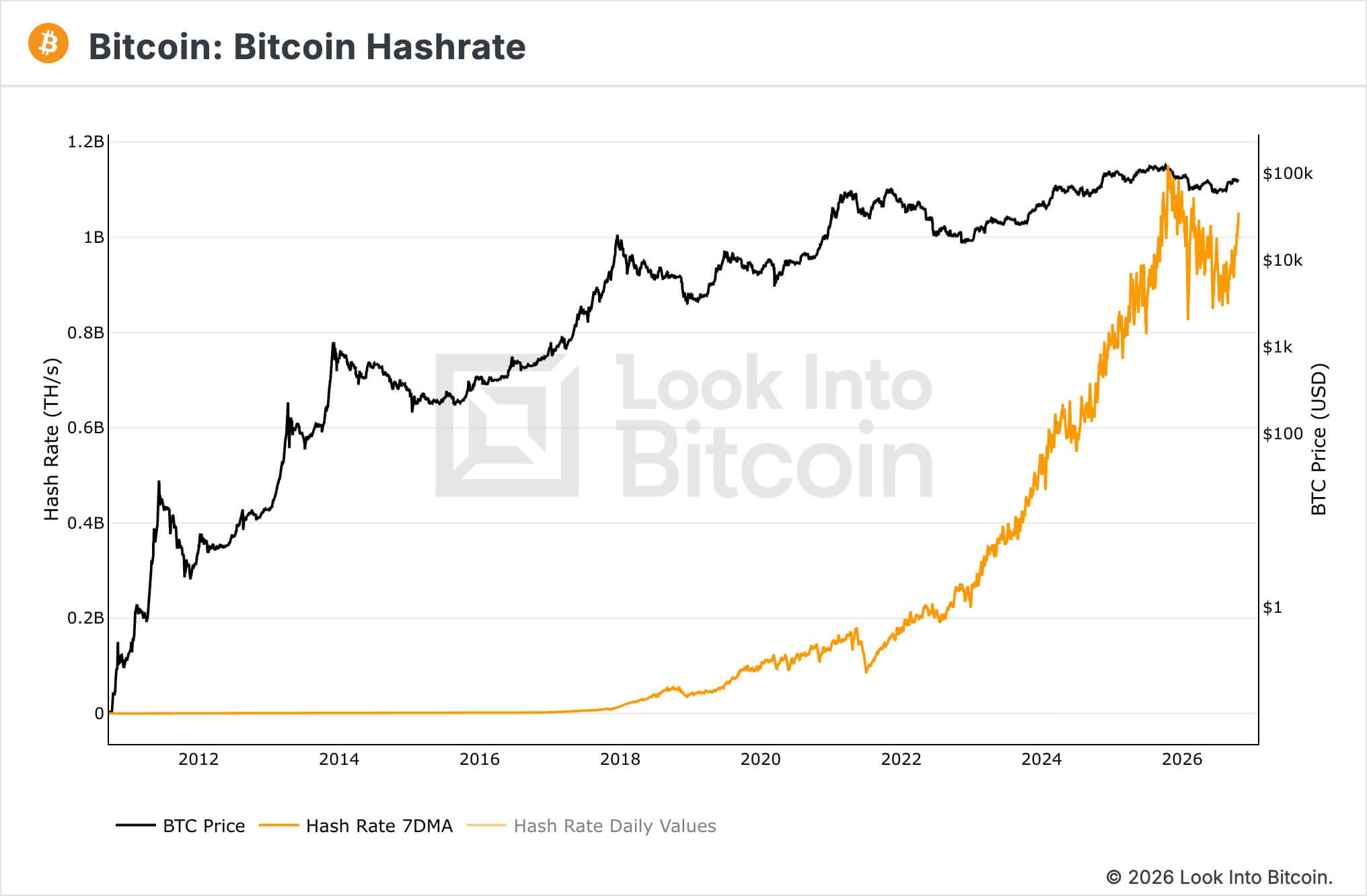
The adjustment is a direct response to a sustained recovery in the network’s total computing power, or hashrate. As more machines join the network and existing hardware becomes more efficient, blocks are discovered faster than the protocol’s ten-minute target. To maintain the integrity of the issuance schedule, the Bitcoin protocol automatically recalibrates its difficulty every 2,016 blocks, approximately every two weeks. However, while a rising hashrate signals a more secure and resilient network, it also forces a "survival of the fittest" scenario among mining firms, many of whom are seeing their profit margins evaporate as the "hashprice"—the measure of expected daily revenue per unit of computing power—falls toward levels not seen since August.
A Resilient Recovery Amidst Infrastructure Transitions
The recent surge in network activity is particularly noteworthy given the broader industrial shift toward Artificial Intelligence (AI) and High-Performance Computing (HPC). Over the past year, several of the industry’s largest publicly traded mining operations have begun diversifying their portfolios, redirecting capital and energy contracts away from Bitcoin mining and toward the construction of data centers designed for AI model training and inference.
Despite this perceived "brain drain" of hardware and energy, the Bitcoin network has staged a remarkable comeback. According to Jamie Coutts, Chief Crypto Analyst at Real Vision, the network has successfully navigated one of its most volatile periods in recent history. Coutts noted that between a peak in October 2025 and a trough in February 2026, the network’s 14-day average hashrate experienced a 23% contraction. This decline was the most severe since the 2021 "Great Migration" that followed China’s blanket ban on cryptocurrency mining operations.
Several factors contributed to that period of instability. Severe winter weather patterns across North America forced many large-scale miners in Texas and the Midwest to curtail operations to stabilize local power grids. Simultaneously, the burgeoning profitability of AI infrastructure led to market speculation that Bitcoin mining might be entering a permanent decline as companies sought more predictable, contract-based revenue streams.
However, the data suggests that these concerns may have been premature. Since July 17, 2026, the network has added approximately 185 exahashes per second (EH/s) to its total computing power. This 21% increase over a 102-day span represents the largest absolute addition of computing power during a recovery phase since 2018. While the percentage gain is not a historical record, the sheer volume of hardware being deployed indicates that Bitcoin mining remains a primary focus for global infrastructure investors.
The Technical Mechanics of the Difficulty Adjustment
The fundamental mechanism driving these changes is the Bitcoin difficulty adjustment algorithm, a cornerstone of Satoshi Nakamoto’s original design. By adjusting the complexity of the cryptographic puzzles that miners must solve, the network ensures that Bitcoin is produced at a steady rate, regardless of how much computing power is directed at it.

When the hashrate increases, blocks are found in less than ten minutes on average. In the period leading up to Oct. 29, the increased efficiency and volume of mining hardware meant the network was operating ahead of schedule. The subsequent 5.54% increase in difficulty effectively raises the "cost" of finding a block, requiring miners to perform more calculations to earn the same reward.
For network security, this is an unalloyed positive. A higher difficulty level means that a malicious actor would need to command an even greater, and likely prohibitively expensive, amount of computing power to attempt a 51% attack. Jamie Coutts emphasized that the willingness of operators to deploy resources on thin margins demonstrates a long-term institutional confidence in Bitcoin’s role as a global reserve asset.
The Economic Squeeze: Analyzing the Hashprice Collapse
While the network grows stronger, the economic reality for individual operators is becoming increasingly grim. The "hashprice," a metric that quantifies the daily revenue a miner can expect from one petahash per second (PH/s) of computing power, has plummeted. Current data from Startmining indicates that the hashprice has dropped to approximately $33 per PH/s per day.
To put this in perspective, the hashprice averaged $40 as recently as September. The combination of the Oct. 16 and Oct. 29 difficulty adjustments has resulted in a cumulative reduction in expected Bitcoin earnings of approximately 10.5% for miners with unchanged hardware capacity.
The financial impact is most acutely felt by operators using older-generation hardware. The industry currently benchmarks efficiency in Joules per Terahash (J/TH). A detailed breakdown of mining economics illustrates the widening gap between efficient and inefficient operations:
- The Inefficient Operator (25 J/TH): At a gross hashprice of $33.35, a machine operating at 25 J/TH generates roughly $32.68 in daily revenue after a standard 2% mining pool fee. However, if the operator pays an electricity rate of 6 cents per kilowatt-hour (kWh), the daily power bill for that machine amounts to $36.00. This results in a daily loss of $3.32 per PH/s, even before accounting for maintenance, labor, and cooling costs.
- The Efficient Operator (20 J/TH): Under the same conditions, a more modern machine operating at 20 J/TH incurs a daily electricity cost of $28.80. This leaves a modest surplus of $3.88 per PH/s. While profitable, this margin is razor-thin and leaves little room for capital expenditure or debt servicing.
For those operating at the 25 J/TH threshold, the break-even electricity price has now dropped to approximately 5.45 cents per kWh. In many jurisdictions, particularly in developed markets, such low rates are only achievable through specialized industrial contracts or by utilizing stranded energy sources like flared natural gas or excess renewable energy.
Strategic Shifts: Bitcoin Mining vs. AI Data Centers
The tightening margins in the mining sector are accelerating a transformation in how these companies view their infrastructure. Publicly traded firms are no longer positioning themselves as "pure-play" Bitcoin miners. Instead, they are evolving into diversified high-performance computing hubs.
The rationale is clear: Bitcoin mining is a high-risk, variable-reward business where revenue is tied to the volatile price of BTC and the unpredictable growth of global hashrate. In contrast, AI data centers offer long-term, multi-year contracts with blue-chip technology firms. These contracts provide the predictable cash flow that Wall Street investors prefer.
However, the network-wide recovery in hashrate suggests that for every terahash of power that a public company redirects toward AI, new capacity is being added elsewhere. This new capacity is likely coming from private entities, sovereign wealth funds, or operators in regions with subsidized or underutilized energy, such as parts of the Middle East, Ethiopia, and South America. This shift suggests a decentralization of the hashrate away from Western public markets and toward more energy-advantaged global regions.
Long-term Implications for the Bitcoin Ecosystem
The current environment of record-high difficulty and low hashprice is likely to trigger a period of consolidation. Small-to-medium-sized miners without access to ultra-low-cost power or the latest hardware may be forced to shutter operations or sell their assets to larger, better-capitalized competitors.
Furthermore, this "difficulty ribbon" effect historically precedes significant market movements. As inefficient miners are flushed out, the remaining participants are generally those with the lowest cost basis and the strongest balance sheets. This often leads to a reduction in the "forced selling" of Bitcoin by miners who need to cover operating expenses, potentially easing downward pressure on the asset’s market price.
From a technical standpoint, the continued growth of the hashrate despite financial pressure reinforces the narrative of Bitcoin as the most secure computational network in human history. The cost to attack the network is now at an all-time high, making it increasingly attractive to institutional investors and nation-states looking for a secure settlement layer.
Conclusion: A Maturing Industrial Landscape
The Oct. 29 difficulty adjustment is more than just a technical update; it is a testament to the industrialization of the Bitcoin mining sector. The days of hobbyist mining are long gone, replaced by a cutthroat global industry that operates on the frontier of energy efficiency and computational power.
As the network approaches the end of 2026, the focus for miners will remain on two fronts: securing the cheapest possible energy and maximizing hardware efficiency. While the current revenue lows are testing the resolve of operators worldwide, the relentless climb of the hashrate suggests that the industry is far from retreating. Instead, it is doubling down, betting that the long-term value of the Bitcoin network will ultimately outweigh the temporary financial strain of a 148-trillion difficulty era.