admin
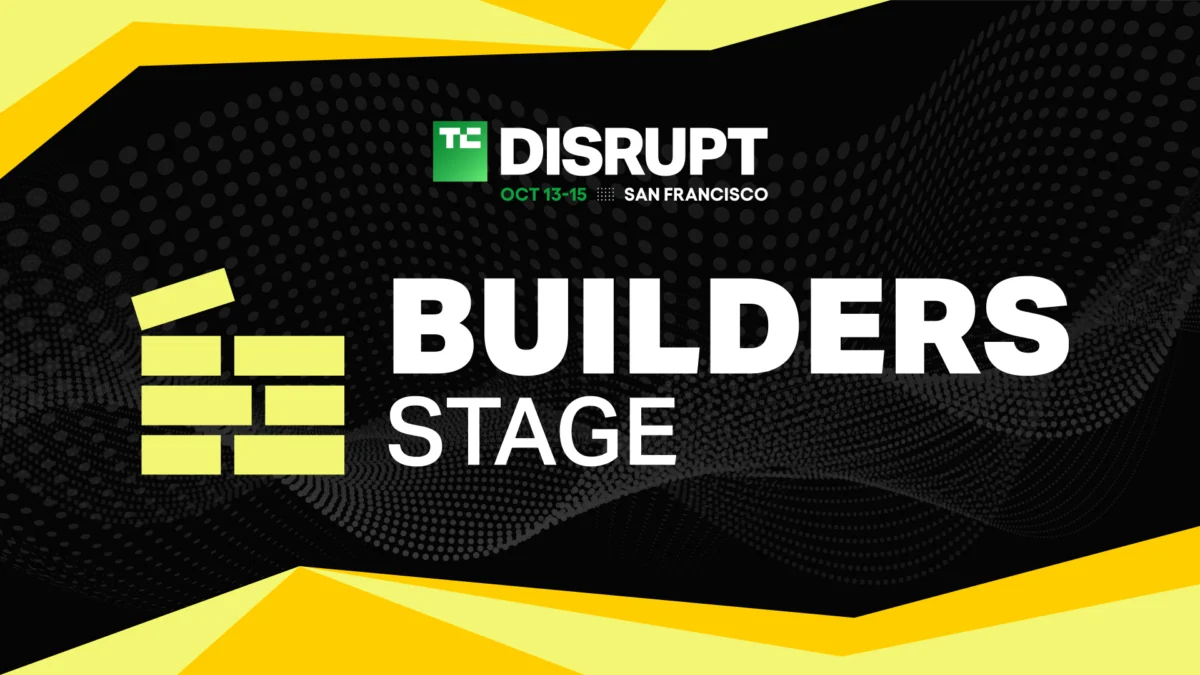
TechCrunch has officially announced the return of the Builders Stage at TechCrunch Disrupt 2026, scheduled to take place at the Moscone Center in San Francisco from October 13 to 15. As one of the central pillars of the three-day event, the Builders Stage is designed to serve as a practical forum for founders, startup operators, and venture capitalists to engage in high-level discussions regarding the mechanics of building and scaling sustainable technology companies. With an anticipated attendance exceeding 10,000 technology leaders and investors, the 2026 iteration of the stage focuses on navigating the complexities of the current venture landscape, with a specific emphasis on the integration of artificial intelligence (AI), capital efficiency, and long-term operational resilience.
The Builders Stage remains one of six industry-focused stages at Disrupt, distinguishing itself by moving beyond theoretical innovation to provide actionable insights into the "how-to" of startup management. The 2026 agenda features a robust lineup of industry veterans, including Grant Lee, CEO and co-founder of Gamma; Leah Solivan, founder and general partner at Precedent.vc; and Robby Stein, VP of Product at Google. Through a series of fireside chats, panel discussions, and real-world case studies, these experts will address critical milestones in the startup lifecycle, ranging from initial fundraising and talent acquisition to go-to-market (GTM) strategies and the transition from seed funding to Series A.
Historical Context and the Evolution of the Builders Stage
TechCrunch Disrupt has long been recognized as a premier platform for early-stage startups, most notably through its Startup Battlefield competition, which has seen past participants like Dropbox and Fitbit go on to achieve significant market exits. However, as the tech ecosystem has matured, the focus of the event has expanded to address the "scaling gap"—the period between finding initial product-market fit and achieving global scale. The Builders Stage was established to bridge this gap, offering a specialized track for founders who have moved past the ideation phase and are now focused on the rigorous demands of organizational growth.
The choice of the Moscone Center as the venue reflects San Francisco’s enduring status as the epicenter of global technology innovation, particularly amidst the current AI-driven resurgence. By hosting the event in the heart of the city, TechCrunch Disrupt 2026 aims to facilitate direct networking between the next generation of founders and the institutional investors who manage the world’s most influential venture funds.
Navigating the Venture Landscape: From Pre-Seed to Series A
A significant portion of the 2026 agenda is dedicated to the evolving dynamics of venture capital. In a session titled "Winning Pre-Seed Without a Product," investors such as Puneet Agarwal of True Ventures and Austin Clements of Slauson and Co will discuss the increasing importance of founder-market fit and narrative building. In the current market, where capital is deployed with greater scrutiny, founders are often required to demonstrate high levels of conviction and a clear strategic roadmap before a single line of code is written or a minimum viable product (MVP) is launched.

The transition to later stages is also under examination. The session "The Series A in 2027" features perspectives from Jahanvi Sardana of Index Ventures and Janelle Teng Wade of Bessemer Venture Partners. This discussion is particularly timely, as the metrics for "fundability" have shifted toward revenue quality and unit economics rather than raw user growth. Analysts suggest that by 2027, the gap between seed and Series A will have widened, requiring startups to demonstrate significantly higher levels of traction and operational maturity than was required during the low-interest-rate environment of the early 2020s.
The AI Paradigm Shift: Defensibility and Integration
The pervasive influence of artificial intelligence is a recurring theme throughout the Builders Stage agenda. However, rather than focusing on the hype surrounding AI models, the sessions aim to address the strategic challenges of building an AI-adjacent business. "What Happens When OpenAI Ships Your Roadmap" will feature Michel Tricot of Airbyte and Linda Tong of Webflow discussing the concept of "platform risk." As giants like OpenAI and Anthropic continue to expand their product suites, smaller startups must find ways to build defensible moats through proprietary data, specialized workflows, or superior user experiences.
Furthermore, the agenda explores how AI is fundamentally altering the internal operations of startups. In "Hiring When AI Is a Co-Founder," Josh Reeves, CEO of Gusto, will examine the rise of hybrid teams where AI agents handle engineering and support tasks. This shift is not merely about cost-cutting; it represents a fundamental change in how early-stage companies structure their human capital. Data indicates that AI-enabled startups are maintaining leaner headcounts while achieving milestones faster, but this requires a new approach to culture and accountability.
Operational Excellence and Product Management at Scale
Scaling a product from an initial user base to billions of users requires a fundamental shift in decision-making processes. Robby Stein, VP of Product at Google, will lead a fireside chat on how product instincts must evolve as a company grows. The speed and agility that characterize early-stage development can become liabilities when every update affects a global user base. Stein’s insights will be complemented by a session on "Rebuilding Consumer Products for the AI Era," featuring Maria Angelidou-Smith, CPO of Reddit, who will discuss how legacy platforms are redesigning their interfaces to accommodate AI-driven search and discovery.
The Builders Stage also prioritizes the human element of entrepreneurship. "Yes, It’s Hard to Be a Founder: An Honest Conversation" will bring together Nell Daly of Revenge Capital and David H. Rosmarin of Harvard Medical School to discuss the psychological toll of high-growth environments. By addressing issues such as decision fatigue and burnout, the stage acknowledges that sustainable company building is as much about the mental resilience of the leadership team as it is about the technical specifications of the product.
Strategic Exits and the Future of M&A
As the IPO market remains unpredictable, mergers and acquisitions (M&A) have moved from being a final exit strategy to an early-stage consideration. In "M&A Is Now an Early-Stage Strategy," Karl Alomar of M13 and Lindsey Mignano of Mignano Law Group will break down how founders can architect their companies for potential acquisition from day one. This involves not only technical compatibility but also strategic alignment with potential buyers.

The event will also serve as the launchpad for the "AI Disruptors 60," a curated list by Greenfield Partners and TechCrunch highlighting the companies most likely to redefine the AI landscape. Shay Grinfeld of Greenfield Partners will lead a discussion on where the biggest opportunities lie in the emerging infrastructure layer of AI, providing a roadmap for investors and founders alike.
Supporting Data and Market Implications
The themes presented at the Builders Stage are supported by broader market data. According to recent venture reports, the "time to market" for AI startups has decreased by nearly 40% compared to SaaS companies of the previous decade. This acceleration is addressed in the session "The 90-Day GTM," which argues that $0 to $10 million in Annual Recurring Revenue (ARR) is becoming the new baseline for early-stage traction.
However, this speed comes with risks. The session "PMF Red Flags," featuring Rajeev Dham of Sapphire Ventures and Rahul Vohra of Superhuman, will provide a data-driven look at why many startups mistake temporary momentum for true product-market fit. In an era of viral growth and distribution hacks, identifying durable retention metrics has become the most critical task for any founder looking to build a multi-product engine.
Conclusion and Attendance Information
TechCrunch Disrupt 2026 and its Builders Stage arrive at a pivotal moment for the technology industry. As the "blitzscaling" era gives way to a period of disciplined, AI-augmented growth, the insights shared at this event will likely influence the trajectory of the next generation of unicorn companies. The Moscone Center will serve as a melting pot of ideas where the practicalities of hiring, fundraising, and product development are dissected by those who have successfully navigated these challenges.
Registration for the event is currently open, with organizers encouraging early sign-ups to take advantage of discounted rates. As the tech community prepares to descend on San Francisco this October, the Builders Stage stands ready to provide the tactical playbook for those who are not just starting companies, but building the enduring institutions of tomorrow. Through its blend of high-level strategy and granular operational advice, the stage remains a vital resource for anyone committed to the rigors of the startup journey.