Dwi Wanna
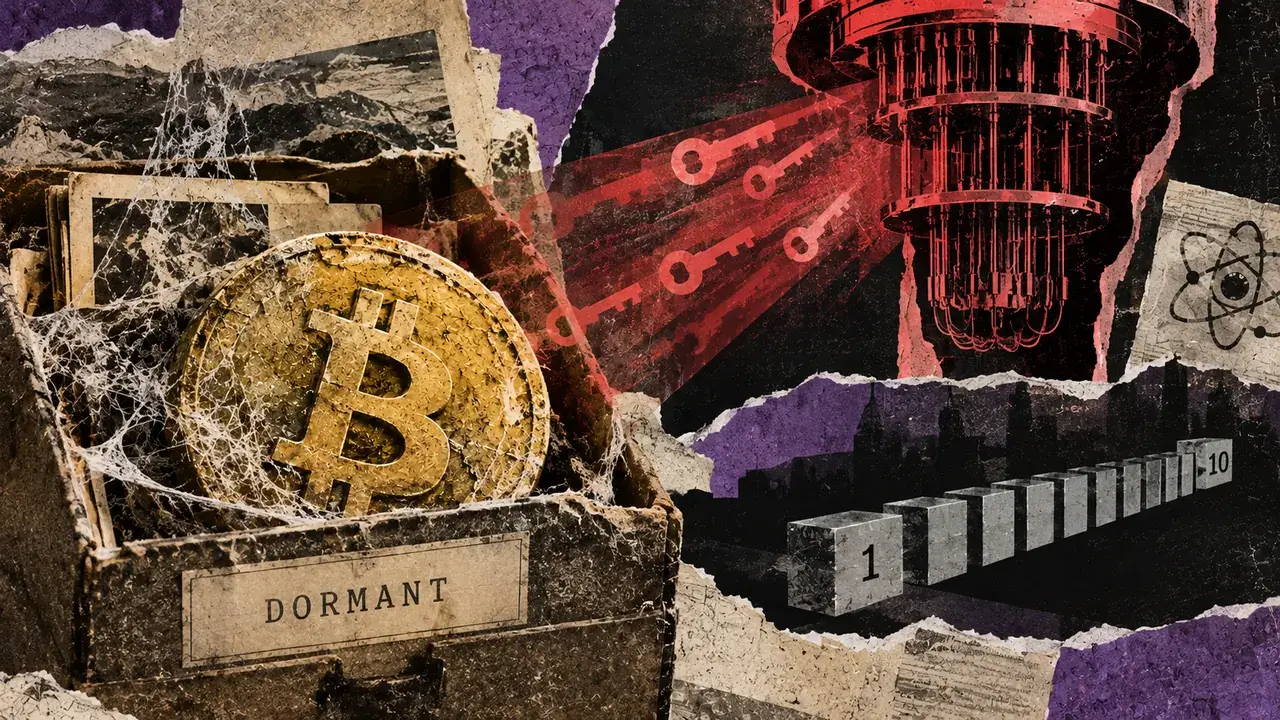
In the rapidly evolving landscape of digital finance, the intersection of quantum computing and blockchain technology has transitioned from a theoretical curiosity to a pressing security concern. Crypto investor and venture capitalist Nic Carter recently highlighted a "worst-case" quantum scenario that could fundamentally undermine the integrity of the Bitcoin network. According to Carter, the most devastating event would involve a hostile actor utilizing a quantum computer to recover the private keys of dormant Bitcoin addresses, subsequently broadcasting a massive wave of transactions across a mere ten blocks. This maneuver, if executed, would not only result in the theft of billions of dollars in assets but could also shatter the global confidence that serves as the bedrock of Bitcoin’s valuation.
The vulnerability lies in the cryptographic foundations of Bitcoin, specifically the Elliptic Curve Digital Signature Algorithm (ECDSA). While current classical computers would take billions of years to crack an ECDSA key, a sufficiently powerful quantum computer running Shor’s algorithm could theoretically derive a private key from a known public key in a matter of hours or even minutes. The stakes of this technological leap are staggering. Data from Glassnode’s May 20, 2024, analysis indicates that approximately 6.04 million BTC—representing roughly 30.2% of the total issued supply—exists in addresses where the public keys are already exposed to the ledger.
The Mechanics of the Ten-Block Sweep
Nic Carter’s scenario focuses on the psychological and systemic shock of seeing "Satoshi-era" coins move for the first time in over a decade. Early Bitcoin transactions utilized a script type known as Pay-to-Public-Key (P2PK). In these instances, the public key is recorded directly on the blockchain. In later iterations, such as Pay-to-Public-Key-Hash (P2PKH), the public key is hashed, providing a layer of protection until the owner attempts to spend the funds. For the millions of BTC sitting in P2PK outputs—including many attributed to Bitcoin’s anonymous creator, Satoshi Nakamoto—the "shield" of hashing does not exist.
The technical feasibility of moving such a vast amount of wealth in a short window depends on the limitations of Bitcoin’s block space. Bitcoin’s architecture tracks funds through individual Unspent Transaction Outputs (UTXOs). To move 2.5 million BTC, an attacker would need to consume tens of thousands of these outputs. Calculations based on the Bitcoin developer reference suggest that 50,000 early outputs, each containing 50 BTC, would require approximately 5.7 million bytes of data. Under current Bitcoin Improvement Proposals (BIPs) and block-weight rules, ten blocks provide a cumulative ceiling of 40 million weight units.
When accounting for transaction overhead and standard weight limits (400,000 units per transaction), a concentrated sweep of 2.5 million BTC could theoretically fit within ten blocks. This "quantum blitz" would see roughly 100 minutes of network activity (given the average 10-minute block interval) during which the world would witness the largest involuntary transfer of wealth in human history.
Historical Context and the Quantum Timeline
The fear of a "Quantum Sunset" is not new, but the timeline for its arrival is narrowing. Google’s research wing has been vocal about the roadmap for quantum supremacy, recently setting 2029 as a target for developing a "useful, error-corrected quantum computer." While current quantum machines, such as those developed by IBM and IonQ, possess a limited number of qubits and suffer from high error rates, the trajectory of the technology suggests that the cryptographic algorithms securing the internet—not just Bitcoin—are on borrowed time.
In the context of Bitcoin, the urgency is amplified by the "Harvest Now, Decrypt Later" strategy. Hostile actors or nation-states could be archiving blockchain data today, waiting for the day a quantum computer is powerful enough to reveal the private keys behind the public data. This makes the 6.04 million BTC identified by Glassnode a "sitting duck" for future exploitation.
Quantitative Analysis of Exposed Supply
To understand the scale of the threat, one must look at the composition of the exposed Bitcoin supply. Glassnode’s research categorizes exposed BTC into three primary groups:
- P2PK Outputs: These are the earliest coins minted, where the public key is visible on the ledger.
- Reused Addresses: When a user sends Bitcoin from a hashed address (P2PKH) but receives change back to the same address, or uses the same address multiple times, the public key is revealed during the first spend.
- Taproot Outputs: While Taproot offers privacy and efficiency benefits, its key-spend path reveals the public key, making it theoretically vulnerable to Shor’s algorithm.
Security researcher Jameson Lopp provided a sobering assessment in May 2021, estimating that roughly 2.6 million BTC might be permanently unable to migrate to quantum-secure addresses. These coins are often considered "lost" because their owners have passed away, lost their private keys, or are otherwise inactive. However, in a quantum-capable world, "lost" coins are simply coins waiting to be claimed by the first person with a quantum computer. This creates a perverse incentive where the security of the network depends on the benevolence of the first entity to achieve quantum supremacy.
Proposed Solutions and the BIP Process
The Bitcoin developer community is not idle in the face of this existential threat. Several proposals are currently being debated to transition the network to post-quantum cryptography (PQC).
BIP-360 and BIP-361:
These proposals, authored by researchers like David Burkett, suggest a phased approach to "sunsetting" vulnerable signature types. BIP-360 proposes a new output type called Pay-to-Merkle-Root, which keeps public keys hidden even more effectively than current hashed addresses. BIP-361 outlines a timeline for restricting legacy signatures. Under this plan, the network would stop allowing the creation of new vulnerable outputs approximately three years after activation. Two years after that, "rescue conditions" would be applied to legacy spends, requiring additional proofs of ownership beyond a simple ECDSA signature.
The PACT Concept:
Proposed by Dan Robinson of Paradigm, the PACT (Private Address Control Testimonies) concept explores the use of advanced, private timestamps. This would allow a Bitcoin holder to prove they had control over an address before the advent of quantum key recovery. By creating a cryptographic "proof of life" for their coins today, owners could claim their funds in a post-quantum future even if their ECDSA keys were compromised.
Hourglass V2:
This proposal suggests a more radical approach: throttling the rate at which legacy coins can be spent. By limiting the network to, for example, one P2PK spend per block, the community could prevent a rapid "quantum sweep." However, this would also constrain legitimate holders, potentially trapping them in a slow-moving queue while the market reacts to the looming threat.
Market Implications and Global Response
The economic impact of a quantum attack on Bitcoin would extend far beyond the immediate loss of funds. Bitcoin’s primary value proposition is its role as a "digital gold"—a secure, immutable store of value. If the "unspendable" coins of Satoshi Nakamoto were suddenly moved by an unknown entity, the narrative of Bitcoin’s scarcity and security would collapse.
Financial institutions that have recently embraced Bitcoin through Spot ETFs (Exchange Traded Funds) would face unprecedented regulatory and legal challenges. If 30% of the supply is at risk, the volatility would likely drain liquidity from exchanges, as holders rush to exit positions before the "sweep" concludes.
Furthermore, the response from miners and nodes would be critical. In the event of a visible quantum attack, the community might be forced to consider a "hard fork"—a contentious split of the network where the community agrees to invalidate the attacker’s transactions. However, this would require a level of social consensus that is difficult to achieve in a decentralized system and would raise questions about Bitcoin’s "code is law" philosophy.
Conclusion: The Race Against the Quantum Clock
The scenario described by Nic Carter serves as a vital wake-up call for the cryptocurrency industry. While the technology required to break Bitcoin’s encryption does not yet exist in a stable form, the theoretical groundwork is complete. The transition to post-quantum security is not merely a technical upgrade; it is a race against time to protect the world’s most successful decentralized financial system.
As the Bitcoin community evaluates BIP-360, BIP-361, and other defensive measures, the focus remains on balancing security with accessibility. The ultimate challenge will be deciding which claims to recognize when a standard signature can no longer distinguish between a rightful owner and a quantum-armed thief. For now, the most effective defense for Bitcoin holders is to avoid address reuse and stay informed on the migration paths toward more secure, hashed, or future quantum-resistant address formats. The resilience of the network will depend on its ability to evolve without sacrificing the decentralization that made it valuable in the first place.