Dwi Wanna
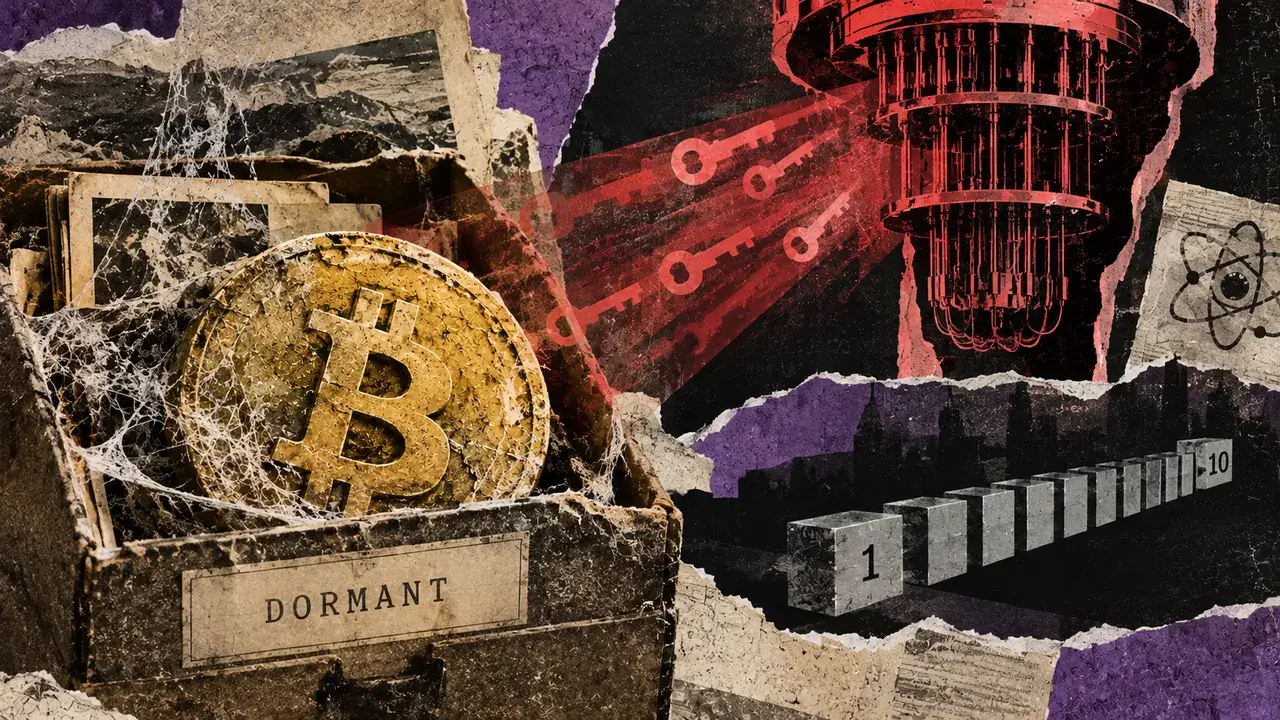
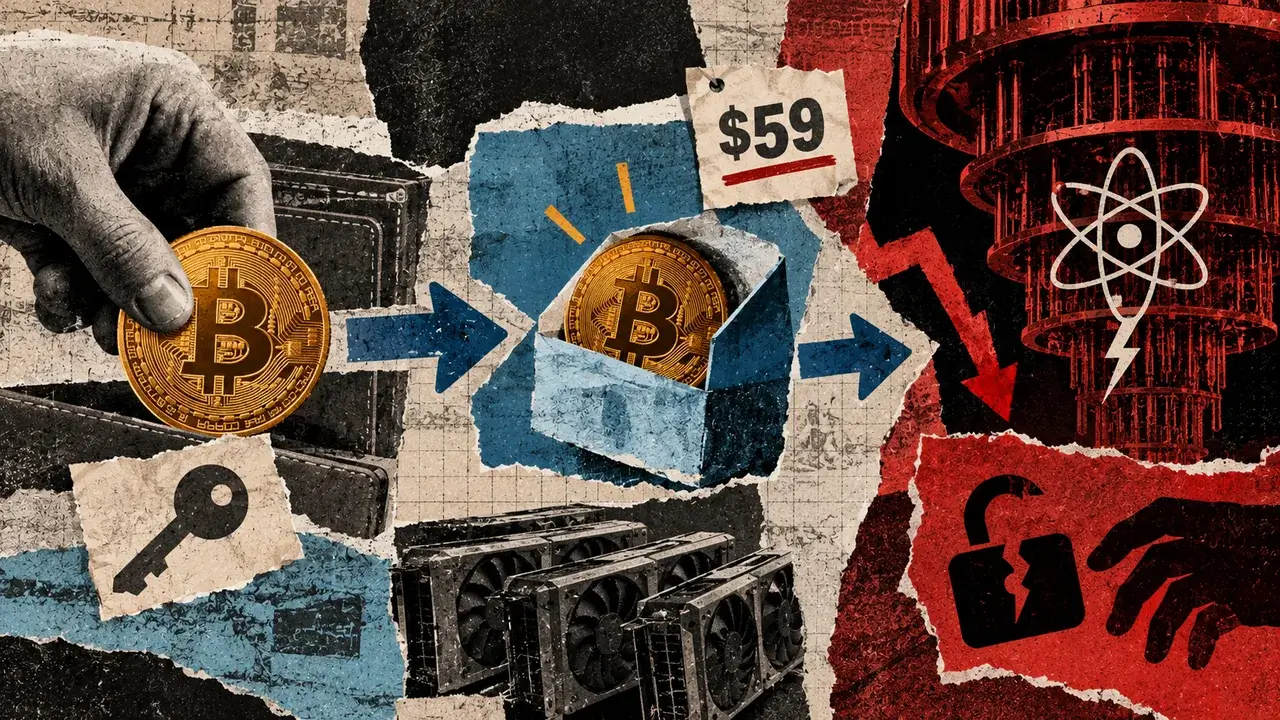
The stability of the Bitcoin network faces a theoretical yet existential challenge from the rapid advancement of quantum computing, a topic recently brought to the forefront by prominent crypto investor Nic Carter. In a detailed assessment of the network’s vulnerabilities, Carter outlined a "worst-case scenario" involving a hostile actor utilizing a quantum computer to recover private keys from dormant Bitcoin addresses. This hypothetical attack would culminate in the broadcasting of a massive wave of transactions across 10 consecutive blocks, a move that Carter suggests could fundamentally shatter market confidence and the perceived security of the decentralized ledger.
The crux of the concern lies in the cryptographic foundations of Bitcoin. Currently, Bitcoin relies on the Elliptic Curve Digital Signature Algorithm (ECDSA). While robust against classical computing, ECDSA is vulnerable to Shor’s algorithm, a quantum algorithm capable of deriving a private key from a known public key. For many early Bitcoin addresses, these public keys are already visible on the blockchain, making them "quantum-exposed."
The Scale of Vulnerability: 6 Million BTC at Risk
The magnitude of this exposure is not merely theoretical; it is quantifiable. According to a May 2024 analysis by the on-chain data firm Glassnode, approximately 6.04 million BTC—representing roughly 30.2% of the total issued supply—resides in outputs where the public keys are already exposed. This exposure primarily stems from two sources: early Pay-to-Public-Key (P2PK) outputs and address reuse.
In the earliest days of Bitcoin, transactions often utilized P2PK, which explicitly included the recipient’s public key in the script. Later, the network transitioned to Pay-to-Public-Key-Hash (P2PKH), which hides the public key behind a hash until the moment the funds are spent. However, for those who received funds via P2PK and have never moved them, or for those who have reused addresses, the public key is already part of the public record.
Security researcher Jameson Lopp provided further nuance to these figures in a May 2024 analysis. Lopp estimated that of the exposed supply, roughly 2.6 million BTC might be considered "immobile" due to inactivity, known entity labels, or presumed loss of private keys. While these coins are effectively out of circulation today, a quantum attacker could potentially "resurrect" them, seizing control of assets that the market had long since priced as "lost."
The Mechanics of a Quantum Sweep: Can 10 Blocks Hold the Supply?
A central question in Carter’s scenario is whether a quantum attacker could physically fit a massive amount of stolen BTC into a short window of time. Bitcoin’s block space is a finite resource, governed by a "weight" limit of 4 million weight units per block.
To test the feasibility of a rapid sweep, one can model a hypothetical set of 50,000 early outputs, each containing 50 BTC (the original block reward). This totals 2.5 million BTC. Based on the Bitcoin developer reference for P2PK inputs, such a set would require approximately 5.7 million bytes of data, translating to roughly 22.8 million weight units before accounting for transaction overhead.
Under Bitcoin’s current consensus rules, 10 blocks provide an aggregate ceiling of 40 million weight units. If an attacker were to batch these inputs efficiently—using one compact receiving output per transaction and staying within the 400,000-unit standard weight limit per transaction—the entire 2.5 million BTC could theoretically be confirmed within approximately 100 minutes (the average time for 10 blocks).
This technical feasibility suggests that the bottleneck for a quantum attacker is not the blockchain’s capacity, but rather the acquisition of a sufficiently powerful quantum computer. While Google’s current research models the resources required for such an attack, a successful recovery of a Bitcoin private key remains undemonstrated in the public domain. Google has set a target of 2029 for developing a "useful, error-corrected quantum computer," a timeline that many in the cryptographic community view as a benchmark for the "quantum sunset" of classical encryption.
The Evolution of the Quantum Threat: A Chronology
The awareness of quantum risks has evolved alongside the development of the technology itself:
- 2008–2010: Bitcoin is launched using ECDSA. P2PK is the standard, unintentionally exposing public keys of early adopters, including the estimated 1.1 million BTC attributed to Satoshi Nakamoto.
- 2016: The National Institute of Standards and Technology (NIST) begins a global competition to identify post-quantum cryptographic (PQC) standards.
- 2019: Google claims "quantum supremacy," performing a specific calculation in 200 seconds that would take a classical supercomputer 10,000 years. Although unrelated to breaking encryption, it signals a leap in hardware capability.
- 2021: The Taproot upgrade is activated on Bitcoin. While enhancing privacy and efficiency, Taproot’s key-spending path also exposes public keys, adding a new category of quantum-exposed outputs.
- Early 2024: Detailed research from Glassnode and security experts like Jameson Lopp quantifies the "quantum-exposed supply," shifting the conversation from "if" to "how much."
- Present Day: Several Bitcoin Improvement Proposals (BIPs) are in the draft stage, aiming to provide a migration path to quantum-resistant signatures.
Proposed Solutions: BIPs and "Rescue" Protocols
The Bitcoin developer community is actively exploring several avenues to mitigate these risks. However, each solution involves significant trade-offs between security, accessibility, and the preservation of Bitcoin’s fundamental "code is law" ethos.
BIP-360 and BIP-361
Drafted as a multi-phase response, BIP-360 proposes a new output type called Pay-to-Merkle-Root. This would allow users to commit to funds without exposing a public key, even during the spending process. BIP-361 suggests a phased approach: first, restricting the creation of new vulnerable outputs (like P2PK), and later, implementing "rescue conditions" for legacy signatures. This would effectively "sunset" old cryptographic standards, forcing a migration to quantum-resistant alternatives.
The PACT Concept
Proposed by Dan Robinson of Paradigm, the Private Asynchronous Control Transfer (PACT) concept explores the use of advanced, private timestamps. This would allow a holder to "pre-register" a claim to an address before a quantum computer becomes powerful enough to break it. If a quantum attacker later tries to spend the coins, the original holder could use their pre-registered proof to assert ownership. The challenge here is the "standardization hurdle"—holders must act long before the threat is imminent.
The Hourglass V2 Draft
An alternative approach, Hourglass, focuses on "throttling" the outflow of funds. By limiting the network to, for example, one P2PK spend per block, the community could prevent a rapid "sweep" of the 6 million exposed BTC. While this would slow down an attacker, it would also severely restrict the liquidity of legitimate holders who have not yet migrated their funds.
Market Implications and the "Satoshi" Factor
The most significant impact of a quantum attack would likely be psychological. If coins associated with the earliest days of the network—particularly the "Satoshi" coins—were to move suddenly, the market would likely interpret this as a compromise of the protocol’s integrity.
A visible, hostile transfer of 2.5 million BTC would not create new supply, but it would move control of that supply into the hands of a malicious actor. The resulting "confidence shock" could lead to massive sell-offs before the attacker even reaches an exchange. Furthermore, the liquidity required to absorb such a volume does not currently exist in the spot markets, meaning any attempt to liquidate stolen quantum-recovered coins would likely crash the price of Bitcoin toward zero in the short term.
Expert Reactions and Industry Outlook
The consensus among cryptographers is that while the threat is real, the "quantum apocalypse" is not imminent. "The window for a proactive migration is still open," noted one security researcher. "The challenge is not the math—we have post-quantum algorithms. The challenge is the governance of a decentralized network. How do you tell 30% of your users that their coins will be invalidated if they don’t move them by a certain date?"
The debate over "rescue conditions" is particularly contentious. If Bitcoin changes its rules to prevent a quantum attacker from spending P2PK coins, it also risks locking out legitimate owners who have lost their keys or who are simply unaware of the need to migrate. This creates a philosophical rift: should the network prioritize the security of the whole at the expense of the property rights of the few?
Conclusion: A Race Against Time
Nic Carter’s 10-block scenario serves as a stark reminder that Bitcoin’s security is not static. It is a dynamic equilibrium between the strength of its cryptography and the computational power available to attackers. As quantum hardware approaches the "useful" threshold, the Bitcoin community faces a monumental task: upgrading the engine of a multi-trillion-dollar financial system while it is in mid-flight.
The path forward will likely involve a combination of the proposed BIPs, requiring users to eventually move their assets to "safer destinations." While the technical blueprints for a quantum-resistant Bitcoin are being drawn, the ultimate protection for the network will depend on the speed of adoption and the community’s ability to reach a consensus on how to handle the legacy of its own cryptographic past. For now, the 6 million BTC sitting in exposed addresses remain a ticking clock in the age of quantum advancement.