Dwi Wanna
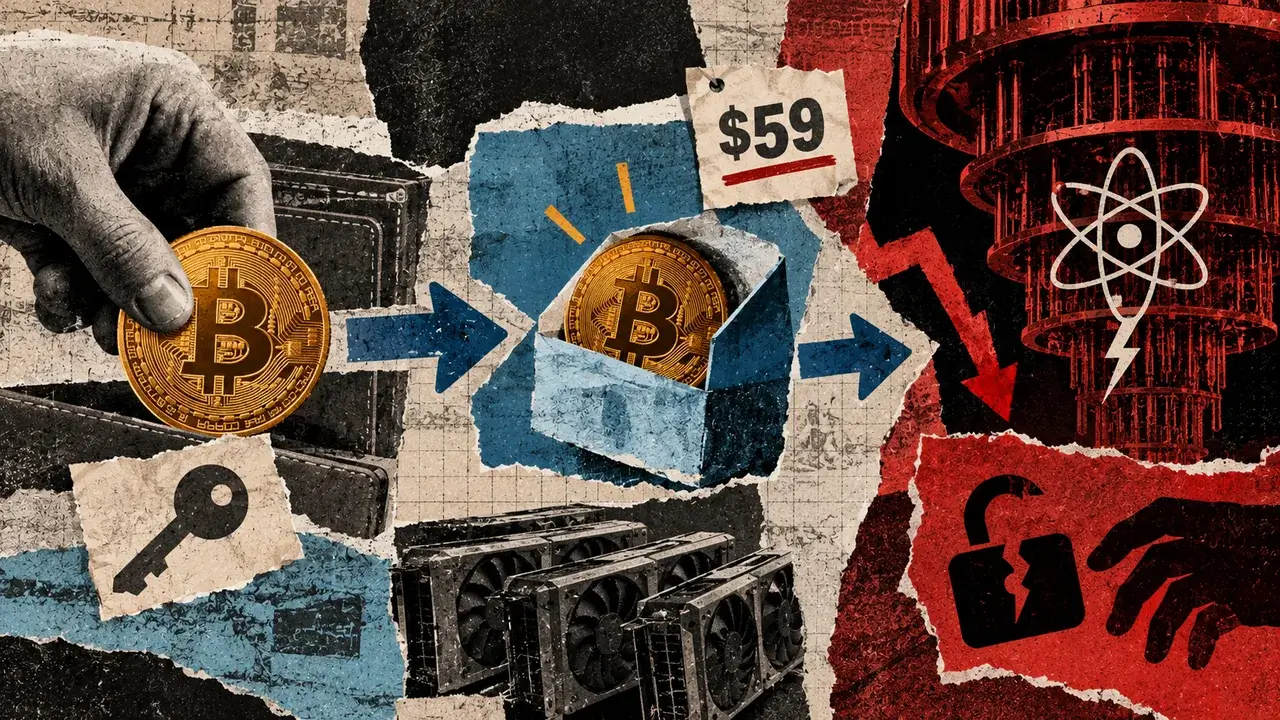
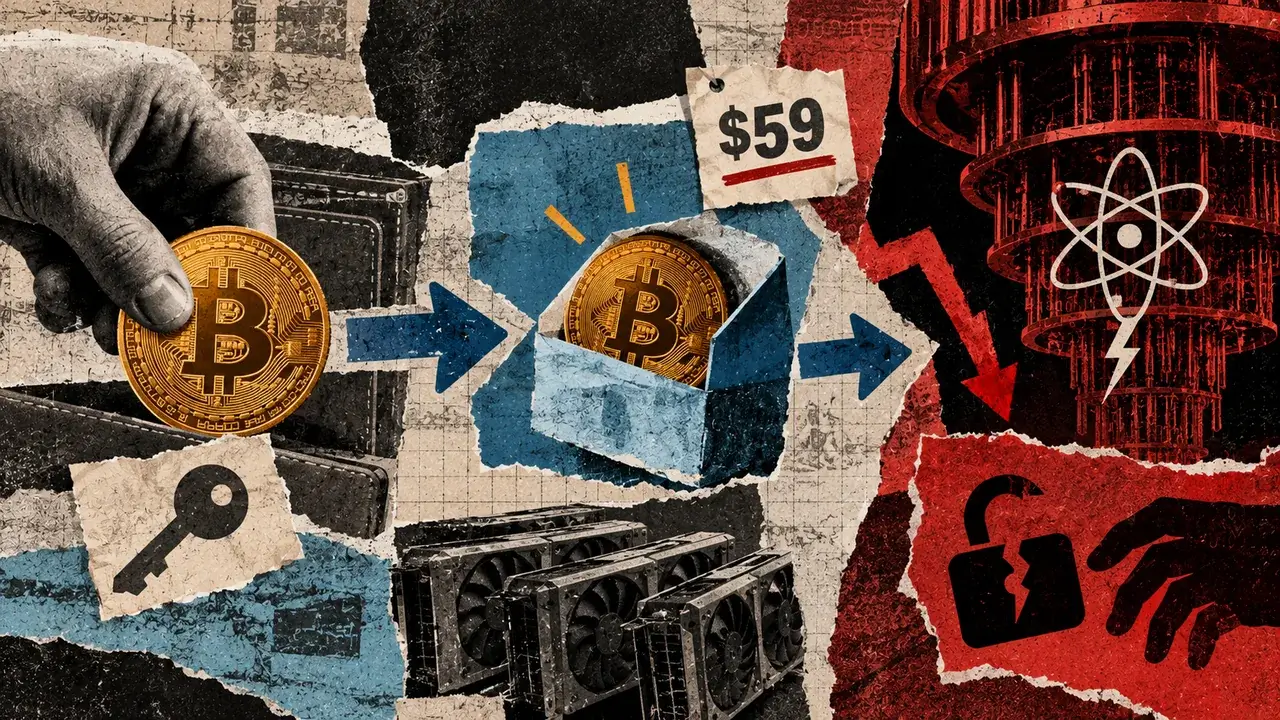
Researchers participating in the Quantum-Safe Bitcoin (QSB) Optimization Challenge have successfully reduced the projected computational cost of a specialized quantum-resistant Bitcoin transaction to $59, representing a staggering 82% decrease from initial estimates. This breakthrough, announced following a series of technical milestones achieved between August and October 2024, signals a significant shift in the feasibility of protecting decentralized assets against the future threat of quantum computing. The initiative, led by StarkWare in collaboration with Yukon Research and Eigen Labs, utilized advanced graphics processing software and artificial intelligence-assisted coding tools to optimize the intensive computational searches required for these high-security transactions.
The recent benchmarks indicate that the cost of preparing a QSB transaction has plummeted from approximately $320 during the first mainnet demonstration in August to $67 in September, reaching the $59 mark as of October 13. While this figure remains an estimate based on simulated GPU workloads—specifically utilizing the high-performance Nvidia RTX 4090—the rapid pace of optimization suggests that the financial barrier to quantum security is falling much faster than previously anticipated.
The Technical Evolution of Quantum-Safe Bitcoin
The QSB method is a specialized emergency protection framework designed to safeguard Bitcoin holdings without requiring an immediate, network-wide overhaul of the underlying protocol. It relies on hash-based cryptography and a complex computational puzzle that allows users to move their funds into a quantum-resistant state. This approach is particularly critical because it operates within Bitcoin’s existing consensus rules, though it bypasses standard relay policies that typically govern how transactions are broadcast across the network.
At the heart of the recent cost reduction is a massive leap in computational efficiency. During the initial stages of development, the hardware was capable of processing approximately 146 million verified candidates per second. Through the application of AI-assisted coding tools, which helped developers refine the algorithms used for cryptographic searches, the latest recorded benchmark exceeded 1 billion verified candidates per second on a single Nvidia RTX 4090 GPU.
This seven-fold increase in hashing speed is the primary driver behind the lower cost estimates. The $59 figure is calculated based on the hardware depreciation and electricity costs associated with a simulated 100-unit RTX 3090/4090 model cluster. It is important to note, however, that this estimate excludes Bitcoin network fees (miner fees), which vary based on block space demand, and assumes the availability of a cooperative miner to process the non-standard transaction.
Chronology of the Quantum-Safe Bitcoin Initiative
The journey toward affordable quantum resistance for Bitcoin has moved through several distinct phases over the last quarter:
- August 2024: The Proof of Concept. Avihu Levy, a researcher at StarkWare, demonstrated the first successful mainnet transaction using the QSB method. This event proved that Bitcoin’s existing script language could support quantum-resistant spending arrangements. However, the computational overhead was high, with costs estimated at over $300 per transaction.
- September 2024: Initial Optimization. Following the public launch of the Quantum-Safe Bitcoin Optimization Challenge, developers began applying specialized GPU kernels to the hashing problem. This effort quickly brought the estimated cost down to $67, proving that software-level refinements could yield immediate dividends.
- October 2024: AI Integration and Current Benchmarks. By integrating AI-assisted coding to optimize the search space and execution paths, researchers reached the $59 milestone. On October 13, the team confirmed that they had surpassed the 1 billion candidates per second threshold.
- Future Targets: StarkWare and its partners have stated that the current goal is to drive the computational cost below $10. Achieving this would make the protection method accessible not only to institutional whales but also to a broader segment of individual Bitcoin holders.
The Impending Threat of Quantum Computing
The urgency behind these developments is driven by a shifting timeline for "Q-Day"—the hypothetical moment when quantum computers become powerful enough to break modern encryption. Bitcoin currently relies on the Elliptic Curve Digital Signature Algorithm (ECDSA). While ECDSA is robust against classical computers, it is vulnerable to Shor’s algorithm, which a sufficiently powerful quantum computer could use to derive a private key from a public key.
In March 2024, researchers at Google Quantum AI published a report suggesting that the window for action might be smaller than previously thought. Their research indicated that a quantum computer with approximately 500,000 physical qubits could potentially compromise Bitcoin’s security in a matter of minutes. This represented a 20-fold reduction in the resources required compared to earlier estimates that suggested millions of qubits would be necessary. While such machines do not yet exist in a stable, public form, the rapid advancement in qubit fidelity and error correction has put blockchain developers on high alert.
Analyzing the Scale of Bitcoin’s Vulnerability
The threat to Bitcoin is not uniform; it specifically targets addresses where the public key has been revealed to the network. According to data from Glassnode, the scale of this exposure is immense. Approximately 6.04 million BTC—roughly 30.2% of the total circulating supply—is currently considered "quantum-exposed."
This exposure occurs in several ways:
- Legacy Addresses (P2PK): In the early days of Bitcoin, coins were often sent directly to public keys. These keys are visible on the blockchain, making them immediate targets for a quantum attacker. This includes the roughly 1.1 million BTC attributed to Satoshi Nakamoto.
- Address Reuse: When a user sends Bitcoin from a modern address (P2PKH or SegWit), the public key is revealed during the transaction. If the user then receives more Bitcoin to that same address, the funds are now vulnerable because the public key is already in the public ledger.
- Spent Outputs: Any address that has been used to send a transaction in the past but still holds a balance is at risk.
The QSB method provides a "hiding spot" for coins. By moving funds into an output where the public key remains hidden behind a hash until the moment of spending, users can protect themselves. However, for the 6.04 million BTC already exposed, the QSB method acts more as a recovery or migration tool that must be used before a quantum attacker becomes active.
Operational Hurdles and the Role of Miners
Despite the reduction in computational costs, the practical deployment of QSB faces significant hurdles. Standard Bitcoin nodes operate under "relay policies" that filter out complex or unusual transactions to prevent spam and denial-of-service attacks. Because QSB transactions are computationally dense and use non-standard scripts, they are typically rejected by the general network.
To bypass this, users must submit their transactions directly to mining pools. During the August demonstration, the mining firm MARA (formerly Marathon Digital Holdings) utilized its "Slipstream" service to facilitate the transaction. This creates a dependency on centralized or specialized mining services, which contradicts the fully decentralized ethos of Bitcoin.
Furthermore, the $59 cost is purely for the "search" to solve the computational puzzle. Once the puzzle is solved, the user must still pay the prevailing market rate for block space. During periods of high network congestion, these fees could add hundreds of dollars to the total cost of migration, potentially pricing out smaller holders even if the computational cost drops to $10.
Broader Implications for the Bitcoin Protocol
The success of the QSB Optimization Challenge has sparked a renewed debate within the Bitcoin developer community regarding the long-term roadmap for quantum resistance. There are two primary schools of thought:
- The Proactive Upgrade Path: Some developers argue for a "soft fork" to introduce native quantum-resistant signature schemes, such as Lamport signatures or Winternitz One-Time Signatures (WOTS+). This would provide a standardized, user-friendly way to secure coins but requires a level of consensus that is notoriously difficult to achieve in the Bitcoin ecosystem.
- The Reactive Fallback Path: Proponents of the QSB method argue that it serves as an essential safety net. It allows the network to remain conservative and avoid complex protocol changes until they are absolutely necessary. If a quantum threat emerges suddenly, the infrastructure developed by StarkWare and its partners could be deployed as an emergency migration path.
Industry reactions have been cautiously optimistic. Security analysts suggest that the 82% cost reduction proves that the "computational tax" on security is not a fixed barrier but a technical challenge that yields to innovation. However, they also warn that the reliance on high-end GPUs like the RTX 4090 could create a "security gap" between those who have access to specialized hardware and those who do not.
Conclusion and Outlook
The reduction of quantum-safe transaction costs to $59 is a landmark achievement in the field of blockchain forensics and security. It demonstrates that through a combination of AI optimization, GPU acceleration, and open-source collaboration, the crypto industry can build defenses that outpace the theoretical threats of quantum computing.
As the Quantum-Safe Bitcoin Optimization Challenge continues, the focus will shift toward demonstrating these savings in a production environment and establishing a more robust network of miners willing to process these specialized transactions. For the millions of Bitcoin currently sitting in exposed addresses, these developments offer a glimmer of hope—a way to outrun the quantum shadow without waiting for the slow wheels of protocol consensus to turn. The race between the quantum code-breakers and the cryptographic code-builders is far from over, but for the first time, the cost of defense is beginning to look affordable.